



When The Saints Go Marching In (Lektion)
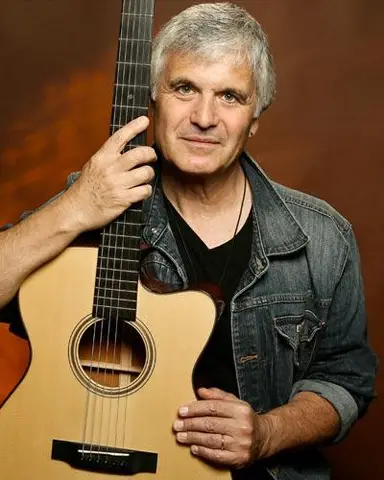
Lesson time: (3min 47sec)
Course preview
This lesson is part of the course DADGAD verstehen
Watch a preview of the full course below.
Lesson transcript:
When the Saints Go Marching In: A Music Lesson
Introduction
The first piece that I ever learned to play was "When the Saints Go Marching In." I learned it in the key of C, in standard tuning.
Tuning and Key
- Key: C
- Tuning: Standard
However, I later explored it in D, using DADGAD tuning. The melody fits nicely on both the top and bottom strings, allowing for some creative counterpoint.
Basic Melody
The basic melody is very straightforward, working within a narrow range of just a fifth.
Creating Counterpoint
What I'm going to do is spice it up with some counterpoint:
- Melody: Start with the basic melody.
- Echo: Follow with an echo of the melody.
- Bass Line: Continue the bass line down.
- Scale Movement: Walk down the scale, landing on an E instead of an A.
Chord Voicings
- The melody note is the sixth of the chord.
- Adding a seventh and a ninth underneath creates an A.
- This is an A 13th shape that you may be familiar with.
- Move it around for various chord sequences while keeping an alternate bass.
Transitioning Chords
Next, I'll move to a D ninth chord.
- Notice that instead of playing the melody on the top string, I've transferred it for added depth.
- Adding a seventh and the ninth gives us the D ninth voicing, transitioning to a G over B.
Bass Line Movement
- The bass line moves down a half step to D over F sharp.
- This creates a cycle of fifths movement.
- It can be treated as either a D chord or an F sharp minor, but I prefer the DADGAD tuning approach.
Conclusion
- The progression continues: E minor 7, A, and then to D.
- It's a fun little arrangement!
Performance
Now, let me perform "When the Saints Go Marching In" for you.
About the instructor
Laurence Juber wurde zunächst als Leadgitarrist in Paul McCartneys Band Wings bekannt. Seither hat er sich eine Karriere als Fingerstyle-Gitarrist, Komponist und Arrangeur aufgebaut und arbeitet vorwiegend in der DADGAD-Stimmung, die ihm den Beinamen 'the Duke of DADGAD' einbrachte.Von den Lesern des Fingerstyle Guitar Magazine wurde er zum Gitarristen des Jahres gewählt und vom Magazin Acoustic Guitar zu den besten Gitarristen gezählt – dazu kommen eine lange Liste von Soloalben und Welttourneen.In seinen Kursen vermittelt er seine Fingerstyle-Technik und die DADGAD-Stimmung, für die er bekannt ist, wie man Melodie, Harmonie und Bass für die Solo-Gitarre zusammenführt, und die Stücke – wie sein charakteristisches 'Wooden Horses' –, die all das vereinen. read more