



Amazing Grace (Lektion)

Lesson time: (10min 51sec)
In dieser Lektion bringt dir Laurence Juber bei, das beliebte Stück Amazing Grace auf der Akustikgitarre in DADGAD-Stimmung zu spielen.
Course preview
This lesson is part of the course DADGAD verstehen
Watch a preview of the full course below.
Lesson transcript:
Music Lesson: Arranging "Amazing Grace" in DADGAD Tuning
Introduction
Today, we're going to explore a familiar melody, "Amazing Grace." We'll develop a unique arrangement to showcase the possibilities within DADGAD tuning.
Basic Melody Introduction
- Key: D
- Melody: "Amazing Grace"
- Approach: Start with a simple rendition
- The melody note and bass note (A) are introduced.
- Transition to the V chord in D with an A7.
Exploring Chords
-
A7 Chord Construction:
- In standard tuning, you would finger it traditionally.
- In DADGAD tuning, the shape moves up to the seventh fret.
-
Texture Addition:
- Utilize open strings to create texture.
- Play the melody again, incorporating bass notes.
Complexifying the Arrangement
- Add Complexity:
- Start with a D chord.
- Add a seventh to create a D7 chord with E in the melody, thus forming a D9 chord.
Finger Positioning
-
Fingering Technique:
- Notice the use of the pinky for the G bass note, which is good practice.
- Alternate finger options for increased mobility.
-
Exercise Suggestion:
- Hold down the G while playing a pattern on top to strengthen finger usage.
Transitioning Chords
-
B Minor Chord:
- Based on standard tuning fingering.
- Melody note: D (open string).
- Include an A to form a rich-sounding B minor 7th chord.
-
Moving to E Chord:
- Instead of an open E, structure it as an E7 with F# as the melody (the ninth).
Chord Comparison
- C Chord Variation:
- Standard C chord compared to C9 in DADGAD tuning.
- The shifted notes create a rich, mobile ninth chord voicing.
Application to "Amazing Grace"
- Chord Progressions:
- D9 chord transitioning to B minor.
- E chord progression leading naturally to A.
- B minor walking down to E, creating harmonious movement.
Complete Arrangement
Exploring Harmonic Twists:
-
Slide Technique:
- Begin with a slide on the fourth string from the seventh to the twelfth fret.
-
Voicing Introductions:
- Use an F# augmented chord for complexity.
- Include a G chord with added A.
Percussive Elements
- Incorporate Rhythm:
- Use a little slap percussively.
- Transition from A7 while maintaining the A bass note and moving up a half step.
Interval Techniques
- Tenth Intervals:
- Create a pleasing sound by moving in tenths.
Chord Movements
- Progression Notes:
- Casually finger down to F# minor 7 and B minor 7.
- Alternate between standard and first inversion E9 chords for bass movement.
Conclusion
- Ending the Arrangement:
- Conclude with a coda leading to C9, then to B, and finish with an A13.
- Final Touch:
- End with a simple turnaround.
Now, let's go ahead and play the arrangement of "Amazing Grace."
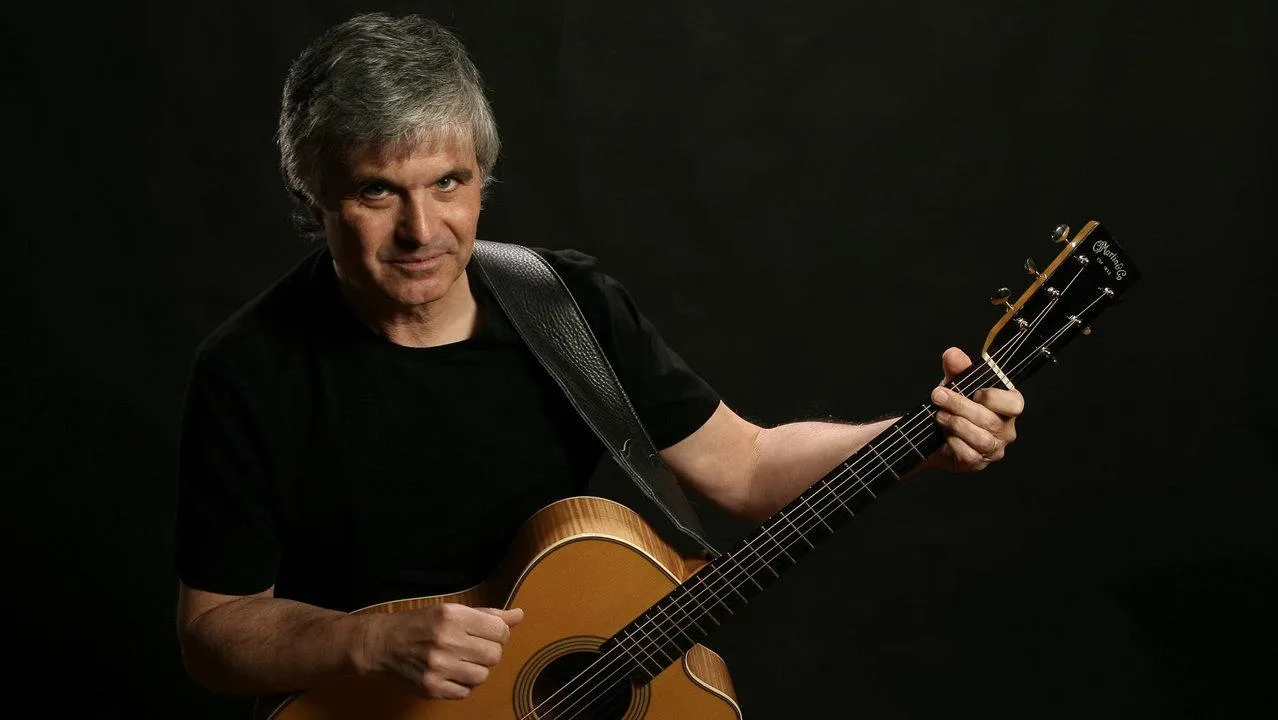
About the instructor
Laurence Juber wurde zunächst als Leadgitarrist in Paul McCartneys Band Wings bekannt. Seither hat er sich eine Karriere als Fingerstyle-Gitarrist, Komponist und Arrangeur aufgebaut und arbeitet vorwiegend in der DADGAD-Stimmung, die ihm den Beinamen 'the Duke of DADGAD' einbrachte.Von den Lesern des Fingerstyle Guitar Magazine wurde er zum Gitarristen des Jahres gewählt und vom Magazin Acoustic Guitar zu den besten Gitarristen gezählt – dazu kommen eine lange Liste von Soloalben und Welttourneen.In seinen Kursen vermittelt er seine Fingerstyle-Technik und die DADGAD-Stimmung, für die er bekannt ist, wie man Melodie, Harmonie und Bass für die Solo-Gitarre zusammenführt, und die Stücke – wie sein charakteristisches 'Wooden Horses' –, die all das vereinen. read more