



Spindrift (Lektion)
Mit
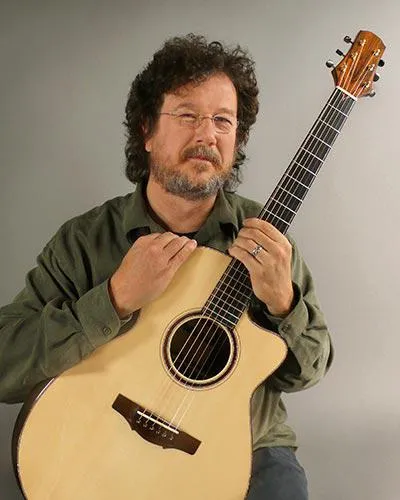
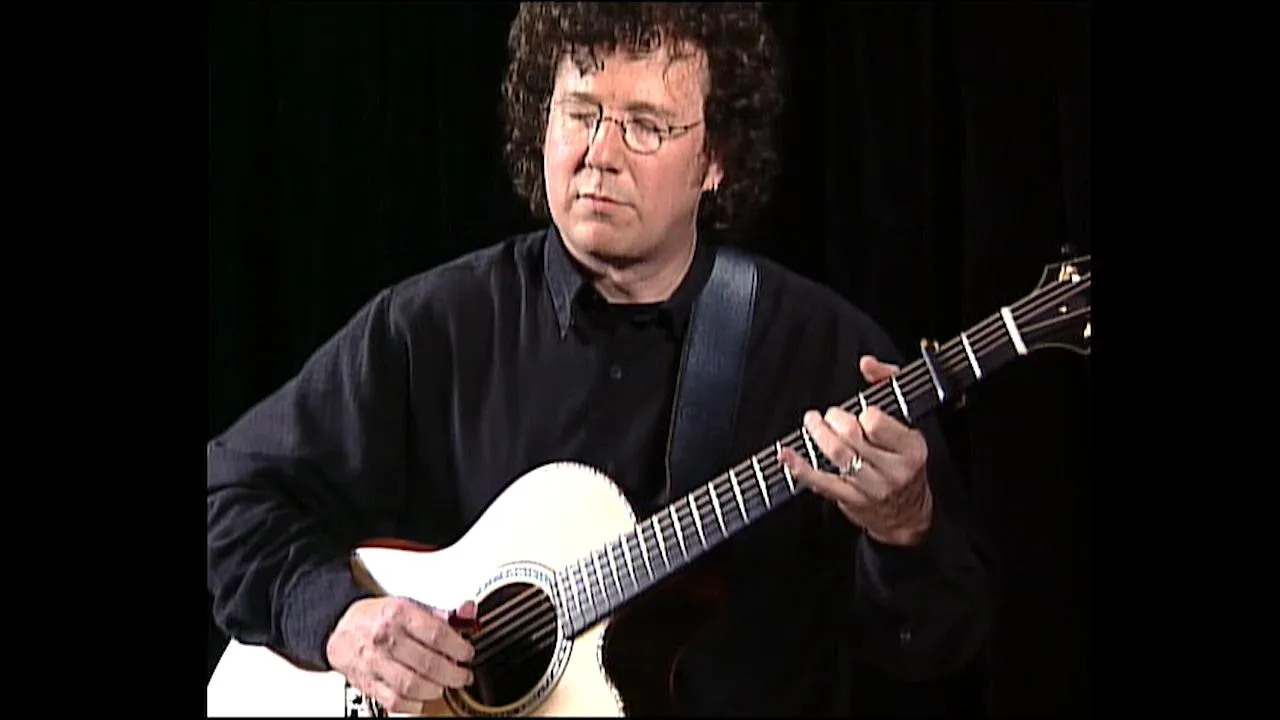
Al PettewayAl Petteway bringt dir sein keltisch angehauchtes Stück „Spindrift“ auf der Akustikgitarre in DADGAD-Stimmung bei und beginnt mit diesem einleitenden Lick.
Das steckt im Kurs
14 Lektionen (1h 25m) · 1 gratis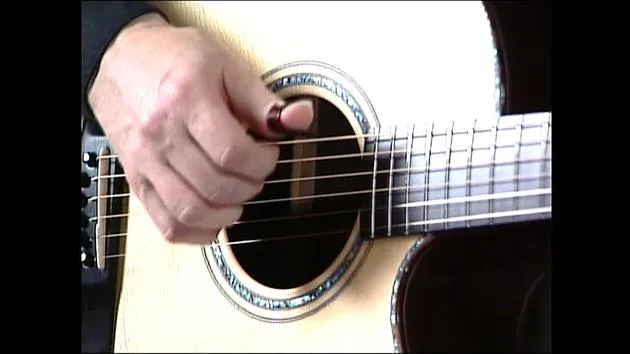
01. Spindrift (Aufführung)
Gratis-Lektion3:36
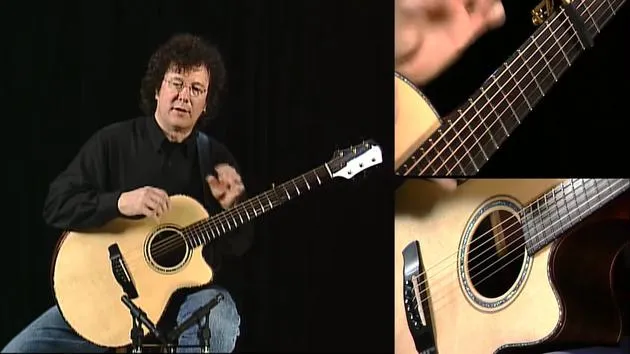
02. Spindrift (Lektion)
Du bist hier9:05
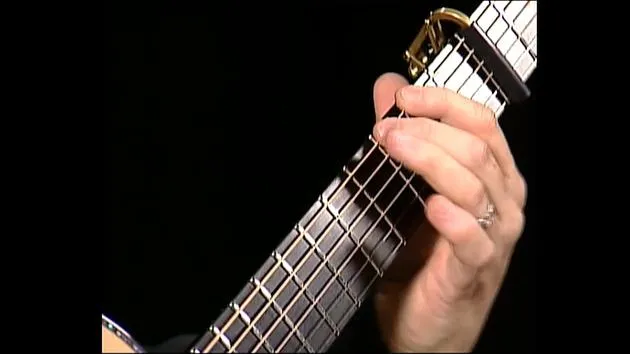
03. Eureka Hotel (Performance)
3:12
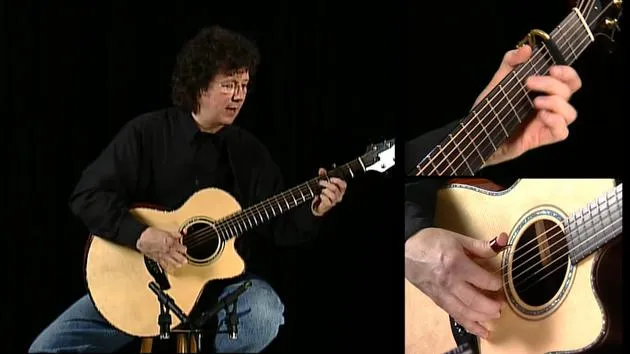
04. Eureka Hotel (Lektion)
9:47
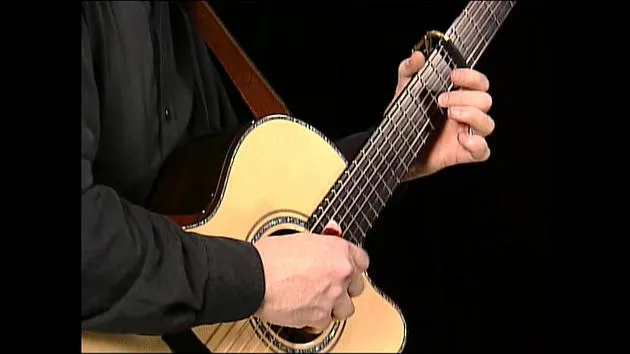
05. She Moved Through The Fair (Performance)
2:34
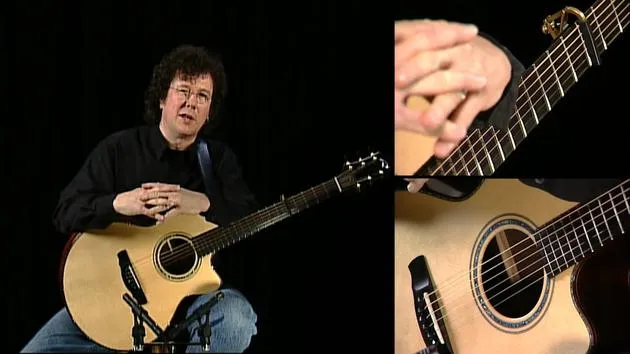
06. She Moved Through The Fair (Lektion)
9:05
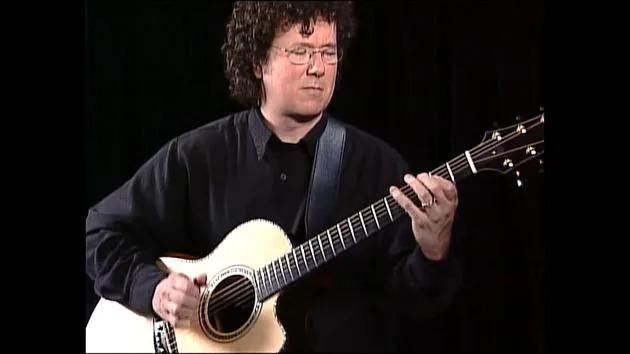
07. Meant To Be (Performance)
3:59
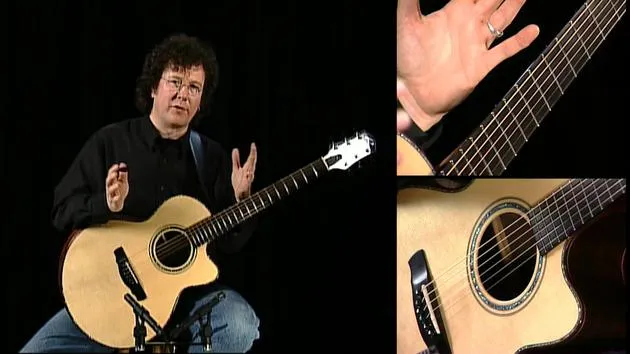
08. Meant To Be (Lektion)
10:25
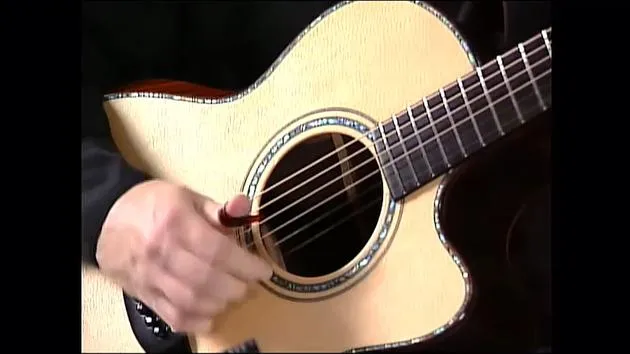
09. Smokey Mountain Morning (Vortrag)
4:53
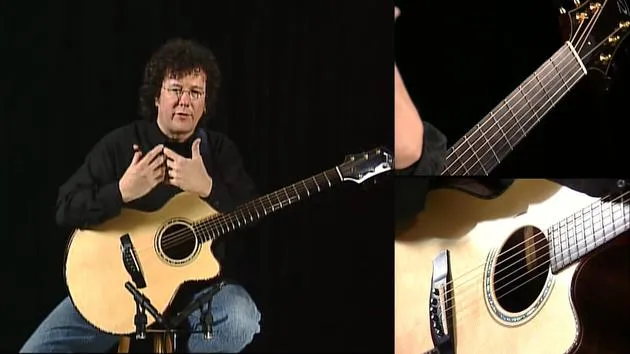
10. Smokey Mountain Morning (Lektion)
9:21
11. The West Wind (Performance)
3:34
12. The West Wind (Lektion)
9:48
13. BONUS: After Dark
3:34
14. BONUS: Requiem (Performance)
2:37
Transkript der Lektion
Lesson Overview: Exploring Dad Gad Tuning and the Tune "Spindrift"
Hi, I'm Al Pettaway, and I hope you enjoyed that performance. It's interesting to me that you can play all these different styles of music with one tuning. That's not standard tuning, and I'll be showing you a little bit about that.
Understanding Dad Gad Tuning
Dad Gad Tuning is my standard tuning. I'll start off by showing you a little bit about "Spindrift." This tune was inspired by the Celtic tradition, although it gets a little bit of that American flavor in it too.
Getting Started with "Spindrift"
Most people want to learn right off the bat, they want to learn that lick at the very beginning. It's actually way easier than it appears. Let's dive into that lick:
- Key: D Major
- The very beginning melody includes a roll across the strings to create a sweet sound.
- Followed by a pull-off and then another pull-off.
Note: If you've played pull-offs before, they're not that difficult. You just need to decide which direction you want to go:
- Some people push up, while others pull down.
- It depends on your playing style and comfort level.
Personally, I like to go down, but that's just my preference. You'll notice that I incorporate a lot of pull-offs and hammer-ons, which help to split the notes between my left hand and right hand.
Technique Breakdown
Here's that lick again:
- Visual Observation: People often comment that it looks like I'm not moving, and that's because I really don't move my left hand much.
- Movement:
- I stretch up to the same note, stretch down, and pull off again.
- I then play a little arpeggio: thumb, first, second, third, second, first, thumb.
Practice Suggestion:
Practice this technique while watching TV or just relaxing.
- Go up and down the fingers until they feel comfortable:
- Sequence: Thumb, first, second, third, second, first, thumb.
This can be handy for a lot of different tunes, and for "Spindrift," it's perfect.
Sweetness Over Attack
I'll do it slowly again: notice the roll I use to sweeten the sound. If I hit those notes straight on, it gives a different effect.
- This technique emphasizes sweetness over a hard attack, which is crucial in this style of music.
- The way you come off the strings with your nails and the rolls you play with your fingers will greatly affect the outcome.
Moving to the Next Section
Now, let's move on to the next part. It's simply a walking down of chords in Dad Gad tuning.
Chord Progression in Dad Gad
If you haven't played in Dad Gad before, the tuning is:
- D, A, D, G, A, D.
With a capo, I can play in the key of G, and you need to be aware of what key you're in when playing with others.
B Section Chord Progression
For the B section or the second half of the A, it goes:
- G → D (with F sharp) → E minor.
These three strings are exactly the same as standard tuning, while the other three are down a step. This gives you octaves to play and creates a wonderful freedom for the left hand.
American Influence and Travis Picking
The second half has more of an American feel, and it may sound like I'm doing Travis picking.
Key Technique:
To incorporate the melody, I have to leave out some notes.
- The goal is to maintain a flowing sound, similar to alternating fingers, but I need to ensure the melody is prominent.
- This can be thought of as a banjo roll.
I'll play that really slowly now. The trick is to keep a 16th note pattern going. If there's a gap, fill it with whatever finger is available, ensuring that:
- Melody: Always play the melody the loudest.
- Bass: Next loudest after the melody.
- Other notes: Played more softly in comparison.
This allows the melody to shine through the context of all the notes being played.
Reinforcing the Technique
To reinforce this, return to the first exercise:
- Practice Sequence: Thumb, first, second, third, second, first, thumb, and accent a different finger each time.
- For example, start with the thumb, then the first finger, second, and third.
This exercise can be done on any chord set and will help you learn to accentuate the melody.
Conclusion
That's "Spindrift"! You'll find that it's much easier than it sounds, and when you start playing any of this music in Dad Gad, it just falls right under your fingers. I think you'll enjoy it!
14 Lektionen
1 Std. 25 Min. strukturierte Videolektionen
Erweiterte Videofunktionen
Verlangsamen, Passagen loopen, mitlesen
Handy, Tablet & Desktop
Üben, wo du willst
100 % Zufriedenheitsgarantie
30 Tage Geld-zurück-Garantie
Lern deinen Guru kennen
Lern deinen Guru kennen
Al Petteway, ein mit einem Grammy Award ausgezeichneter Aufnahmekünstler und Interpret, hat nahezu jede Art von Populär-, Folk- und klassischer Musik gespielt. Obwohl sein Hauptinstrument stets die Gitarre war, hat er auch Laute, Kontrabass, Perkussion und Komposition studiert. Seine Kompositionen für Fingerstyle-Akustikgitarre sind stark von seiner Liebe zur keltischen Musik und seinen eigenen Wurzeln in Folk, Rock und Blues geprägt – genau das Terrain, das er in seinem MusicGurus-Kurs Celtic, Blues and Beyond erschließt.
In Celtic, Blues and Beyond teilt Al die offenen Stimmungen, Fingerstyle-Techniken und den melodischen Ansatz hinter seinem Sound und zeigt dir, wie du keltische Phrasierung mit dem Feel von Folk, Rock und Blues verschmelzen kannst, damit du deine eigene Stimme auf der Akustikgitarre findest.
Al wurde von der Washington Area Music Association mit fünfundvierzig "Wammies" ausgezeichnet, darunter die höchsten Ehrungen "Artist of the Year" und "Musician of the Year". Er erhielt zwei Maryland State Arts Council Individual Artist Awards für Musikkomposition und ist in der Residenz des Vizepräsidenten sowie im The White House aufgetreten. Sein Spiel ist auf mehr als sechzig Aufnahmen einiger der weltweit bekanntesten Folk- und Keltik-Musiker zu hören. 2005 wählten ihn die Leser des Acoustic Guitar Magazine zu einem der Top Fifty Acoustic Guitarists of all Time, und 2008 gewann er bei den Player's Choice Awards des Magazins die Silber- und Bronzemedaille. Seine CD "Caledon Wood" wurde in der Jubiläumsausgabe zum 20-jährigen Bestehen des Acoustic Guitar Magazine zu einem der "Essential Albums of the Past Twenty Years" gewählt, und seine 2012 erschienene Platte "It's Only the Blues" fand sich auf zwei der "Top Ten Essential Albums of 2012"-Listen der Redakteure des Acoustic Guitar Magazine. 2014 und 2015 veröffentlichte er zwei weitere Soloalben, "Mountain Guitar" und "Dream Guitars, Vol. II."
"Ein innovativer Instrumentalist, bekannt für seine offenen Stimmungen, bietet Petteway einen vollen, sanften Klang, der eine Verschmelzung von Alt und Neu vereint."
--The Boston Globe







