



Eureka Hotel (Lektion)

Mit
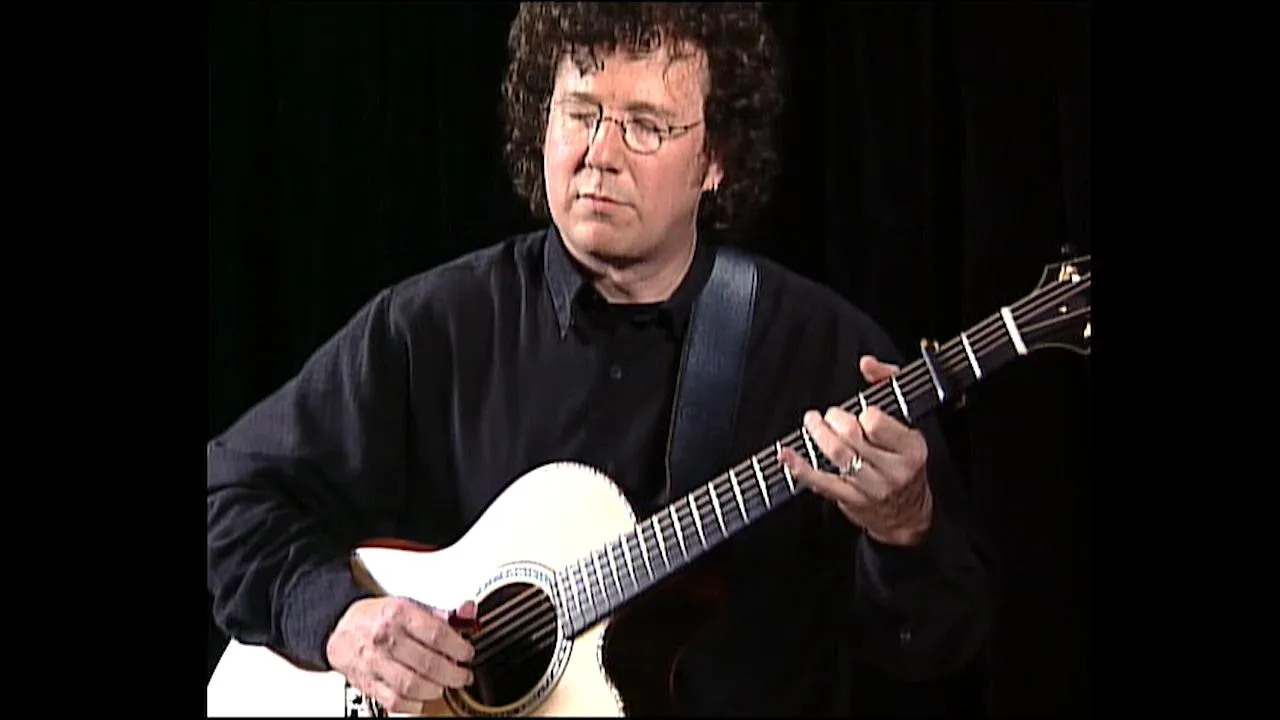
Al PettewayAl Petteway bringt dir 'Eureka Hotel' in DADGAD-Stimmung bei und spielt die Melodie in Oktaven für einen 12-saitigen Klang über einem gleichmäßigen Bass.
Das steckt im Kurs
14 Lektionen (1h 25m) · 1 gratis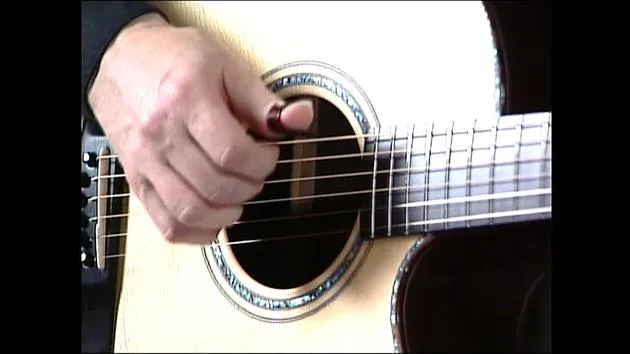
01. Spindrift (Aufführung)
Gratis-Lektion3:36
02. Spindrift (Lektion)
9:05
03. Eureka Hotel (Performance)
3:12
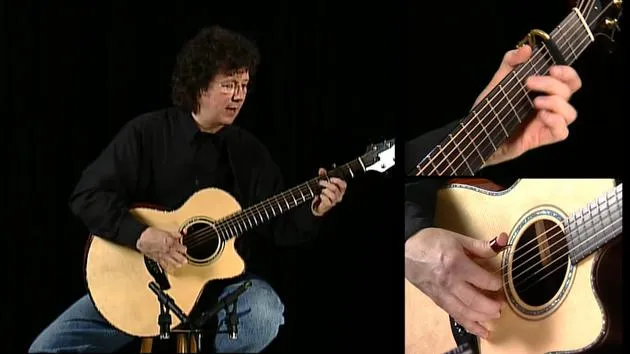
04. Eureka Hotel (Lektion)
Du bist hier9:47
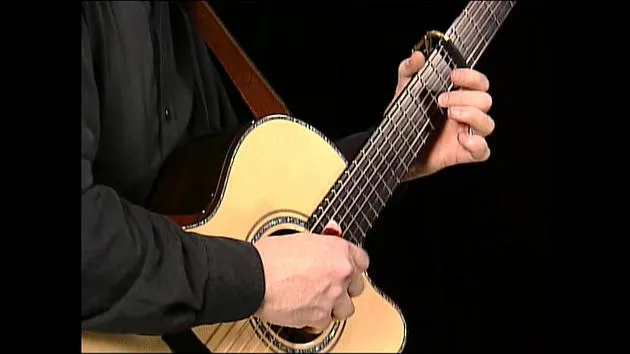
05. She Moved Through The Fair (Performance)
2:34
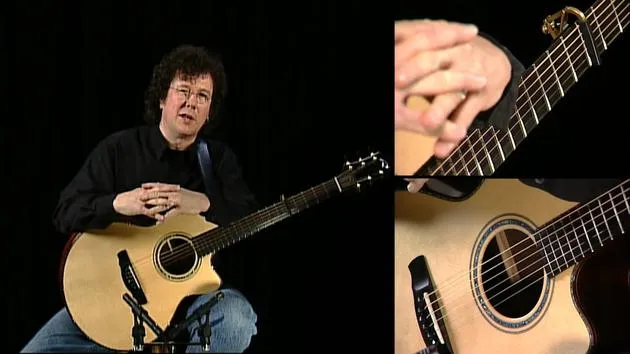
06. She Moved Through The Fair (Lektion)
9:05
07. Meant To Be (Performance)
3:59
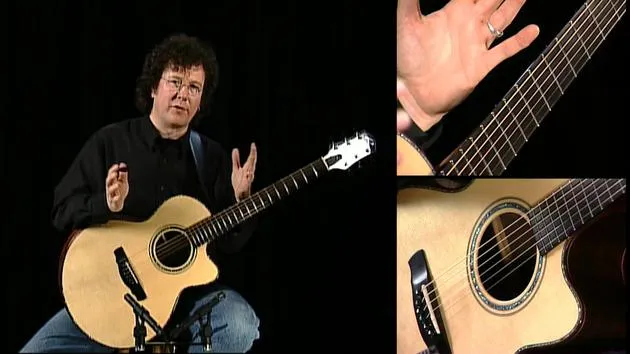
08. Meant To Be (Lektion)
10:25
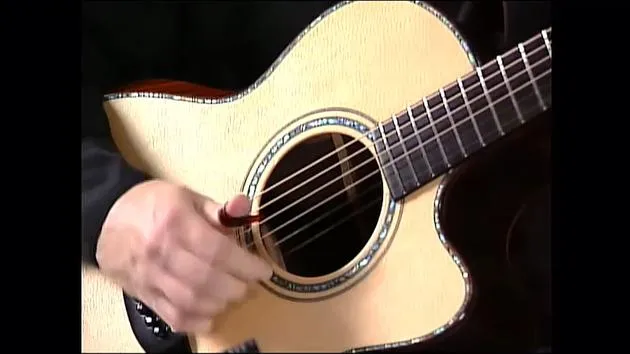
09. Smokey Mountain Morning (Vortrag)
4:53
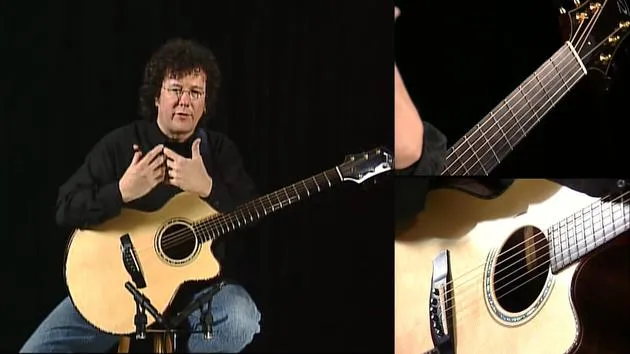
10. Smokey Mountain Morning (Lektion)
9:21
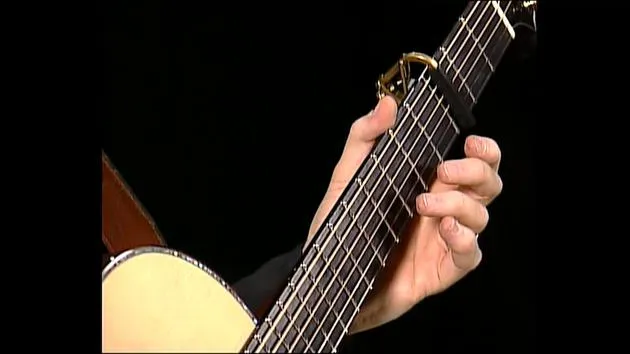
11. The West Wind (Performance)
3:34
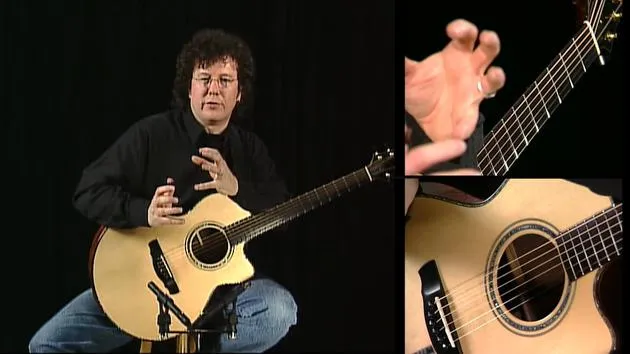
12. The West Wind (Lektion)
9:48
13. BONUS: After Dark
3:34
14. BONUS: Requiem (Performance)
2:37
Transkript der Lektion
Discovering Dad Gad Tuning
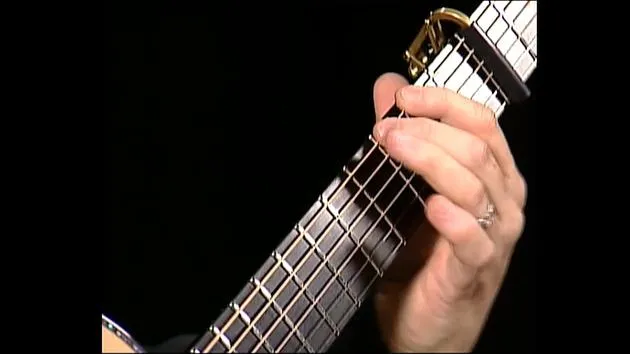
One of the most fun things that I've discovered lately while playing in Dad Gad tuning is that you can actually play some of the older style tunes. You can almost imitate a 12-string guitar because you have all these parallel strings.
The Parallel Strings Effect
- Three strings in octaves: You can play an entire melody on a double pair of strings and get almost a 12-string effect.
- Melodies and Bass Lines: By combining melodies with a standard, repeating bass line, you create a unique sound.
Starting Out
Originally, I was just sort of playing with the idea of playing a melody in octaves and then the bass. This melody is simple, and what I have to do is really concentrate on finding those octaves comfortably.
Key Points
- When playing the fifth and the second string, there are two strings between.
- When playing the fourth and the first string, there are also two strings between.
- However, when you get down to the fourth and the sixth, there's only one string in between.
So, you have to make that subtle adjustment with your right hand, allowing you to play just about any melody, even in those tunes.
Practical Application
Just like I showed you in the "West Wind," you can suddenly pull in an octave and it gives a nice flavor.
Example Chords
The other thing to keep in mind is that I'm using chords that are pretty much standard tuning chords. But by switching the fingering slightly, I can get:
- Seventh Chord: Here's a seventh.
- Straight Major: All I have to do is add the flatted seventh.
- Minor Seventh: To create this, I just flatten that major third to A minor.
The feeling of playing these chords is not much different from playing the four-note jazz chords; you just have to rethink the structure a little bit.
A Practical Example
For example, if you play a C chord in Dad Gad, you get a C9.
- If you were to play a blues progression:
- Play a seventh for your I chord
- Transition to the IV chord with a standard C chord
The Flavor of Eureka Hotel
"Eureka Hotel" has that same old, turn-of-the-century flavor. The key takeaway is to maintain a steady rhythm throughout.
- Octave Melody: Incorporate an octave melody, and sometimes I'll use the back of my nail for more effect.
- Transitioning Back: You go back to this seventh chord with the melody in octaves.
Blues Running Down
This blues run is so easy in Dad Gad! I love how it allows for a more laid-back playing style, where you only need to focus on one or two fingers at a time.
Putting It All Together
This tune repeats pretty much the same elements. The bridge transitions to the IV chord major, then goes to A minor, and back to the I. I dampen the strings here to give it an old-time flavor.
Unique Techniques
- Stretching Up: While playing, stretch your fingers up but don't let them come down.
- Funky Sound: By getting under the strings and pulling them away from the fret, you can get a funky sound. I'm not using my nails at all; just grabbing with the flesh of my fingers.
Ending Notes
After I do a certain sequence, I perform a hammer-on and pull-off combination and slide up to the matching note.
Flexibility in Music
Every time I play a tune, it changes slightly. Although we provide you with music and tab, remember that tunes are flexible.
- Adapt them to fit what you do particularly well.
- You don't have to play exactly like someone else; make it as easy on yourself as possible.
Final Thoughts
As John Hartford once said, finding your personal style is key. It doesn't have to be fast or fancy; it simply needs to resonate with your heart and soul when you play.
- Once you figure out what works for you, that can be your career in music.
- Stay true to your heart, and everything will fall into place.
14 Lektionen
1 Std. 25 Min. strukturierte Videolektionen
Erweiterte Videofunktionen
Verlangsamen, Passagen loopen, mitlesen
Handy, Tablet & Desktop
Üben, wo du willst
100 % Zufriedenheitsgarantie
30 Tage Geld-zurück-Garantie
Lern deinen Guru kennen
Lern deinen Guru kennen
Al Petteway, ein mit einem Grammy Award ausgezeichneter Aufnahmekünstler und Interpret, hat nahezu jede Art von Populär-, Folk- und klassischer Musik gespielt. Obwohl sein Hauptinstrument stets die Gitarre war, hat er auch Laute, Kontrabass, Perkussion und Komposition studiert. Seine Kompositionen für Fingerstyle-Akustikgitarre sind stark von seiner Liebe zur keltischen Musik und seinen eigenen Wurzeln in Folk, Rock und Blues geprägt – genau das Terrain, das er in seinem MusicGurus-Kurs Celtic, Blues and Beyond erschließt.
In Celtic, Blues and Beyond teilt Al die offenen Stimmungen, Fingerstyle-Techniken und den melodischen Ansatz hinter seinem Sound und zeigt dir, wie du keltische Phrasierung mit dem Feel von Folk, Rock und Blues verschmelzen kannst, damit du deine eigene Stimme auf der Akustikgitarre findest.
Al wurde von der Washington Area Music Association mit fünfundvierzig "Wammies" ausgezeichnet, darunter die höchsten Ehrungen "Artist of the Year" und "Musician of the Year". Er erhielt zwei Maryland State Arts Council Individual Artist Awards für Musikkomposition und ist in der Residenz des Vizepräsidenten sowie im The White House aufgetreten. Sein Spiel ist auf mehr als sechzig Aufnahmen einiger der weltweit bekanntesten Folk- und Keltik-Musiker zu hören. 2005 wählten ihn die Leser des Acoustic Guitar Magazine zu einem der Top Fifty Acoustic Guitarists of all Time, und 2008 gewann er bei den Player's Choice Awards des Magazins die Silber- und Bronzemedaille. Seine CD "Caledon Wood" wurde in der Jubiläumsausgabe zum 20-jährigen Bestehen des Acoustic Guitar Magazine zu einem der "Essential Albums of the Past Twenty Years" gewählt, und seine 2012 erschienene Platte "It's Only the Blues" fand sich auf zwei der "Top Ten Essential Albums of 2012"-Listen der Redakteure des Acoustic Guitar Magazine. 2014 und 2015 veröffentlichte er zwei weitere Soloalben, "Mountain Guitar" und "Dream Guitars, Vol. II."
"Ein innovativer Instrumentalist, bekannt für seine offenen Stimmungen, bietet Petteway einen vollen, sanften Klang, der eine Verschmelzung von Alt und Neu vereint."
--The Boston Globe







