



She Moved Through The Fair (Lektion)
Mit
Al Petteway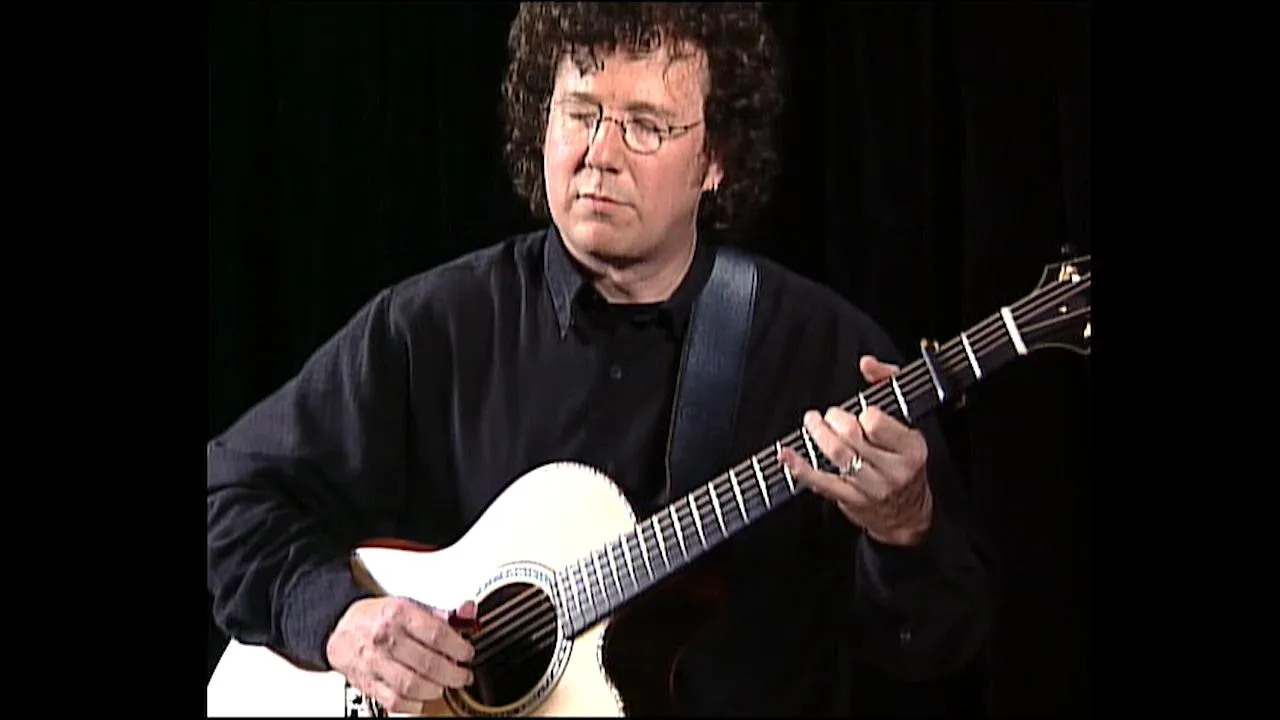
Das steckt im Kurs
14 Lektionen (1h 25m) · 1 gratis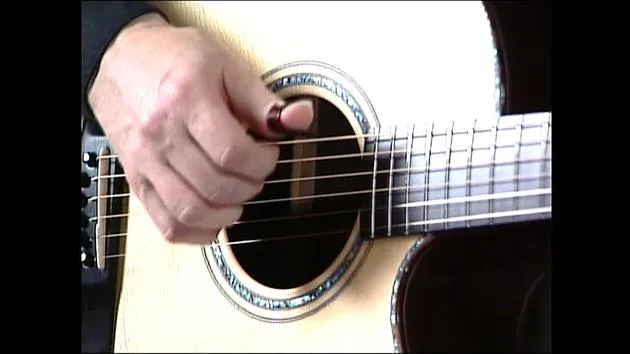
01. Spindrift (Aufführung)
Gratis-Lektion3:36
02. Spindrift (Lektion)
9:05
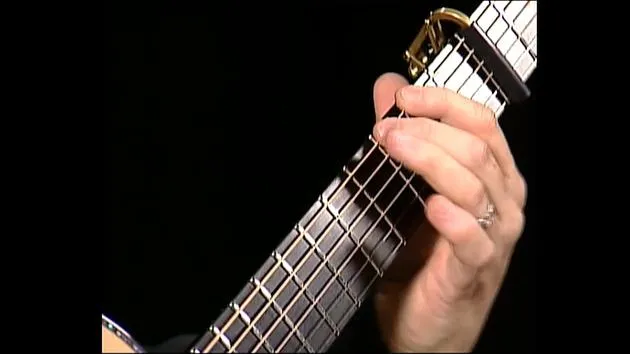
03. Eureka Hotel (Performance)
3:12
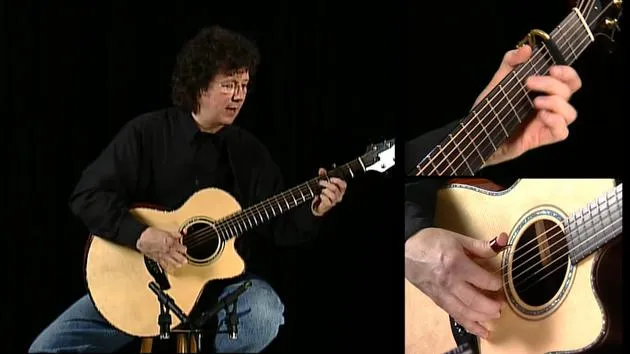
04. Eureka Hotel (Lektion)
9:47
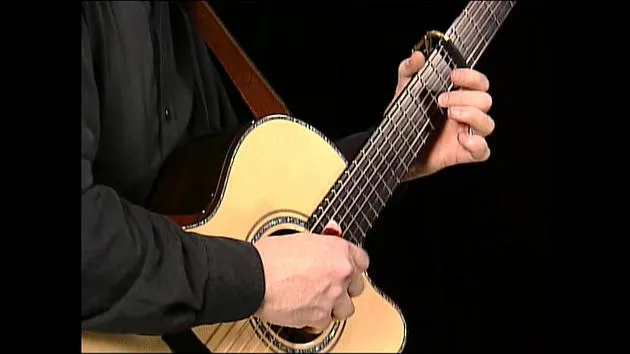
05. She Moved Through The Fair (Performance)
2:34
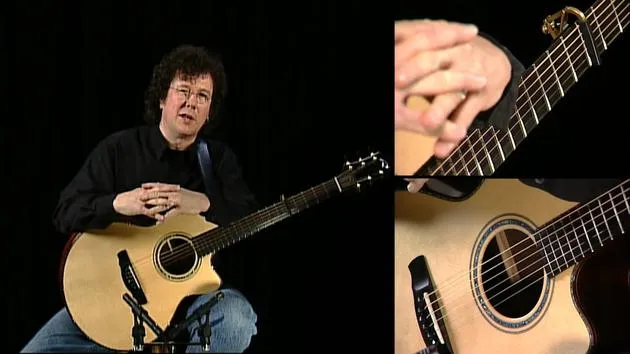
06. She Moved Through The Fair (Lektion)
Du bist hier9:05
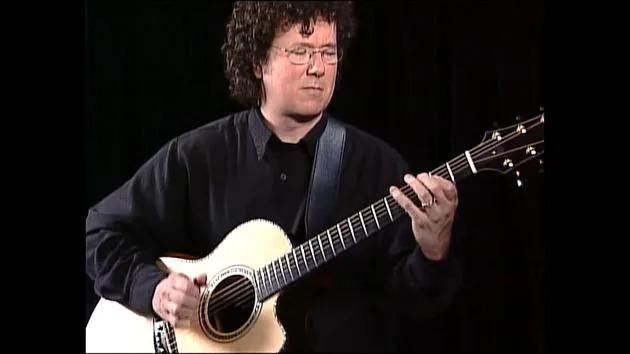
07. Meant To Be (Performance)
3:59
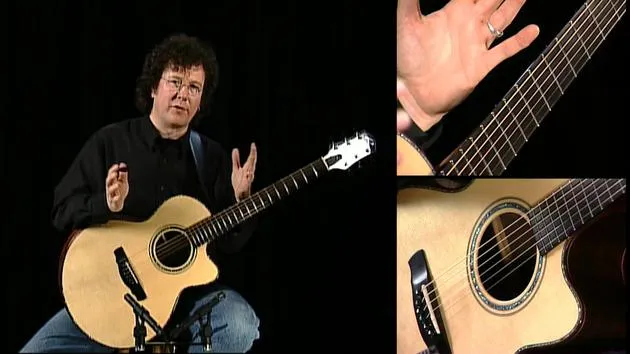
08. Meant To Be (Lektion)
10:25
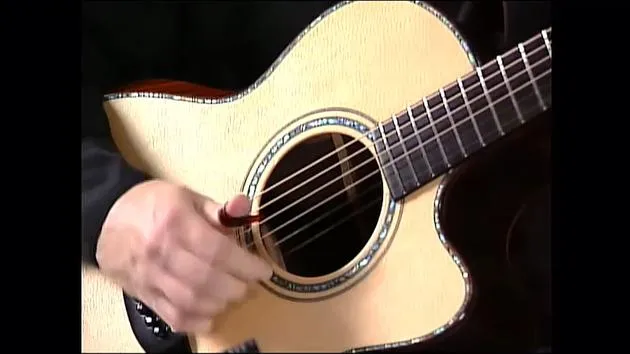
09. Smokey Mountain Morning (Vortrag)
4:53
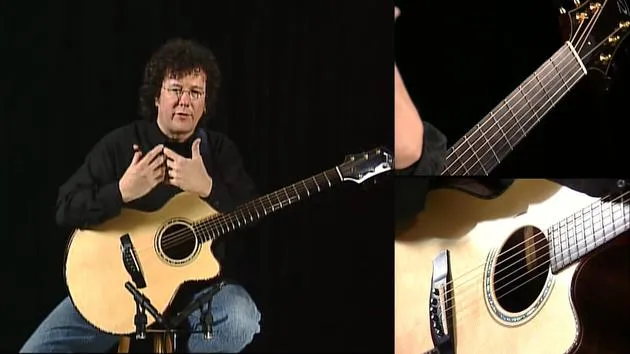
10. Smokey Mountain Morning (Lektion)
9:21
11. The West Wind (Performance)
3:34
12. The West Wind (Lektion)
9:48
13. BONUS: After Dark
3:34
14. BONUS: Requiem (Performance)
2:37
Transkript der Lektion
Understanding Celtic Music: "She Moved through the Fair"
One of the things I love about playing Celtic music, or traditional music of just about any kind, is the modes that they use for the different melodies.
Exploring the Mode
"She Moved through the Fair" is one of those tunes that sounds like it's in a minor key, but it's actually in a major mode. Here's what I mean:
-
The standard D scale would sound something like this:
D scale example
-
The only difference in this tune is that there's a flatted seventh degree of the scale, which puts it into a mode called the Mixolydian mode.
You hear this mode in blues, Celtic music, old-timey music, and across traditional music worldwide. The one degree difference gives the tune this sort of haunting quality.
Creating the Arrangement
When I start my arrangement of "She Moved through the Fair", I immediately hit that flatted seventh right at the beginning to establish the mode.
- Even though the melody is something simple, starting with the flatted seventh becomes a significant part of the tune.
When you reach the 5 chord, it becomes minor.
Making It Unique
One important consideration when arranging Celtic or traditional tunes is to make each iteration unique.
-
If you listen to a lot of traditional music, you'll notice that the melody often doesn't change. Sometimes they'll play the same melody for hours.
-
This may be fine in a group setting where everyone is learning, but as a solo guitarist, you need to find ways to make the melody engaging.
To achieve this, you could:
- Use more notes and harmonies.
- Change the melody by adding or removing notes.
This approach will make the listener take notice and keep the music from becoming monotonous.
First Steps in Performance
For a tune like "She Moved through the Fair," I'll always start fairly simply.
- You'll notice I'm using the roll I talked about in another lesson.
I could even play it without any extra notes the first time through.
For the second iteration, I add a little Scottish flavor:
- This also mirrors the concept of the Scottish snap, a very quick emphasis that adds character to the melody.
You'll hear it in this tune, likely mimicking how pipes would be played, which might have that kind of flavor.
Adding Drones and Authenticity
When playing these tunes, I think about how to make it sound more authentic.
One effective technique is to throw in a drone behind the melody.
- By adding a note above the main melody, you create a sort of drone effect that may evoke a very Celtic sound.
Experimenting with Modes
In this tune, I change the mode for one of the verses.
- Instead of a major third, I use a minor third for a brief moment, creating a straight minor key feel.
You'll notice that it doesn't sound out of character, even though we've been in the major mode the whole time.
- When I hit that minor, it fits perfectly.
This little change can surprise the listener, as it plays with the haunting minor flavor established earlier.
Incorporating Techniques
I include a couple of pull-offs and hammer-ons that are quite fun, such as:
- Using a triplet with my thumb and two fingers.
At the beginning of a phrase or in the middle, you can throw in this technique:
- Thumb first, repeating for emphasis.
If you wish to create that effect across two strings, you can use your thumb, first finger, and second finger on two identical notes on different strings.
Imitating Instruments
As I perform, I often aim to imitate the sounds of pipes and fiddles.
- Remember, the guitar was added to Irish and Celtic music relatively recently, in the 1960s, so anything you play on the guitar can bring a fresh perspective.
Singing as a Foundation
When Celtic musicians teach a tune, they often start by singing it.
- This approach gives you a sense of expression and emulation of the melody.
When playing guitar, consider singing the tune first, as this can be incredibly helpful for understanding its emotional expression.
Embracing Freedom in Performance
These rhythms are not just mechanical.
- I incorporate pauses to breathe life into the performance.
When you notate this in tablature or standard music notation, it might look straightforward. However, embrace the freedom to express the music vocally alongside the guitar.
By keeping these principles in mind, you'll enhance your Celtic music performance, making it more engaging for both you and your audience.
14 Lektionen
1 Std. 25 Min. strukturierte Videolektionen
Erweiterte Videofunktionen
Verlangsamen, Passagen loopen, mitlesen
Handy, Tablet & Desktop
Üben, wo du willst
100 % Zufriedenheitsgarantie
30 Tage Geld-zurück-Garantie
Lern deinen Guru kennen
Lern deinen Guru kennen
Al Petteway, ein mit einem Grammy Award ausgezeichneter Aufnahmekünstler und Interpret, hat nahezu jede Art von Populär-, Folk- und klassischer Musik gespielt. Obwohl sein Hauptinstrument stets die Gitarre war, hat er auch Laute, Kontrabass, Perkussion und Komposition studiert. Seine Kompositionen für Fingerstyle-Akustikgitarre sind stark von seiner Liebe zur keltischen Musik und seinen eigenen Wurzeln in Folk, Rock und Blues geprägt – genau das Terrain, das er in seinem MusicGurus-Kurs Celtic, Blues and Beyond erschließt.
In Celtic, Blues and Beyond teilt Al die offenen Stimmungen, Fingerstyle-Techniken und den melodischen Ansatz hinter seinem Sound und zeigt dir, wie du keltische Phrasierung mit dem Feel von Folk, Rock und Blues verschmelzen kannst, damit du deine eigene Stimme auf der Akustikgitarre findest.
Al wurde von der Washington Area Music Association mit fünfundvierzig "Wammies" ausgezeichnet, darunter die höchsten Ehrungen "Artist of the Year" und "Musician of the Year". Er erhielt zwei Maryland State Arts Council Individual Artist Awards für Musikkomposition und ist in der Residenz des Vizepräsidenten sowie im The White House aufgetreten. Sein Spiel ist auf mehr als sechzig Aufnahmen einiger der weltweit bekanntesten Folk- und Keltik-Musiker zu hören. 2005 wählten ihn die Leser des Acoustic Guitar Magazine zu einem der Top Fifty Acoustic Guitarists of all Time, und 2008 gewann er bei den Player's Choice Awards des Magazins die Silber- und Bronzemedaille. Seine CD "Caledon Wood" wurde in der Jubiläumsausgabe zum 20-jährigen Bestehen des Acoustic Guitar Magazine zu einem der "Essential Albums of the Past Twenty Years" gewählt, und seine 2012 erschienene Platte "It's Only the Blues" fand sich auf zwei der "Top Ten Essential Albums of 2012"-Listen der Redakteure des Acoustic Guitar Magazine. 2014 und 2015 veröffentlichte er zwei weitere Soloalben, "Mountain Guitar" und "Dream Guitars, Vol. II."
"Ein innovativer Instrumentalist, bekannt für seine offenen Stimmungen, bietet Petteway einen vollen, sanften Klang, der eine Verschmelzung von Alt und Neu vereint."
--The Boston Globe







