



7. Natürliches Moll oder äolischer Modus

Lesson time: (4min 48sec)
Peter Gane und Chris Houlding nehmen sich den natürlichen Moll- (äolischen) Modus vor, mit gegenläufigen Skalen- und Arpeggio-Übungen, um ihn flüssig auf der Posaune zu spielen.
Course preview
This lesson is part of the course Zirkeltraining für Posaune
Watch a preview of the full course below.
Lesson transcript:
Circuit Training: Unit 7 - Natural Minor or Aeolian Mode
Hello and welcome to circuit training!
Understanding the Natural Minor or Aeolian Mode
The easiest way to find the natural minor or Aeolian mode is by playing all the white notes on the piano from A to A.
Demonstration
Chris, could you demonstrate the A mode by playing "God Rest Ye Merry Gentlemen"?
Note: Remember, the difference between the various modes is the order in which the tones and semitones are placed, not on which notes they start or finish.
Patterns in Time
Again, patterns like these can be put into five time, which add musical flavor and interest.
Chris, can you now play the natural swing study?
This study cleverly combines:
- Harmonic and melodic minors
- Chromatic syncopated rhythms
- Different articulations in an irregular 5/4 meter
Challenges in Coordination
Playing the harmonic and melodic scales crabwise is not only challenging but also great for:
- Coordination
- Intonation
Using the same format as the major crabwise scales in Unit 6, try working on the harmonic and melodic minor crabwise in your own time. Have fun!
Combining Interaction with Unfamiliar Keys
Now, let us combine interaction between more unfamiliar keys with a variety of changing compound rhythms in Minor Spider Crab on the Move.
Review of Material Covered
In Unit 7, covering the natural minor or Aeolian mode, we have looked at:
- Harmonic and melodic minor crabwise scales
- Arpeggios to consolidate these concepts
Final Reminder
Play the complete unit once again. And don't forget that all we have talked about can be found in Circuit Training, Volume 2.
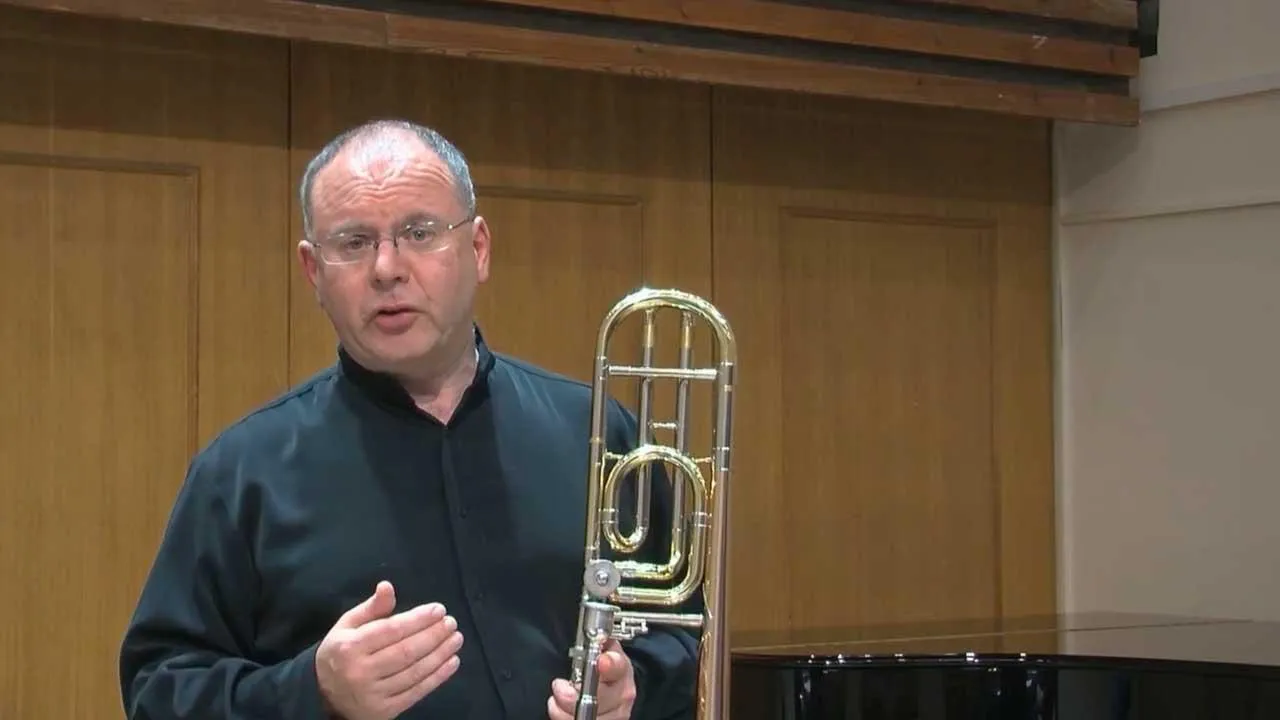
About the instructor
Peter Gane ist einer der führenden Blechbläser-Spezialisten und Posaunisten Großbritanniens. Mit 19 Jahren wurde er Mitglied des London Symphony Orchestra. 1971 wurde er Professor an der Guildhall School und ist es bis heute. 1981 wurde er zum Fellow der Guildhall School gewählt und war von 1988 bis 2008 Leiter der Abteilung Holz, Blech und Schlagwerk. Er ist künstlerischer Berater des Combret Music Festival in Aveyron, Frankreich. Als Gründer und ehemaliger Präsident der British Trombone Association ist Peter ein renommierter Pädagoge. Er ist seit Langem mit dem National Youth Orchestra of Great Britain und dem European Union Youth Orchestra verbunden, wo er seit 1977 bzw. 1984 Professor für Posaune ist. Als Lehrer, Blechbläser-Spezialist und Dirigent hat er Meisterkurse und Workshops an zahlreichen europäischen Konservatorien und mit professionellen Ensembles in Deutschland, Frankreich, Dänemark, Schweden, Norwegen, Spanien, den Niederlanden, Österreich, Italien und den USA gegeben. 1996 wurde sein internationaler Ruf durch die Verleihung des Neill Humfeld Award für herausragenden Posaunenunterricht durch die International Trombone Association bestätigt. Zu Peters Veröffentlichungen zählen: The Good Brass Guide, Trombone Books 1 & 2, erschienen bei Trinity Guildhall; Circuit Training for Trombone, volumes 1 and 2, Slide Systems, Five Games, Guildhall 125, World in Motion, Mansion House Fanfare, alle erschienen bei Warwick Music; How Trombonists Do It, erschienen bei Brass Wind; und Brass Medals, erschienen bei der Associated Board. Genau diesen Circuit-Training-Ansatz teilt Peter hier mit dir: gezielte, wiederholbare Übungen, die die Zugpräzision, Atemkontrolle, Flexibilität und den Ton aufbauen, die du brauchst, um die Posaune wirklich zu beherrschen - ganz gleich, auf welchem Niveau du bist. read more