



6. Dur-Tonleiter oder ionischer Modus

Mit
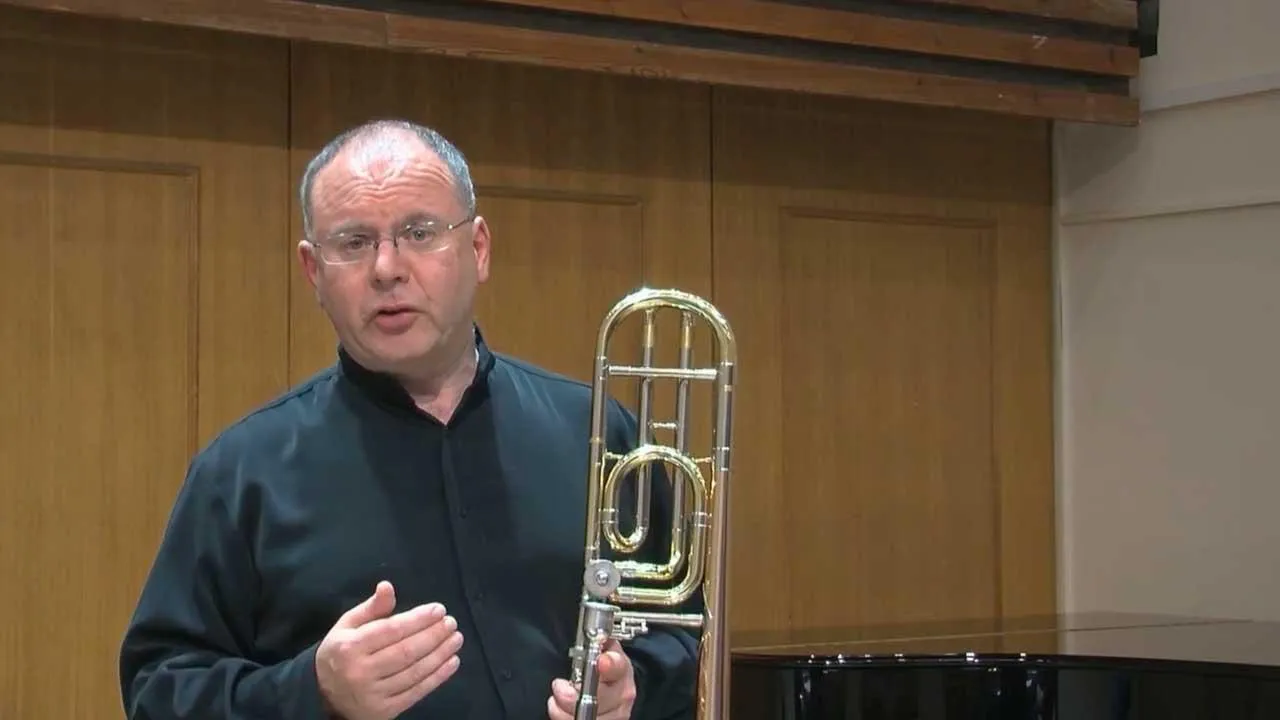
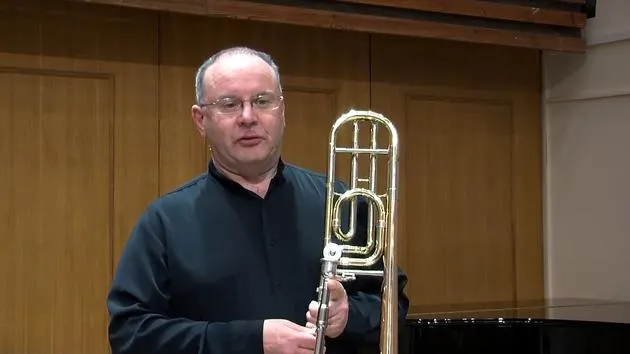
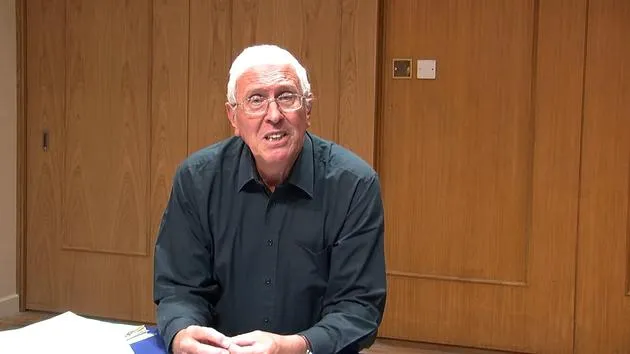
Peter GanePeter und Chris betrachten die Dur-Tonleiter und erläutern die wesentlichen fortgeschrittenen Tonleiter- und Arpeggio-Übungen, die sie und ihre Schüler verwenden.
Das steckt im Kurs
10 Lektionen (1h 33m) · 1 gratis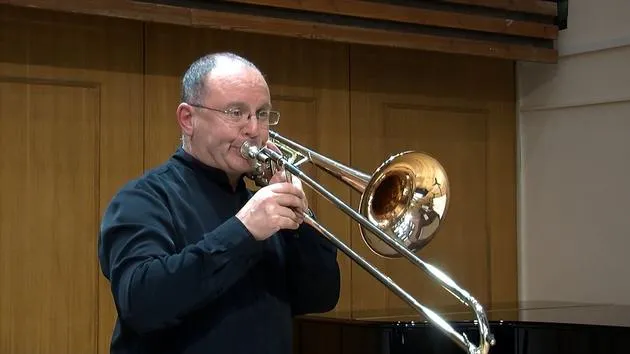
Transkript der Lektion
Circuit Training: Unit 6 - Major Scale or Ionian Mode
Hello and welcome to circuit training!
Introduction
Chris, I think it's about time that we looked at some scales. Let's start by exploring the Ionian mode (or major scale) alongside some advanced scale and arpeggio patterns.
Learning Techniques
I have found the easiest and fastest way to learn some of these patterns is by playing them in a crabwise formation.
- Aural Memory & Musical Phrases
Developing your aural memory and instrumental skills by making up your own short musical phrases and then playing them through all the keys is an excellent skill to acquire.
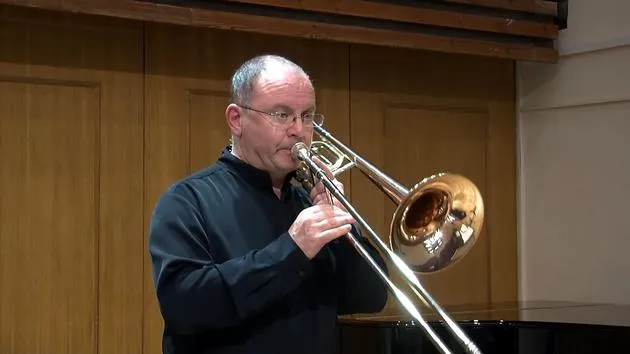
Chris, could you play some different note patterns to illustrate? You can then go on to take each pattern and try them in different keys. And don't stop there. You can go on and make up your own patterns just like the jazz players do.
Thank you, Chris.
Spider Scales
Spider scales are, for me, the quickest and most efficient way of playing through all the patterns.
- Keep It Fresh
Keep yourself mentally and musically fresh by changing the rhythms and articulations. Chris, could you illustrate one by playing, say, sevens?
Good Practice
When playing these advanced patterns, it's a good idea to keep balanced and focused.
- Instrument Positioning
- Keep the instrument still and firm in the left hand to avoid unwanted stress on the embouchure.
- Keep the instrument still when taking a breath, maintaining the top lip connected to the mouthpiece and breathing through the corners to enhance the melodic line.
Example: Crabwise Arpeggio Study
I'm now going to play the crabwise arpeggio study on page 30.
- Rhythm Variation
Fives are a great rhythm and get you away from the predictable four-four up-and-down formula. They're great fun!- It's interesting to note that this rhythm is a palindromic rhythm, i.e., like the name "Hannah," it's the same forwards and backwards.
By the way, Fives for H on Bones is published by Warwick.
Conclusion
In Unit 6, Major Scale or Ionian Mode, we have covered a lot of material.
- Key Topics
- Major crabwise scales
- Aural memory
- Major crabwise arpeggios
- Sevens and fives
To consolidate, play the complete unit once again. And don't forget that all we've discussed can be found in Circuit Training volume.
10 Lektionen
1 Std. 33 Min. strukturierte Videolektionen
Erweiterte Videofunktionen
Verlangsamen, Passagen loopen, mitlesen
Handy, Tablet & Desktop
Üben, wo du willst
100 % Zufriedenheitsgarantie
30 Tage Geld-zurück-Garantie
Lern deinen Guru kennen
Lern deinen Guru kennen
Peter Gane ist einer der führenden Blechbläser-Spezialisten und Posaunisten Großbritanniens. Mit 19 Jahren wurde er Mitglied des London Symphony Orchestra. 1971 wurde er Professor an der Guildhall School und ist es bis heute. 1981 wurde er zum Fellow der Guildhall School gewählt und war von 1988 bis 2008 Leiter der Abteilung Holz, Blech und Schlagwerk. Er ist künstlerischer Berater des Combret Music Festival in Aveyron, Frankreich.
Als Gründer und ehemaliger Präsident der British Trombone Association ist Peter ein renommierter Pädagoge. Er ist seit Langem mit dem National Youth Orchestra of Great Britain und dem European Union Youth Orchestra verbunden, wo er seit 1977 bzw. 1984 Professor für Posaune ist.
Als Lehrer, Blechbläser-Spezialist und Dirigent hat er Meisterkurse und Workshops an zahlreichen europäischen Konservatorien und mit professionellen Ensembles in Deutschland, Frankreich, Dänemark, Schweden, Norwegen, Spanien, den Niederlanden, Österreich, Italien und den USA gegeben. 1996 wurde sein internationaler Ruf durch die Verleihung des Neill Humfeld Award für herausragenden Posaunenunterricht durch die International Trombone Association bestätigt.
Zu Peters Veröffentlichungen zählen: The Good Brass Guide, Trombone Books 1 & 2, erschienen bei Trinity Guildhall; Circuit Training for Trombone, volumes 1 and 2, Slide Systems, Five Games, Guildhall 125, World in Motion, Mansion House Fanfare, alle erschienen bei Warwick Music; How Trombonists Do It, erschienen bei Brass Wind; und Brass Medals, erschienen bei der Associated Board.
Genau diesen Circuit-Training-Ansatz teilt Peter hier mit dir: gezielte, wiederholbare Übungen, die die Zugpräzision, Atemkontrolle, Flexibilität und den Ton aufbauen, die du brauchst, um die Posaune wirklich zu beherrschen - ganz gleich, auf welchem Niveau du bist.







