



András Schiffs Analyse von Nr. 4 Moderato
Das steckt im Kurs
4 Lektionen (0h 57m) · 1 gratis
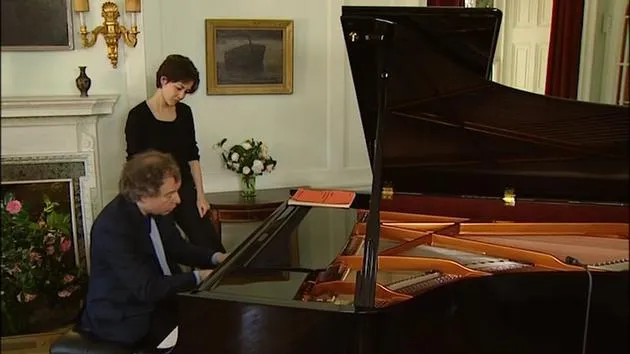
Transkript der Lektion
Music Lesson
Introduction
And the next one, please. It's the same movement, but it's a different expression. This is not cozy; this is very tragic.
Expression and Emotion
- Please, you played it also because if you think of Bach, you know. But it's something else.
- This is mysterious. It shouldn't be so clear because you have harmonies.
- When you play it like this, you hear the "La Cremosa" of Mozart's Requiem.
Playing Techniques
- Again, the Neapolitan sixth. Please, it's too many fingers.
- Play me a choral.
- Yeah, very good.
- Now play it as it's written.
Replaying the Piece
- Okay, now I play again.
- The left hand again: this is too staccato; make this one a little longer.
- Very much better.
Character of the Piece
Now, just think of it:
- The tone fall, the character of the piece, and what we had.
- The first one, you see sunlight, sunshine. This is very dark, not just because it's in minor.
- And then it gets desperate. This is the most tragic piece of the Moma Musical.
Tempo and Rhythm
Okay, let's go from when this was jumping.
- Do more of that duck till "yum yum" phrase.
- Tempo, tempo, tempo. Very strict, but I would not slow down because you spoiled the surprise.
- Yum pom pimp. Again, the silence. Silence is the most beautiful thing in music.
Establishing a Rhythm
- But why a new tempo? I think the same tempo.
- Now get this: the movement of the trio section, the middle part, has a little accent on the syncopation.
- It's misleading because the listener hears: 1, 2, 3, 4; 1, 2, 3, 4; 1.
- But Schubert says 1, 2, 3 for 1, 2, 3; for 1, 4.
- We must establish this rhythmic pattern. After we can talk about details.
Playing Details
- A little more accent on the syncope: 1, 2, 3, 4; 1, 2, 3, four; 1, 2, 3, four.
- Okay, and now play legato.
Imagining the Scene
What's legato?
- Now try to think that the C sharp minor section is less Schoenam?llerin and more winterize.
- We are out in the cold, but we would like to be in a warm room.
Transition in Playing
- And this is the warm room.
- In your dream, you sit too long on the middle note. That's very good.
- There is a little bump that I don't need, you know, because it has to have a wonderful lilt swing.
Left Hand Technique
This is also your left hand is too heavy there. Be careful.
- So long. Too long.
Continuing with the Piece
Let's go on now. Very good.
- Now this is a question mark and answer.
- Don't do that; it's not a clever finger.
- Can you reach that? Yes, of course. Very good.
Theme of Wandering
It's one of those songs of wandering, you know.
- He's an unhappy wanderer.
- After coming back from the warm room, which was only in his dream, we are back on the road in ice.
- Sing. No, silence. This is so poetic.
Concluding Thoughts
And again, he thinks of the warmth, but only for two bars. Then it's interrupted, and then there is this epilogue.
- But there is no hope.
Play this again.
- But yes, it's beautiful.
- This is again: you have such a drama, so much happening in so little time.
- You have to put all the emotions and all the feelings within that time frame.
But it was very good.
Thank You
Now, thank you very much.
4 Lektionen
0 Std. 57 Min. strukturierte Videolektionen
Erweiterte Videofunktionen
Verlangsamen, Passagen loopen, mitlesen
Handy, Tablet & Desktop
Üben, wo du willst
100 % Zufriedenheitsgarantie
30 Tage Geld-zurück-Garantie
Lern deinen Guru kennen
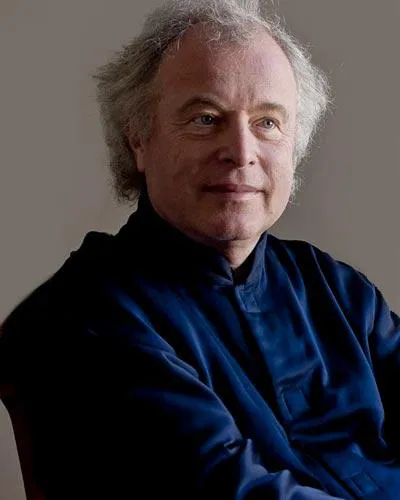
Lern deinen Guru kennen
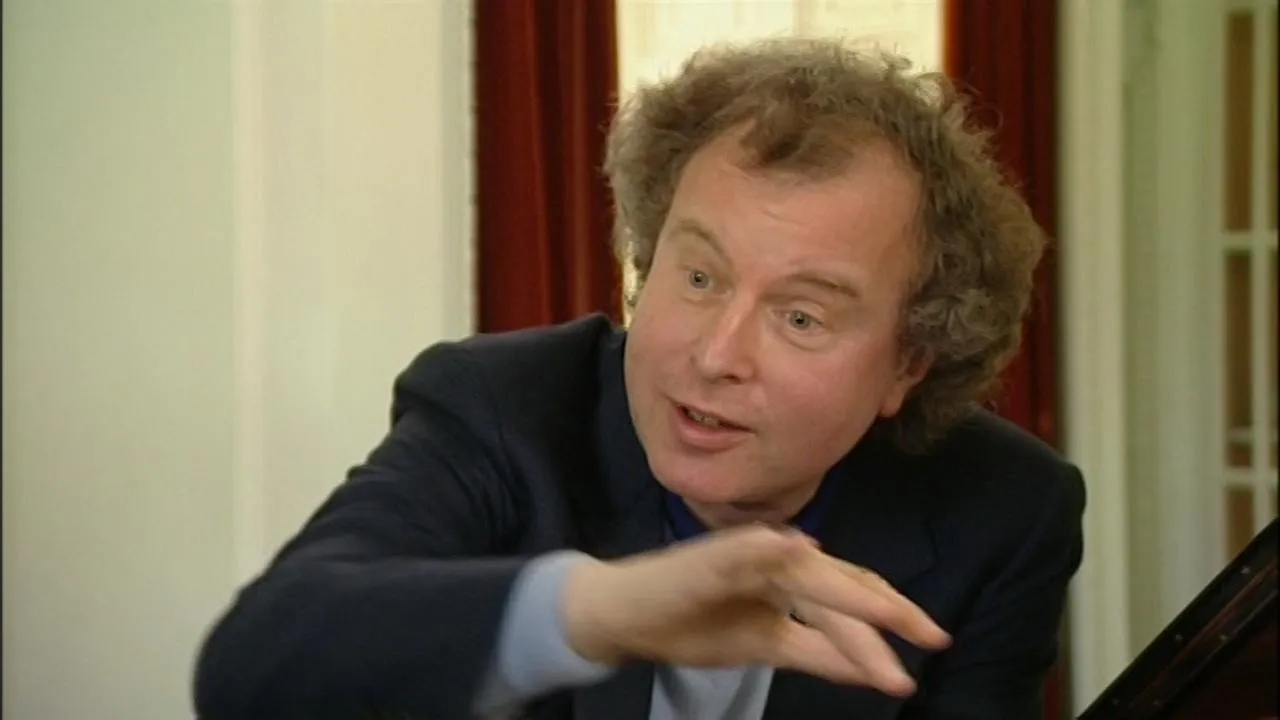
András Schiff ist eines der herausragendsten Mitglieder einer Generation ungarischer Pianisten, die in den Jahren nach dem Zweiten Weltkrieg geboren wurden, neben Künstlern wie Zoltán Kocsis, Dezso Ránki und Jenő Jandó. Aus dieser bemerkenswerten Gruppe hat Schiff das größte internationale Ansehen erlangt, nicht nur wegen seiner Entscheidung, seine Karriere außerhalb Ungarns zu verfolgen, sondern auch dank seines fein abgestuften Anschlags und eines beeindruckenden Gedächtnisses, das es ihm erlaubt, in Konzerten und Aufnahmen große Teile des Œuvres eines Komponisten darzubieten.
Schiff wurde am 21. Dezember 1953 in Budapest geboren und studierte beim ungarischen Komponisten Pal Kadosa und bei Ferenc Rados (die beide auch Kocsis und Ránki unterrichteten) sowie beim englischen Cembalisten George Malcolm. Sein Debüt gab er mit 19 Jahren in Budapest, gefolgt von Konzertauftritten in ganz Europa und den Vereinigten Staaten. Sein Ansehen wuchs mit preisgekrönten Auftritten beim Moskauer Wettbewerb 1974 und beim Leeds Festival 1975.
András Schiff arbeitet mit den meisten großen internationalen Orchestern und Dirigenten, doch die meisten seiner Aufführungen von Klavierkonzerten von Bach, Beethoven und Mozart leitet er selbst. 1999 gründete er sein eigenes Kammerorchester, die Cappella Andrea Barca, mit der er jährlich als Dirigent und Solist arbeitet, ebenso wie mit dem Philharmonia Orchestra und dem Chamber Orchestra of Europe.
Schiffs Stil, in dem sich ein ungewöhnlich sensibler Anschlag mit einem Gespür für kontrapunktische Klarheit verbindet, hat ihn zu einem der bedeutendsten Bach-Interpreten der Gegenwart gemacht. Er hat die gesamte Klaviermusik von Bach eingespielt, ebenso wie die vollständigen Sonaten und Sonatenfragmente von Franz Schubert, dessen introspektive Klaviermusik Schiffs Temperament gut entspricht. 2009 vollendete er bei ECM einen Beethoven-Sonatenzyklus, und 2011 wurde ihm der Schumann-Preis der Stadt Zwickau für seine Interpretation und Förderung der Musik Schumanns verliehen. 2001 begann Schiff, die Werke Bachs erneut zu betrachten und neu einzuspielen. Neben den erwartbaren mitteleuropäischen romantischen Werken nimmt die Musik von Béla Bartók und Leos Janácek einen prominenten Platz in Schiffs Repertoire ein.
In seinen MusicGurus-Kursen zu Schuberts Moments Musicaux Nr. 1, 3 und 4, Bachs Partita Nr. 2 und Beethovens späten Klaviersonaten holt Schiff dich in diese interpretatorische Welt – er teilt, wie er über Stimmführung, Anschlag, kontrapunktische Klarheit und Struktur denkt, damit du diesen Werken am Klavier echte Tiefe und echtes Verständnis verleihen kannst.







