



András Schiffs Analyse von Nr. 3 Allegro Moderato
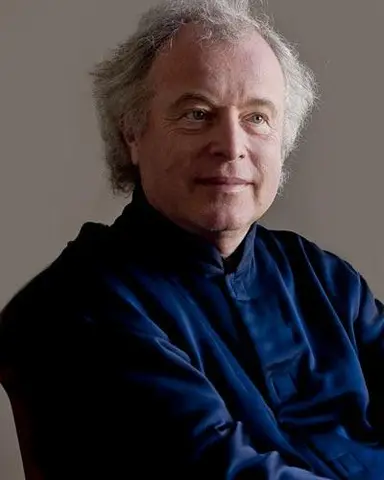
Lesson time: (11min 1sec)
Course preview
This lesson is part of the course Schubert - Moments Musicaux Nr. 1, 3 und 4
Watch a preview of the full course below.
Lesson transcript:
Music Lesson
Introduction: "So please begin the third piece again."
Context: "Okay. Thank you. Now, you live in Vienna, so you have seen a coach with horses in Vienna. Now it's a touristy attraction. But in Schubert's time, this was the normal form of transportation. He must have seen this all the time in front of his house. And I really heard the horses here."
Local Atmosphere: "Also, if you go to Grinzing or one of those little towns around Vienna, where you have taverns and where they have wine and food, this is where Schubert liked to sit with his friends. There you have little music bands, and if somebody plays the viola there, or if you hear a gypsy band, then there's this viola player always playing."
Musical Interpretation: "So, whatever you play on the Abo a little later, it can sound, of course, a little more sinister. But just let this... Let's get this movement. It's much too loud, you know. I am not hard of hearing; I have good ears. Please, there is no movement, you know?"
Getting into the Tune: "Okay, now. Now let's get the tune. There's just a little more inflection. Again, you have to separate the melody from the accompaniment. I mean, this is not a Bachian piece where every voice is equal. Here, there is definitely a melody, an accompaniment, and harmony."
About the Accompaniment: "And the accompaniment is short. It has all the different moods, but it's a wonderful little composition, you know, very round. There's a wonderful recording with Cazals playing this on the cello, and he brings a new element. He says, 'Yum,' I love that very much. But let's get back to the original."
Revisiting Technique: "Yeah. So play from the beginning. No robot! Why do you start with a hesitation? If you would sing this, it's too pianistic. It's not singing. Yes. And these are short notes. I have a problem with your repeated notes. You say 'tam, tam, tam' three times. 'Tam.' It's too percussive, you know?"
Composing Words: "It's a song. You have to compose words for it."
Technical Notes:
- Key: A flat major
- Technique: Long bow
- Phrase: "Yadadadadin."
- "Maybe change the fingers, please. Not everything, wisdom. Yes."
Practicing Together: "Alright. Now I play the left hand and you play the right hand. Okay, now we go. Let's go on. Okay, now you do it alone. But it's the right pulse, you see? Just a question of some warms in that."
Final Thoughts: "Piano, piano, piano. Here we have the major accent, a small accent, long thumb."
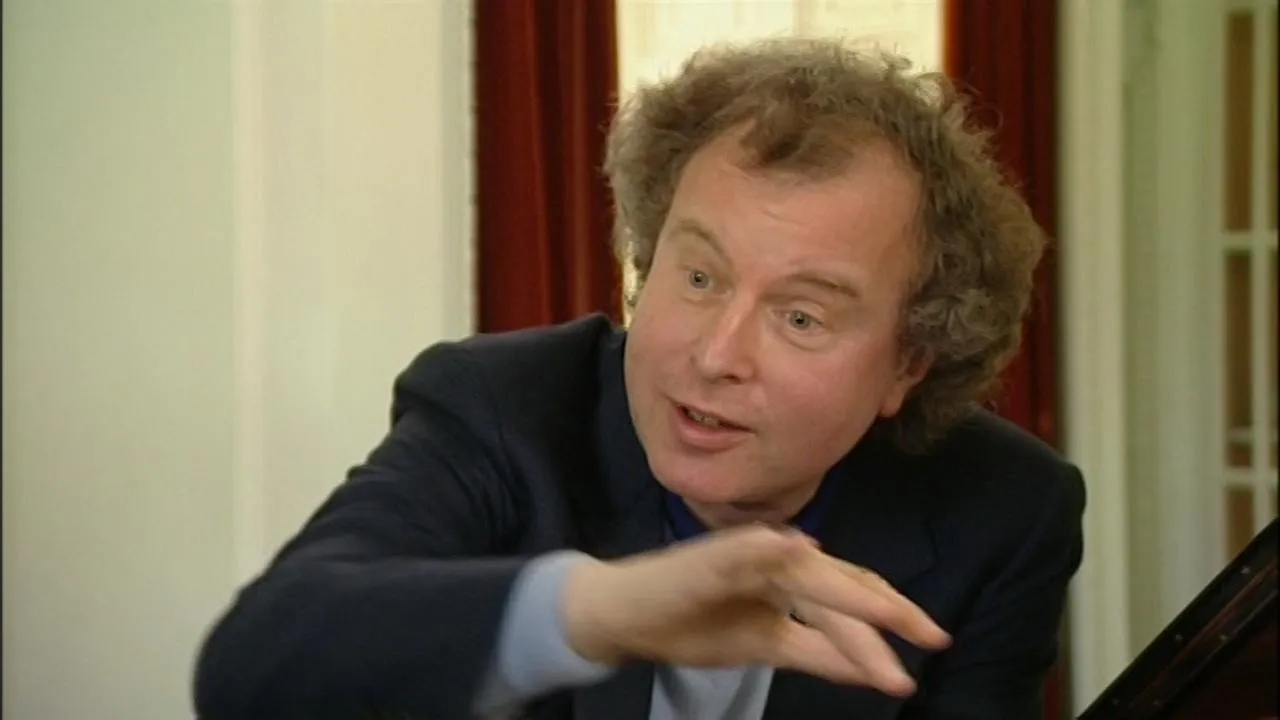
About the instructor
András Schiff ist eines der herausragendsten Mitglieder einer Generation ungarischer Pianisten, die in den Jahren nach dem Zweiten Weltkrieg geboren wurden, neben Künstlern wie Zoltán Kocsis, Dezso Ránki und Jenő Jandó. Aus dieser bemerkenswerten Gruppe hat Schiff das größte internationale Ansehen erlangt, nicht nur wegen seiner Entscheidung, seine Karriere außerhalb Ungarns zu verfolgen, sondern auch dank seines fein abgestuften Anschlags und eines beeindruckenden Gedächtnisses, das es ihm erlaubt, in Konzerten und Aufnahmen große Teile des Œuvres eines Komponisten darzubieten. Schiff wurde am 21. Dezember 1953 in Budapest geboren und studierte beim ungarischen Komponisten Pal Kadosa und bei Ferenc Rados (die beide auch Kocsis und Ránki unterrichteten) sowie beim englischen Cembalisten George Malcolm. Sein Debüt gab er mit 19 Jahren in Budapest, gefolgt von Konzertauftritten in ganz Europa und den Vereinigten Staaten. Sein Ansehen wuchs mit preisgekrönten Auftritten beim Moskauer Wettbewerb 1974 und beim Leeds Festival 1975. András Schiff arbeitet mit den meisten großen internationalen Orchestern und Dirigenten, doch die meisten seiner Aufführungen von Klavierkonzerten von Bach, Beethoven und Mozart leitet er selbst. 1999 gründete er sein eigenes Kammerorchester, die Cappella Andrea Barca, mit der er jährlich als Dirigent und Solist arbeitet, ebenso wie mit dem Philharmonia Orchestra und dem Chamber Orchestra of Europe. Schiffs Stil, in dem sich ein ungewöhnlich sensibler Anschlag mit einem Gespür für kontrapunktische Klarheit verbindet, hat ihn zu einem der bedeutendsten Bach-Interpreten der Gegenwart gemacht. Er hat die gesamte Klaviermusik von Bach eingespielt, ebenso wie die vollständigen Sonaten und Sonatenfragmente von Franz Schubert, dessen introspektive Klaviermusik Schiffs Temperament gut entspricht. 2009 vollendete er bei ECM einen Beethoven-Sonatenzyklus, und 2011 wurde ihm der Schumann-Preis der Stadt Zwickau für seine Interpretation und Förderung der Musik Schumanns verliehen. 2001 begann Schiff, die Werke Bachs erneut zu betrachten und neu einzuspielen. Neben den erwartbaren mitteleuropäischen romantischen Werken nimmt die Musik von Béla Bartók und Leos Janácek einen prominenten Platz in Schiffs Repertoire ein. In seinen MusicGurus-Kursen zu Schuberts Moments Musicaux Nr. 1, 3 und 4, Bachs Partita Nr. 2 und Beethovens späten Klaviersonaten holt Schiff dich in diese interpretatorische Welt – er teilt, wie er über Stimmführung, Anschlag, kontrapunktische Klarheit und Struktur denkt, damit du diesen Werken am Klavier echte Tiefe und echtes Verständnis verleihen kannst. read more