



Explanation and demonstration of exercise three
With
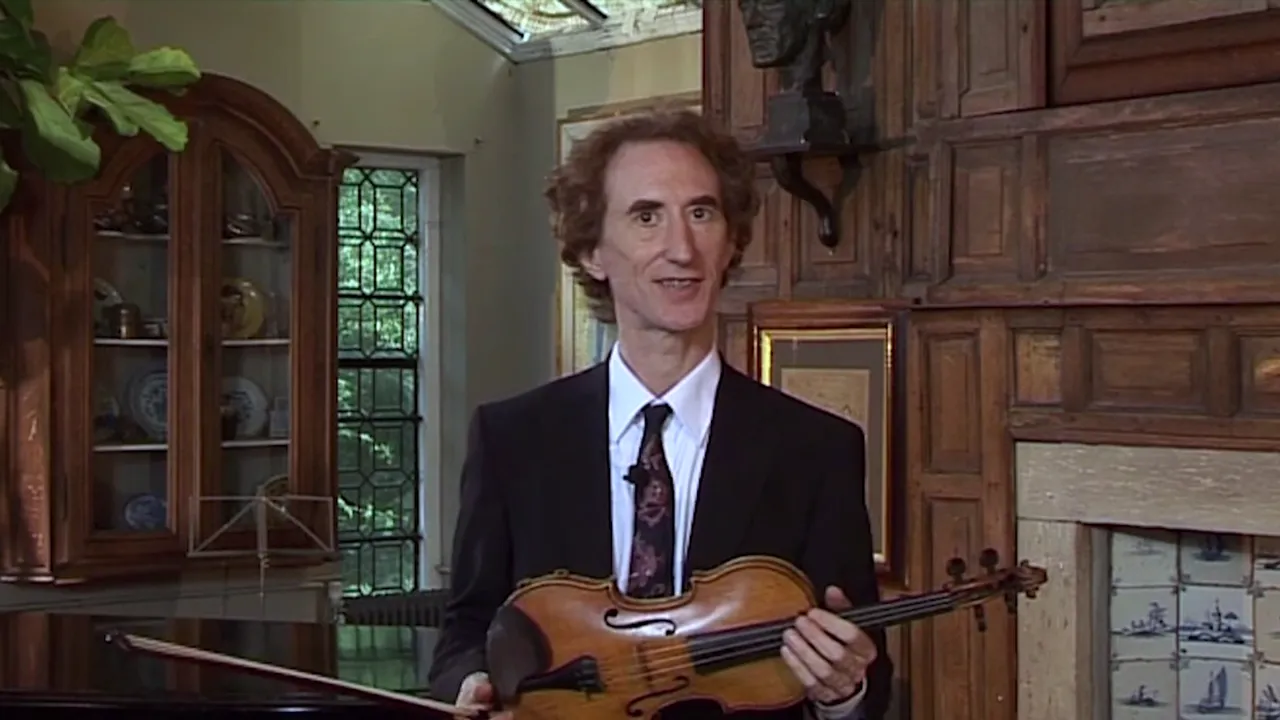
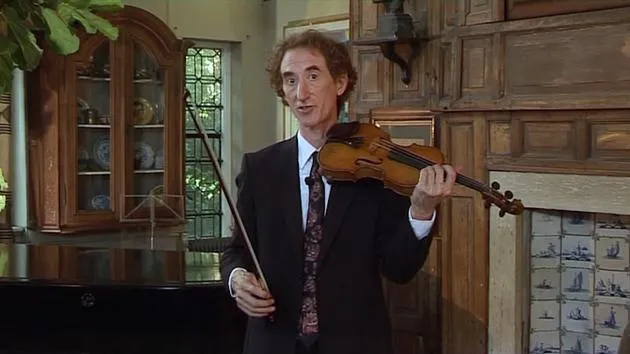
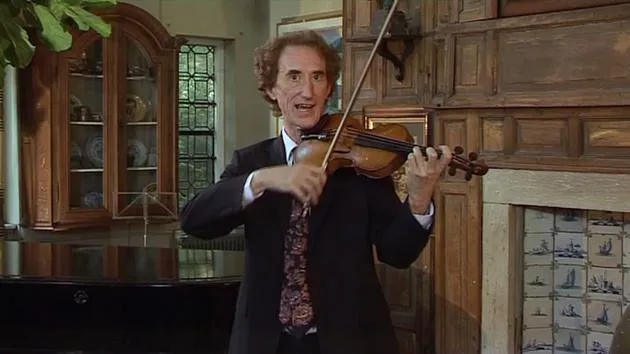
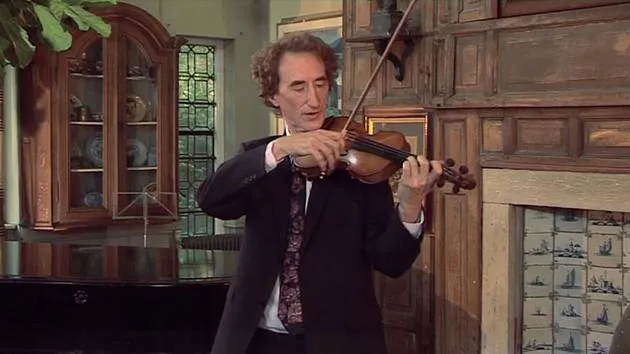
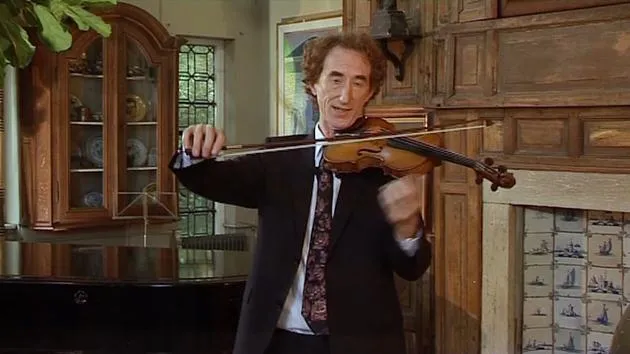
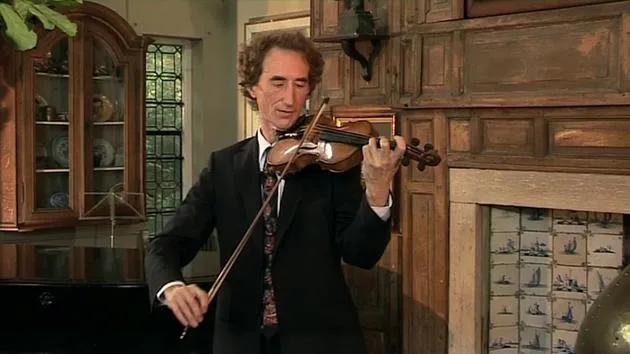
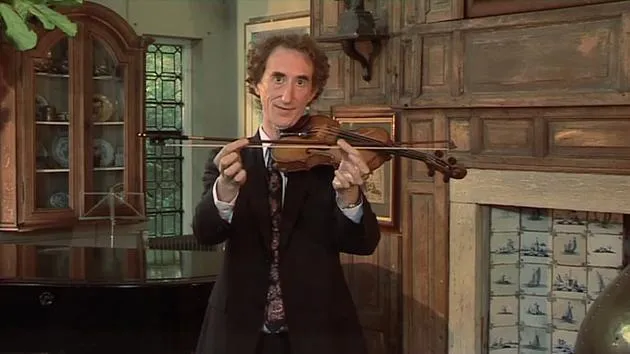
Simon FischerSimon Fischer explains the Pressure Exercise - alternating heavy and light bow pressure within a single bow stroke to build an even, pure, unforced tone.
What's in the course
8 lessons (0h 59m) · 1 free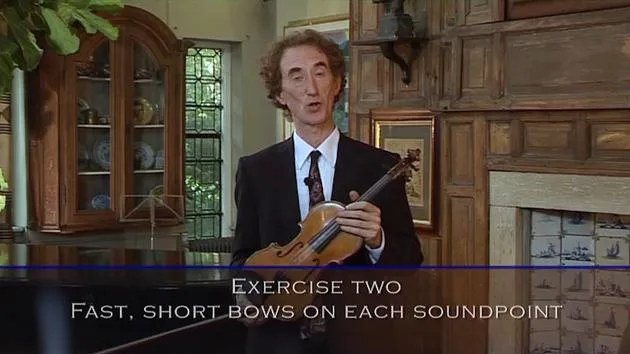
Lesson transcript
Pressure Exercise for Bow Control
The pressure exercise simply alternates heavy and light bow pressure within one long bow stroke. Here's how to approach it:
For Less Advanced Players:
- Focus on achieving 8 to 12 heavy-lights in one bow stroke.
For More Advanced Players:
- Challenge yourself with 28, 32, 36, or even 40 heavy-lights in a single bow stroke.
Objectives:
- Explore how deeply you can sink the bow into the string.
- Immediately transition to how lightly you can float the bow along the surface of the string.
- Aim for a tone that is absolutely pure, even, and unforced.
Tips:
- Strive for fantastic evenness in both forte and piano.
- To maximize the effects of the pressure exercise:
- Do as much as you can using only pressure or weight.
- Keep bow speed as unchanged as possible.
Caution:
- Avoid using too much extra speed to prevent scratching the tone.
- Use just a little extra speed to maintain purity.
Execution
- Forte, non diminuendo forte.
- Acknowledge the need for some extra bow speed without letting it become a speed exercise.
- Practice transitions:
- Subito piano.
- Forte, piano.
- Hold purity in tone.
Exercises:
-
Start with two in one bow:
Forte, piano. Forte, piano.
Address any issues related to pressure and tempo. -
Progress to three in one bow:
Focus on maintaining purity: Heavy, heavy. -
Try four in one bow:
Concentrate on equal thirds:
Heavy, heavy.
Increasing Complexity
- Work towards eight and then sixteen heavy-lights in a row, with careful attention to bow division:
- Go deep into the string and allow the bow to follow freely.
Volume Gradation:
- Execute shifts like pianoforte using localized actions:
- Stress the importance of separating actions so that each movement is intentional and precise.
Final Thoughts
- Maintain a steady hand while focusing on sound points.
- Keep the bow parallel to the bridge:
"If your bow wanders, your sound will too."
Key Reminders:
- Localized actions are crucial.
- For instance, when placing fingers on the string, do it without tensing the body.
Remember, every subtle adjustment in your technique can lead to improved tone and expression. Keep practicing and refining these motions to achieve greater control and sound quality.
8 lessons
0h 59m of structured video lessons
Advanced video features
Slow down, loop a passage, follow along
Mobile, tablet & desktop
Practise wherever you are
100% satisfaction guarantee
30-day money-back guarantee
Meet your guru
Meet your guru
Simon Fischer enjoys a distinguished and wide-ranging career as a performer, educator and recording artist.
He has performed worldwide as a recitalist, and committed three Brahms Sonatas to record, a recording that received high praise in Gramophone Magazine.
Simon is recognised as having a place amongst the world's elite teachers. He is a professor at the Guildhall School of Music, and has held positions at the Yehudi Menuhin School, Wells Cathedral School and the Purcell School, and for 15 years was a visiting professor at the Royal Scottish Academy of Music. Having studied in London with Yfrah Neaman, and in New York with Dorothy DeLay, Fischer's approach unites the best elements of the French, Russian and American violin traditions.
Fischer's published work greatly influences the teaching of the violin. Having written for The Strad magazine since 1991, his monthly articles have attracted a worldwide following. Published by Edition Peters, his technique books Basics and Practice (translated into Korean, Italian and German), Scales and The Violin Lesson, and the DVD The Secrets of Tone Production (now available to stream via MusicGurus), have become standards on many continents. His book and DVD Warming Up was described by The Strad magazine as "23 pages of pure technical gold".
In 2014 Simon Fischer was awarded the European String Teachers Association prize "In celebration of a lifetime contribution to String Teaching".
In his four-part Secrets of Tone Production course, Simon guides you through getting to know your instrument and then working through his fundamental tone exercises step by step, so you can produce a richer, more controlled and more beautiful sound on the violin.







