



Mixing it up with the 'Pinetop Smith' riff

With
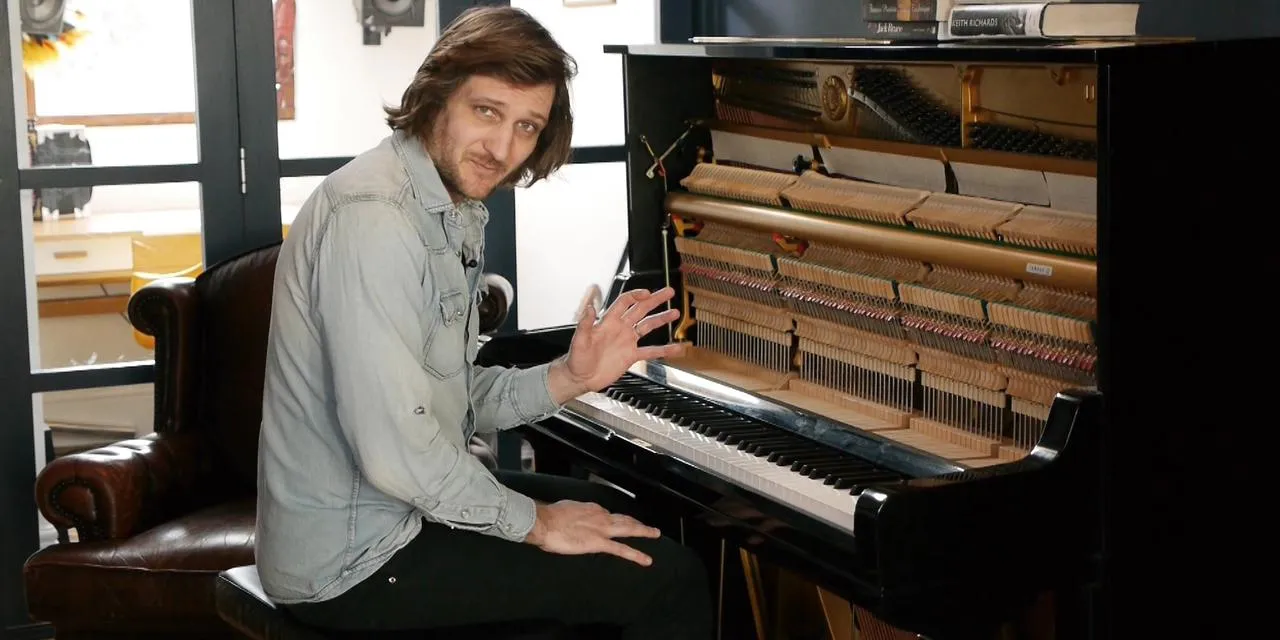
Paddy MilnerPaddy Milner plays through a 12-bar section that weaves the Pinetop Smith riff together with other ideas, showing how to use it as a linking passage rather than a whole chorus.
What's in the course
14 lessons (2h 17m) · 2 free
01. Demonstration - let's play some blues
Free lesson3:48

02. Exploring the 'Pinetop Smith' riff
Free lesson15:29

03. Mixing it up with the 'Pinetop Smith' riff
You are here7:59

04. Riffs based on a second inversion chord
20:24
05. Exploring descending 3rds
15:28

06. Ideas for an introduction
9:34
07. The engine room - left hand bass
10:59

08. Ideas for chords V-IV (bars 9-10)
12:00

09. Exploring 'rolling' chords
7:24

10. Piano break no.1
8:58

11. Piano break no.2
6:15
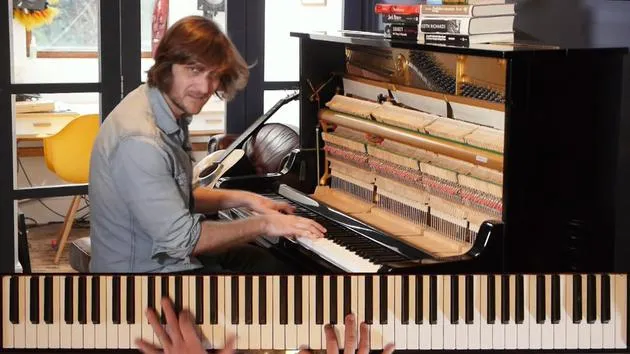
12. Exploring endings
10:25
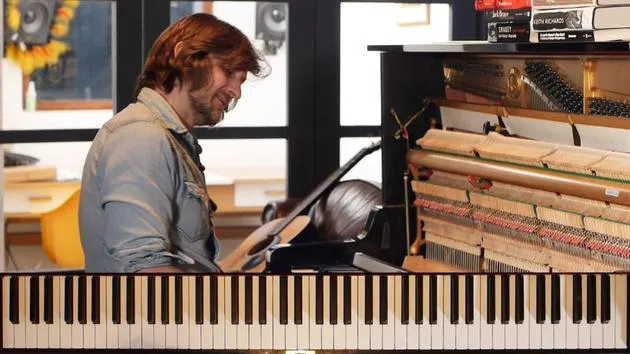
13. Some extra ideas
6:53

14. Everyday I'm Shufflin' - The Blues Shuffle Challenge
1:35
Lesson transcript
Music Lesson: Exploring Riffs and Keys
So, yeah, we've looked at all kinds of variations on this riff. You might or might not want to use them over a whole 12-bar section. It might be better to intersperse them with other riffs.
Demonstration of a 12-Bar Sequence
I'm going to demonstrate a 12-bar section here, playing some other stuff mixed in with that riff. So listen out for which kind of variation I'm using and how it fits in with the rest of the material.
Here we go:
- Two bars in.
- Use several different versions of that riff.
- Notice how, a lot of the time, it's used as a sort of linking passage.
Example: "When I Went Up to the Sea"
That's definitely a very stylistic thing that you might hear somebody like Pine Top Perkins playing. Now we're getting into some pretty stylistic things. It's not just going up and down the blues scale, which sounds bluesy, but it's not the real stuff.
You could do the same kind of thing on the chord of G.
Chord Variations
If you notice there, I was on the C chord, rocking between the D, not the E, which is totally fine too. That kind of works when you're coming down from the D. It might not work all the time and can sound slightly odd, but it works in different contexts.
- Works well on: C chord
- Coming down from: D
Adding Flavor with Pickups
You may have noticed as well, I've done some little pickups. These are great stylistic additions that add a bit of flavor, so chuck those in.
Let's have a listen to that over a 12-bar section.
Advancing Your Skills
Now we're getting into some real heavy stuff. You may have noticed:
- Sometimes I will roll via the B flat,
- Sometimes I'll roll via the B.
Often, when I'm on the chord of C, I'll roll via the B flat because that's part of the C7 chord.
Future Lessons
Sometimes, when I'm on the G, I'll go via. But we'll look at that kind of stuff in another lesson.
Challenge: Playing in Different Keys
Here's one more practice tip: it's a bit adventurous, but it's great because playing in different keys is so important as a musician. This is especially true when you start playing with other musicians, particularly guitar players, who tend to favor keys like E, A, D, and B (that's a tough one!). Or horn players, who tend to favor the flat keys like B flat, E flat, and A flat.
The Beauty of Keys
It's good to know as much as you can in as many keys as possible. Some riffs don't lend themselves to different keys, so there's no point in forcing things that don't necessarily work. But it's a great practice thing to get together.
Each key has its unique character due to the way the hands fit over the keys.
Practicing the Cycle of Fifths
I really suggest trying to practice these riffs around the cycle of fifths. The cycle of fifths, as the name suggests, is a cycle of chords that goes round by the interval of a fifth each time, covering all 12 keys.
Cycle of Fifths Starting on G:
- G
- C
- F
- B flat
- E flat
- A flat
- D flat
- G flat
- B
- E
- A
- D
- Back to G
Note: Don't worry about the particular voicing I was doing there; I was just playing some kind of seventh chord. The essential movement is just by fifths.
Final Demonstration
Try playing as many versions of those riffs around all 12 keys.
Here we go: 1, 2, 3
- C, F, B flat, then back to the G.
Now, if you can do that with all the different variations of the riff, you'll be onto a winner. That's a great skill to have, so do your worst.
Good luck!
14 lessons
2h 17m of structured video lessons
Advanced video features
Slow down, loop a passage, follow along
Mobile, tablet & desktop
Practise wherever you are
100% satisfaction guarantee
30-day money-back guarantee
Meet your guru
Meet your guru
Paddy Milner is recognised as one of the leading blues piano players in the world - he is currently keyboard player of choice for Sir Tom Jones, following several years with the late, great Jack Bruce - but he is also a superb original songwriter and a distinctive singer. Just read the praise from the likes of Dave Brubeck below! His playing was featured on the soundtrack for the hit 2019 film 'Rocketman'.
He has twice won the award for Best Keyboard Player in the British Blues Awards, and he holds a long-standing residency as a founder member of the Ronnie Scott's Blues Explosion at the world-renowned Ronnie Scott's club.
His current group LONDONOLA plays homegrown British music with a strong dose of New Orleans spirit, and his collaborative group JAWBONE goes from strength to strength following the release of their self-titled debut album.
- "I love it... there's a guy who can really play the piano" - Dave Brubeck
- "I highly recommend it. Somehow things start to feel much better!" - Jack Bruce
- "The best blues piano player in Europe..." - Blues Access, USA
- "Impressive & original" - The Times
- "Dazzling" - The Independent
Across his courses, Paddy breaks down authentic blues shuffle, slow blues, boogie-woogie, rock 'n' roll and New Orleans piano - right down to three classic boogie-woogie songs - so you can learn these styles from one of the very best in the business.







