



Lean on Me, Bill Withers (Lesson)

What's in the course
28 lessons (1h 26m) · 1 free

Lesson transcript
Music Lesson: "Lean On Me" by Bill Withers
Introduction
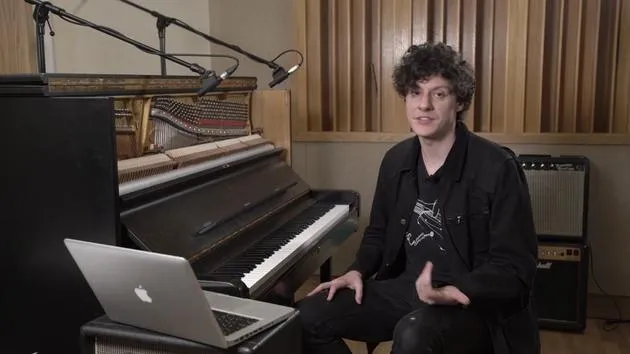
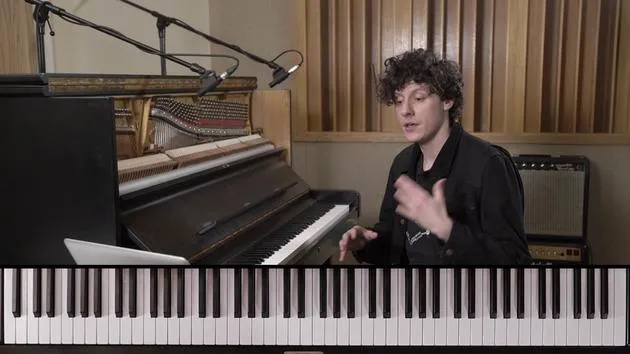
Hi, I'm Paddy, and today I'm going to talk about a beautiful song, "Lean On Me" by Bill Withers, one of my favorite singers. This is a beautiful kind of soul gospel song. It's a very simple song harmonically, with not too many chords, but it has a very strong rhythmic aspect to it.
Importance of Rhythm
- The rhythm is crucial to this song.
- Playing in time with the backing track is especially important.
- As you hear the drummer counting in the song on his sticks, try to feel the tempo of the track and move your body to it.
Drummer Counting:
1, 2, 3, 4.
Imagine you're in a gospel church, swaying to the music. It's all about feeling the rhythm in your body.
Playing the Notes
First Bar
- We start off with a simple line.
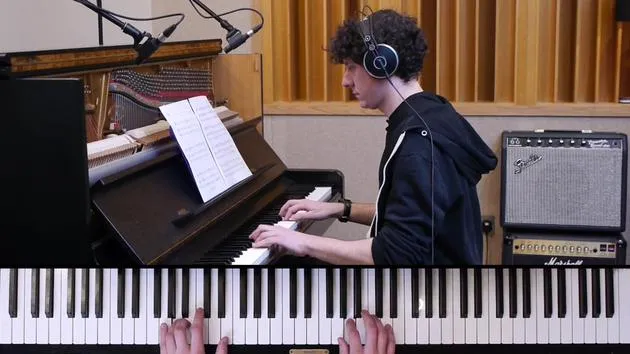
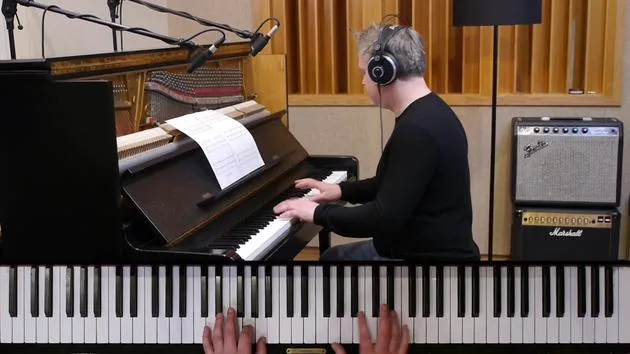
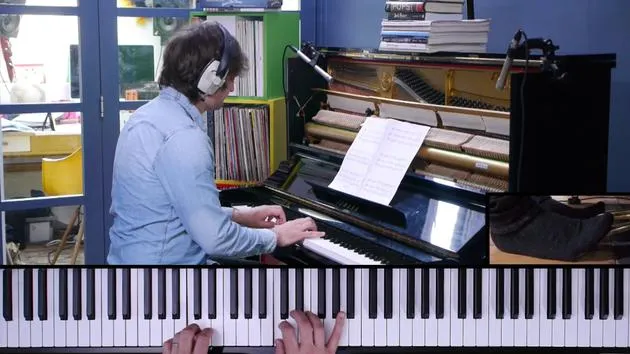
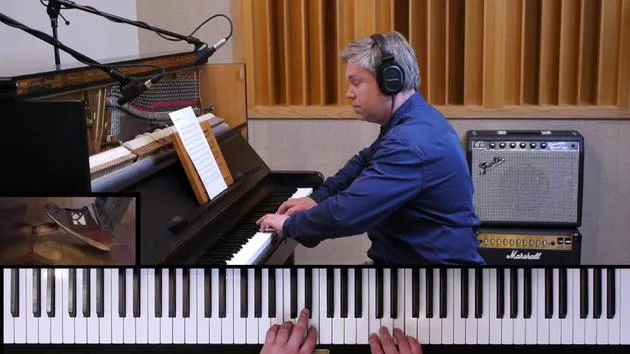
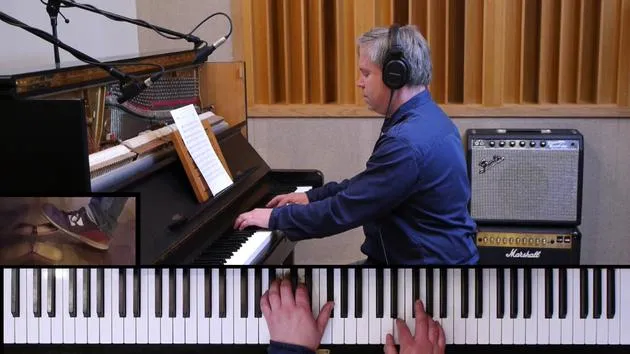
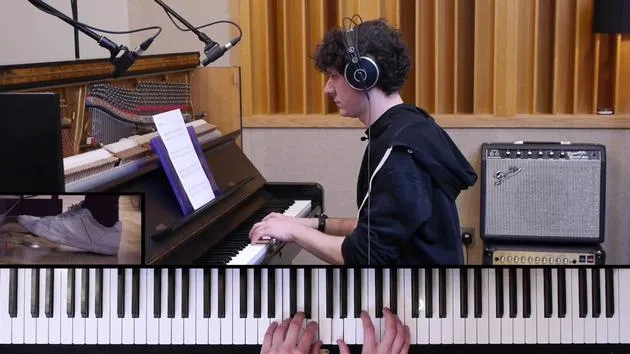
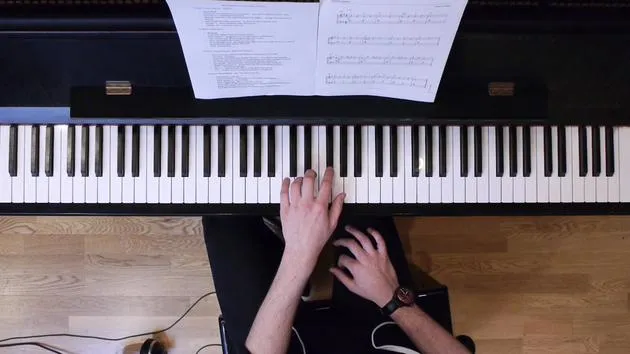
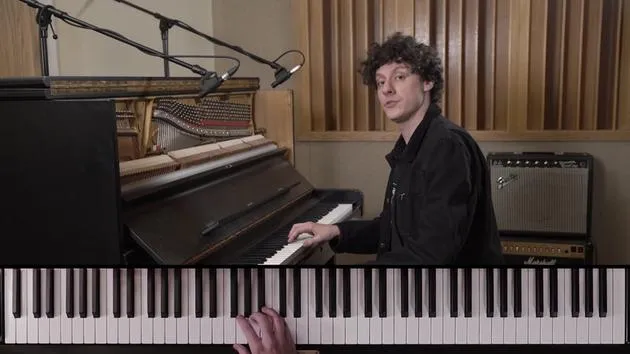
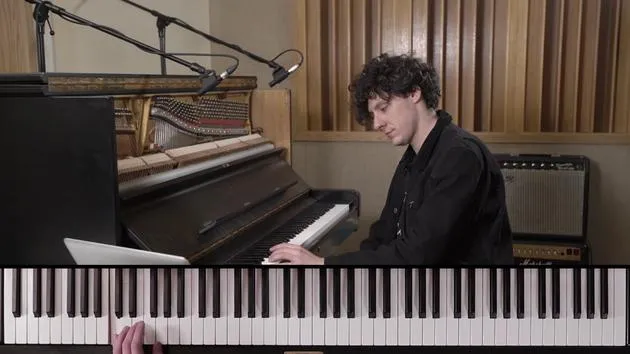
- It's best to use different fingers for it. Although the notation doesn't mention fingering, using different fingers for different pitches is recommended.
Finger Positioning:
- Start with your fifth finger (little finger), going up to your second finger (index finger).
- Use the same fingers going back down, so you don't have to move your hand.
Avoid:
Using your thumb which involves a little jump.
Next Hand Position
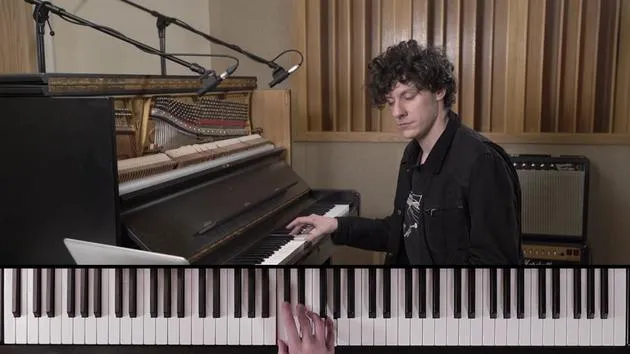
- On the next line, there's a jump down to the G.
- You may want to change hand position going from one position to another for that bottom G.
Listening to the Original
I highly recommend you listen to Bill Withers' original track. It's essential for finding the spirit of the song and understanding how the piano is articulated.
- Legato: The notes aren't played completely legato (very smoothly); they are a little detached.
- Listen closely to the piano part in the original song to replicate the feel.
Rhythmic Feel and Harmony
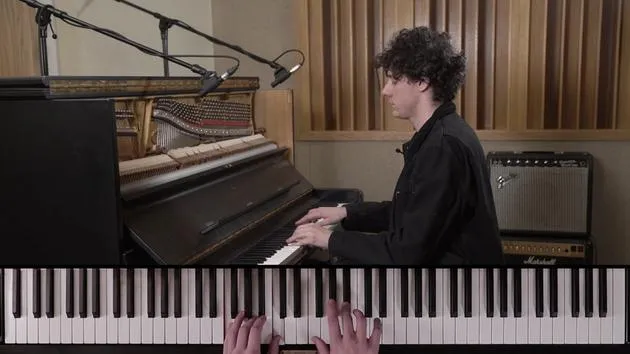
When we get to bar five, the right hand comes in and, at this point, the vocals haven't started. We are still playing a reduction of the piano part from the original song, maintaining a slightly detached feel. The left hand supports the right hand with simpler notes.
Harmony Overview
- This piece is in the key of C and is primarily built around three chords.
- C major chord: C, E, G
- F chord: F, A, C
- G chord: G, B, D
These are the main harmonies used, common throughout lots of Western music.
Chord Progression
- Chord 1 (C),
- Chord 4 (F),
- Chord 5 (G)
Bar Nine: Vocal Introduction
At bar nine, Bill's beautiful tone comes in. He sings it a little more legato, which you might want to reflect in your performance.
Articulation
In bar five, the articulation in the right hand is a little detached. When the melody comes in at bar nine, consider playing it more legato.
Continuing the Feel
As the piece goes on, maintain that sensitive approach to the melody. In bar 15, you encounter another harmony similar to bar 8.
The Chorus
- At bar 17, the chorus starts with a lift in the melody, making the whole piece feel euphoric.
- Reflect that by playing a little louder and with a little more dynamic intensity.
Concluding Remarks
As the piece nears its end, make sure to come off with the rest of the band as the instruments fade.
I can't emphasize enough the importance of listening to the original track. Try to mirror Bill Withers' phrasing in your piano playing.
Performance Consideration
If you were going to play this with a singer, you wouldn't need to play the vocal melodies (e.g., during the chorus). Play the underlying piano part instead.
Practice Tips
- Build up finger strength using notes from this piece.
- Extend practice by going up and down the five notes.
I've enjoyed playing this piece; it's one of my favorites and was sung at my wedding. I hope you enjoy it too, and good luck learning it!
28 lessons
1h 26m of structured video lessons
Advanced video features
Slow down, loop a passage, follow along
Mobile, tablet & desktop
Practise wherever you are
100% satisfaction guarantee
30-day money-back guarantee







