



In My Place – Coldplay (Analysis)
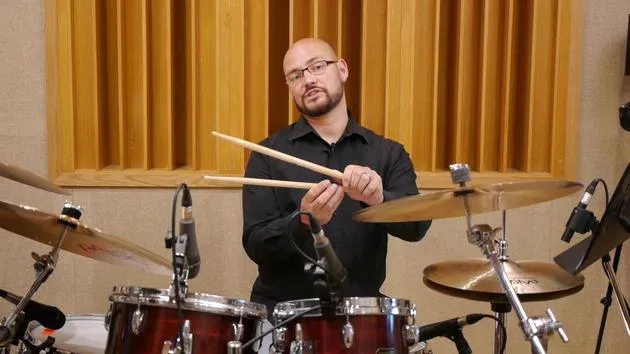
Stu Roberts analyses the drum chart for Coldplay's 'In My Place', looking at its tempo, dynamics and feel before you play it.
What's in the course
29 lessons (2h 24m) · 1 free
01. Ready or Not – Fugees
2:34
02. Sweet Home Alabama – Lynard Skynard
2:10
03. Let’s Dance – David Bowie
1:58
04. Respect – Aretha Franklin
2:14
05. In My Place – Coldplay
2:21
06. Scary – Stormzy
1:54
07. Cold Pants
2:00
08. Attitude
1:59
09. The Nod
2:00
10. Hammerblow
Free lesson2:04
11. Jahmake Ska
1:58
12. Noisy Neighbour
1:57
01. Let’s Dance – David Bowie (Analysis)
8:26
02. In My Place – Coldplay (Analysis)
You are here10:16
03. Scary – Stormzy (Analysis)
10:27
04. Respect – Aretha Franklin (Analysis)
9:50
05. Ready or Not – Fugees (Analysis)
7:51
06. Sweet Home Alabama – Lynard Skynard (Analysis)
8:33
07. Noisy Neighbour (Analysis)
17:14
08. Cold Pants (Analysis)
4:24
09. Attitude (Analysis)
6:22
10. The Nod (Analysis)
4:18
11. Hammerblow (Analysis)
11:04
12. Jahmake Ska (Analysis)
4:00
Lesson transcript
Welcome to Music Guru's Drum Lesson: In My Place
Hi, and welcome back to Music Guru's drum lesson on In My Place. I'm sure you're familiar with this Coldplay track. It was a huge hit!
Analyzing the Music
As a drummer, the first thing I look at in the first bar is:
- Dynamic: What is it?
- Tempo: What is it?
- Stylistic Indications: Are there any?
Thankfully, this chart provides that information.
- Tempo: 80 beats per minute (quite a slow tempo)
- Dynamic: Forte (the 'F' stands for loud)
- Time Signature: 4/4 (four quarter note beats per bar)
Playing Style
The section is described as heavy rock, which means you're going to hit the drums with serious intention to create a big sound.
Hi-Hat Technique
- The hi-hat plays eighth notes consistently throughout.
- If you see an open sign above the notes, it means to open the hi-hat so that the sound 'slosh' together.
Tip: When playing the hi-hat like this, aim for the sound of breaking glass. This can help you achieve an abrasive yet smooth sound.
Don't hit the hi-hats too hard; the natural sound of the hi-hats and the vibration of the cymbals will carry the sound well, especially with a mic over the snare drum.
First Section Breakdown
-
First 10 Bars: Play the same groove but add the crash cymbal on the first beat of bar one.
Tip: Make sure you know exactly where you are as the music progresses.
Section B: Dynamic Shift
In Section B, you'll notice:
- The hi-hats are shut.
- A plus sign above the second eighth note in bar 11 indicates to shut the hi-hats until otherwise noted.
Opening the Hi-Hat:
- At the end of bar 12, open the hi-hat going into bar 13.
Pay attention to your foot coordination!
Common Notation Practices
- In bars seven and fifteen, look for two bar repeats, a shorthand notation to save time.
- If you see a one-bar biz bar (one slash), it means repeat the previous one bar.
- Two slashes across the bar line mean to repeat the previous two bars.
Section D: Simplicity in Drumming
At rehearsal letter D:
- There's very little going on; just a couple of hits on the ride cymbal and a cymbal roll.
- Producers often emphasize that it's not about playing really fast, but rather about playing effectively.
Thought: Excellent music often doesn't rely on flashy drumming. Instead, focus on supporting the music without dominating it.
Practical Tips
- In bar 30, when you perform the cymbal roll, use a single stroke roll between the two crashes.
- Play backbeats on the ride cymbal until the end of that section.
Unison Fill
For the unison fill:
- Use a 16th note subdivision with the snare and floor tom while avoiding flams (where one hand hits slightly earlier than the other).
Crescendo:
- There's a crescendo written in the notation, which signifies to get louder gradually.
Example: Playing bar 33 and 34. Notice how playing on the edge of the drum instead of the center can create dynamic variations.
Section E: Riding the Rhythm
In section E:
- Move up to the ride cymbal instead of using the hi-hat.
Tip: Just play those eighth notes relaxed and let them percolate on the cymbal for rhythmic propulsion.
Dynamic Contrast
Use a crash cymbal on the first beat of every bar in section E. Notice the dynamic difference created throughout the piece with tonal shifts between open hi-hat, shut hi-hat, and ride cymbal.
Final Thoughts
Good luck with this piece; it's great fun!
- Practice Tips:
- Work on your bass drum technique to ensure those notes land well.
- Practice with and without a click.
- Record yourself and analyze your playing while referring to the original recordings.
Most importantly, enjoy yourself, because that's what playing drums is all about!
29 lessons
2h 24m of structured video lessons
Advanced video features
Slow down, loop a passage, follow along
Mobile, tablet & desktop
Practise wherever you are
100% satisfaction guarantee
30-day money-back guarantee







