



Scary – Stormzy (Analysis)
Paul Elliott analyses 'Scary' by Stormzy, a tricky Grade 4 grime track, picking out the key stickings and coordination that make the groove work.

What's in the course
29 lessons (2h 24m) · 1 free
01. Ready or Not – Fugees
2:34
02. Sweet Home Alabama – Lynard Skynard
2:10
03. Let’s Dance – David Bowie
1:58
04. Respect – Aretha Franklin
2:14
05. In My Place – Coldplay
2:21
06. Scary – Stormzy
1:54
07. Cold Pants
2:00
08. Attitude
1:59
09. The Nod
2:00
10. Hammerblow
Free lesson2:04
11. Jahmake Ska
1:58
12. Noisy Neighbour
1:57
01. Let’s Dance – David Bowie (Analysis)
8:26
02. In My Place – Coldplay (Analysis)
10:16
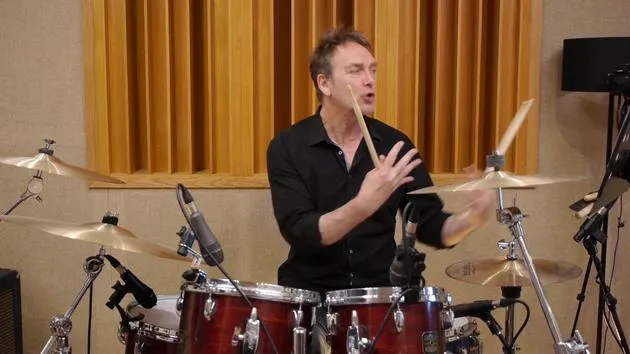
03. Scary – Stormzy (Analysis)
You are here10:27
04. Respect – Aretha Franklin (Analysis)
9:50
05. Ready or Not – Fugees (Analysis)
7:51
06. Sweet Home Alabama – Lynard Skynard (Analysis)
8:33
07. Noisy Neighbour (Analysis)
17:14
08. Cold Pants (Analysis)
4:24
09. Attitude (Analysis)
6:22
10. The Nod (Analysis)
4:18
11. Hammerblow (Analysis)
11:04
12. Jahmake Ska (Analysis)
4:00
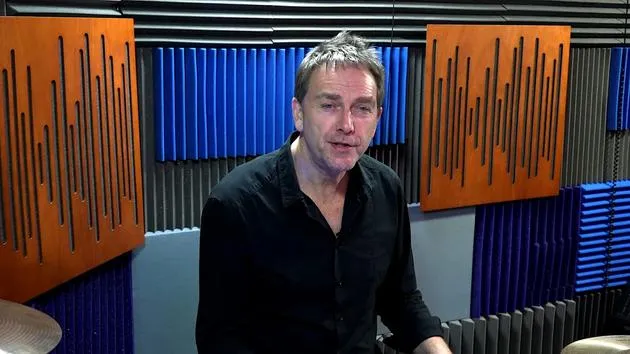
Lesson transcript
Music Lesson: "Scary" by Stormzy
Introduction
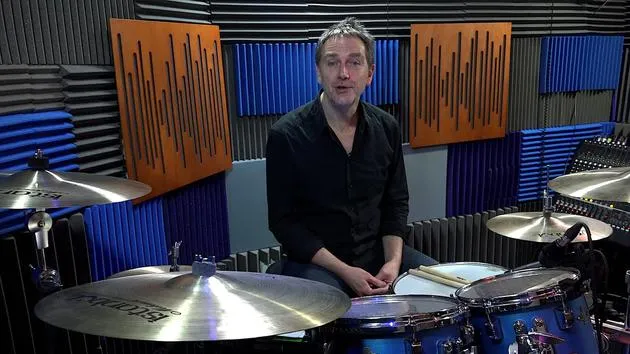
Okay, here we go with Scary by the Great Stormzy. This is a program drum track on the original track. But you would see Matty Smith, a great drummer, interpreting this kind of music, this grime music, in a live situation.
Track Difficulty
Now, this is a difficult track. I found it difficult to play. There's a lot going on, there's a lot of coordination here and a lot of changes. So let's just pick out some of these key things, and we can get through this tune.
Key Sticking Ideas
There's a few sticking ideas that I think are important. When you see my performance of this, you might notice certain stickings, and those were the stickings on fills that I found to work best for me.
Introduction Rhythm
Coming in from the intro, there's no hi-hat, so there's no kind of ride line thing going on. It's just a case of really feeling it. It's a fast tempo, so I'll be feeling that before I come in with that bass drum and snare groove.
Count In:
"1, 2, 1, 2, 3, 4."
That's a very spacious introduction, but I will be feeling the time, even though you can't hear that being played. I think it's a good idea to feel it.
Fill Analysis
This fill at the end of that A section is pretty fast. We've got to get from the end of that bar back to the hi-hat for the start of the B section. So let's just have a real quick look at that.
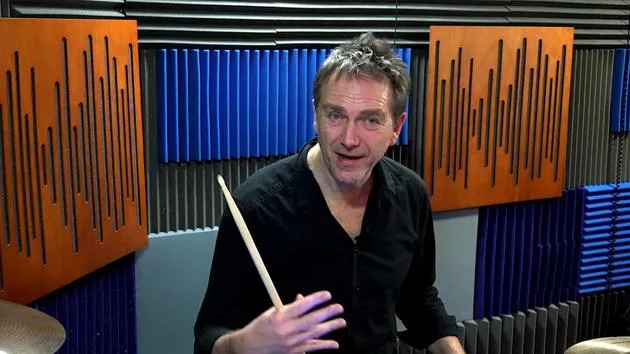
- I'm going to slow that right down because I'll show you just a very definite sticking which is just hand to hand.
- You have a choice of either coming out on this cymbal or this cymbal to get back to the hi-hat.
- I had to try that out a few times to find what felt most efficient.
Example Count
"1, 2, 3." (This is the last bar of section 8)
"2, 3, 4."
Fact: Stories playing on the snare drum. (My mistake, sorry.)
So, because we're finishing on the floor tom, my instinct would be to kind of crash over here and get back. But feel free to try and crash here as long as you can get back to the hi-hat in the next bar.
Coming Into the B Section
We've got this coming in from it. I'll try this side playing single stroke rolls. Just have a think about how you're coming in from which side to get back to the hi-hat in this B section.
Groove Characteristics
- The groove is a very heavy, sort of half-time grime stroke, almost like an R&B or hip-hop groove.
- I'm playing some very definite dynamics on the hi-hat in my performance that aren't notated, but that's just a creative choice for me.
- I'm playing rim shots, which is not essential, but it's just to get that sound and go for that kind of vibe.
Hi-Hat Pattern
We've got some 16th notes on the hi-hat there coming towards the end of the B section. Again, I would play that hand to hand. It's probably too fast to play as doubles and maybe not as clean.
Count: "1, 2, 3, 4."
So, those sticking ideas are very important. It's crucial to have a sense of which stickings you're going to use and which combinations of right and left hand will help you through that section into the next section.
Transitioning to C Section
At the end of the B section, there's a tricky fill where we've got a flam followed by three high tom hits.
"1, 2, 3, 4."
That's quite a tricky fill, it's fast, and of course, getting out of there into the next section is important.
Fill Breakdown
I start that fill with the left hand:
- Left, right, left, right, left.
If you can find another way around it, that's great. That's just the way I played in my performance.
D Section: Practice Offbeat Notes
We've got the C section, which is a breakdown section. Again, there's a fill there that I would play hand to hand, just playing 16th notes hand to hand.
The D section can be quite tricky because we've got these offbeat eighth notes, so it's worth just practicing some grooves with offbeat eighth notes and working through that specific section.
Solo Section
What's more pressing in practice here is that for the remainder of that section, we've got the develop section and this four-bar solo section.
- Generally, you can just improvise a little bit with that kind of offbeat groove.
"1, 2, 3, 4." (That kind of thing.)
I'm just kind of experimenting and messing around.
Importance of Groove
When you get to the solo section, you can check out those two downbeat quarter notes that go with the melodic track.
Reminder: In the solo section, don't go crazy. We don't need loads of big fills and crazy ideas. It's just nailing that groove and paying respect to the tune.
E Section Overview
Okay, we can get now into the E section, and it just runs through. You can see what's written there. We have this nice bass drum motif, which goes:
"1, 2, 3, 4."
Tip: Sing those notes; sing that rhythmic motif.
Then we get to the right cymbal, which goes down into the groove, having a developed section that is very interesting.
Transitioning Grooves
We're back into almost the introduction grooves in the B section:
"1, 2, 3, 4."
Then it starts to develop, so we can just experiment with that groove.
Dynamic Control
I'm trying to keep a nice dynamic here. There are no rules, other than I'm not developing too far; I'm just sticking within the boundaries of those grooves. You can still hear the tune running through my develop section.
Final Section Analysis
Okay, we're nearly there. That section at the end now is just a very, almost machine-like single stroke roll. The one bar of 16th notes at the end of the F section just has that huge:
"1, 2, 3, 4."
Be really positive, really bounce those sticks, really dynamic, really even sound.
Then, back to the hi-hat for the G section, and we're out completely.
- I'll add a little fill between snare, hi-hat, and floor tom at the end, followed by a crash to signal the conclusion.
Key Takeaways
There's a lot going on here. Pay attention, of course, to what's written, but also to the lovely developed sections and movement between hi-hat and right cymbal.
Double-check the D section, which has these offbeat hi-hats. It's very important to work on your coordination around that.
As always, read the walkthrough in your Rock School material. Listen to the backing track and what's going on with the other instruments in the backing track, and you should be fine with this track.
What I found difficult with this track was just moving from section to section.
Practice Tips
- Keep practicing, keep moving those sections.
- Feel free to practice each section as many times as you need to.
Conclusion: Have fun with Scary. It's a great track and a really good workout for the drums. Thanks, and see you soon.
29 lessons
2h 24m of structured video lessons
Advanced video features
Slow down, loop a passage, follow along
Mobile, tablet & desktop
Practise wherever you are
100% satisfaction guarantee
30-day money-back guarantee







