



Hazee Daze (Analysis)
Paul Elliott analyses the Rockschool funk piece 'Hazee Daze', tracing its acid-jazz roots through Herbie Hancock and Jamiroquai and how to approach the groove.

What's in the course
28 lessons (1h 32m) · 1 free
01. My Name Is – Eminem
1:00
02. Yellow – Coldplay
1:05
03. Untitled How Does It Feel – D’Angelo
1:06
04. Rebel Without A Pause – Public Enemy
0:57
05. People Get Ready – Curtis Mayfield
1:03
06. The Dock of the Bay – Otis Redding
1:01
07. Full Rudder
1:01
08. Z
1:07
09. Rattlesnake
1:03
10. Big Ideas
1:06
11. Hazee Daze
1:02
12. Hoedown
Free lesson0:58
01. My Name Is – Eminem (Analysis)
6:46
02. Untitled How Does It Feel – D’Angelo (Analysis)
2:48
03. People Get Ready – Curtis Mayfield (Analysis)
3:42
04. Yellow – Coldplay (Analysis)
4:15
05. Rebel Without A Pause – Public Enemy (Analysis)
13:38
06. The Dock of the Bay – Otis Redding (Analysis)
3:27
07. Full Rudder (Analysis)
4:19
08. Z (Analysis)
4:10
09. Rattlesnake (Analysis)
8:56
10. Big Ideas (Analysis)
3:34
11. Hazee Daze (Analysis)
You are here5:47
12. Hoedown (Analysis)
6:37
Lesson transcript
Hazy Days: Funk Lessons
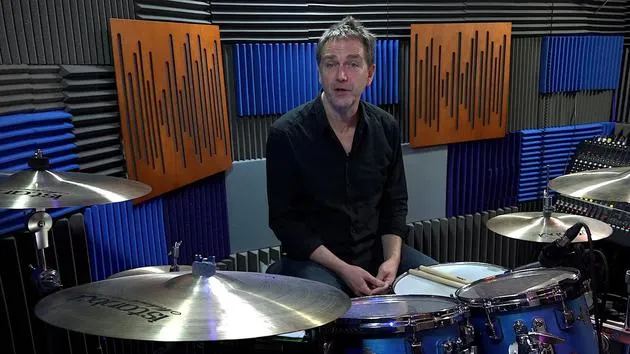
Welcome to Hazy Days, a funk piece influenced by jazz, funk, and acid jazz genres. You can hear the influence of Herbie Hancock and Jamiroquai in this tune.
To dive deeper into the origins of this stylistic blend, I recommend:
- Herbie Hancock and the legendary Harvey Mason on the Headhunters album.
- The precise and solid drumming of Derek McKenzie with Jamiroquai.
You'll hear these influences throughout this track.
A Section
In this track, the A section comes in reasonably empty.
Pre-count Recommendation:
- Give yourself a good pre-count:
- 1, 2, 3, 4, Jackie Ticket, Jackie Ticky Jacket, Jackie Jackie, Jackie, Jackie Jack.
- This fills in the space before you come in with the bass drum and hi-hat.
Importance of Pre-count
This is very important, so I recommend getting into the habit of doing that.
Grooves and Unisons
The grooves following that are primarily eighth note-based with some unison elements.
Tips for Playing Unisons:
- Aim for a clean distribution between the parts (hi-hat, snare, bass drum).
- Ensure unisons are tight; avoid a flam-like feel.
Unison Fills
- At the end of the B section and C section, there are hi-hat and snare unisons.
- Practice those bars separately to punctuate the ends of the sections.
Balance of Sounds
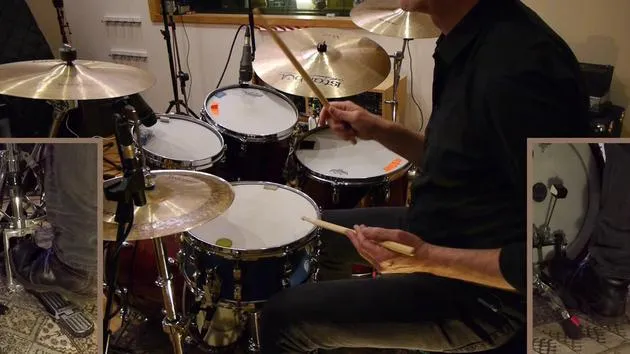
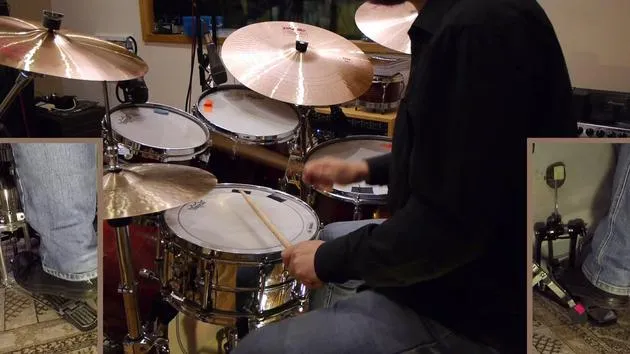
While playing this track, I typically use a rim shot in commercial situations. However, as this track felt laid back, I opted for a centre snare sound:
- Not too loud, but audible.
- Added a slight accent on the hi-hat for a choppy feel.
Playing Tips:
- Utilize the shoulder of the stick for an accent.
Practice Recommendations
-
Play with the Track:
- Practice without the click.
- Listen to what's going on around you; play with the other musicians.
-
Use a Metronome:
- Practice at the track's tempo or without any backing.
- Break down the groove as needed.
-
Work with Your Teacher:
- If you have a teacher, prepare these elements together.
-
Check Your Resources:
- Review the walkthrough and overview sections in your instructions book.
- There's great additional information and recommended listening.
I hope this has given you some food for thought! See you very soon!
28 lessons
1h 32m of structured video lessons
Advanced video features
Slow down, loop a passage, follow along
Mobile, tablet & desktop
Practise wherever you are
100% satisfaction guarantee
30-day money-back guarantee







