



How to practice
With
Paul Elliott
What's in the course
10 lessons (0h 46m) · 1 free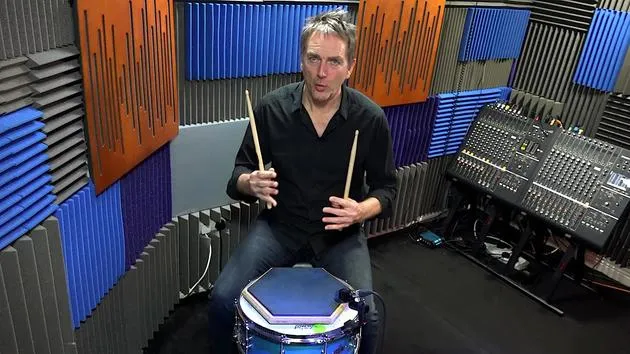
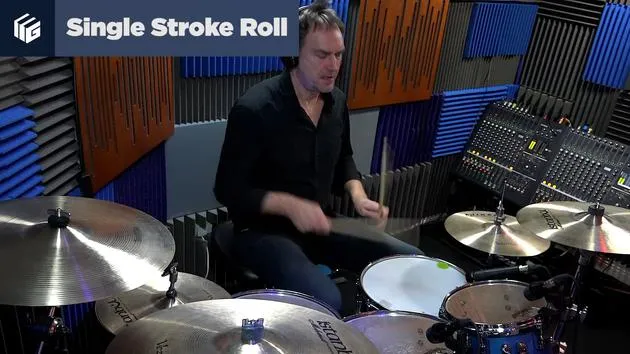
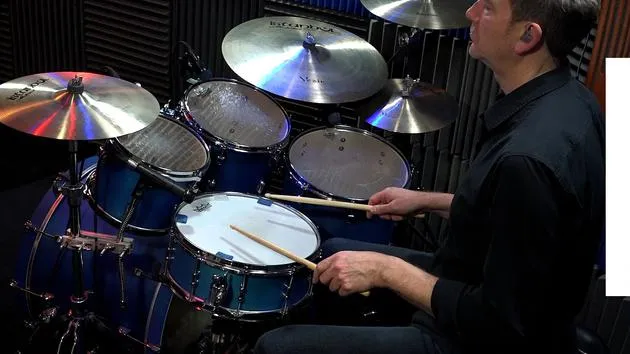
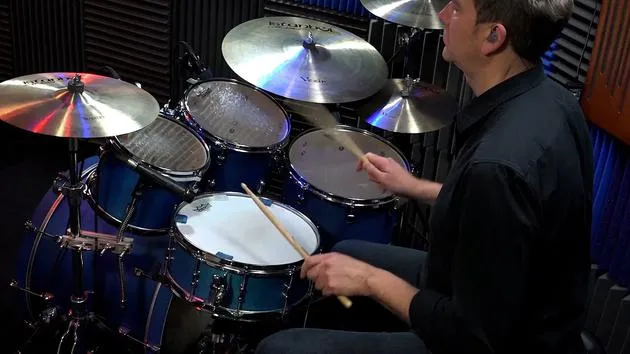
Lesson transcript
General Practice Tips
Introduction
I'd like to offer some general practice tips.
Physical Techniques
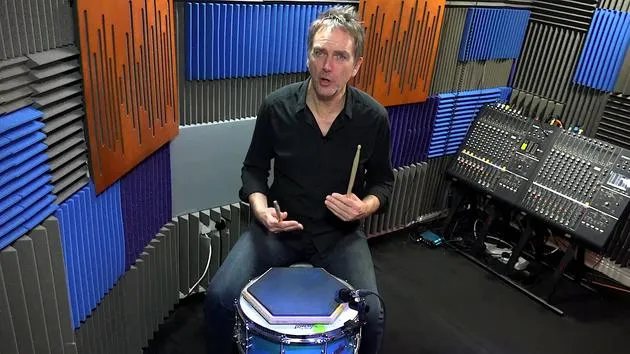
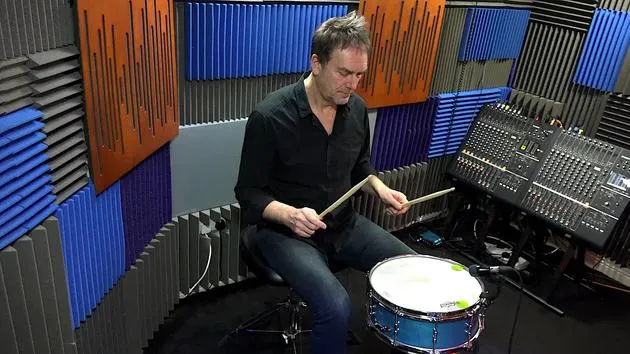
First of all, be aware of the physical techniques that you're going to use to get the sound that you need.
- This involves:
- Bounce Techniques
- Stroke Techniques or Stroke Sequences
Remember, it's from those techniques that you get the sound and the dynamics that you need. Also, think about being physically efficient so you use the right strokes and the right movements to get the correct sound.
Methodical Practice
- Work methodically and slowly.
- Break everything down.
- Be patient.
You don't need to rush through the exercises; just take your time. If you need to break things down into separate bars or even separate beats and play them many times, that's fine.
"There are no rules. Just take your time on the exercises."
It's much better than trying to rush through everything.
Using a Metronome
Work with a click, a metronome, or a sequence to develop this inner clock.
- This term refers to developing this inner time flow.
- Focus on achieving:
- Good metronomic time
- Knowledge of pulse and subdivisional changes
Regular Practice
Practice regularly.
- It's much better to practice a little bit every day than to, for example, do eight hours in one day and then not practice for two weeks.
- Aim for about five days a week, doing as much as you can to have that cumulative practice rather than binge practice.
"This is very important, so practice regularly."
Stay Connected
Make sure that you speak to your teacher or do further research if you don't have a teacher about all the components of the technical studies.
- It's very beneficial to run this by people.
- Speak to friends who might be drummers or those preparing for exams.
Just have a chat and keep in touch with others so you don't feel entirely on your own in this process.
"Speak to people and feel connected with everyone else."
Technical Exercises
Finally, you'll see that in the technical exercises, there are sections called Groove and Fill and Stylistic Studies appropriate to your grade.
- I'm not going to demonstrate these, but essentially they're combinations or extensions of the pieces, the grooves, the styles, and the concepts that you'll need to practice throughout the whole grade package.
So, if you've prepared your pieces, grooves, and technical exercises, you will be well prepared for the exam.
Conclusion
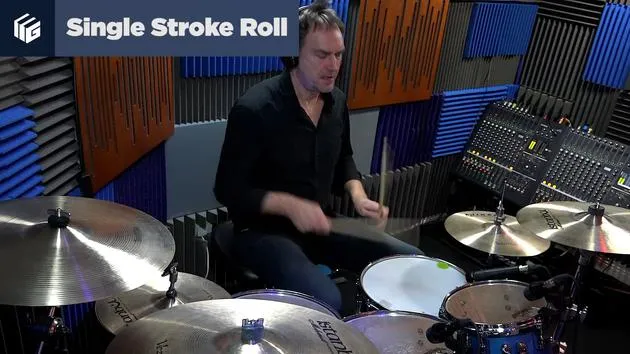
Here are the technical exercises for your grade, played at the tempo stated in the book.
I wish you good luck!
10 lessons
0h 46m of structured video lessons
Advanced video features
Slow down, loop a passage, follow along
Mobile, tablet & desktop
Practise wherever you are
100% satisfaction guarantee
30-day money-back guarantee
Meet your guru
Meet your guru
Paul Elliott is a respected drum educator and clinician whose students hold top gigs across the industry, including drummers for Kylie Minogue (Tom Meadows), Ricky Martin (Laura Fares) and The Cure (Jason Cooper). He has shared clinic stages with Steve Smith, Manu Katché, Simon Phillips and Gary Husband, and his own playing career included work with Frank Gambale, Guthrie Govan and Shaun Baxter. Drummers such as Phil Selway (Radiohead) and Ash Soan (Adele) come to him for technical advice. In his courses he works through the technical requirements grade by grade, demonstrating each rudiment and explaining not just how to play it but what mastering it lets you do on the kit.







