



Hard Rock 2
Con
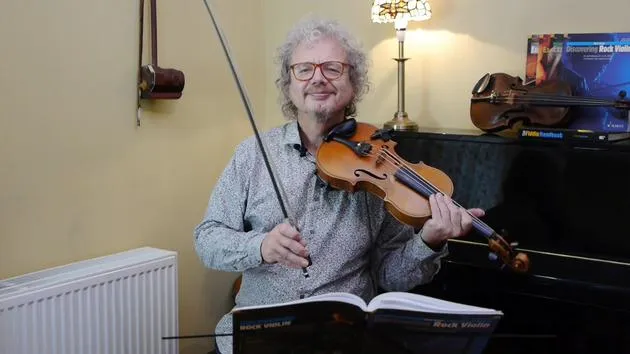
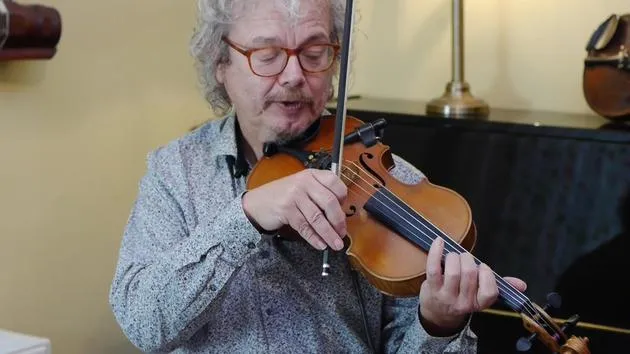
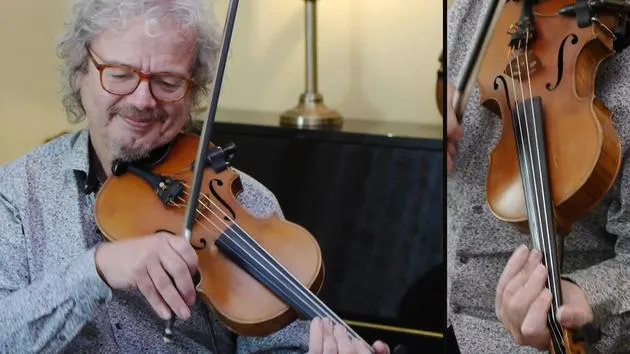
Chris HaighChris Haigh sube el violín a 11 para el heavy rock, aplicando síncopa, el intervalo del diablo y licks de power chord tomados de la guitarra solista.
© 2011 Schott Music Ltd, London
Qué incluye el curso
18 lecciones (1h 41m) · 1 gratis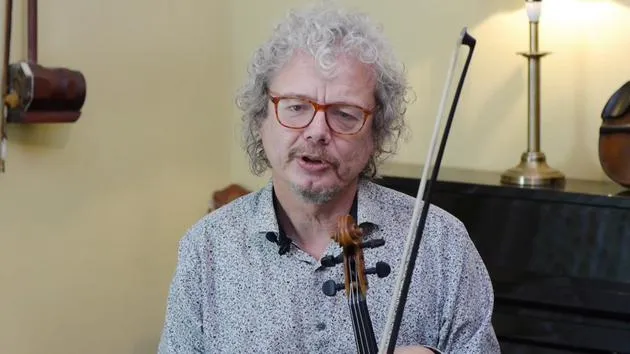
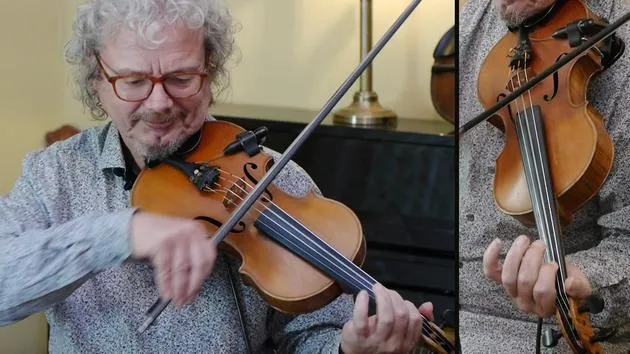
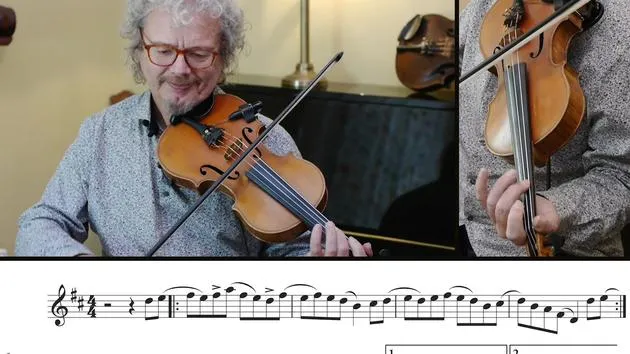
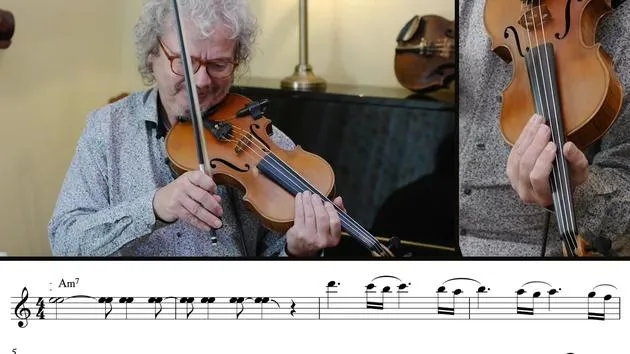
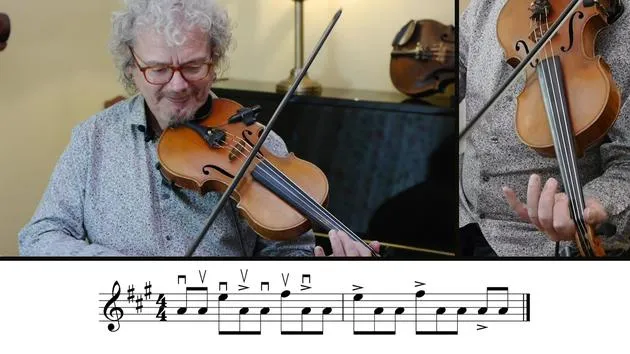
Transcripción de la lección
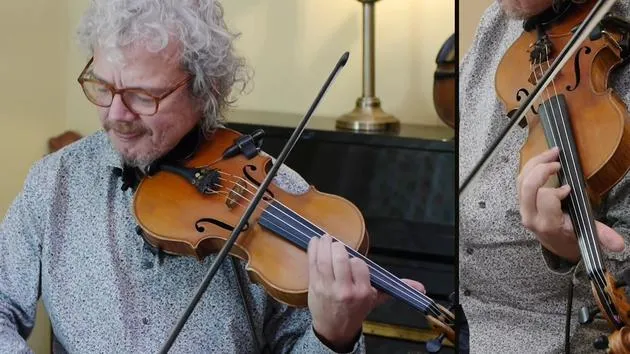
Heavy Rock Violin Lesson
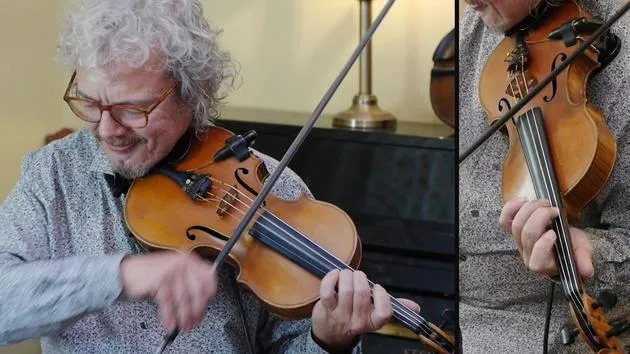
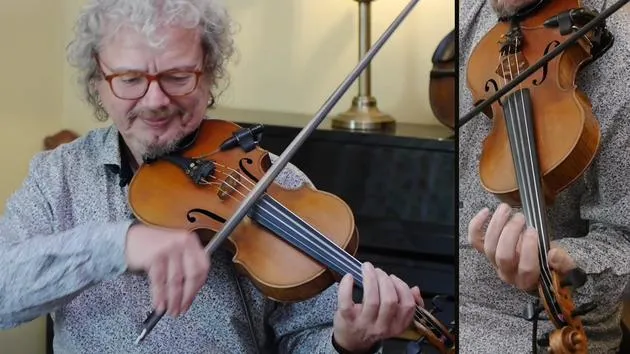
Hi! If you remember back to lesson one, which was a long time ago, at the beginning of this epic and colossal journey that we've undertaken together, you'll recall that I promised you we would eventually get to the point where you could turn up to 11 and rock out.
Well, we've finally reached that goal, and today we're going to talk about heavy rock violin.
Key Concepts
We previously mentioned several important aspects of playing rock riffs:
- Syncopation
- The Devil's Interval
- Power Chord Conversion
Now, let's try playing some of these concepts with backing from some heavy guitar.
The Rock Violinist's Goal
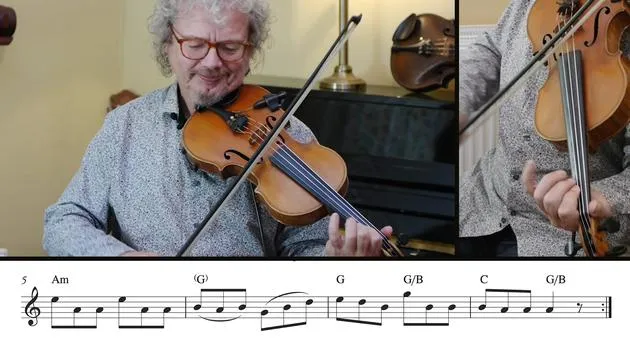
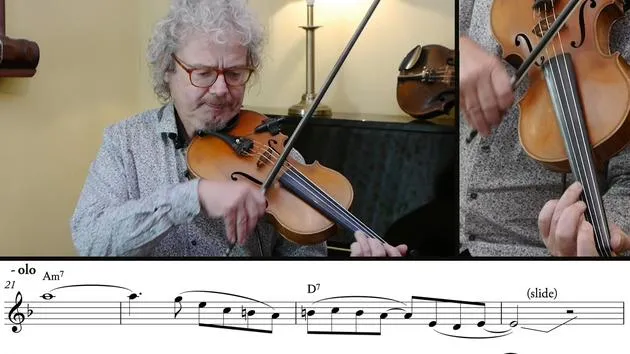
The goal of many, and possibly all, rock violinists is to take the place of the lead guitarist. We're going to explore a whole series of licks borrowed directly from the lead guitar.
Lick Exercises
-
First Exercise:
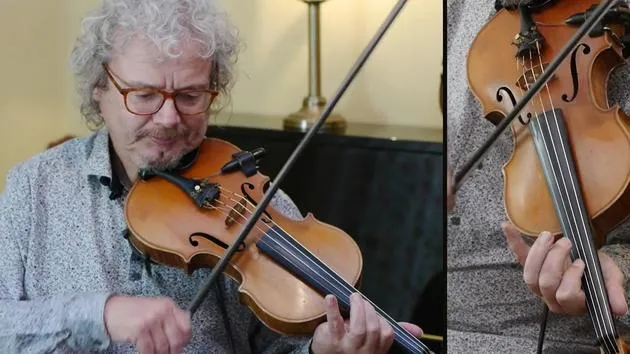
- Technique: Second finger, fourth finger open at an indeterminate speed.
- Play: Slow, medium, or fast. Let's hear that one with some backing.
-
Starting on the Upper Note:
- Play: Similar to the first exercise but begin on the upper note.
-
Strength Building:
- Target: Forefinger strength.
- Position: Move up to the third position.
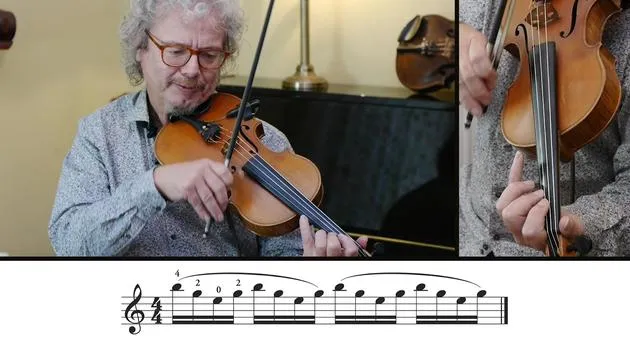
- Exercise: First finger, first, second, first open.
-
Eight Note Pattern:
- Position: Third position, second finger, first finger.
- Play: This is an eight-note pattern.
-
Grouping of Sixteen Notes:
- Structure: Two sixes and a four.
- Play: Here's the first six, followed by the next six, and then a four (slowly).
-
Stretch in Third Position:
- Exercise: Second finger open and then up to the fourth.
-
Bluesy Lick:
- Start: Second finger, bring the first finger up next to it.
-
Fast Sextuplets:
- Challenge: If your forefinger isn't strong enough, this may be tough.
- Play at Different Speeds: Works better slow, but let's try it fast!
-
Big Stretch Test:
- Exercise: First finger to fourth finger to open string.
Final Stretch
Now, here's the real test:
- Big Stretch: If you have small hands, this may be nearly impossible. If you have medium-sized hands, you might need to adjust your little finger to make it work.
Disclaimer: Please don't go to the hospital claiming I told you to do this, just practice!
Assignment
-
Research Mark Wood:
- He is a master of the heavy guitar rock riff played on the violin.
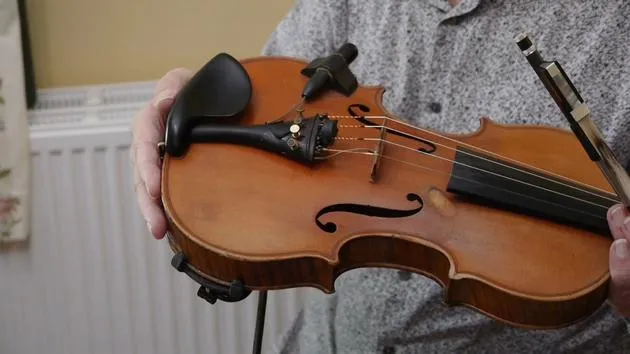
- Products: He designs and manufactures rock violins, like the Viper and the Stingray.
-
Explore His Innovations:
- Mark has a device that allows your violin to stand on its own, letting you wave your hair around and throw your arms in the air while performing. It's an amazing concept.
-
Practice:
- Look at all the licks I've shown you.
- Practice until your fingers are bleeding and you can play them at full speed.
-
Experiment with Keys:
- See if you can play them in different keys, most will be challenging but E and A should be manageable.
-
Mirror Practice:
- Get yourself a full-length mirror and try posing while doing these licks.
Keep practicing and rock on!
18 lecciones
1h 41m de lecciones en vídeo estructuradas
Funciones de vídeo avanzadas
Ralentiza, repite un pasaje, sigue la partitura
Móvil, tablet y ordenador
Practica donde quieras
Garantía de satisfacción 100%
30 días de garantía de devolución
Conoce a tu gurú
Conoce a tu gurú
Chris Haigh es violinista profesional desde hace 25 años, con experiencia en muchos géneros distintos. Ha tocado en más de 75 álbumes, trabajando con artistas como Alison Moyet, Bob Geldof, All About Eve, Michael Ball, David Soul, Oumou Sangare, The Quireboys, Riverdance, Morcheeba, James Galway y Steps.
Ha tocado swing y jazz con The Kimbara Brothers, Diz Disley, Le Jazz, The Hot Club of London y los Quecumbar Allstars, y lidera una banda de swing soviético de siete integrantes, The Kremlinaires.
Chris imparte clases y talleres sobre técnica de violín de jazz y ha enseñado violín de jazz en las universidades de Middlesex, Brunel y Newcastle y en el Truro College. Entre sus créditos como autor figuran nueve libros de violín, entre ellos The Fiddle Handbook.
También dirige Fiddling Around (fiddlingaround.co.uk), probablemente la fuente de información sobre violín más completa y visitada de la red.







