



How to play fast

With
Torsten GoodsTorsten Goods shares how he built his speed and clean staccato picking, with the influences and practice habits behind his fast rock-and-blues lead playing.
What's in the course
37 lessons (1h 38m) · 1 free
01. Introduction
1:00
02. Jazz/ Blues concept - pentatonics and major scales
5:35
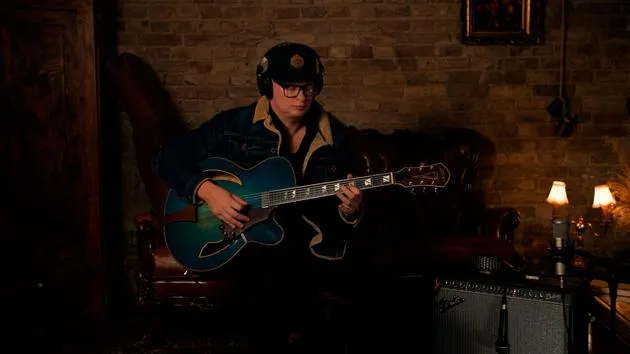
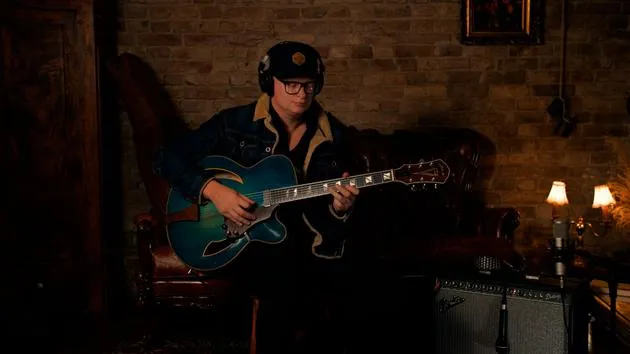
03. G Blues - Solo Demonstration
Free lesson1:22
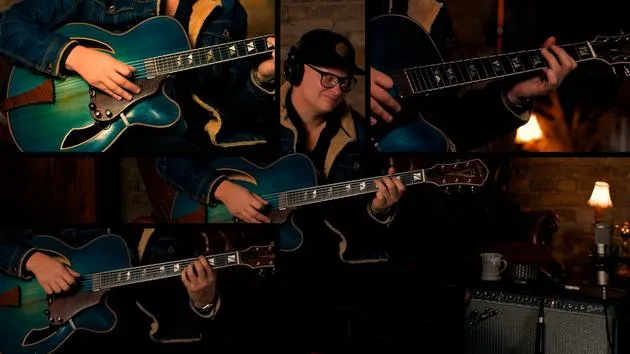
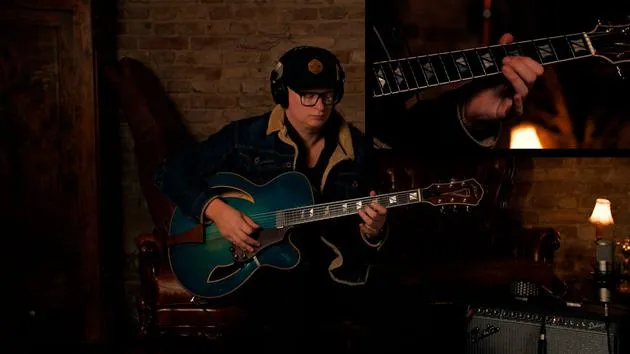
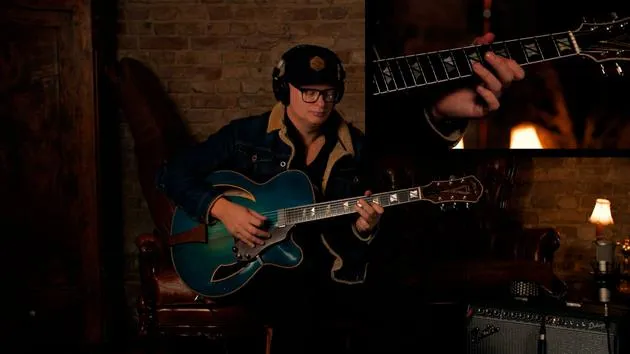
04. G Blues - Solo Demonstration (Splitscreen + Rhythm Guitar)
1:22
05. Advanced Blues playing - introduction
0:44
06. G Blues - Inspirational Performance
1:21
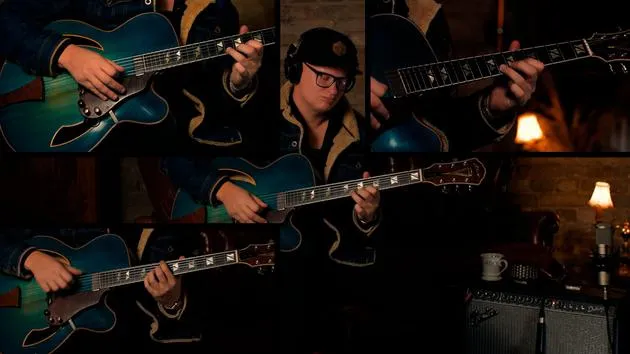
07. G Blues - Inspirational Performance (Splitscreen + Rhythm Guitar
1:21
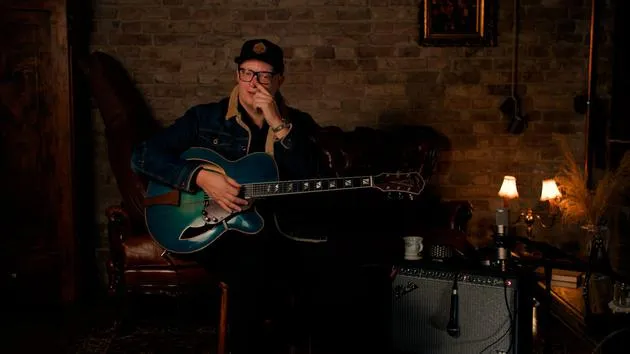
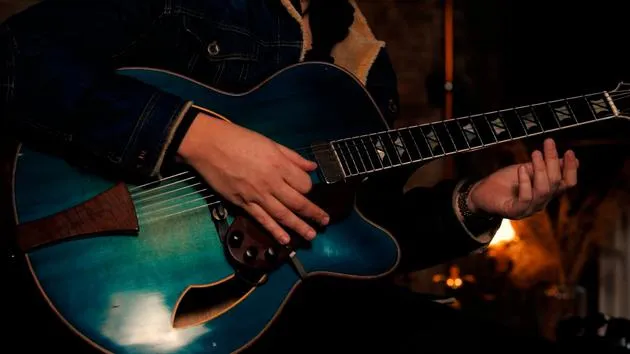
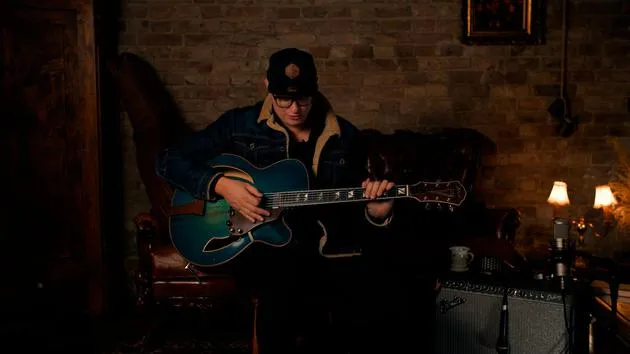
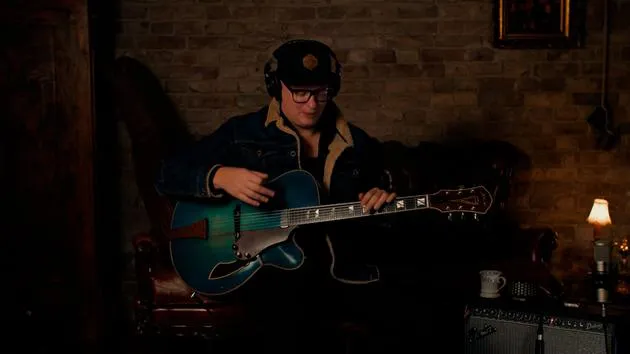
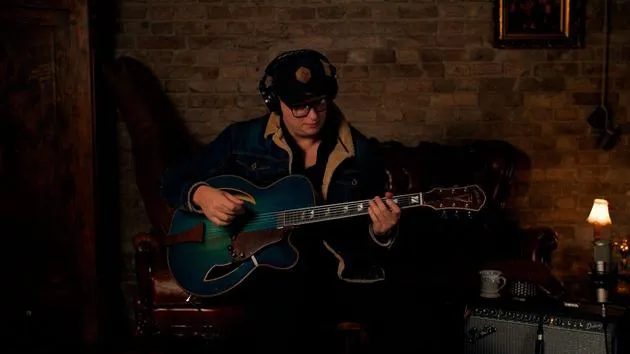
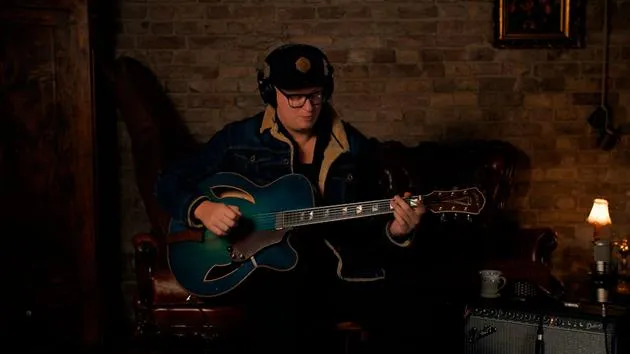
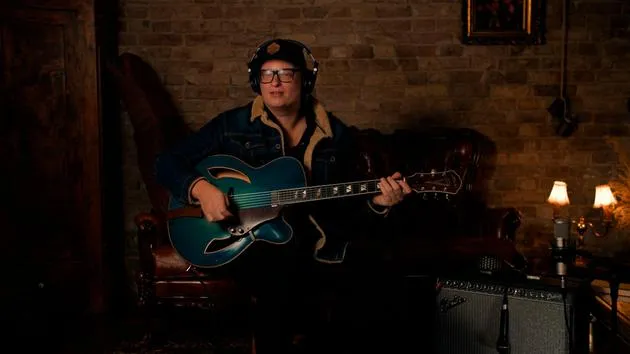
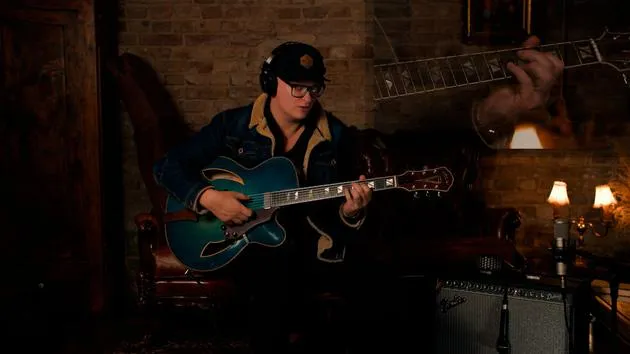
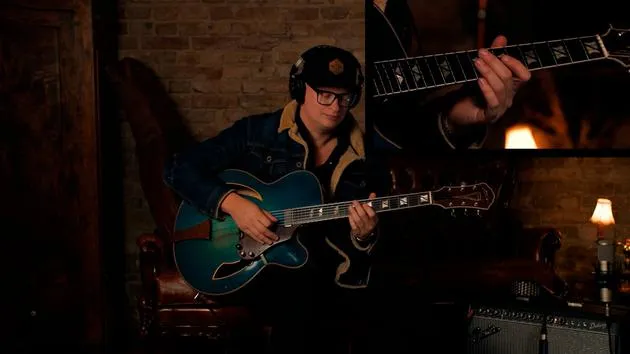
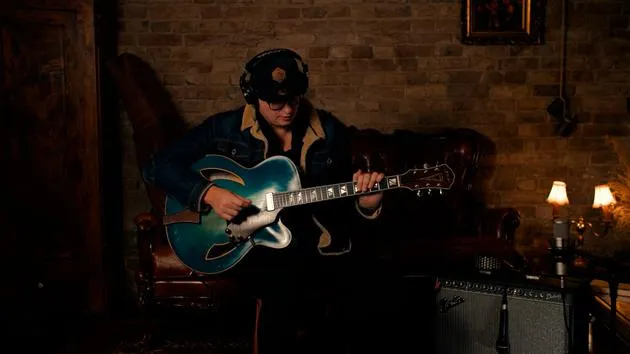
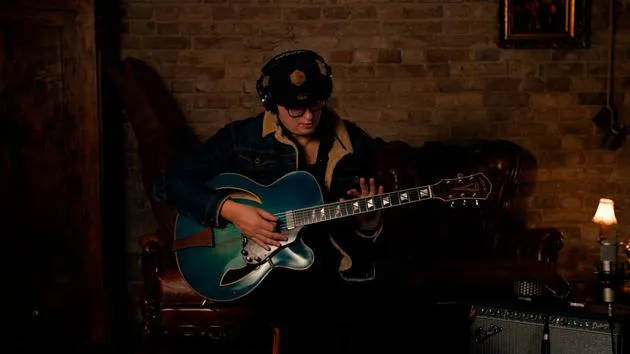
Lesson transcript
Music Lesson: The Importance of Technique
All right, so the technique, obviously, when I was a teenager, it was a very important thing for me. It was the absolute stereotype, you know, I was a stereotypical young, long-haired guitar player who wanted to play fast. I have to admit that!
Influences
It's sort of where a lot of us came from in our generation. I really wanted to play fast as soon as possible when I was 13 or 14. I have to say, Paul Gilbert and Yngwie Malmsteen really influenced me a lot.
Key Techniques
As I mentioned before, Paul Gilbert had this particular lick:
- E minor lick: This was really a major thing that got everything else together.
- I practiced this a lot. Now I don't practice it anymore, but it's still ingrained because I did it so much from ages 14 to 18.
- It really helps me play everything else, anything I want to play in jazz, blues, R&B, or pop contexts, I can do without any problems. I'm pretty sure this is because I practiced that so much.
Lick Breakdown
This E minor lick, which you can probably see on the tablature here, has some key components:
- The most important part is the skip between the strings, specifically between the G and D strings. That sounds clear and good, obviously.
- If you can master the skip between these strings, then you can skip between all the strings.
Conclusion
This is just about combining different techniques and ideas. But remember, this Aeolian minor E minor exercise is where I started, and it opened up many different possibilities for me. Definitely!
37 lessons
1h 38m of structured video lessons
Advanced video features
Slow down, loop a passage, follow along
Mobile, tablet & desktop
Practise wherever you are
100% satisfaction guarantee
30-day money-back guarantee
Meet your guru
Meet your guru
Torsten Gutknecht was born in 1980 in Dusseldorf, the son of a German father and an Irish mother. The family moved to Erlangen, Germany, where Torsten grew up. Thanks to his mother's well-stocked record collection, which included Irish folk songs alongside jazz greats ranging from Duke Ellington to Oscar Peterson, Gutknecht found an early access into the world of jazz. His first steps as a guitarist, however, were typically influenced by rock and pop. When he was 14 Gutknecht began to study in earnest. At the age of 17 he found a teacher who could instruct him in the intricacies of improvised music, the acclaimed guitarist Peter O'Mara. His talent and enthusiasm were obvious, and this quickly helped to get him into master classes with some of the greats of the guitar fraternity. While he was still in school he attended workshops given by Jim Hall and John Scofield in New York, and took lessons with the virtuoso gypsy guitarist Bireli Lagrene in Strasbourg, France. This last experience was a major influence on his development.
In 2001 as a 20 year old, Gutknecht travelled to New York with a stipend to study at the prestigious New York New School, where he studied with Jack Wilkins and Vic Juris. But it was even more important for Torsten to plunge into the musical life of the 'Big Apple'. He worked with Seleno Clarke, Barbara Tucker, Reverend Run (from Run DMC), and met George Benson, a major influence who inspired Gutknecht to sing along with his playing. He was also able to perform with guitar legend Les Paul, who gave him his artist name 'Torsten Goods'.
Before his stay in New York, Goods had been working with no less energy and determination in Germany. In 2000 he became a member of the German Youth Jazz Orchestra under the direction of Peter Herbolzheimer, and shortly thereafter - before his graduation - he recorded the first album under his own name, in 2001, 'Manhattan Walls' (Jardis), with Tony Lakatos, Davide Petrocca, Dejan Terzic, Guido May, Jan Eschke, Andreas Kurz, and Rick Keller.
In 2004 there followed 'Steppin' (Jazz4ever). His band at that time, which consisted of Jan Miserre, Marco Kuhnl, and Christoph Huber, was augmented by crack German players Olaf Polziehn, Martin Gjakonovski, Dejan Terzic, Tony Lakatos, Johannes Enders, and Lutz Hafner. The album was nominated for the German Record Critics' Award, and international critics acclaimed Goods as an 'emerging new force in the jazz scene'. Shortly after, in 2005 Goods was the only European to be chosen by Herbie Hancock and Wayne Shorter for the final round of the 'Thelonious Monk Jazz Guitar Competition' in Washington D.C. Since then Torsten Goods has been touring extensively throughout Europe, Asia, and the USA. During this period he has worked with the likes of Bob James, Chris Potter, James Genus, Terri Lyne Carrington, Barbara Tucker, Dawn Tallman, Marcus Fugate, Jimmy Bruno, John Ruocco, Johannes Faber, Leszek Zadlo and Patrick Scales.
In 2006 Goods began to work exclusively as an artist for ACT. His ACT debut, 'Irish Heart' (ACT 9714-2), on which he delves into his Irish roots, marked a decisive breakthrough: not only did it introduce him to a wider public, first and foremost he became recognized as a singer. Goods is not only equipped with a virtuoso guitar technique - he also has an exceptionally sensitive and expressive singing voice that is at home with the blues as well as swing and pop. The 'Irish Heart' tour took him through not only Germany; it also brought him invitations to some of the major European festivals such as the Paris Jazz Festival, Jazz Baltica, the Leverkusen Jazz Days, Burghausen Jazz Weeks, JazzKaar Estonia, the Pure Jazz Festival in Den Haag, the Traumzeit-Festival and Competitions in Brussels, as well as the London International Jazz Competition, the Montreux Jazz Guitar Competition, and the European Guitar Award in Dresden.
With his second ACT album, '1980' (ACT 9719-2), Goods once again substantially extends the range of his music. With adaptations of the works of outstanding artists from 1980 (the year Goods was born) along with his own compositions, Goods follows on the tracks of such great jazz guitarists and singers as Al Jarreau and Michael Buble.
In June 2013 the long-awaited fifth album 'Love Comes To Town' (ACT 9726-2) was released on ACT. The new CD was produced by Nils Landgren. Besides him, other well-known guests like Till Bronner, Wolfgang Haffner, Magnus Lindgren, Ida Sand and Viktoria Tolstoy appear on the album. On 'Love Comes To Town' Torsten Goods refers to his musical roots in blues, jazz and R&B while simultaneously focusing on the future as a matured artist. The album was well received in Germany for its groovy pop jazz-sound that was even compared to George Benson.
It is this mix of virtuoso fretboard technique and soulful, song-led playing that Goods brings to his teaching. In Play Authentic Rhythm & Blues Guitar, he draws on everything from those George Benson and Les Paul lessons to a lifetime in blues, jazz and R&B, showing you the feel, phrasing and chord work that make rhythm and blues guitar come alive.







