



Vierter Groove - Bourbon Street

Mit
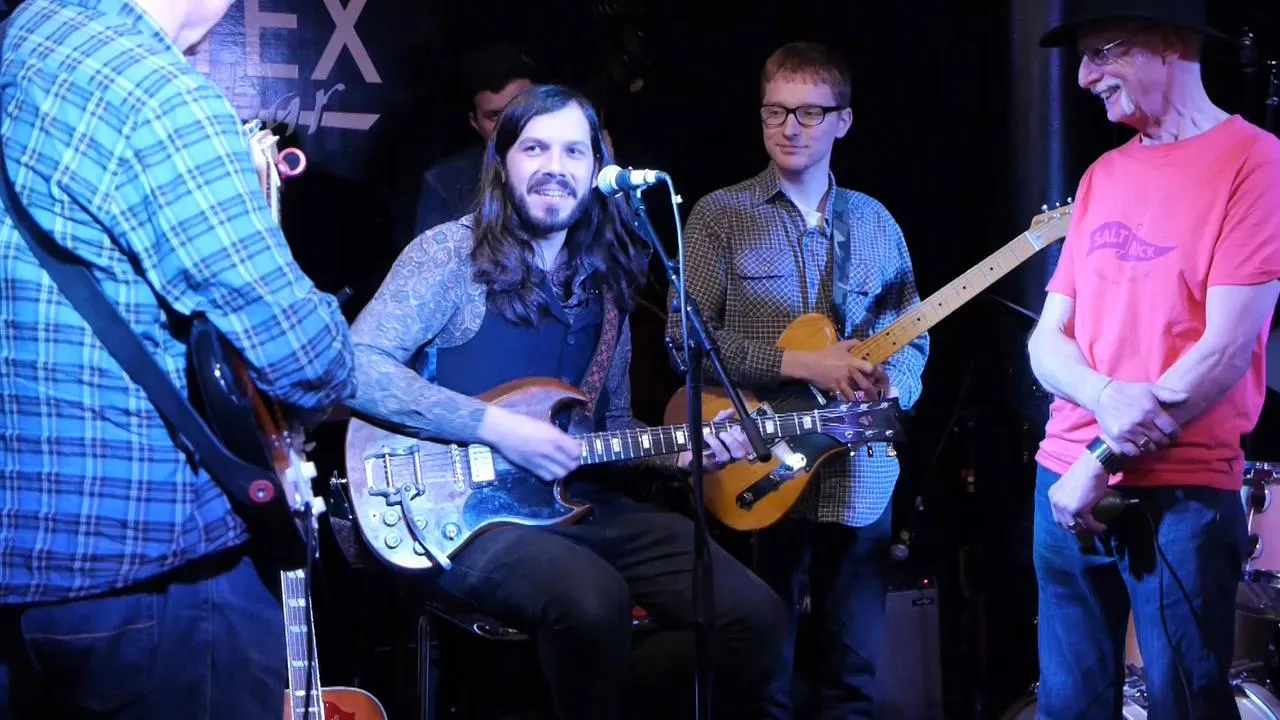
Paddy MilnerDie Band spielt das New-Orleans-Stück „Bourbon Street" und geht dem Feel und der Attitüde nach - der betonten Viertelnote und dem „Four-and"-Rhythmus - die es auf der Bühne funktionieren lassen.
Das steckt im Kurs
16 Lektionen (2h 45m) · 1 gratis
01. Aufführung von Tom Waits - Way Down In The Hole
3:33

02. Erste Band - Interpretation
6:38
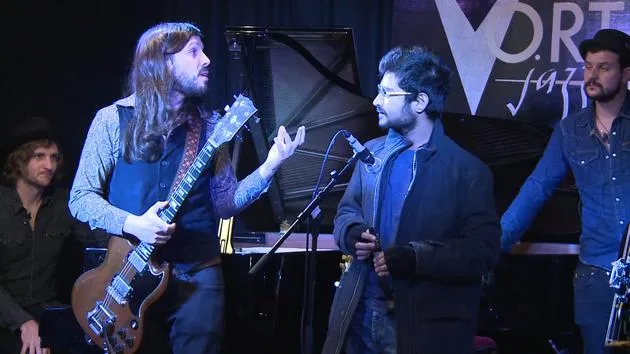
03. Erste Band - Analyse
17:28
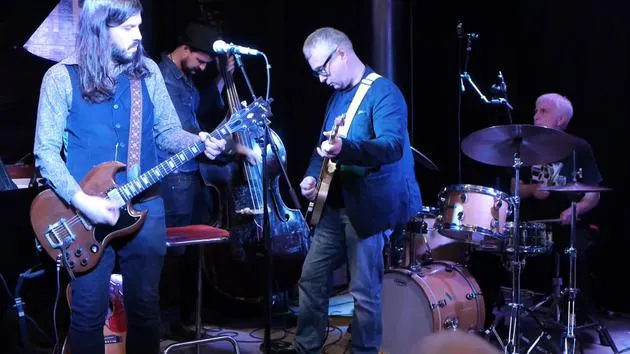
04. Zweite Band - Aufführung
3:27
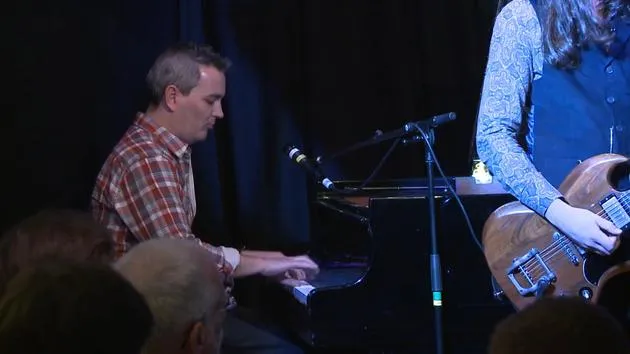
05. Zweite Band - Analyse
13:09
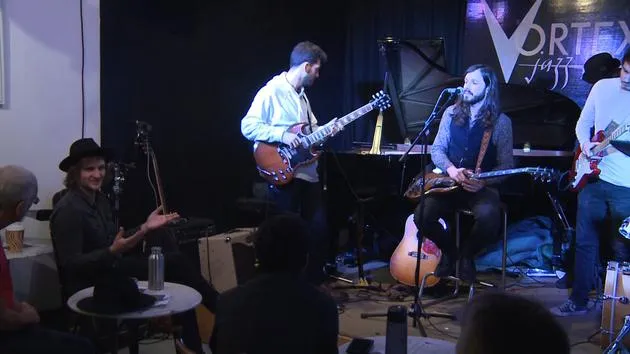
06. Dritte Band - Performance
7:28
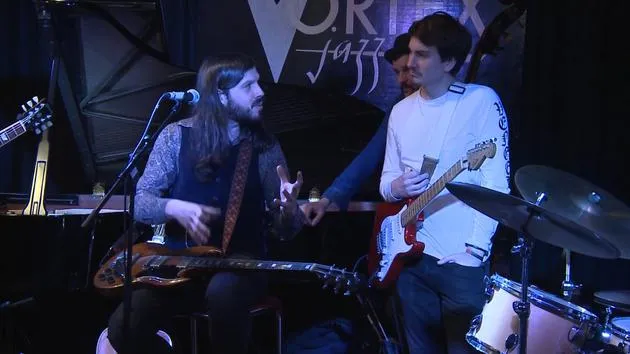
07. Dritte Band - Analyse
6:27
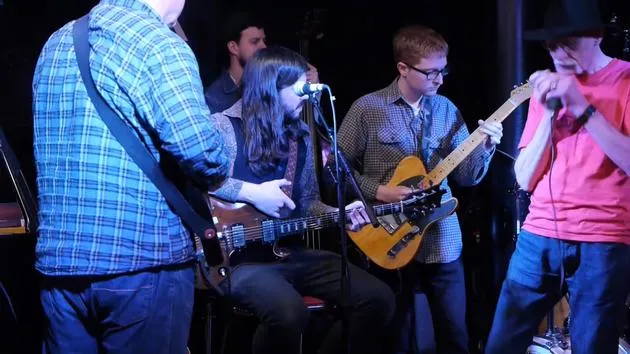
08. Vierte Band - Auftritt
4:37
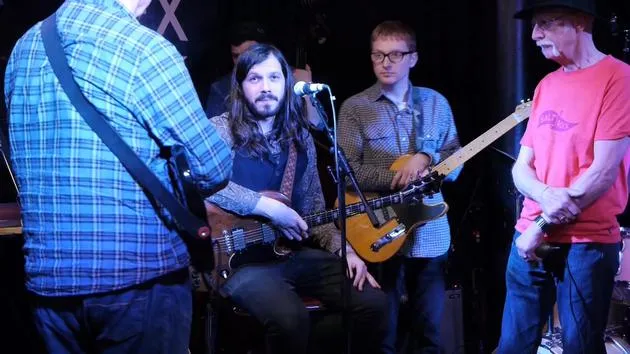
09. Vierte Band - Analyse
4:24
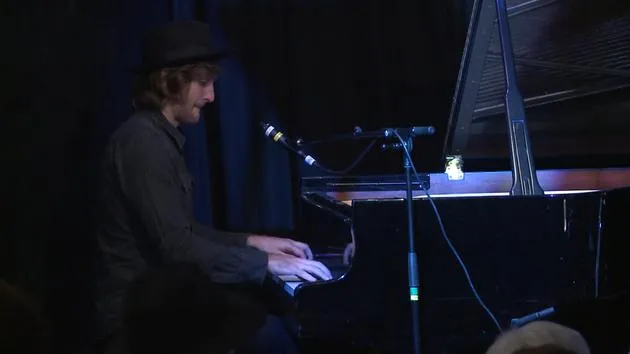
10. Performance - Mardi Gras
7:56
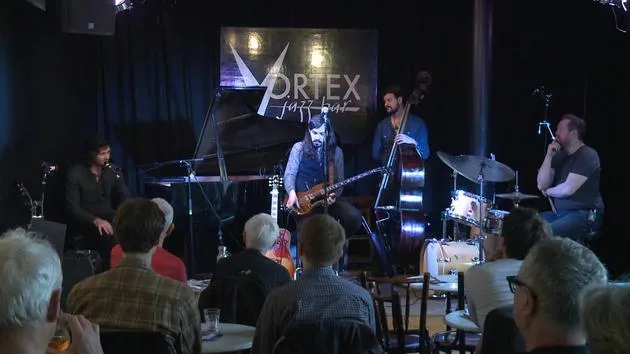
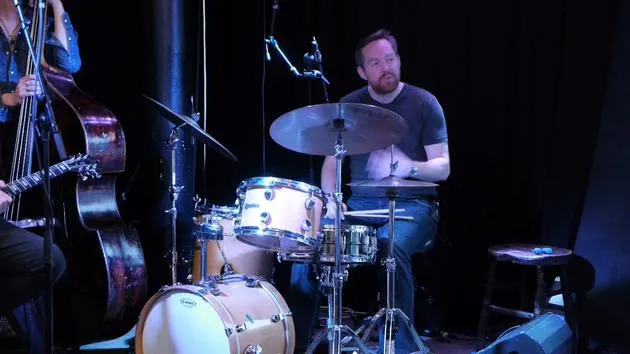
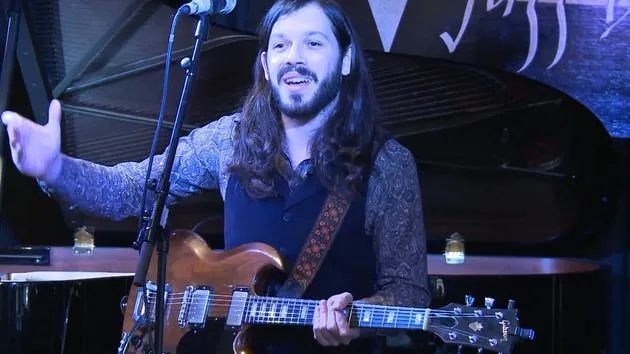
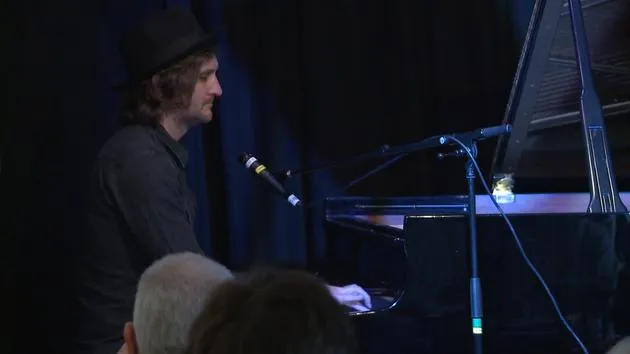
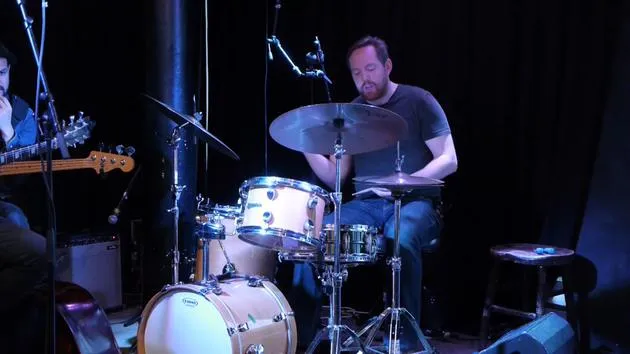
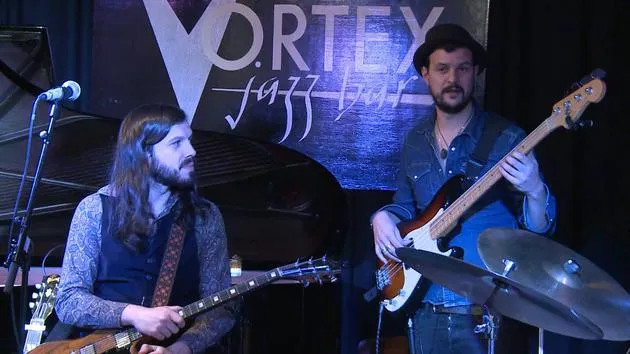
Transkript der Lektion
Bourbon Street Music Lesson
Street. Bourbon Street. Australian.
Yes, yeah, Australian. One, two, one. That kind of thing.
But it does mean that in order to do that, your crotchet has to be really, really strong. If the crotch is weak and the in-between stuff is weak, you've got nothing holding it up anymore.
New Orleans Rhythm
I think what's quite interesting about generally in New Orleans, there's that sort of like four-and thing that's really prevalent in everything. So, like you're saying that, which is almost like a Caribbean thing, again, coming from that same place that carnival music comes from.
You know, that sort of real emphasis on that forehand. Yes, it's sort of when there's a little gap after it, so it really propels it back.
And I guess that's coming from that push and then that snap back, isn't it?
Like we were talking about the 12/8, you think about it, but you don't necessarily play it sometimes as well. It's all about what you're thinking about.
The Feel of the Music
Yeah, exactly. And subdivision sounds a bit stupid, really. I mean, just the feel of it, basically, to have that strong inner groove for everybody.
The track will sound really, really good on stage. Like, the song will sound great. So, to have,
Yeah, just think Ray. Think Ray Brown, you know? Just have your inner Ray Brown going and you'll be fine.
The Lift
The lift is like, it's up there, isn't it? So, I mean, if you were to write it out, it's probably maybe just a little bit forward, just in front of the beat.
But you don't want to think about it like that. You just want to have that feel, you know? And if you can find musicians that breathe in the same way, then hold on to them.
Because everyone can learn the notes. The notes are easy. You say, "play these chords." That's the easy bit. Or play this pattern: right, right, left. That's the easy bit.
And that's why a lot of people teach that. You see a lot of drumming videos going, "do three rights and two feet." Great! How do you apply that? Why would you apply that? It's not really talked about.
What it actually is, it's the most difficult beat to play in this situation.
The Structure of Bourbon Street
So, yeah, there's all of that. There's a lot to think about.
Sure. I guess that particular song was a song called Bourbon Street.
And it's more, it's like a different form as well. It's like a 16-bar form, an A and B section. So, yeah, I guess it's more of a jazz form, to be honest.
But again, there's, you know, a lot of blues kind of influence too, right?
Yes. Yeah, I guess it, it's got, it's more complicated in terms of its basis underlying harmony.
But it's still a lot of things that we were talking about doing in the slow blues. Those reharmonizations, those 16-25, they're all sort of represented in there.
It's sort of take from that and put into there, and you know, it all sort of is the same pot, I suppose.
Playing the Sequence
Do you want to play just the sequence? Just so they,
Yeah, I mean. Yeah. So the sequence to Bourbon Street is basically B flat for six bars. Then to the five.
Again, actually there I've just done a little substitution, if you like, or a little chord over the top that's sort of implying a 2-5-1 played over the 5.
That sort of 2, which in the key of B flat would be a C7 played over the F. Actually, I'll put a flat 9 in as well over the F. Sounds kind of discordant, but in the course of the actual tune, it kind of just adds a bit of grit to it.
The B Section
So that's kind of the A section. Then the B section starts off the same. Sorry, so it goes to chord four then kind of chord one bar over the five.
Or you could play it over the one chord six, then chord two, five to one again. So, I mean, it's basically simple harmony with a couple of substitutions in it, essentially.
Blues and Common Sources
It's an interesting question to say that sounds less bluesy because then I guess it's this idea of linking together stuff today that's essentially all derived from the blues.
To me, and I don't think my opinion is more valid than anyone else's, just subjectively when I hear Paddy playing that even with all of us, I'm like, "Oh, yeah." To me that sounds really bluesy. But, you know, maybe someone else's idea of, it's kind of...
Is it your interpretation of...?
Yeah, I think it's saying. Maybe it's not necessarily derived from the blues. I would say it's maybe that the blues and all these things are derived from a common source or have some common sources.
I think in New Orleans in particular, there is that African influence via the Caribbean. They say, you know, New Orleans is the northernmost Caribbean town rather than the southernmost American town, or one of the southernmost American towns.
And, you know, I think that's the case in terms of its musical and cultural influences.
Groove Ideas
So, yeah, I think, and that is part of, I don't know, in a way it's kind of developed. It's got some of the same influences as some of the blues you might hear in Mississippi or something, but it's also got a stronger influence of this sort of African via the Caribbean thing.
We got like Iko as well, haven't we?
Yeah. As a groove idea.
Yeah, yeah. More of a clave.
Yeah, yeah. Would you just try playing that as well?
Yeah, yeah, sure. Just go around the groove for a bit.
Do you want to sing it, man? This is a,
Does everyone know Iko? Iko.
So you might have played this, but we all basically play the same thing. Unlike the other one where we all play something different, now we're all playing something the same.
It's a good opportunity to hear if everyone's really listening to each other or not, or who's listening to who.
Is someone listening to me or am I listening to them? Some people have big bust-ups about these sort of things, believe it or not.
But we'll try. We'll see if we can all sit in the same way on this rhythm.
One, two, a one, two, three.
That was very nice!
The Importance of Unity in Music
And so simple things like that, if you play together as a group, it's far more effective than if you're off on your own.
It only takes like three or four people just to do the same thing. And you might think this is really boring. "I'm doing the same thing," but out front, hopefully, it sounds a lot stronger.
I think on that point, if you're doing this right, it doesn't feel boring.
No. For me, when I'm playing that rhythm and it locks, like it does, then I never, I don't see how any musician could get bored of that.
Because the music you're making as a four-piece sounds so good. You just want to think in your head, "I want to play this forever!" because it feels so good.
If it doesn't, like you said, it means someone's probably not quite got into joining the party yet.
And that's when you start feeling bored because you just feel like it's not sounding good.
The Nature of Groove
I mean, not to get too deep about it, but where does the groove come from? You know? Why does it exist? Why doesn't it exist in classical music?
If we go back to these 12/8 grooves and play along to those, you'll find that no one breaks those patterns or have very slight variations.
But they'll play for a long time. I don't know if you know about Afrobeat and Fela Kuti and all that, they play for a long time.
And it's just like, you know, Tony Allen, the drummer, he'd be like... and that's it for like four hours, you know.
Then they get into this trance, and that's really a groove.
So we want to, like, get away with all our licks and, but try doing the same thing for three minutes and get into that thing and it feels great.
Conclusion
Which brings us to the whole thing of getting in the groove.
Yeah, yeah, for sure. For hours and hours and hours.
Yeah, yeah, yeah. I think they have a saying about rain for the crops that last seven days continuously. Just...
They'll play all that time. I had.
Well, they say, yeah. One of the reasons that this sort of African influence was so prevalent and was able to develop in New Orleans was the fact that on the weekends, I think on Sundays, they allowed the black people to congregate in Congo Square and play music and have a good time.
And that was an outlet for them to make their music and develop it, whereas in other places that sort of thing wasn't allowed.
Drums Were Banned
Yeah. Drums were banned. Yeah. Apart from Congo Square, which is why it's called Congo Square.
And that's basically the birthplace of all, I know, popular rock and roll music was from that little square. So it's quite an important little place.
16 Lektionen
2 Std. 45 Min. strukturierte Videolektionen
Erweiterte Videofunktionen
Verlangsamen, Passagen loopen, mitlesen
Handy, Tablet & Desktop
Üben, wo du willst
100 % Zufriedenheitsgarantie
30 Tage Geld-zurück-Garantie
Lern deinen Guru kennen
Lern deinen Guru kennen
Paddy Milner gilt als einer der besten Blues-Pianisten der Welt – derzeit ist er der Stammkeyboarder von Sir Tom Jones, nach mehreren Jahren an der Seite des großartigen, verstorbenen Jack Bruce –, aber er ist auch ein hervorragender eigenständiger Songwriter und ein unverwechselbarer Sänger. Lies einfach das Lob von Größen wie Dave Brubeck weiter unten! Sein Spiel war auf dem Soundtrack des Kinohits 'Rocketman' von 2019 zu hören.
Zweimal wurde er bei den British Blues Awards als bester Keyboarder ausgezeichnet, und als Gründungsmitglied der Ronnie Scott's Blues Explosion hat er eine langjährige Residency im weltberühmten Club Ronnie Scott's.
Seine aktuelle Band LONDONOLA spielt selbst geschriebene britische Musik mit einer kräftigen Portion New-Orleans-Geist, und sein gemeinsames Projekt JAWBONE geht seit der Veröffentlichung des gleichnamigen Debütalbums von Stärke zu Stärke.
- „Ich liebe es... da ist einer, der wirklich Klavier spielen kann" - Dave Brubeck
- „Ich kann es nur wärmstens empfehlen. Irgendwie fängt alles an, sich viel besser anzufühlen!" - Jack Bruce
- „Der beste Blues-Pianist Europas..." - Blues Access, USA
- „Beeindruckend und originell" - The Times
- „Blendend" - The Independent
In seinen Kursen zerlegt Paddy den authentischen Blues-Shuffle, Slow Blues, Boogie-Woogie, Rock 'n' Roll und das New-Orleans-Piano – bis hin zu drei klassischen Boogie-Woogie-Songs –, damit du diese Stile bei einem der Allerbesten des Fachs lernst.







