



Placing the Melody in 5/4 Time - feat. Take Five, 5/4 Etudes
With
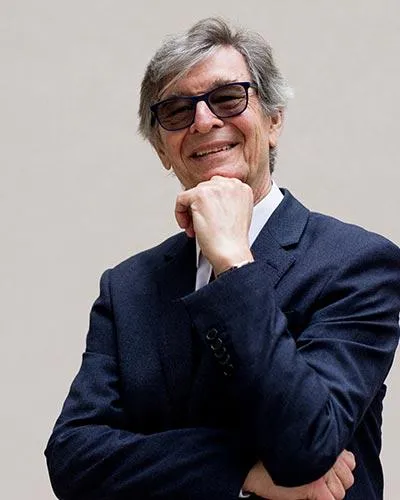
Darius BrubeckDarius Brubeck unpacks the melody of 'Take Five', why it works in 5/4, and the story of how Dave Brubeck, Paul Desmond and Joe Morello created it - plus etudes for writing your own.
What's in the course
12 lessons (2h 10m) · 1 free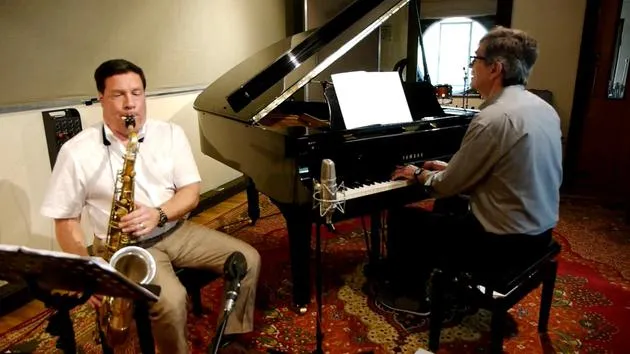
01. Feeling the Rhythm in 5/4 Time - feat. Take Five, 5/4 Etudes
Free lesson13:06
02. Placing the Melody in 5/4 Time - feat. Take Five, 5/4 Etudes
You are here11:57
03. Ideas for Improvisation in 5/4 Time - feat. Take Five
12:28
04. Advanced Ideas for Improvisation in 5/4 Time - feat. Take Five, District Five
16:36
Lesson transcript
Understanding "Take Five"
You've just heard a fragment of that famous tune, Take Five. I'm often asked who wrote it, and usually the person asking has a slightly mischievous intent because it's attributed to Dave Brubeck. But if you see the published versions, it was officially Paul Desmond who wrote it.
The Story Behind "Take Five"
Here's the story as I remember it:
- Joe Morello created the Take Five beat as a kind of warm-up.
- He thought it would be a cool exercise, not necessarily a tune.
- As a drummer, he explored interesting rhythms by switching from 3 to 2.
The quartet was already well known for doing three-four tunes in an interesting way. They had quite a famous recording of Someday My Prince Will Come that you might recall.
- The rhythm they played was 2, 3, 1, 2, 3, 2.
- Dave, especially, would improvise in four over that, while Joe was great at keeping time against time.
Sometimes the bass would just play on the downbeats, maintaining the harmonic flow, no lines, no walking. This layering was crucial as:
- Joe was working on that.
- Playing in three ultimately led to playing in five.
It wasn't so much about adding one beat to four. It sounded more like three against two with an additional couple of beats.
Collaborative Creation
Dave suggested that everyone try to write a melody that fits a different time signature. Paul decided to work with the 5 based on the version Joe laid down. What you hear in the original recording of Take Five is largely unchanged in subsequent renditions.
In the best sense, the tune's creation was very collaborative:
- The drummer came up with the beat.
- The saxophonist developed the melody.
- The pianist contributed the chords, recognizing the need for a bridge.
The famous da da da da da da da da section could be seen as a sequence of two fives, similar to what you find in jazz.
The Role of the Bass Line
Anchoring it all is the bass line articulating 1, 2, and 3, as in Someday My Prince Will Come, followed by two more beats: 1, 2, 3, 4, 5.
Performance Dynamics
It became a hit, and soon it was something other musicians had to learn to play.
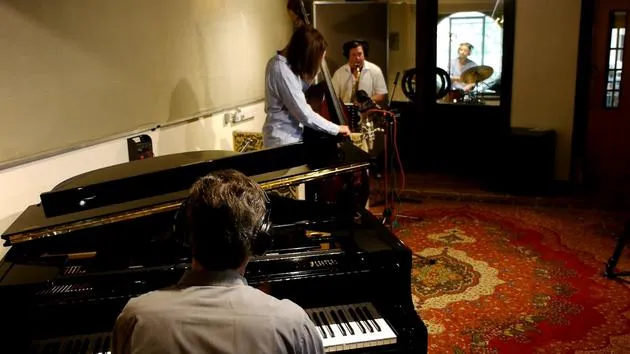
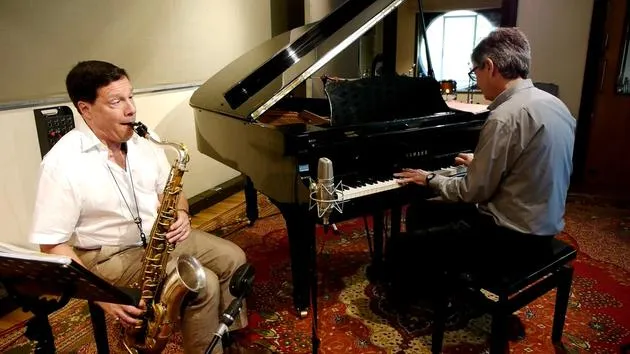
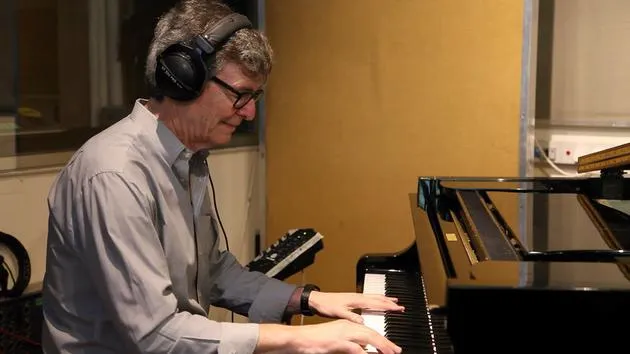
- So, Mike, you're the sax player, and I'm the chord guy, the pianist.
- At the beginning, my role is simple, just keeping the vamp going, but it gets more complicated as the melody enters.
The Melody's Jazz Feel
The melody has a wonderful jazz essence:
- It carries a minor, bluesy sound, leading nicely into the main theme.
When announcing the melody, which is one of the most famous in Western civilization, I must avoid messing it up. It's essential to keep the subdivisions going and come in on the fourth beat or the three plus the two of the bar.
Example of Performance
Darius and I will demonstrate it.
- If I am distracted or not fully attentive, I can easily go off, leading to awkward moments, a situation I dread.
Exploring the Bridge
Now, moving to the middle section of Take Five, we go into a different key, adding more flats. Interestingly, the melody at the bridge starts firmly on one, contrasting with the previous pickups.
Here's the bridge of Take Five:
1, 2, 2, 3...
Practicing in 5/4
Another way to practice melodies in 5/4 is by creating very simple ones and working them through variations:
- For example, you could start with a fragment like:
E flat minor...
And then change it up between 2 and 3.
To take it a step further, refer to the book on page 17, which features the 3:2 etude. You have a play-along option with the rhythm section for two entire choruses.
On page 18, there's another etude that goes through three plus two and two plus three across all 12 keys, perfect for working on your instrument, hearing different keys, and crafting some nice melodies.
Recordings for Practice
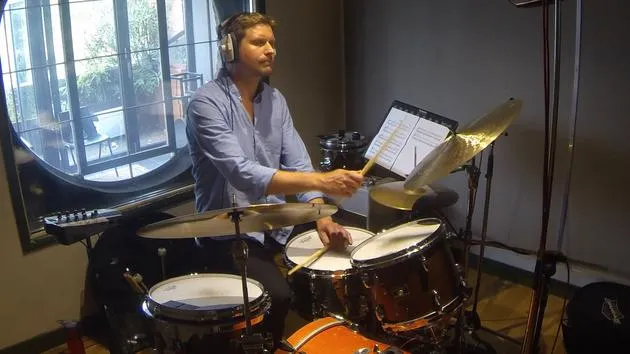
There's a recording of the entire group playing it, as well as one of the rhythm section without Mike. This setup offers you an opportunity:
- Play along with the tune.
- If playing the complete tune feels too challenging, wait until the tune concludes and play over the vamp, which continues on E flat minor.
You can practice interesting rhythms and bluesy licks until we reach the bridge again.
Final Thoughts
It's about learning those two fives or diving deeper into 5/4.
So please, join the group!
12 lessons
2h 10m of structured video lessons
Advanced video features
Slow down, loop a passage, follow along
Mobile, tablet & desktop
Practise wherever you are
100% satisfaction guarantee
30-day money-back guarantee
Meet your guru
Meet your guru
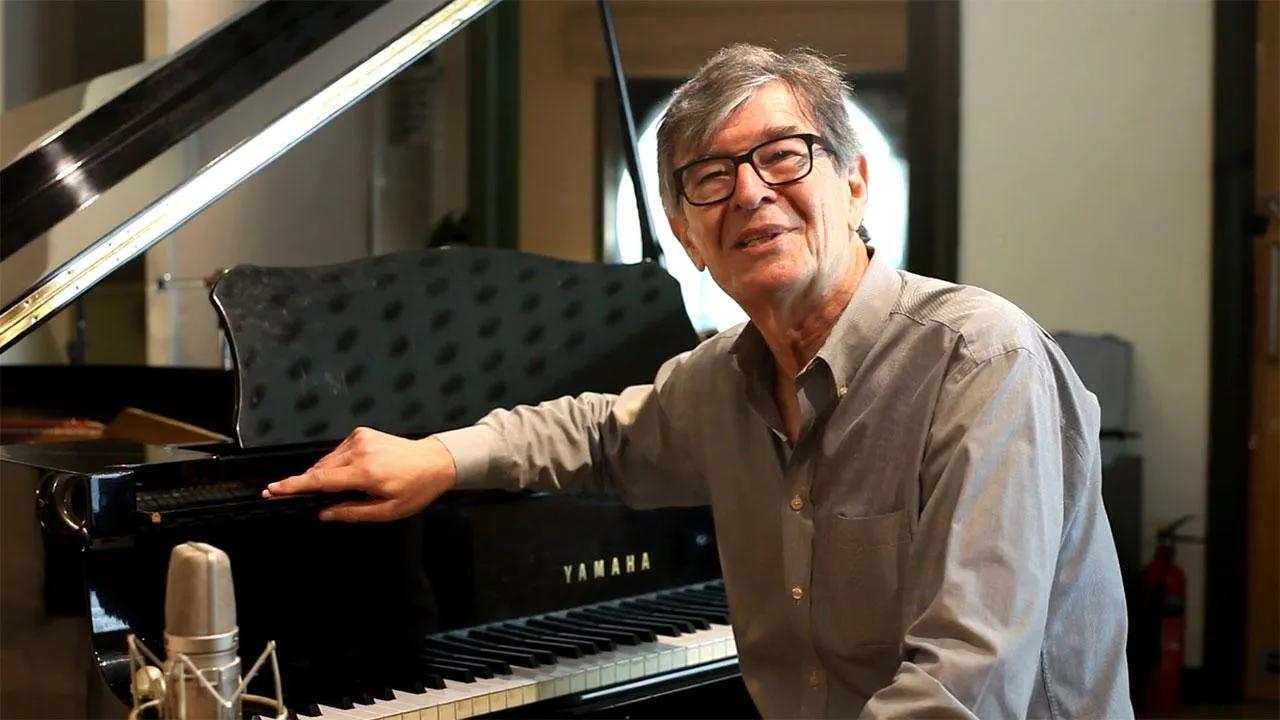
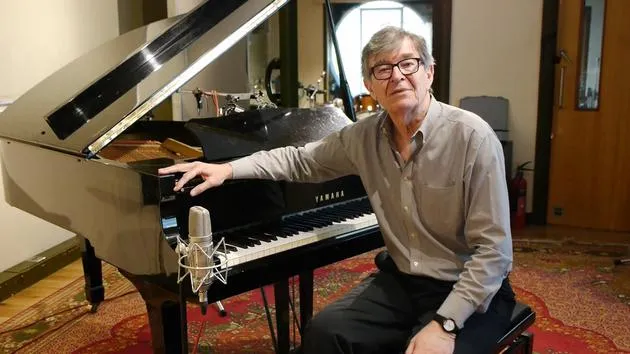
Darius Brubeck is a noted jazz pianist and educator. He has released numerous albums as a leader, toured internationally with his own groups, and collaborated with his brothers on Brubecks Play Brubeck.
Darius has served as a Fulbright visiting professor in Romania and Turkey. He initiated the first degree course in jazz offered by an African university, at the University of KwaZulu-Natal in South Africa, where he taught until 2005.
Darius often collaborates with Mike Rossi, saxophonist and Professor of Music at the University of Cape Town. Mike's achievements include numerous recordings and international stage appearances as leader, soloist, and sideman with Tony Bennett, Dave Liebman, Winston Mankunku Ngozi, George Russell, Clark Terry and Alessio Menconi, among others.
With Darius as your guide, you'll get straight to the "good stuff". In Harmony 101 he demystifies jazz harmony so you can start putting it to use fast, and in Mastering Odd Times he breaks down how to play and improvise confidently in unusual time signatures.







