



Find the melody
With
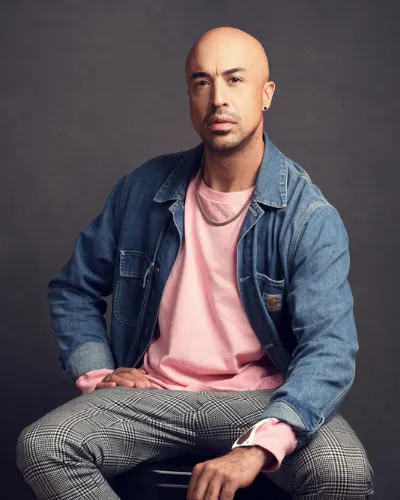
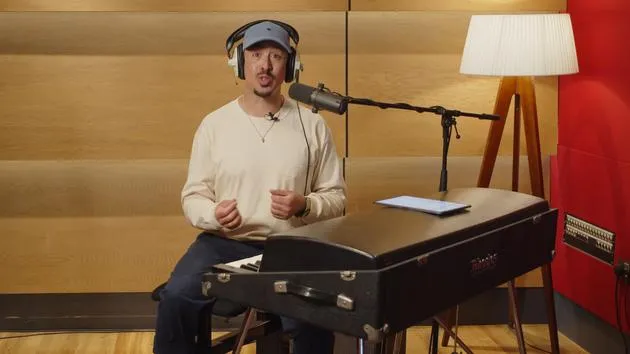
Jono McNeilBuild the melody on top of the chords using chord tones - thirds, fifths and sevenths - to outline the changes as you sing.
What's in the course
26 lessons (1h 50m) · 1 free
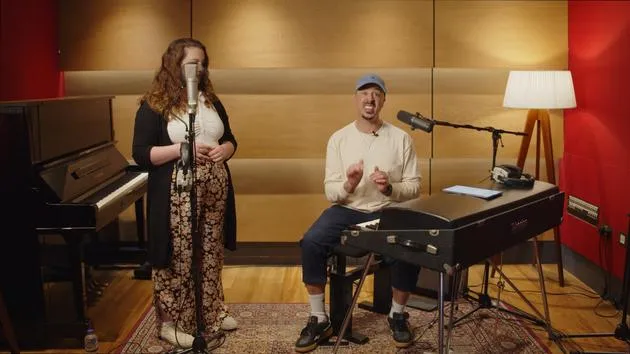
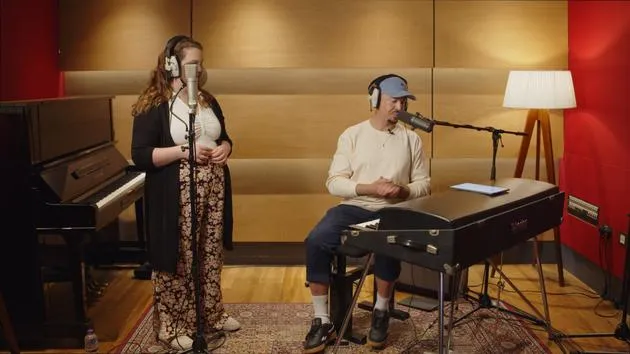
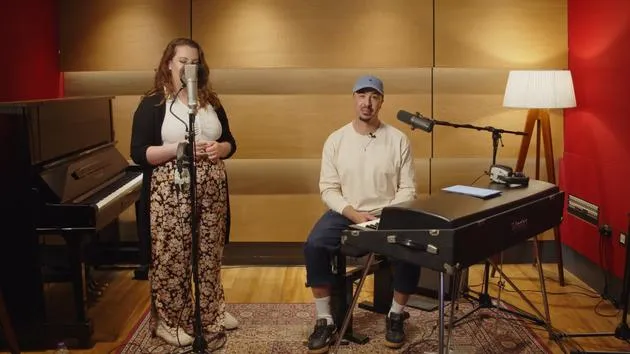
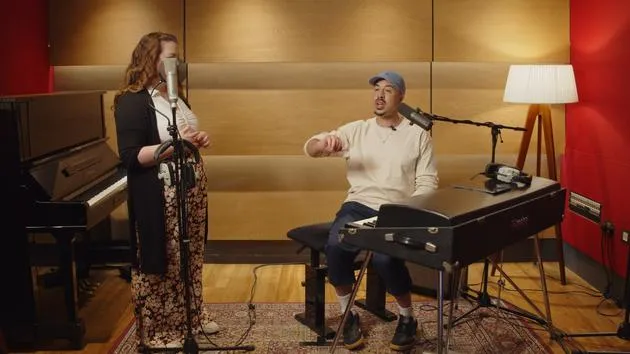
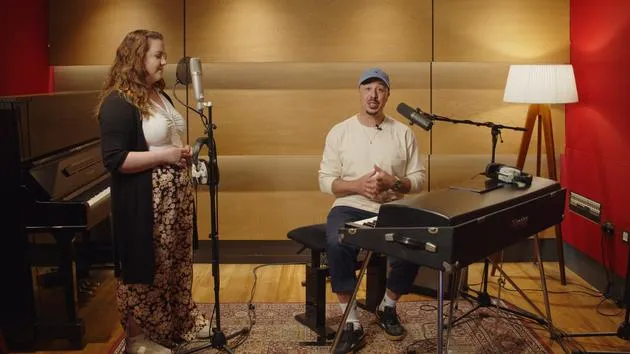
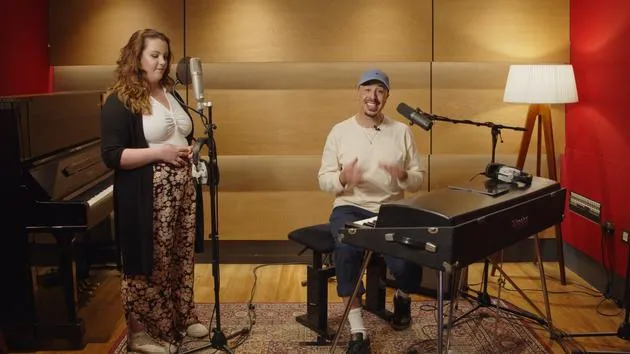
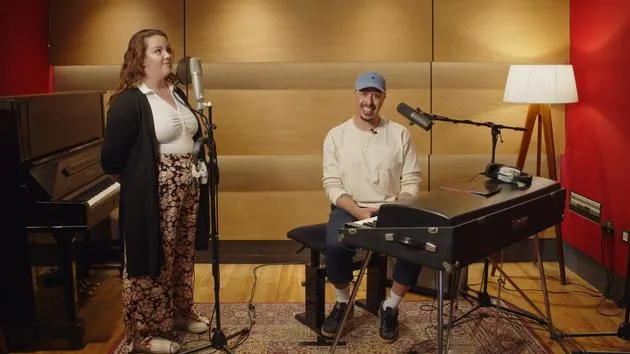
Lesson transcript
Understanding Chord Tones in Melody
Now, the melody I'm going to teach you uses a lot of what we call chord tones. These are the essential bits of the chord that give it its unique sound:
- The majors
- The minors
- The fifths
- The sevenths
If you can learn this melody, you're going to be drawing out all the qualities of these chords. As I mentioned at the beginning of the lesson, you'll be outlining the changes.
Teaching the Melody
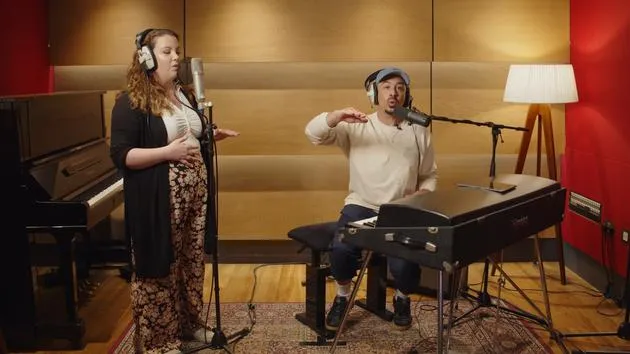
Let me teach you this particular melody. Let's hear our backing track again.
Chord Progression
- Starting with C: Our first chord is C, and we're actually starting on C with our melody.
- We'll work through these chords bit by bit, picking out these really cool notes.
Are you ready? Let's start from the beginning of the progression:
-
Count In: One, two, O.
Try it again.
Great!
Singing the Melody
Let's pause that for a second, and I'll teach it to you.
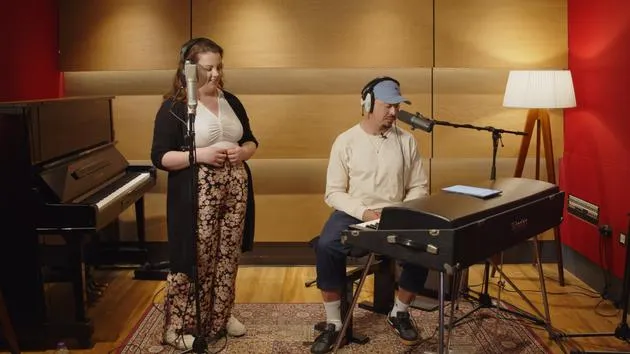
- The first note we're going to sing is "Whoa".
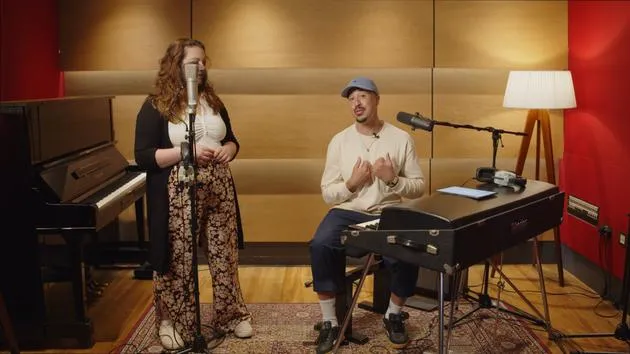
- Do you want to sing that for us?
And sing "Whoa".
Great, great! It's a really nice kind of major nine chord there.
- Let's try it together: "And whoa."
- And at the end: "Whoa."
That's it! You're going to come down a little lower there.
Next week, go try that for me:
"Whoa."
That's it! Really close to those last couple.
So again: "And whoa."
Yeah, that's it. That's a big jump there.
"Whoa."
That's it!
Try it again:
Practicing Together
Three and four: "And whoa."
That's the perfect one.
Now, let's try: "Whoa."
- Good!
You can hear that the melody is a bit complicated because the chord movement is just a little more advanced than we'd normally hear in a standard pop song.
This is good for our ears.
Joining Together
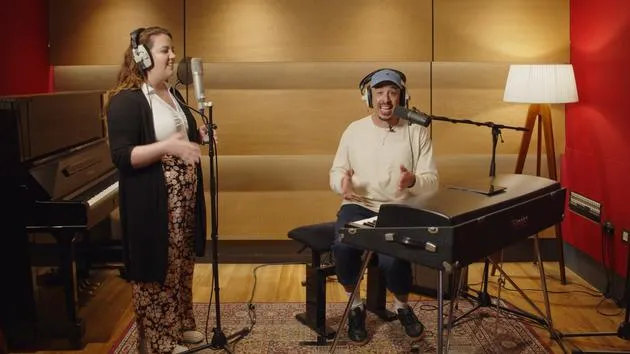
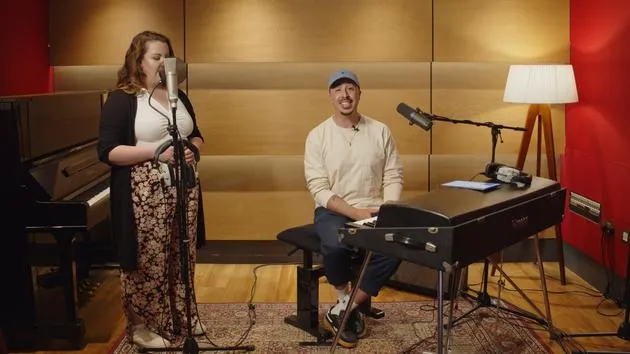
Great! I'm going to see if I can sing it a couple of times with the track again.
Now that you've had a little bit of teaching with the melody, I'll get you to join me as well. Let's see how we do!
Let's try it:
- Let's get that track on again.
- Starting on C.
How do you do? Here we go!
C'mon, you got this!
Try again.
Great, great!
Final Tips
Just have a listen to this. Should we try it all together?
Here we go.
And remember to breathe.
Well done, guys!
That's a really complicated chord progression there.
If you can find the bass line and then, bit by bit, start finding those chord tones, you can navigate through something that's maybe not just straightforward.
Expanding Your Skills
This kind of practice can be really great for your ears, and it will also give you more options for your songs.
Many artists, like Stevie Wonder, have done this for years. You also have lots of new artists, such as:
- Frank Ocean
- Kaytranada
They're all doing things with more complicated chords, and they can be really great!
Getting into these more advanced chord progressions can give you that edge as a singer.
As singers, our ears are all we've got, and we need to invest in making sure they're as advanced and capable as they can be.
This will mean you have access to better repertoire and better ideas when you're singing your licks, runs, ad libs, and improvisations.
So push yourself. Get your ears right into those chords, and it will make a real difference to you as a singer!
26 lessons
1h 50m of structured video lessons
Advanced video features
Slow down, loop a passage, follow along
Mobile, tablet & desktop
Practise wherever you are
100% satisfaction guarantee
30-day money-back guarantee
Meet your guru
Meet your guru
Jono McNeil has provided vocal coaching for professional singers, contemporary artists and vocalists in a range of influential positions within the entertainment industry for over 20 years.
He works as a vocal coach across a variety of TV shows including The Voice Kids, The Voice UK, Little Mix The Search, The Masked Singer, Wedding Day Winners and Change Your Tune, and coaches touring acts such as JLS, New Rules and July Jones to name a few.
An artist and singer in his own right, Jono has also performed with Michael Buble, Paloma Faith, Josh Groban, Nelly, Jamie Cullum, Lemar, George Ezra and Jocelyn Brown, and has several original albums available on streaming platforms.
He combines his experience on stage and in the recording studio with a deep understanding of vocal function to provide effective and inspirational coaching experiences.
Previously he worked as the head of vocals at the Academy of Contemporary Music (ACM), lecturing and designing content for the degree vocal curriculum in popular music, and now continues to work as an external examiner for other academic institutions such as the Leeds Conservatoire.
Passionate about the possibilities of popular music and artistry, he pursues innovative research and strategies to see this realised; his academic qualifications include a degree in Jazz and a masters in Vocal Pedagogy.
In Licks, Riffs & Runs for Pop Singers, Jono shows you exactly how to add the agile runs, riffs and licks that define modern pop singing, so you can decorate a melody with confidence and make it your own.







