



Choosing the right chords
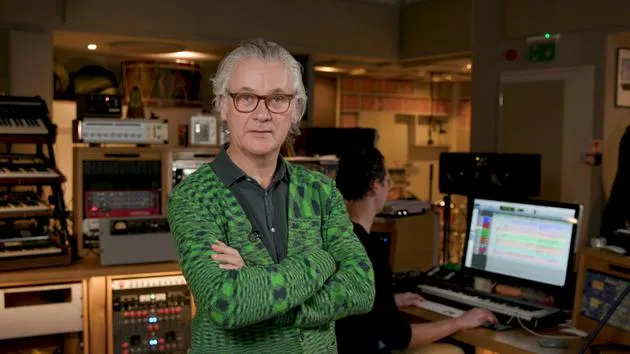
Guy Chambers retraces how he found the chords for Robbie Williams' 'Angels', choosing harmony that supports the melody and lyric to set the song's mood.

What's in the course
18 lessons (1h 33m) · 1 free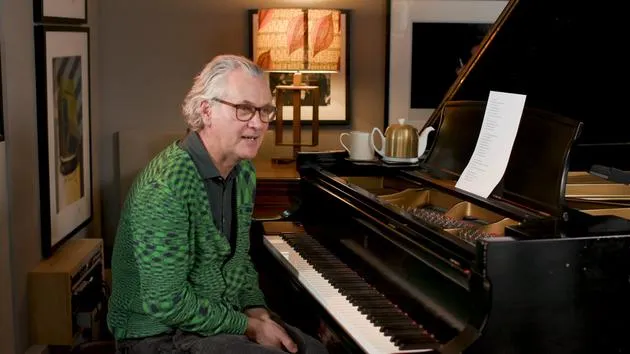





Lesson transcript
Music Lesson: Crafting a Song
Introduction
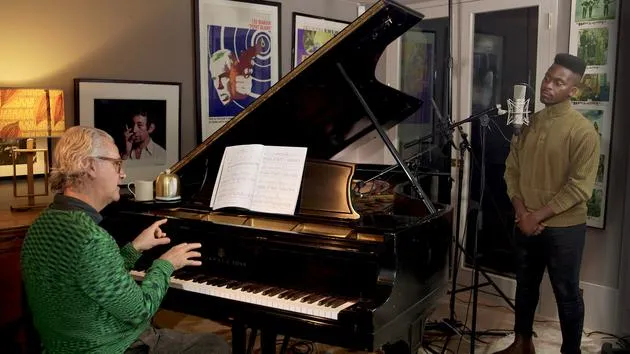
So the song started by Rob walking in my studio, which was actually in the bedroom of my flat at that time. He began singing this melody to me with the words:
"I sit and wait, does an angel contemplate my faith?"
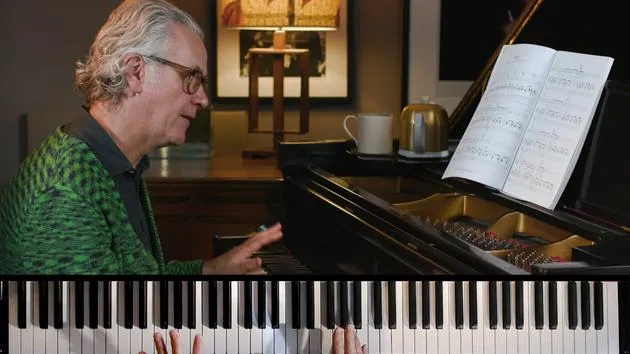
I was thinking, What key is that in? So, I'm sort of on the piano doing this,
"The place is where we go, oh, it's he."
I think I might have said to him, "Stop, that's brilliant. Can you start that again?"
Collaboration Begins
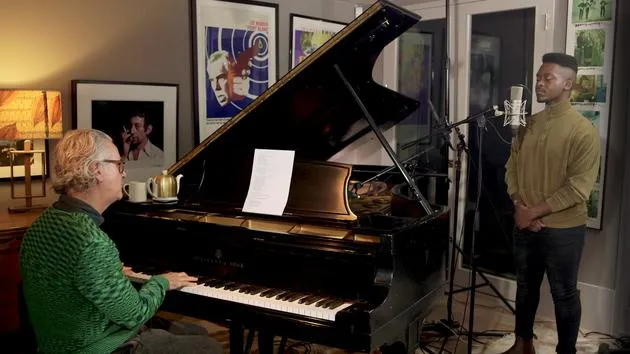
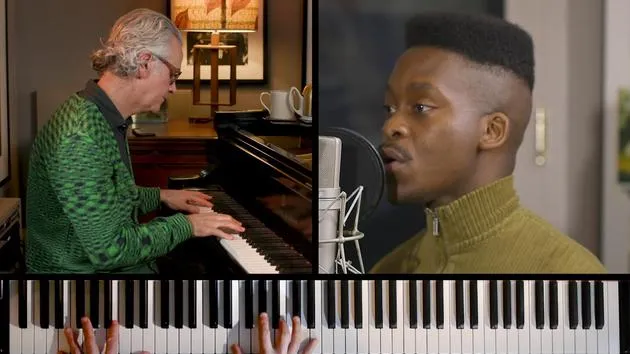
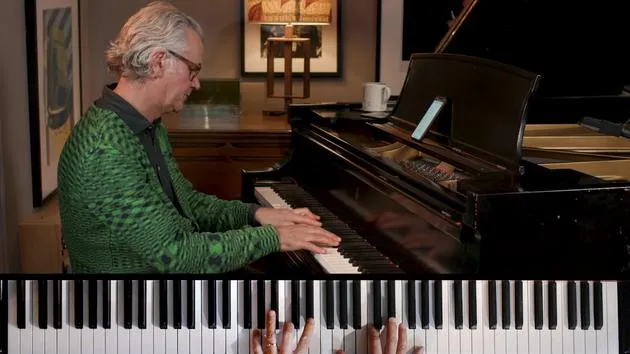
So he started again, and when he did, I played these chords with him:
"I sit and wait, does an angel contemplate my faith?"
Because I'd heard the melody once, I had an idea of where the chords should work with that melody:
- The places where we go when we're grey and old
"So stop singing."
And then you can, of course, carry on sticking to those chords. I've been told that's what happens if you stick to the same chords. It kind of works with the melody, but because the melody is quite similar to the one before, the harmony needs to move.
Creating a Musical Journey
The music needs to change to create a journey that takes you to the chorus. That's why I shifted from E, A, B to F sharp minor discord. This then takes you to a completely different place: C sharp minor.
When I'm lying in my bed, thoughts running through my head, and I feel that love is dead, I'm loving angels instead. As you could hear there, after the F sharp minor, A, C sharp minor, it goes to D, which is, you know, somewhere completely different.
This is nice because it sort of triggers in my mind that something exciting is going to happen.
The Lyrics' Impact
What's really cool about the lyrics of this song is that because Rob came up with all these lyrics for this verse,
"I'm loving angels instead,"
at the end of the verse, it sort of already branded the song. I was like, Oh, wow. That sums up the whole song in like 12 lines.
I was immediately really excited by it. There's the title there, Angels. It was like, Wow. I remember thinking that at the time.
Chorus Development
Then, when we came to where it should go for the chorus, I wanted to pick a chord that hadn't been used in the verse.
Going back to the verse chords, we've used:
- E
- A
- B
- F sharp minor
- C sharp minor
- D
The only other chord we haven't used is G sharp minor, which, for a chorus, makes me feel uneasy. If I started the chorus with that chord, it feels like we're in a bridge because it feels unsettling.
For the beginning of a chorus, you want a release, like:
"Oh, she offers me protection,
A lot of love and affection,
Whether I'm right or wrong."
Then it continues to:
"And down the waterfall,
Wherever it may take me,
I know that life won't break me.
When I come to call, she won't forsake me,
I'm loving angels instead."
Melodic Leap
In terms of the melody, it's unusual because it goes from just an E triad. But the next note it hits is a whole ninth away from the first note. It's ninth notes:
1, 2, 3, 4, 5, 6, 7, 8, 9.
That's a big leap, and quite unusual. I remember when we came up with it. It was a bit like, Wow, that's... I think maybe even Rob said, "I'm not sure if I can sing that."
I reassured him, You can definitely sing it. Just go for it, it'll be fine. He was very unsure about his voice in those early days, but having such a big jump like that makes the chorus super dramatic.
Influences and Inspiration
I often get asked where the idea for the song came from. The song that comes to mind is Hey Jude. I mean, Hey Jude has a similar feel in the piano:
"Hey Jude, don't make it bad."
It has a comparable piano feeling. That leap is quite significant, and I think in the back of my mind I was thinking we should have a similar kind of jump up.
But when you're writing a song, you're not necessarily thinking all these thoughts; they're sort of in your subconscious. They just jump up, and you're in the moment.
18 lessons
1h 33m of structured video lessons
Advanced video features
Slow down, loop a passage, follow along
Mobile, tablet & desktop
Practise wherever you are
100% satisfaction guarantee
30-day money-back guarantee
Meet your guru

Meet your guru
Guy Chambers is one of the UK's most successful living songwriters.
He is the writer behind songs we know from the radio, from the movies, and from the dance floor. Songs we know from our parties and our weddings. Songs that half the world can sing along to note for note. Songs that take us back in time to where we used to be. Songs that carry us forward beyond the everyday to where we wish we were; 'Angels'; 'Let Me Entertain You'; 'Strong'; 'No Regrets'; 'Millennium'; 'Rock DJ'; 'Feel' - to name but a few.
"Guy was the first person in the business who ever took me seriously" says long-standing writing partner Robbie Williams. "The first person who could see the artist that I knew I could become".
The list of other collaborators reads like pop music royalty. Over the years Guy has written and produced for Diana Ross, Tom Jones, Tina Turner (whose scorching take on 'Feel' really has to be heard to be believed), Kylie Minogue, James Blunt, Scissor Sisters, Rufus Wainwright and Mark Ronson, among many others.
He is consistently pushing himself, seeking new, creative endeavours, one of which was creating a children's folk opera based on the Oscar Wilde short story 'The Selfish Giant' - which he dedicated to his late mother, Pat. The show premiered at The Vaudeville Theatre in London's West End in 2018.
In 2019 Guy released his debut solo piano album, 'Go Gentle Into the Light' - a collection of some of the best-loved songs that he and Robbie Williams have written together, with the single 'The Road To Mandalay' reaching over 6 million streams.
He produced the BBC Children in Need official album 'Got it Covered', featuring stars such as Olivia Colman, Jodie Whittaker and Helena Bonham Carter, which reached Number 1 in the UK Charts.
Guy and Robbie Williams teamed up with Chris Heath to compose the music and lyrics for the RSC musical adaptation of David Walliams' best-selling book 'The Boy in the Dress', which opened to five-star reviews (The Independent, What's On Stage) at the Royal Shakespeare Theatre, Stratford-Upon-Avon.
Guy has produced Robbie Williams' most recent UK Number 1 album 'The Christmas Present' and co-wrote the single 'Time for Change'.
He lives with his wife Emma and their four children in Camden and in Sussex, where he enjoys "good wine, good food, cinema and pretty much everything French".
"And writing songs, of course".







