Lover Come Back - Teaching

With
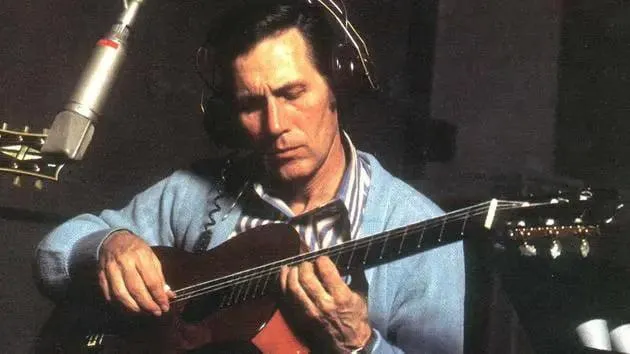
Chet AtkinsChet Atkins teaches his guitar arrangement of Lover Come Back, the Sigmund Romberg tune, taking you through its chord progression and bass moves.
What's in the course
19 lessons (1h 24m) · 1 free
01. Maybelle - Performance
Free lesson2:37
02. Bye Bye Blackbird - Performance
2:31
03. Londonderry Aire - Teaching
6:25
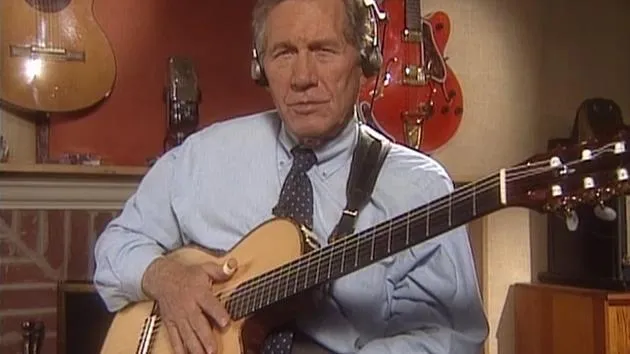
04. Petite Waltz - Teaching
4:14
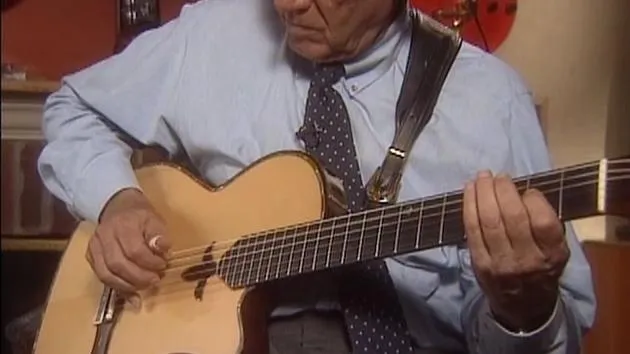
05. Young Thing - Teaching
6:17
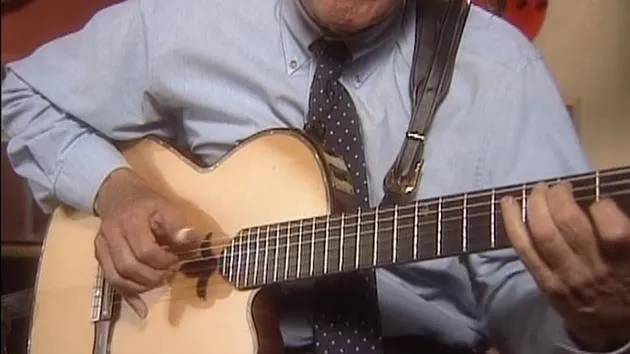
06. Young Thing - Performance
3:14
07. Chet talks
10:26
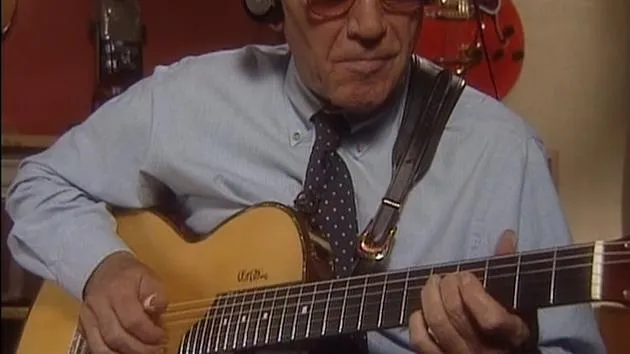
08. When You Wish Upon A Star - Performance
2:35
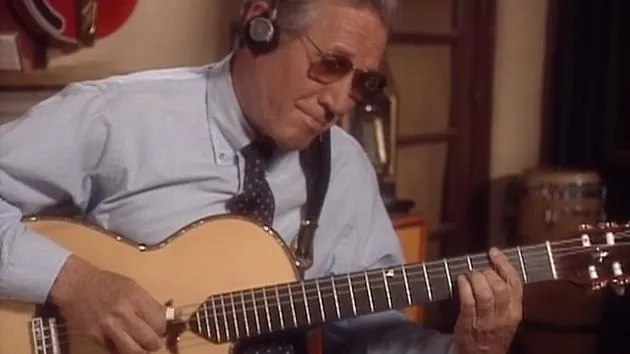
09. Londonderry Aire - Performance
3:12
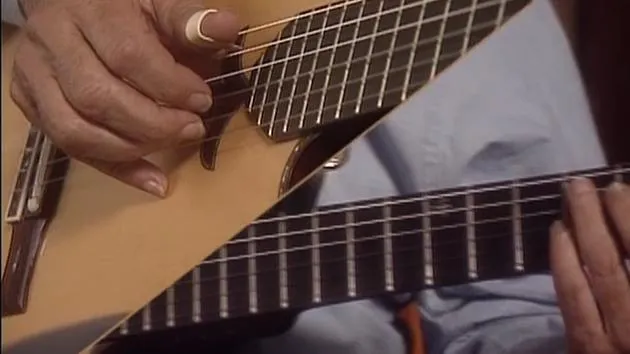
10. Mr. Bojangles - Teaching
6:45
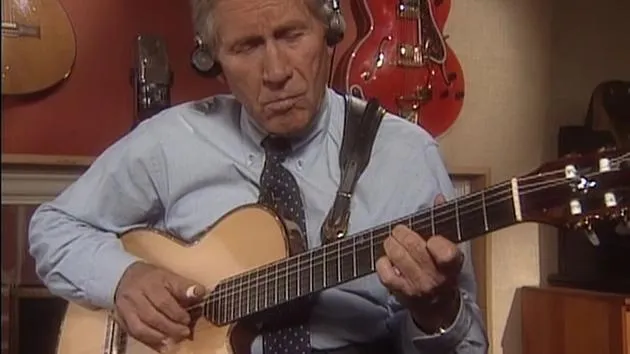
11. Mr. Bojangles - Performance
3:11

12. Lover Come Back - Performance
2:19
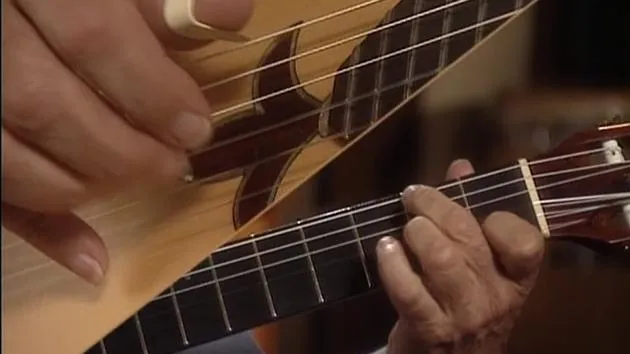
13. Maybelle - Teaching
3:02
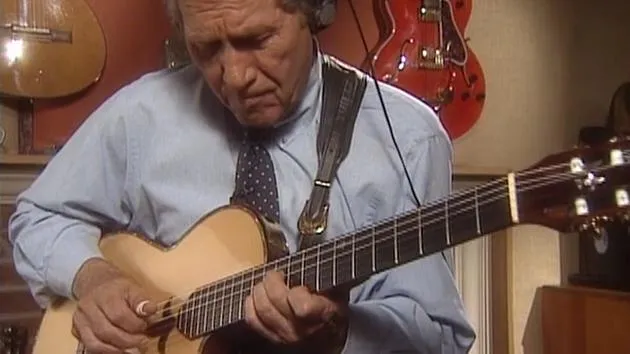
14. Petite Waltz - Performance
2:24
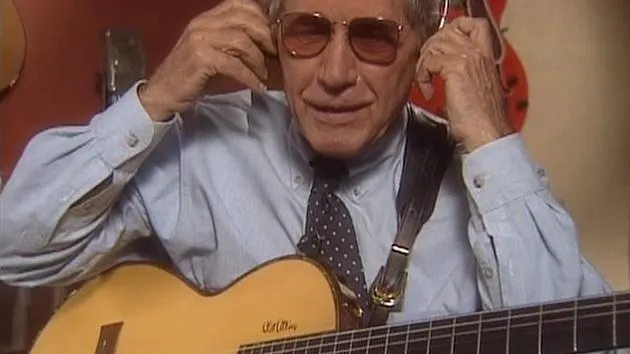
15. When You Wish Upon A Star - Teaching
5:23
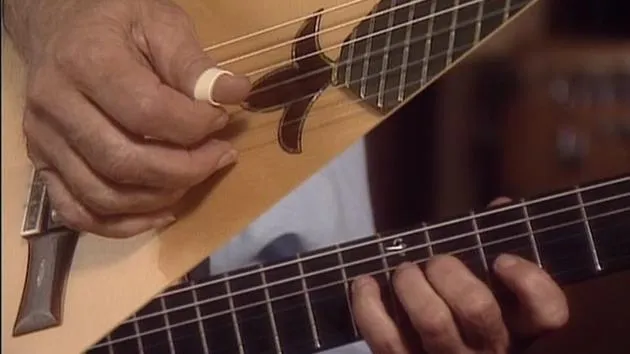
16. Lover Come Back - Teaching
You are here5:51
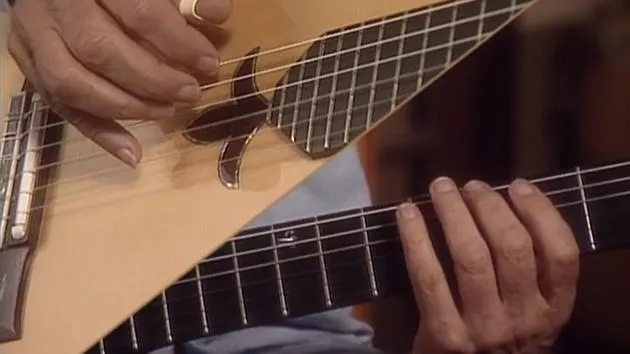
17. Bye Bye Blackbrid - Teaching
6:33
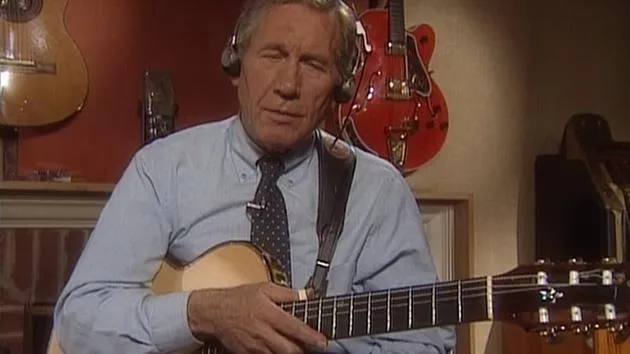
18. Happy Again - Teaching
4:41
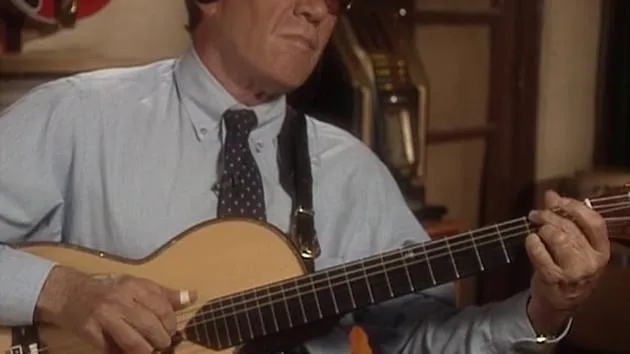
19. Happy Again - Performance
2:24
Lesson transcript
Music Lesson: Exploring a Classic Tune by Sigmund Romberg
That's a tune written by Sigmund Romberg, one of the greatest. One of the greatest writers this country has ever produced.
Why I Like This Tune
I like it because it's like Cheek to Cheek. It's long enough that you can play it all the way through twice. This length means you don't have to improvise too much.
Chord Progression
- E to D: I have to use a 3 in the bass there. I didn't do that on the record, but it's a pretty good idea.
- Then it goes: C, F, B flat.
- Finally, you get to G, and then you reach D in the bass.
- After that, you go to E, then E Sus.
Lyrics Insight
I remember every little thing, so it's:
- E
- I'm so F lonely
- Everyone I want no one
It's all right to go to the 3 in the bass there because you resolve to up a half tone. That sounds nice.
Tune Changes
Now here, the tune changes. This great composer doesn't repeat the same phrases. Instead, he goes to A seventh. That's beautiful!
Improvization Techniques
To improvise, I just do a little Jerry Reed or banjo playing roll here:
- 1, 2, 3, 4.
I go into rhythm there because I don't have my band with me, don't you know? I play just a roll, but I don't think I did that in that performance.
Personal Challenge
That's one of my problems: I can't play the same thing twice. It's an advantage, but sometimes it's a disadvantage.
Slow Playthrough
I'll do it slowly. One time I did the same lick, only I skipped a string each time.
Let's see, what else did I do? I went:
- Then I did a nice little Jerry Reed lick, one of the greatest ones he ever showed me.
- Two and a half: that's nice.
Changing the Melody
I changed the melody a little there. The melody goes:
- "I remember every little..."
On that, I deadened the strings with the heel of my hand. I haven't figured out a good ending for it if it's slow enough.
Sometimes I play Lover Come Back to Me, but it was too fast when I played it a while ago, and I couldn't do that, don't you know?
And because I'm not that quick.
19 lessons
1h 24m of structured video lessons
Advanced video features
Slow down, loop a passage, follow along
Mobile, tablet & desktop
Practise wherever you are
100% satisfaction guarantee
30-day money-back guarantee
Meet your guru
Meet your guru
Known as "Mr. Guitar", Chet Atkins is the most recorded solo instrumentalist in music history. His signature picking style was inspired by Merle Travis, with other major influences including Django Reinhardt, George Barnes, Les Paul and, later, Jerry Reed. That trademark picking style and musicianship won him admirers within and well beyond the country scene, both in the United States and internationally.
As a studio musician, his playing graced records by Elvis Presley, Kitty Wells, The Everly Brothers, Hank Williams and dozens of other Nashville legends. His style went on to influence pop greats such as Mark Knopfler, Duane Eddy, George Harrison, The Ventures, George Benson and Eddie Cochran, as well as thousands of country pickers. He won nine CMA Awards as Musician of the Year, four Playboy jazz poll honours and thirteen Grammys.
With more than 35 million copies of his 75-plus original releases sold, Atkins was also a recipient of the Grammy Lifetime Achievement Award.
He helped create the Nashville sound, a style of country music that owed nearly as much to pop as it did to honky tonks - and without him, country may never have crossed over into the pop charts in the '50s and '60s.
Learn from the master - just click on one of the courses on this page!