



Analysis, explanation, demonstration by Joan Rodgers
With
Joan Rodgers
What's in the course
7 lessons (2h 7m) · 1 free
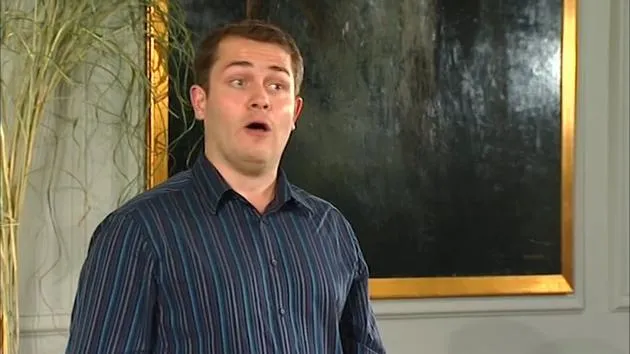
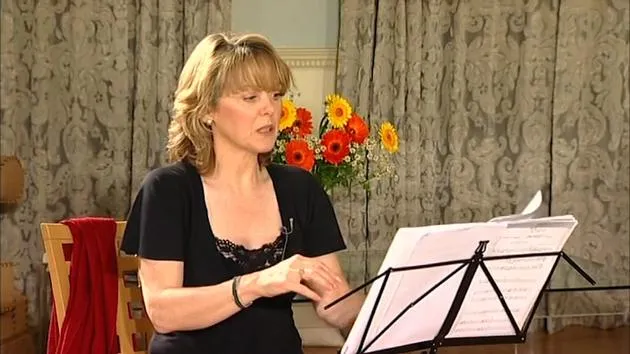
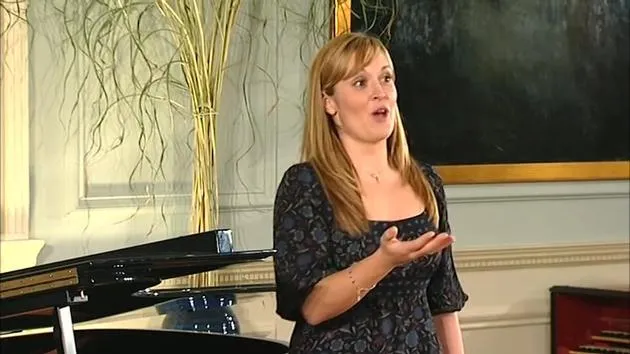
Lesson transcript
Music Lesson Formatting
Observations on Character Feelings
First of all, well done. What adjectives would you use to describe the way he's feeling right now?
- Angry
- Cheated
- Spiteful
Key Aspects:
- Insecurity: The Count is insecure and vulnerable.
- Vanity: He believes he can do whatever he wants, but when faced with challenges, his fa?ade crumbles.
Childhood Analogy
I think he's like a spoiled little boy, really, in some ways. In this repertoire, you want to capture different aspects of his feeling, not just his anger. As he starts to question, "What about Marcelina and Antonio? How can I use that?" we see layers to his character.
Pride and Vulnerability
There's a real sense of pride: "I'm not going to let a servant get one over on me." He knows that Figaro is currently outwitting him, and there's that humiliating moment in the Act 2 finale where he was made to look like a fool.
- Context: He is the lord of the manor raised to believe that he is always right, and now everything is being called into question.
- Vulnerability: This adds depth to his character.
Emotional Complexity
He just had a "sexy little duet" with Susanna, but there's the refrain, "Aija, vinta la causa."
- Disbelief: Is he trapped again?
- Anger: He feels rage but also disbelief, "I don't believe this is happening."
Layering Emotions
It's multilayered; he can express two emotions at once. Imagine he's feeling that he was making progress with Susannah, but there's a growing sense of resentment:
- Qualacho Cardia: There's anger building, but it's subtly growing without an explosion.
- Incrementalism: Can you convey that without looking worried?
Vulnerability and Control
He covers his vulnerability very quickly by asserting, "I'm going to get my own back." But this feeling of anger must have shades of light and dark.
- Inner Thoughts: "What do I want to do? Go on your vault? I'll get my own back. It'll be me who decides what happens because I'm the boss here."
Conveying Emotion
Just do that again because it's really coming through.
- Expression: "Dio foglio, Dio foglio di talmudo Pu pia cher mio la sentenza sala."
Insecurity creeps in: "What if Figaro has outwitted me again?"
- Visual Inquiry: What do you see in your eyes?
Deepening the Performance
Consider that he's thinking, "I can't bear the thought that Figaro is going to marry Susanna before I do."
- Intensity in Emotion: I want to see more life in your eyes as you work through this.
Desire and Suffering
His declaration, "Villo Jetto," shows his strong desire for Susanna.
- Emotional Conflict: He cannot bear thinking that he might not get his way, amplifying his desire.
Dynamics and Clarity
You're trying to follow the dynamics, but can you make it clearer?
- Crescendo and Decrescendo: Can you broaden the emotional spectrum?
- Concentration on Feelings: Focus on the anger and intensity he feels.
Reflecting His Inner Chaos
He's in a self-righteous frenzy; keep that intensity flowing.
- Consistency is Key: Maintain the emotional thread without losing strength.
Language and Articulation
He needs to sound angry enough and articulate it well.
- Pronunciation Matters: Use double consonants to underpin what you're trying to convey.
Tricky Techniques
Be cautious with triplets:
- People often sing the same note, which is a naughty trick.
- Practice staying level while maintaining pitch, like "ha ha ha" continuously.
Final Thoughts and Recommendations
Have you done the role, Gary? Context will help you understand the character better because, let's face it, he's appalling.
- Enjoyment of Singing: "I rather like singing, actually. Thank you very much."
End of transcript.
7 lessons
2h 7m of structured video lessons
Advanced video features
Slow down, loop a passage, follow along
Mobile, tablet & desktop
Practise wherever you are
100% satisfaction guarantee
30-day money-back guarantee
Meet your guru
Meet your guru
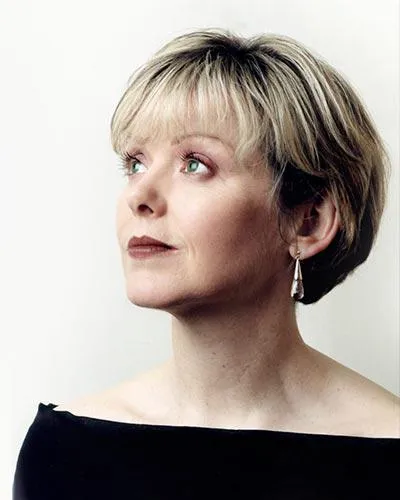
Joan Rodgers has appeared in recital throughout Europe and the USA, including London, Paris, Vienna, Amsterdam, Moscow and New York, and in concert with conductors including Solti, Barenboim, Mehta, Rattle, Harnoncourt, Mackerras, Ashkenazy and Salonen. She is a frequent guest at the BBC Proms. Her operatic engagements have included regular appearances at the Royal Opera House, English National Opera, Glyndebourne, and other leading companies in Britain, Europe and the USA.
Joan Rodgers' many recordings include Mozart's da Ponte trilogy with Daniel Barenboim and the Berlin Philharmonic, The Turn of the Screw (Virgin), solo discs of Tchaikovsky, Mozart and Wolf (Hyperion), The Creation (Philips), Rachmaninov songs with Howard Shelley (Chandos), and a Hyperion disc of songs by Prokofiev, Mussorgsky, Shostakovich and Britten. She received the Royal Philharmonic Society Award as Singer of the Year for 1997, and the 1997 Evening Standard Award for outstanding performance in opera. Joan Rodgers was awarded the CBE in the 2001 New Year's Honours List.
In her Singing Masterclass, Joan brings all of that stage and recording experience directly to students, working closely on technique, language, interpretation and stagecraft. You'll hear how a great song or aria is built, line by line, and learn how to bring that same artistry and detail to your own singing.







