



The Note G - Fingering and Exercises
With
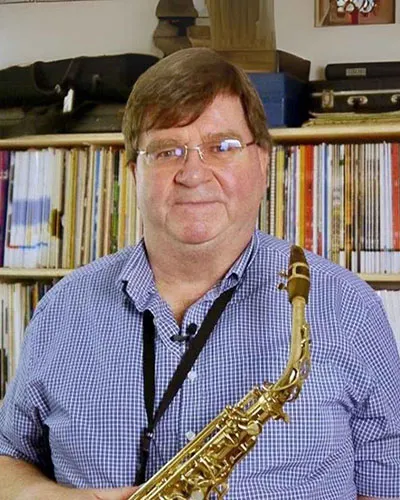
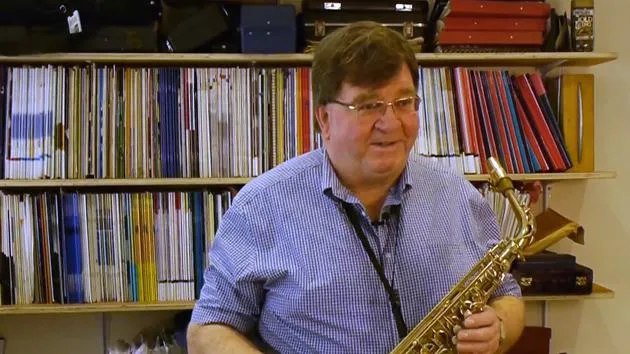
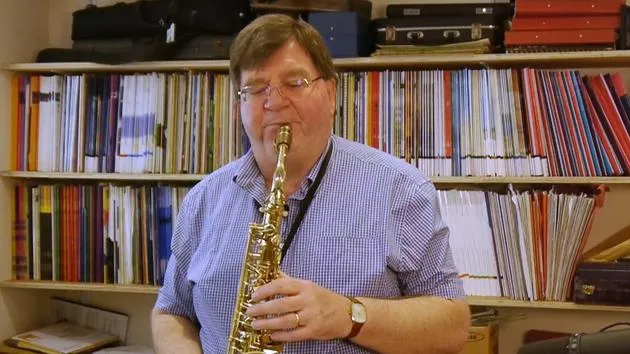
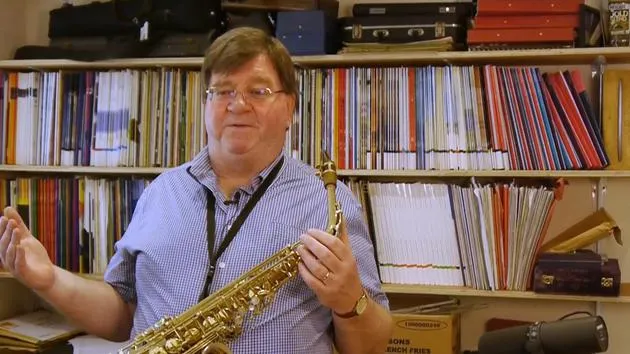
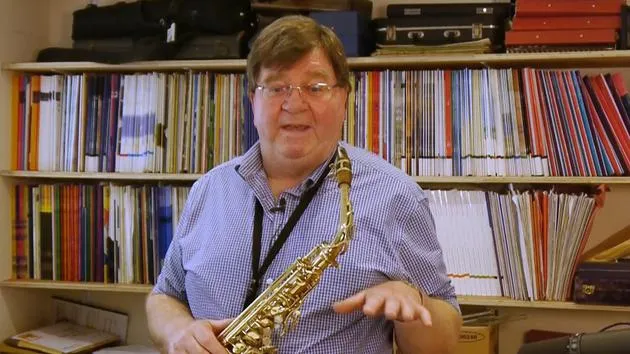
James RaeJames Rae introduces the note G on saxophone, its three-finger position, and exercises for moving cleanly between G, A and B.
Copyright © 2023 Universal Edition (London) Ltd., All compositions by James Rae except where otherwise indicated.
What's in the course
42 lessons (0h 56m) · 1 free
01. The Note G - Fingering and Exercises
You are here3:05
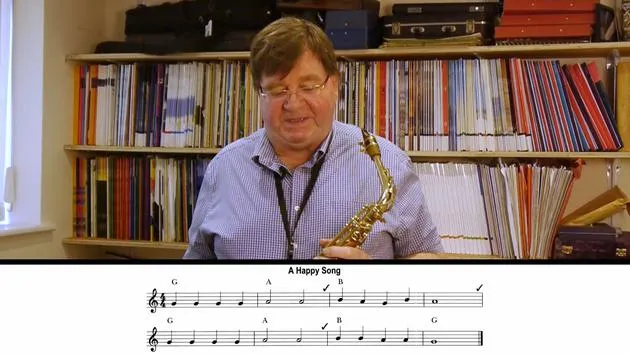
02. A Happy Song - Lesson
0:42
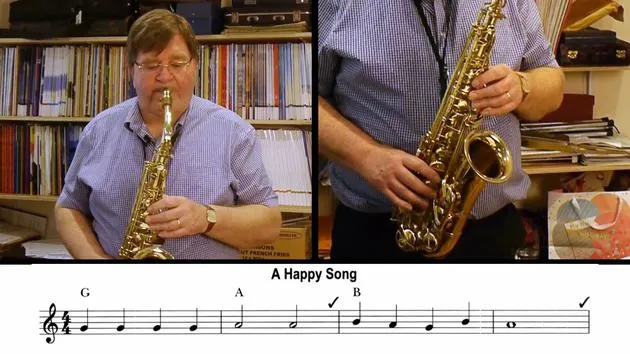
03. A Happy Song - Performance
0:21
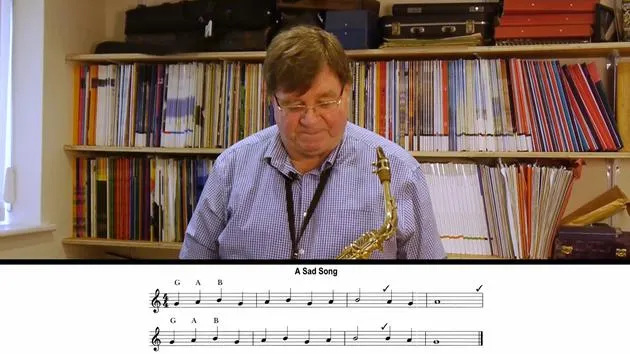
04. A Sad Song - Lesson
0:15
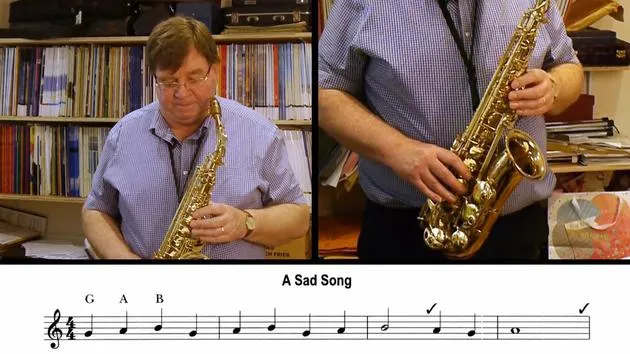
05. A Sad Song - Performance
0:26
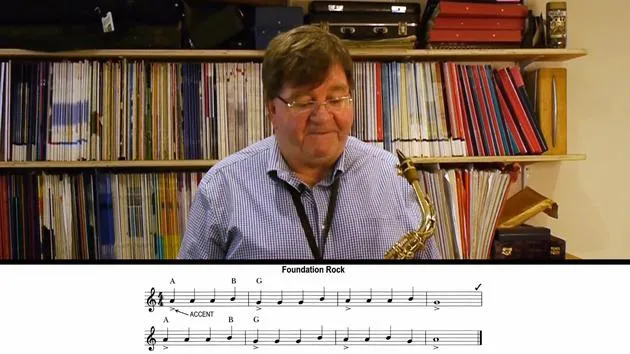
06. Foundation Rock - Lesson
0:35
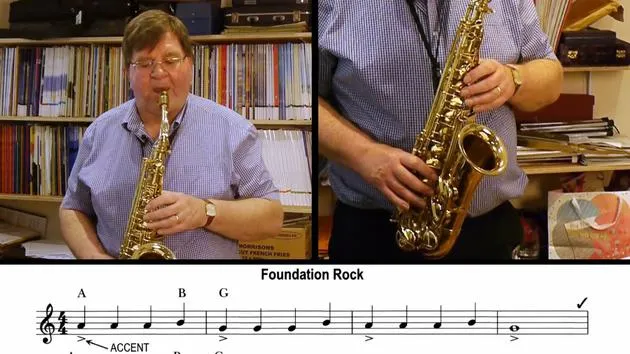
07. Foundation Rock - Performance
0:20
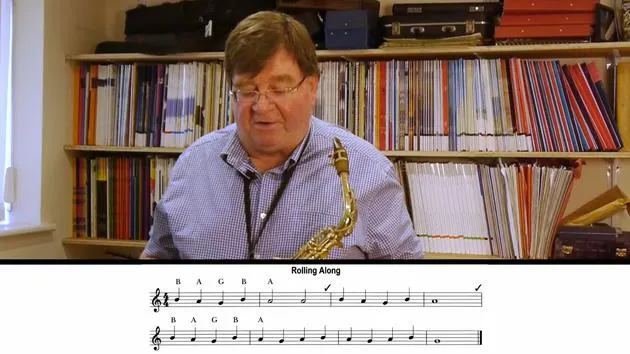
08. Rolling Along - Lesson
1:19
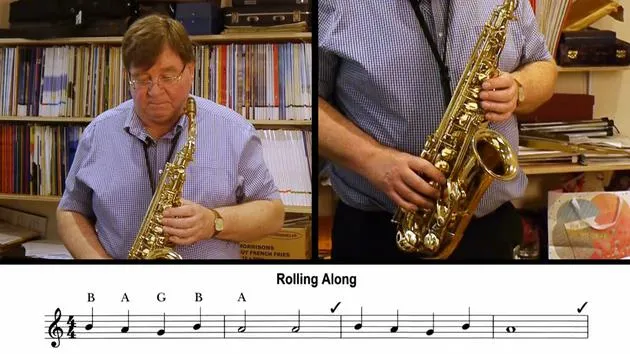
09. Rolling Along - Performance
0:21
01. The Note C - Fingering and Exercises
7:10
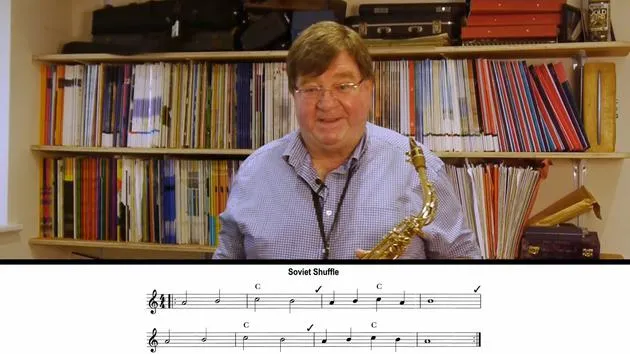
02. Sovient Shuffle - Lesson
0:31
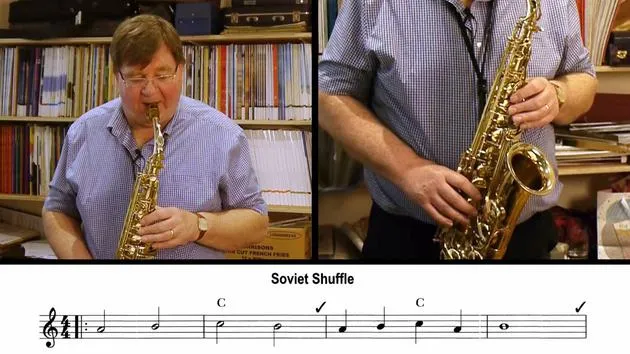
03. Sovient Shuffle - Performance
0:40
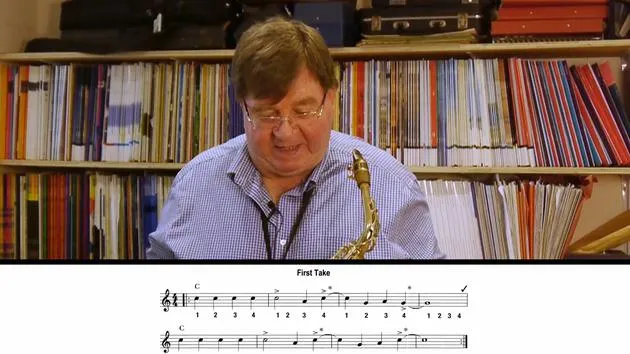
04. First Take - Lesson
0:58
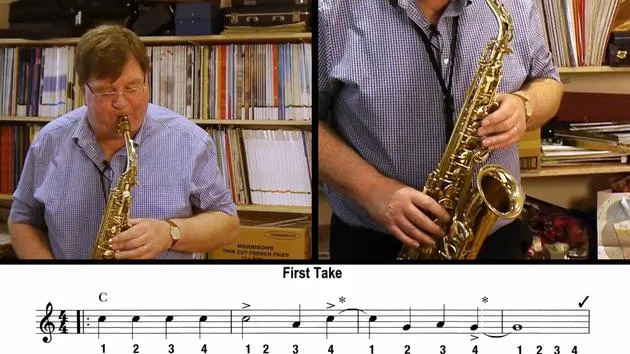
05. First Take - Performance
0:36
06. There And Back Again - Lesson
0:54
07. There And Back Again - Performance
0:40
08. On Target - Lesson
0:18
09. On Target - Performance
0:30
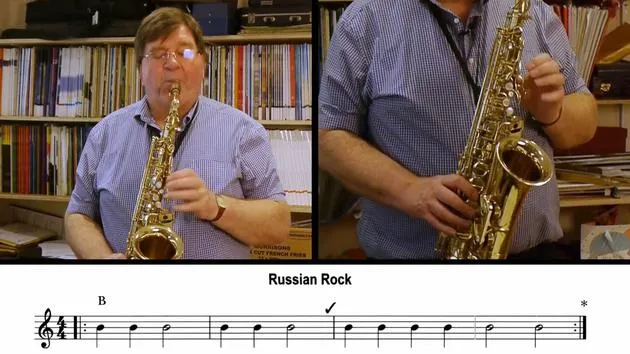
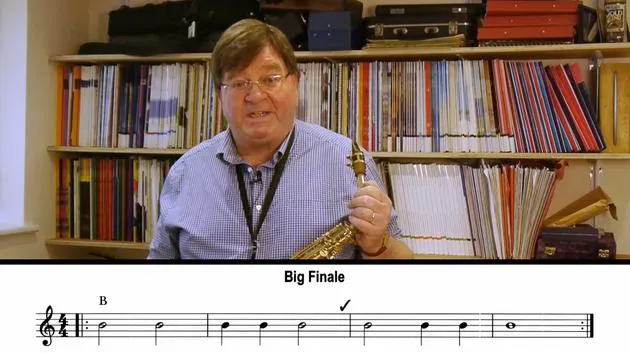
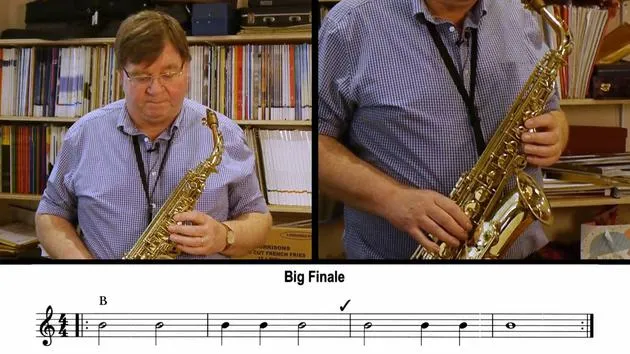
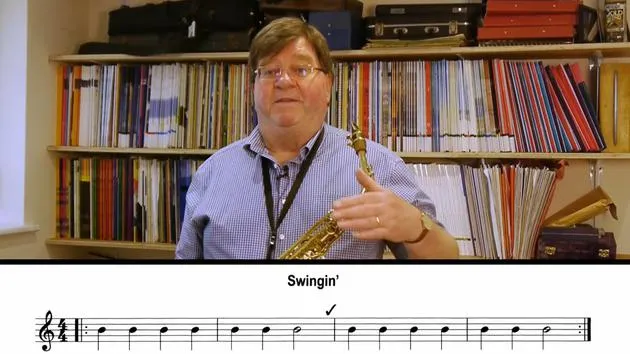
Lesson transcript
Music Lesson: Introduction to the Note G
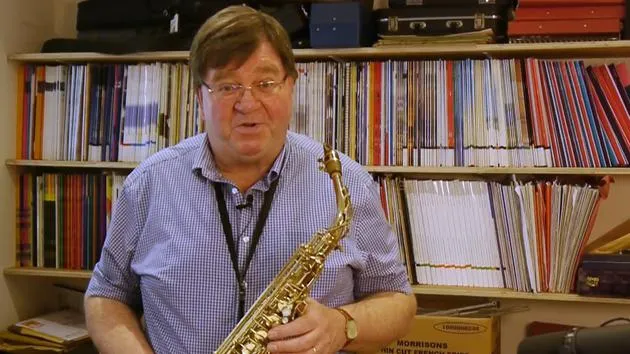
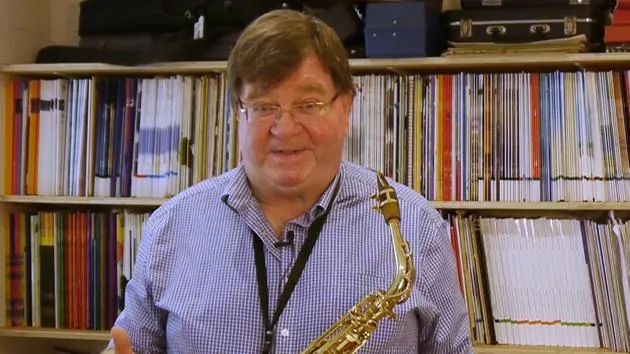
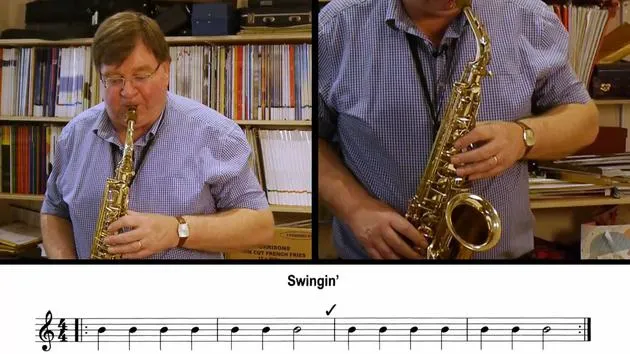
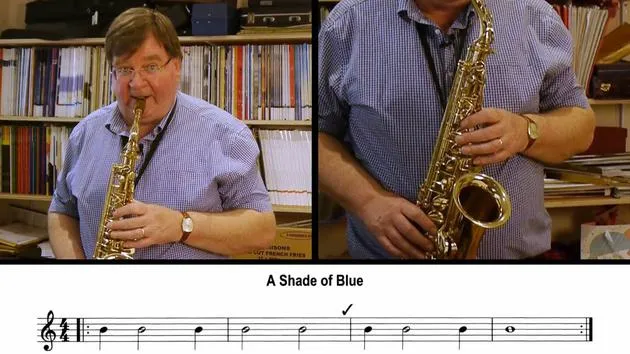
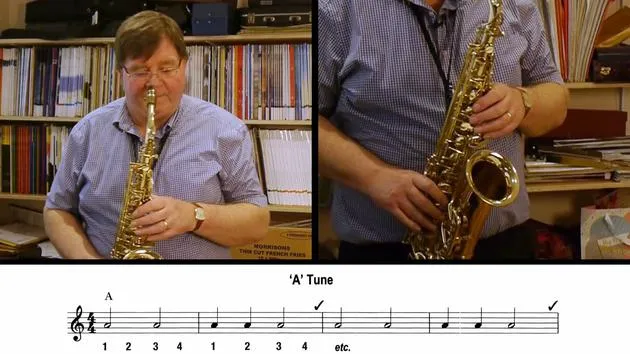
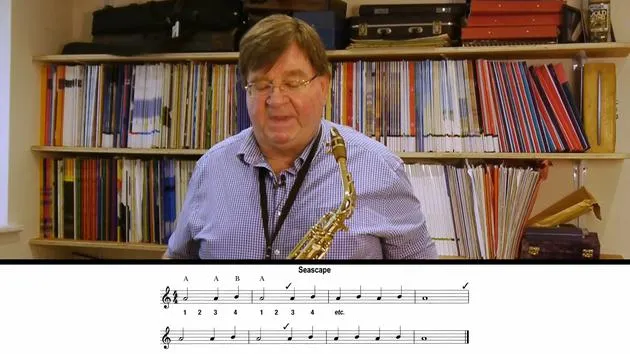
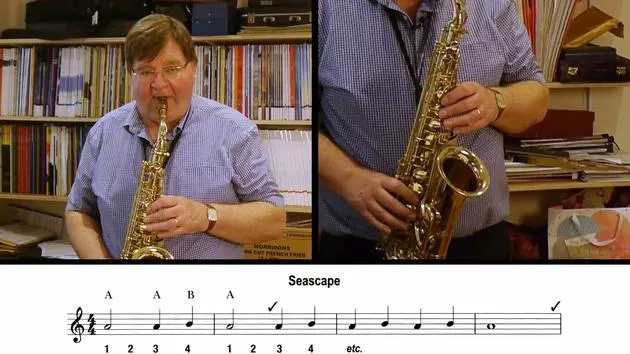
In this lesson, we introduce the note G.
Understanding the Note G
- G sits on the second line of the stave.
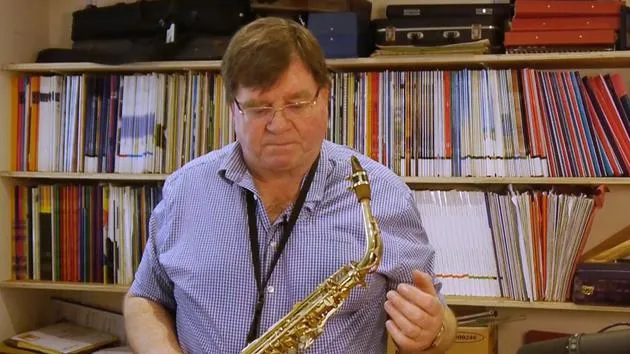
- It is played with three fingers:
- The B finger
- The A finger
- The G finger (which is a much weaker finger)
Training the G finger is essential because we don't use it much in everyday life, but it plays a significant role in playing the saxophone. We must train it to be as agile as the other fingers.
Exercises
Exercise 1: Playing G
- Simply play the note G.
- Notice that it is a lower note.
- As you play the notes in order, they get progressively lower.
- Generally, the more fingers you put down, the lower the note goes.
- Note: There are specific instances in saxophone playing when putting a finger down raises the pitch, but at this stage of development, adding fingers typically lowers the pitch.
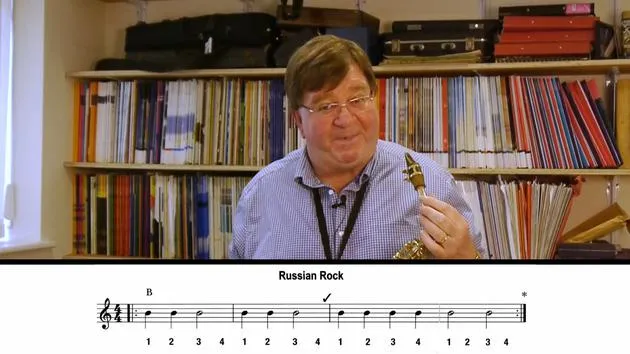
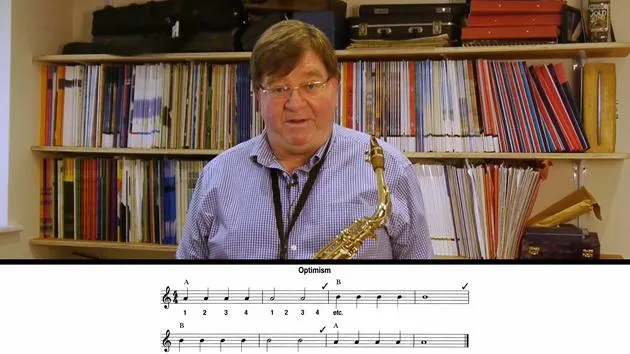
Exercise 2: Movement from G to A
- This exercise consists of a repeated bar indicated to play three times before settling on the G.
- The goal is to achieve an even movement from the G to the A.
"So it goes."
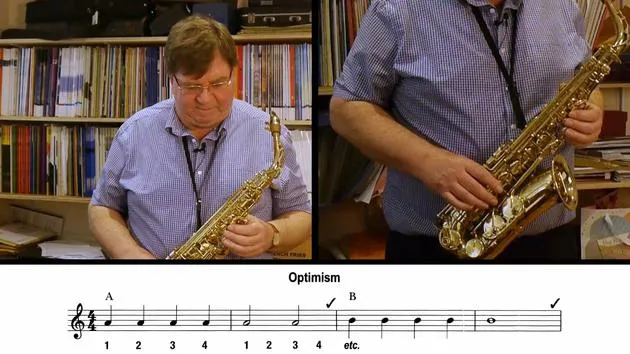
Exercise 3: A to B Transition
- This exercise is similar in concept, focusing on the movement from A to B.
- A bit of revision is applied here.
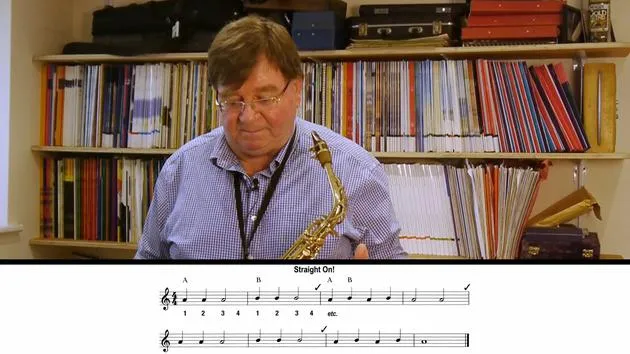
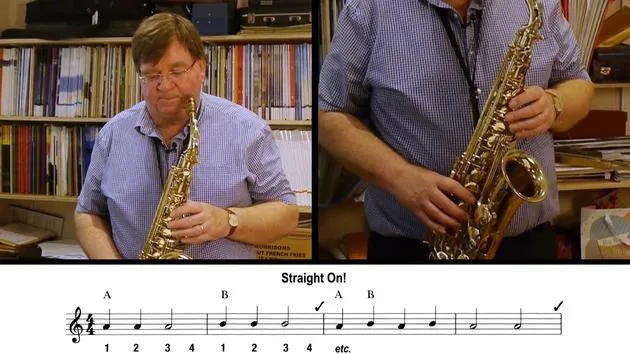
Exercise 4: Challenging Transition from G to B
- In this exercise, we move from G to B.
- This is harder because we need to move two fingers at once to go from the G to the B.
"Try not to catch the A in between."
- Move your fingers cleanly without touching the A.
- Visualize that these two fingers are glued together so that they move as one.
By working through these exercises, you'll develop greater control and agility in playing the saxophone. Happy practicing!
42 lessons
0h 56m of structured video lessons
Advanced video features
Slow down, loop a passage, follow along
Mobile, tablet & desktop
Practise wherever you are
100% satisfaction guarantee
30-day money-back guarantee
Meet your guru
Meet your guru
James Rae was born on Tyneside in 1957. He studied clarinet, bass clarinet, piano and composition at the Guildhall School of Music and Drama from 1975 to 1979, under professors Yona Ettlinger, Stephen Trier, Meriel Jefferson and Patric Standford respectively. Since leaving the Guildhall, he has pursued a highly successful and varied career across three areas: performing, writing and teaching.
James Rae has worked in many West End and Royal National Theatre productions, including Sir Peter Hall's award-winning Oresteia with music by Sir Harrison Birtwistle, and has received many freelance engagements with some of the country's leading orchestras and ensembles. He is the leader of the Phoenix Saxophone Quartet, who over the years have given many recitals and BBC broadcasts, and have recorded the complete works of Carey Blyton on two albums, 'The Return of Bulgy Gogo' and 'Sherlock Holmes meets Dr Who'.
As a composer, James Rae is one of Europe's most published writers of educational wind music, with over 250 publications to his credit, mainly published by Universal Edition. His music includes instrumental study books, sonatas, tutors, baroque, classical and jazz transcriptions, plus many volumes of duets, many of which feature on all the major wind examination syllabuses worldwide. He has also written four musicals for schools with Mike Cornick, and his larger commissions include The Turn of a Wheel, a major work for concert band that premiered in November 1999 for the North Tyneside Concert Band, of which he was a founder member as a boy, and the overture Moving On in 2012.
James Rae has worked extensively as a syllabus consultant and composer for both the Associated Board and Trinity College London, and has been highly involved in developing the woodwind sight-reading requirements for both exam boards. As a teacher, he has held many posts in both the state and independent sectors, and currently works at King's College School Wimbledon, where he directs the Wind Orchestra and Concert Band, and Shrewsbury House School in Surbiton, where he coaches three large bands and a chamber group. That teaching experience runs right through his saxophone series for MusicGurus, which takes you step by step from your very first notes to a confident, stylish player: First Notes, New Keys & Low Notes, Expanding Your Range, Scales & High Notes, Extended Range & Rhythm, and Polish & Style.







