



The Note C - Fingering and Exercises
With
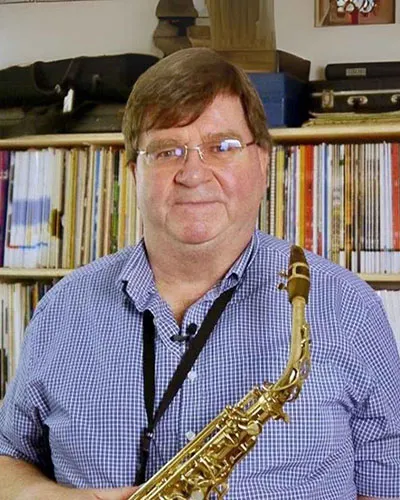
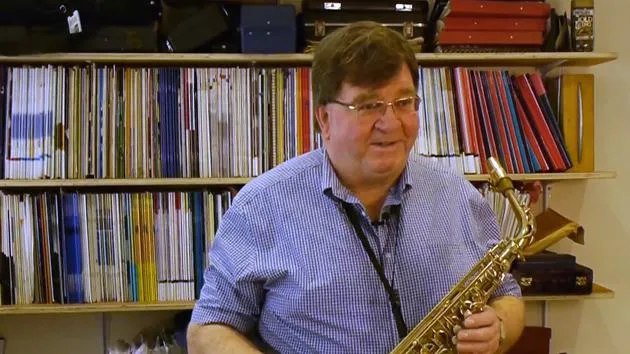
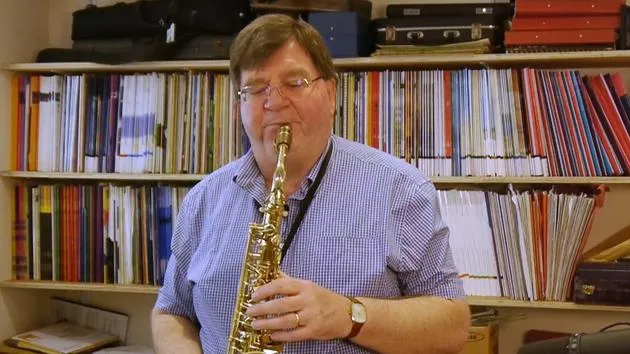
James RaeJames Rae introduces the note C on the saxophone - where it sits on the stave, the left-hand fingering, and long-note exercises to build your sound.
Copyright © 2023 Universal Edition (London) Ltd., All compositions by James Rae except where otherwise indicated.
What's in the course
42 lessons (0h 56m) · 1 free
01. The Note G - Fingering and Exercises
3:05
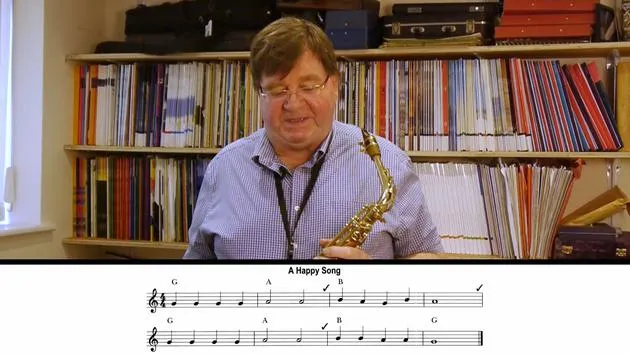
02. A Happy Song - Lesson
0:42
03. A Happy Song - Performance
0:21
04. A Sad Song - Lesson
0:15
05. A Sad Song - Performance
0:26
06. Foundation Rock - Lesson
0:35
07. Foundation Rock - Performance
0:20
08. Rolling Along - Lesson
1:19
09. Rolling Along - Performance
0:21
01. The Note C - Fingering and Exercises
You are here7:10
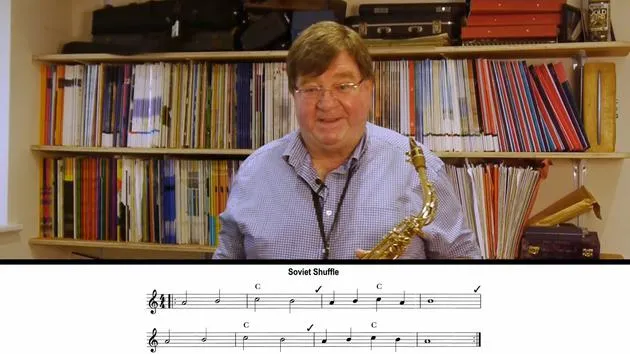
02. Sovient Shuffle - Lesson
0:31
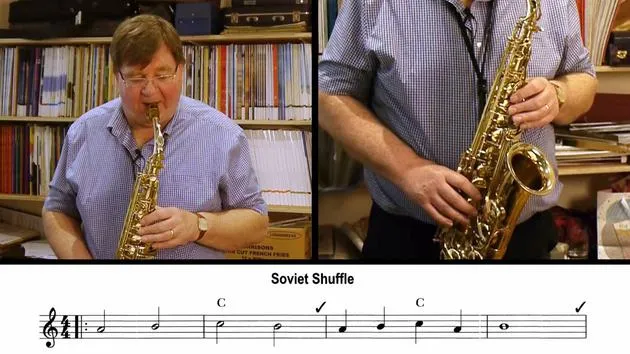
03. Sovient Shuffle - Performance
0:40
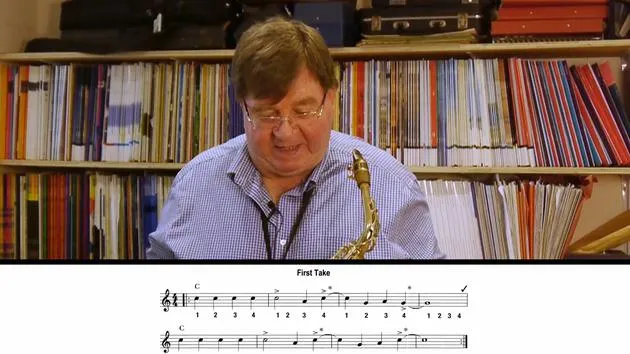
04. First Take - Lesson
0:58
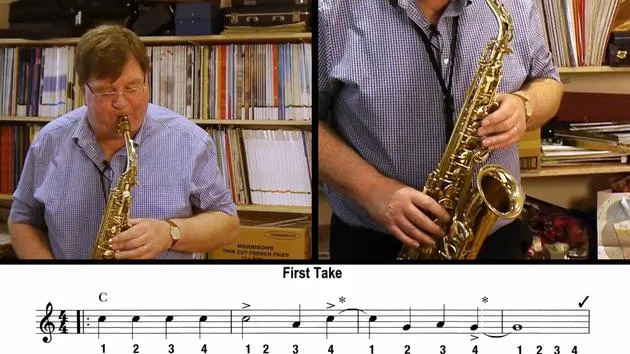
05. First Take - Performance
0:36
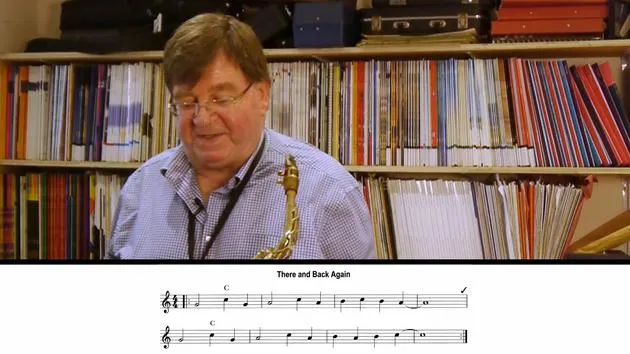
06. There And Back Again - Lesson
0:54
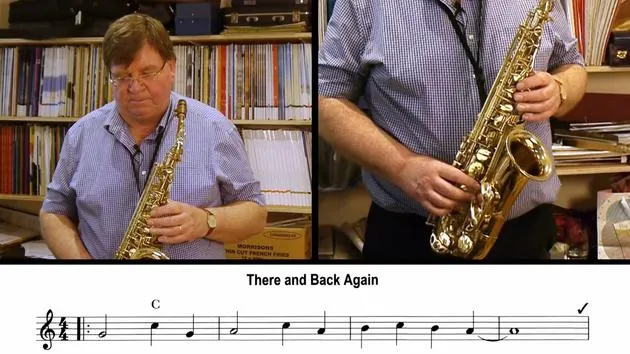
07. There And Back Again - Performance
0:40
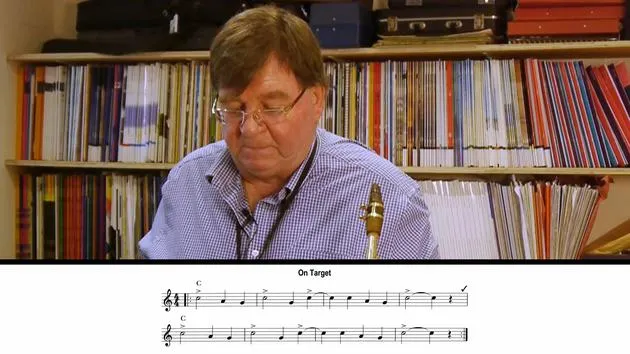
08. On Target - Lesson
0:18
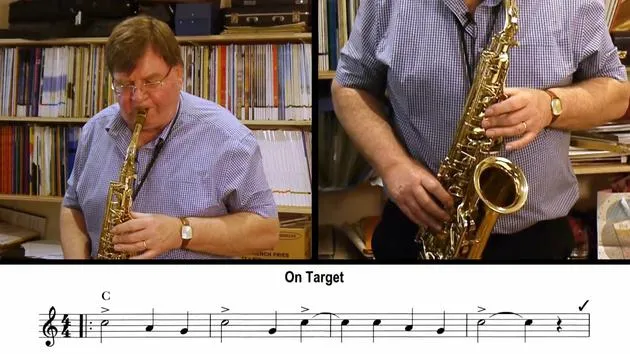
09. On Target - Performance
0:30
Lesson transcript
Introduction to the Note C
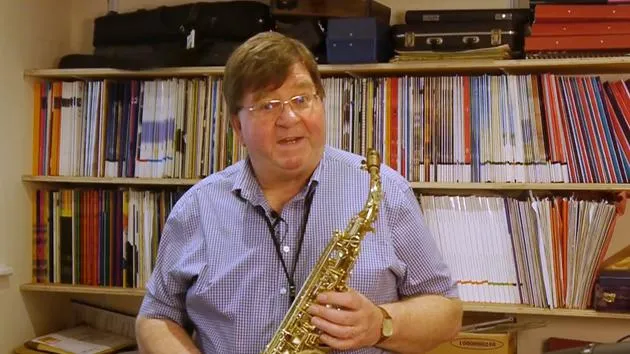
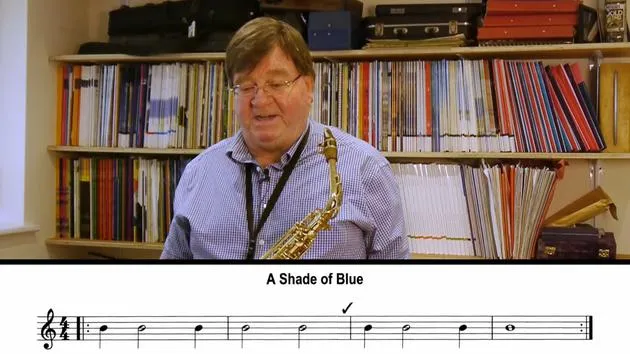
In this section, I'd like to introduce the note C.
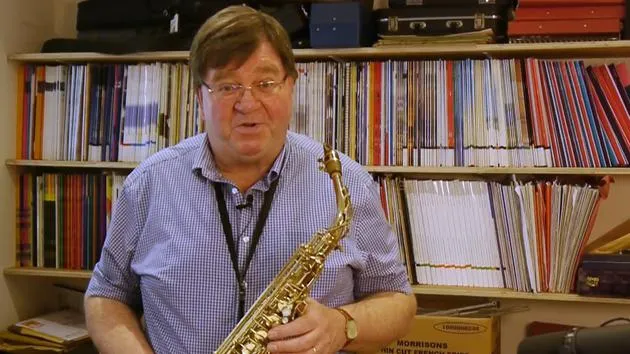
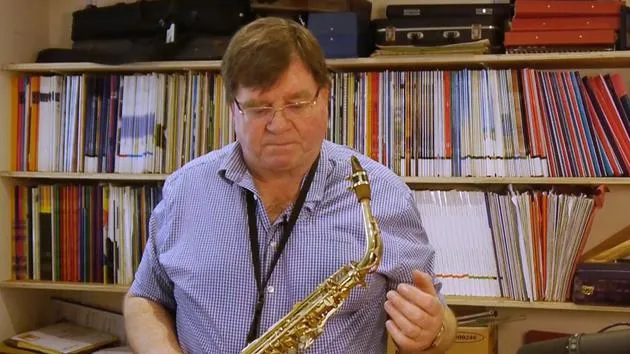
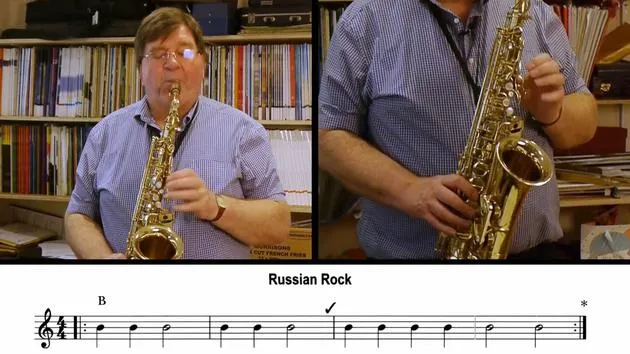
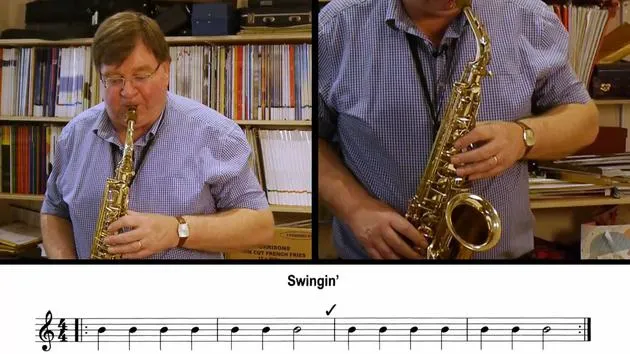
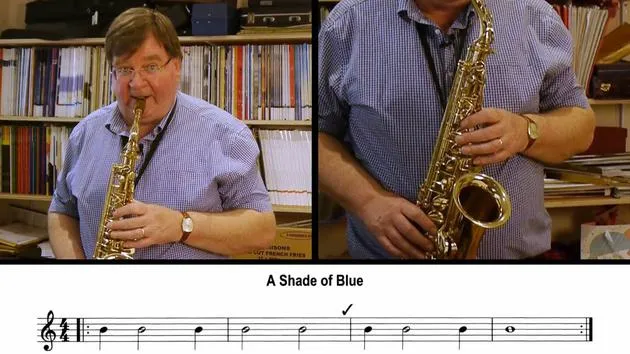
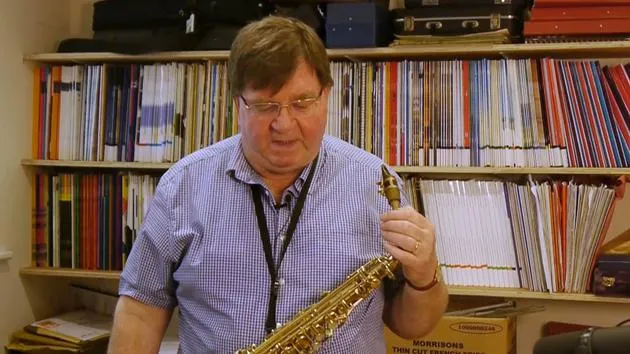
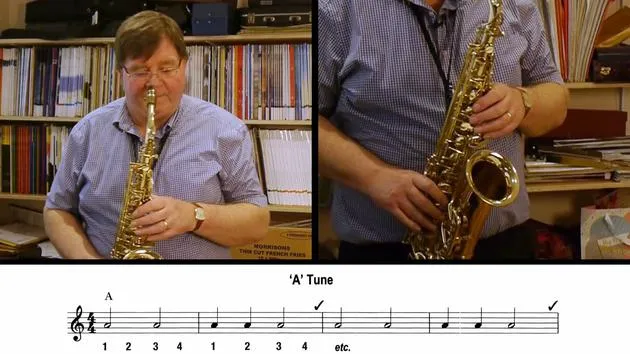
- C sits on the third space of the stave and is played with the middle finger of the left hand, like so.
- Think of your A and remove the top finger.
- It's the highest note we've done.
It'll feel slightly odd at first having the top finger off and the second one down, but you will get used to it.
The Importance of Long Notes
Going back to what I said earlier in the course, it's very important to play long notes to develop your sound.
- When we learn a new note, it's good to practice them as long as you can until your breath runs out.
- This develops good lung capacity and a nice, smooth, straight sound.
Introducing Crotchet Rests and Note Values
In this lesson, we also introduce crotchet rests as well as notes having value.
- Rests also have a value: a crotchet or a quarter note.
- A rest is like a black squiggle, looks like a black seagull on its side. This means you don't play for one beat.
- Crotchets mean you do play for one beat, while rests mean you don't.
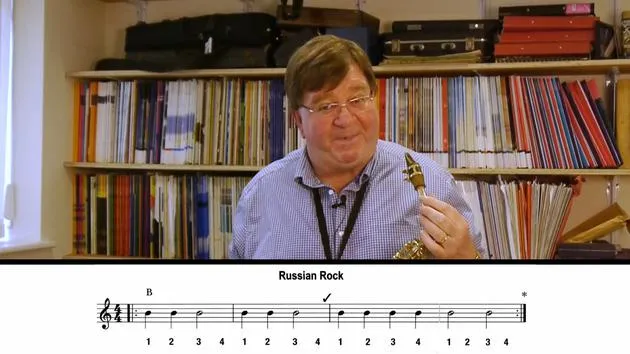
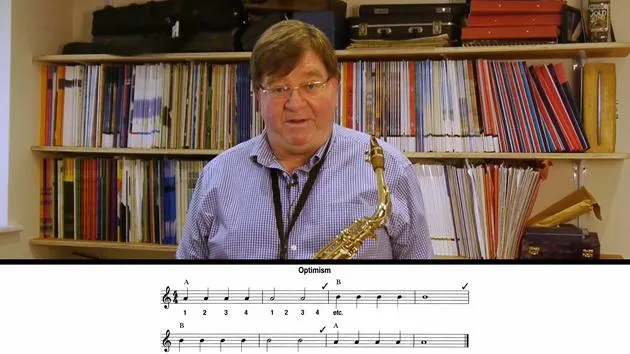
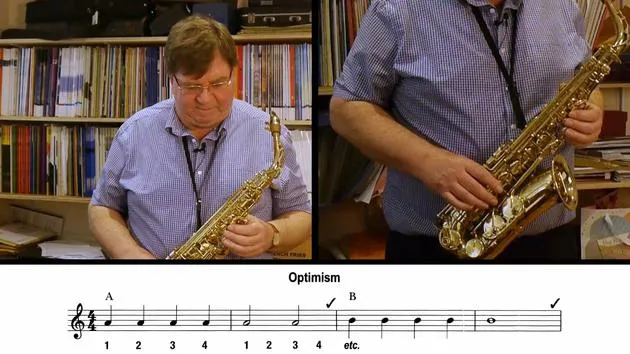
Exercise 1: Play Rest
For example, Exercise 1 is:
- Play rest.
- Play rest.
- Play, play, play, play, rest.
- Play rest.
- Play, play, play.
It's good to practice these exercises with the use of a metronome to keep you in time.
- Eventually, you will develop your own internal metronome, but in the early stages, it's good to have a metronome nearby.
- You can use an electronic one or a mechanical one. Both are very useful.
- You can get them for your phones as apps or get a physical one.
This is a typical clockwork metronome.
- We wind it up just like a clock and set the speed by moving the weight up or down the arm, which affects the speed.
- It's very important that you put it on a level surface.
- Here it gives us a regular tick.
- Set it to a comfortable speed so you can play along with it; this helps to keep you in time.
Exercise 2: Moving Up and Down
Exercise 2 involves going up and down a hill.
- We start on G, go up to C, and back down again.
If you notice, these exercises are repeated. I call it looping, where you take a bite-sized chunk of the music and play it over and over again, listening to it all the time. You will hear it improving before your very ears.
- Don't just play around and switch off, but be active, okay?
- Aim to improve. Each time you play it round, aim to make it better than the previous time.
Smooth Transitions: From B to C
Now, this exercise involves the technique of going from B to C and back smoothly.
- This is a little like playing the piano, where you put one finger down and take the next up.
- There's not much of this in saxophone technique, but in this particular corner, it is essential, like a police car.
After a while, you'll be able to do it without thinking.
Exercise 3: A Little More Complicated
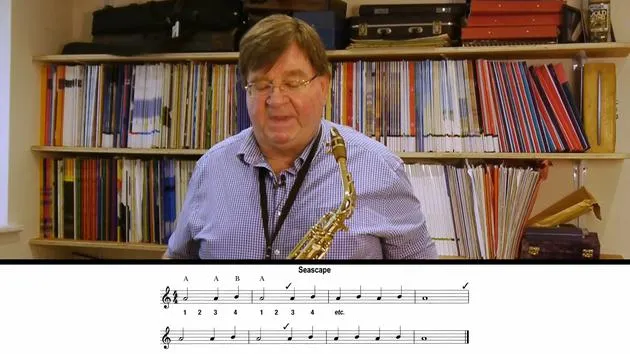
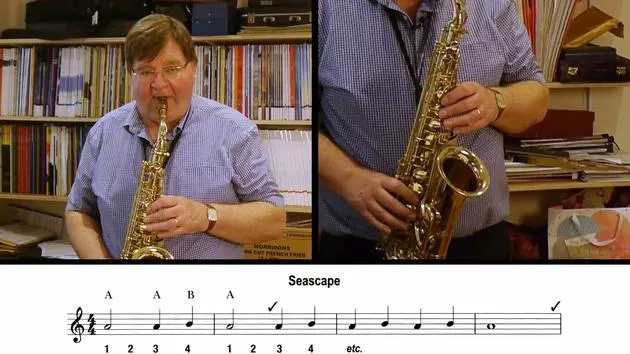
Exercise 3 is a bit more complicated.
- If you look through, you'll see every second note is a G.
- So it starts on C, down to G, then to a B, to a G, to an A, to a G, and back to B, G.
This exercise is a workout for both leaps and steps.
Exercise 4: The Final Challenge
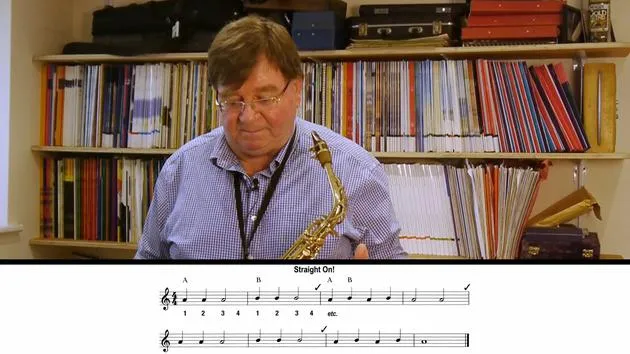
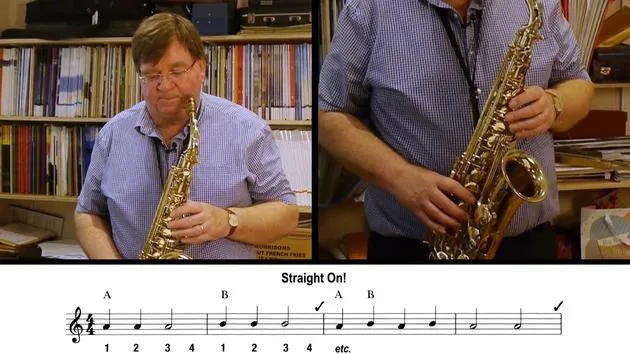
The final exercise in this section, Exercise 4, is a bit of a jumble.
- It looks like a complete set of random notes, but it isn't.
- There is a pattern.
If you look at the first two notes, it's C, A. Then look at the first two notes in the next bar, it's A, C.
- The second two notes in the first bar, G, B.
- The second two notes in bar two, B, G.
There is a cunning little pattern going on, although when you hear it, it just sounds like a jumble.
With perseverance, you'll get it, but it is the hardest of the four.
42 lessons
0h 56m of structured video lessons
Advanced video features
Slow down, loop a passage, follow along
Mobile, tablet & desktop
Practise wherever you are
100% satisfaction guarantee
30-day money-back guarantee
Meet your guru
Meet your guru
James Rae was born on Tyneside in 1957. He studied clarinet, bass clarinet, piano and composition at the Guildhall School of Music and Drama from 1975 to 1979, under professors Yona Ettlinger, Stephen Trier, Meriel Jefferson and Patric Standford respectively. Since leaving the Guildhall, he has pursued a highly successful and varied career across three areas: performing, writing and teaching.
James Rae has worked in many West End and Royal National Theatre productions, including Sir Peter Hall's award-winning Oresteia with music by Sir Harrison Birtwistle, and has received many freelance engagements with some of the country's leading orchestras and ensembles. He is the leader of the Phoenix Saxophone Quartet, who over the years have given many recitals and BBC broadcasts, and have recorded the complete works of Carey Blyton on two albums, 'The Return of Bulgy Gogo' and 'Sherlock Holmes meets Dr Who'.
As a composer, James Rae is one of Europe's most published writers of educational wind music, with over 250 publications to his credit, mainly published by Universal Edition. His music includes instrumental study books, sonatas, tutors, baroque, classical and jazz transcriptions, plus many volumes of duets, many of which feature on all the major wind examination syllabuses worldwide. He has also written four musicals for schools with Mike Cornick, and his larger commissions include The Turn of a Wheel, a major work for concert band that premiered in November 1999 for the North Tyneside Concert Band, of which he was a founder member as a boy, and the overture Moving On in 2012.
James Rae has worked extensively as a syllabus consultant and composer for both the Associated Board and Trinity College London, and has been highly involved in developing the woodwind sight-reading requirements for both exam boards. As a teacher, he has held many posts in both the state and independent sectors, and currently works at King's College School Wimbledon, where he directs the Wind Orchestra and Concert Band, and Shrewsbury House School in Surbiton, where he coaches three large bands and a chamber group. That teaching experience runs right through his saxophone series for MusicGurus, which takes you step by step from your very first notes to a confident, stylish player: First Notes, New Keys & Low Notes, Expanding Your Range, Scales & High Notes, Extended Range & Rhythm, and Polish & Style.







