



Folk Rock 2
With
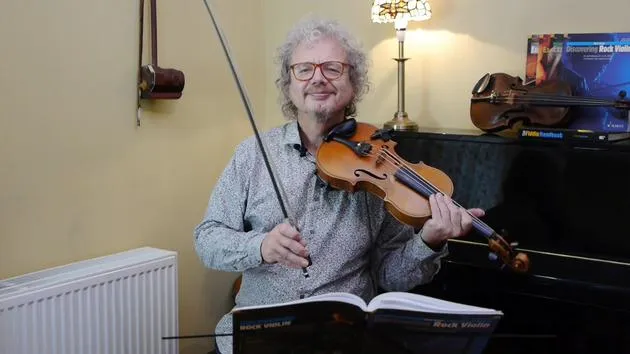
Chris HaighChris Haigh breaks down the ornaments that bring folk-rock fiddle to life, starting with the cut - a quick flick of an upper note borrowed from the Irish pipes.
© 2011 Schott Music Ltd, London
What's in the course
18 lessons (1h 41m) · 1 free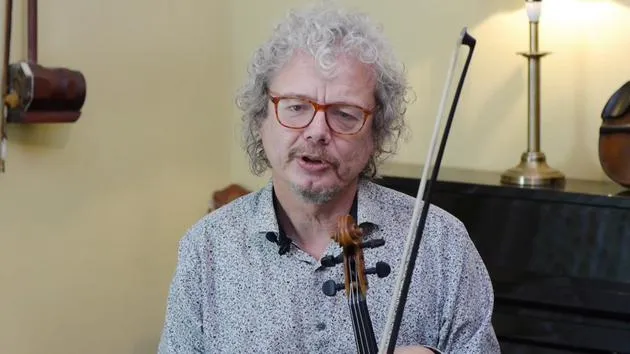
Lesson transcript
Lesson on Ornamentation in Folk Rock
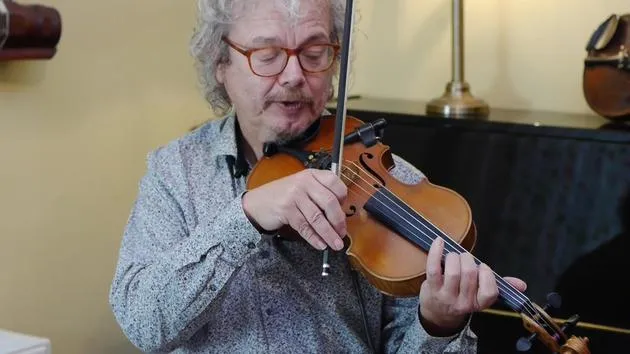
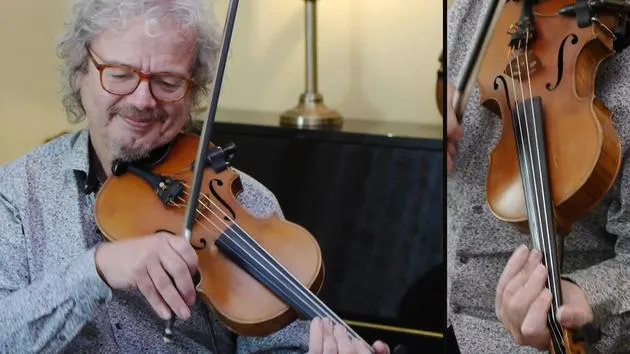
In this lesson, we're going to talk about the ornamentation that you can use when playing folk rock. Celtic music is pretty well organized in that we have actual names and people have thought about the different ornaments that are used. So, it's relatively easy to explain what's going on.
The Cut
First of all, I'm going to show you a thing called the cut, more specifically, the single cut.
Explanation of the Cut
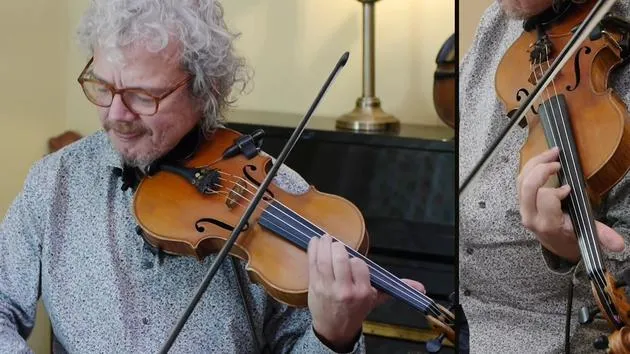
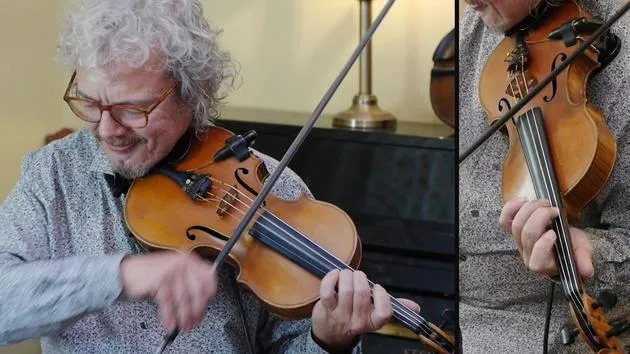
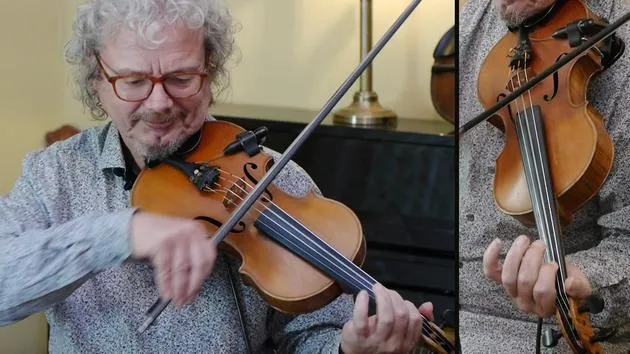
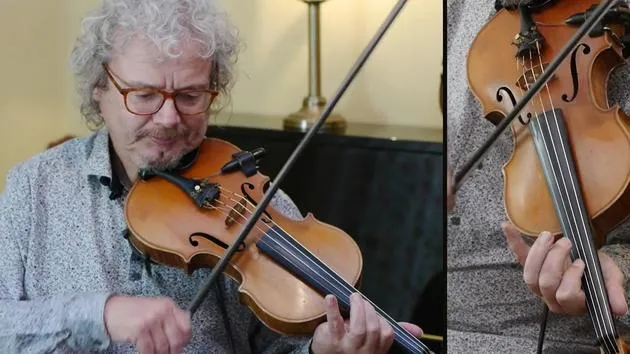
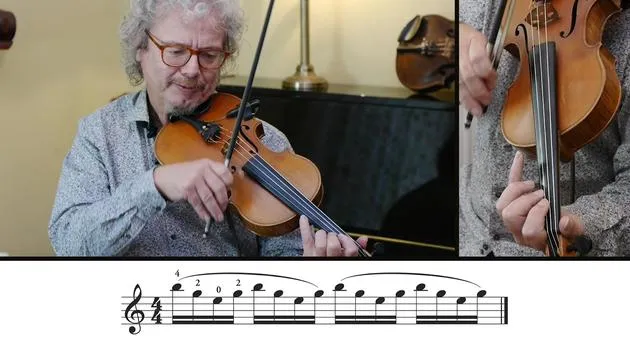
- If you take an unornamented phrase, and you have two of the same notes that you want to differentiate, one way to do this is by a cut, which is a little flick of an upper note.
- On the first cut: A third finger is flicking over the first finger.
- On the second: The fourth finger is flicking on.
The cut derives from the Irish pipes, which are incapable of stopping once they've started. You have basically a continuous flow of notes. If the pipes approach this, they're unable to distinguish between those two notes, except by flicking a little note on. Thus, you can hear two distinct notes.
- Key Points:
- The flick has got to be as quick as possible, and that takes a lot of practice.
- You don't want to hear a distinct note; it mustn't be too long.
- Aim for a tiny flick just to interrupt the note.
This may take you days, weeks, or possibly months to absolutely master. The key, I repeat, is to get it as fast and light as possible.
The Double Cut
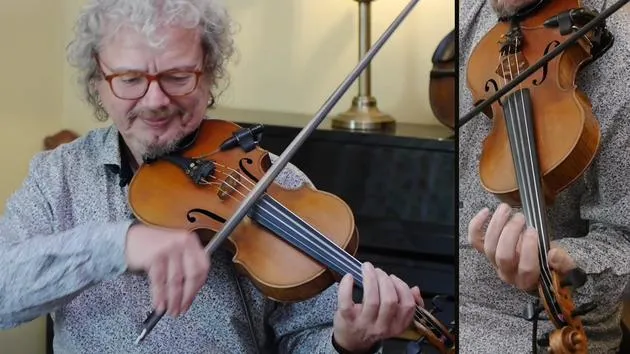
- The double cut is where you put two notes in instead of one.
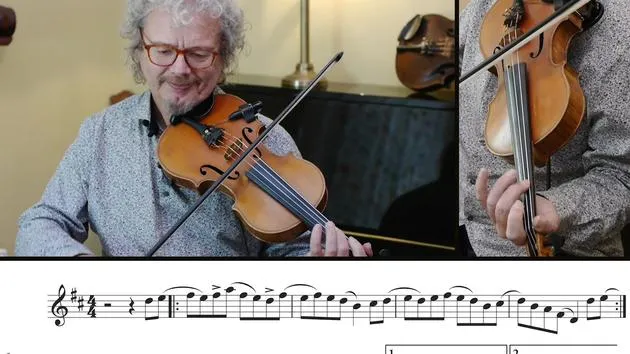
- Here's an unornamented phrase:
- And here's the double cut:
- First finger, third finger, and then onto the melody note.
Always slur from the ornament into the melody note, and you must play it pretty quickly.
The Long Roll
Next, we're going to look at the long roll.
Explanation of the Long Roll
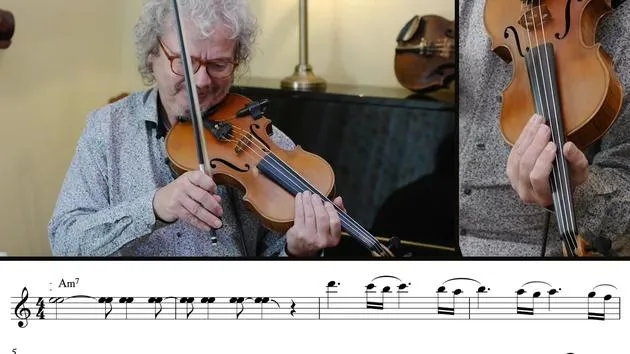
- Unornamented Melody:
- Here it is slowed down with the long roll:
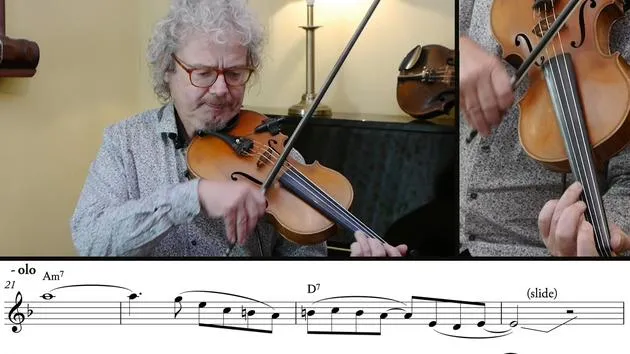
- Play the melody note, the note above in the scale, the melody note again, and the note in the scale below.
Usually, you will play most of the length of the note before you even start the roll.
- Again, play as fast and as light as possible, just an interruption of the note.
Length of Rolls:
- The long roll takes a dotted note (dotted crotchet or eighth note).
- The short roll takes just one eighth note length.
Example:
- Starting Phrase:
- Here's a short roll.
The Treble
We also have a thing called a treble, which is also referred to as the shake or the shiver.
Explanation of the Treble
- Pattern: It's kind of an up, down, up. It's a triplet played very fast and played really short.
- It always starts with a down beat.
This can take a good long while to master if you've never done it before. It requires a tensing of the arm, which is something we almost never recommend.
- Aim for that kind of speed!
Remember, it must be as short as possible.
Summary of Ornaments
Those are your different ornaments. If you've played folk music for a long time, you will probably already know them. If you've not played them before, they will be a mystery and will take a while to get your fingers around.
Playing Jigs
When you're playing jigs, there are different ways of breaking up the 6/8 time signature.
Traditional Jig Pattern
- The standard way is just:
- dagada, dagada, 1, 2, 3, 1, 2, 3
Riverdance Effect
- However, in what I call the river dance effect, there have been a whole load of different ways of introducing rhythms into the jig. If you alternate:
- da, da, da, da, da, da, da, da, da, da, da, da, da, da, it sounds like you've got a complex time signature.
This effect has found its way into Celtic music in the last two or three decades.
Faster Example:
- Listen to the rhythm again a bit faster.
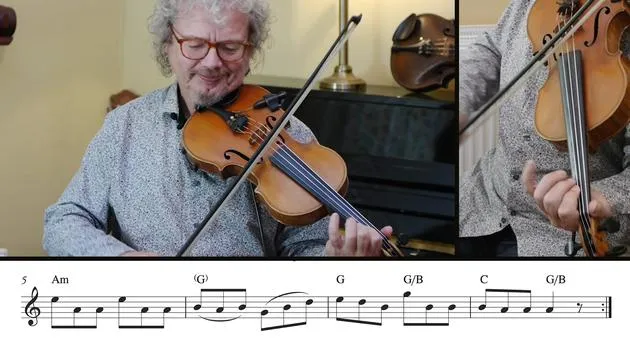
Closing Tune: Wickham Wanderers
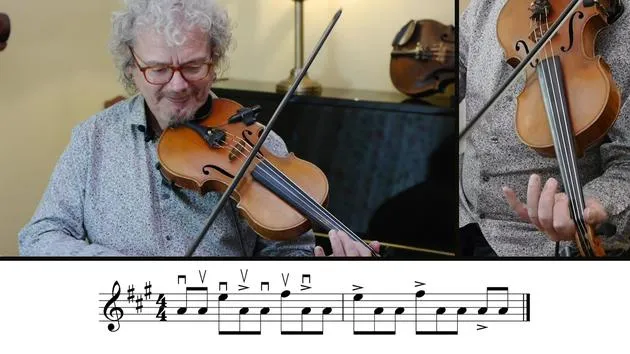
We're going to finish this lesson with a tune called Wickham Wanderers. Steve Wickham was the fiddle player for the Waterboys, who had a lot of hits with songs such as Fisherman's Blues.
Anecdote about Steve Wickham
One of his best stories is about standing at a bus stop in Dublin when along came Bono from U2, just happened to wait for the same bus.
- As you would, Steve Wickham said, "Oh, hello, I'm a fiddle player. I don't suppose you need any fiddle on your next album."
- Bono replied, "Yes, actually, I do."
And I've been looking for that bus stop ever since, but I've never found it.
Assignment
Your assignment for this lesson is:
- Try to master all of the different ornaments that we've talked about.
- Find a couple of other traditional tunes and try to apply some of those ornaments to them.
- Try Wickham Wanderers and play it with the backing.
- Finally, try to improvise over that using notes that incorporate some of these ornaments.
18 lessons
1h 41m of structured video lessons
Advanced video features
Slow down, loop a passage, follow along
Mobile, tablet & desktop
Practise wherever you are
100% satisfaction guarantee
30-day money-back guarantee
Meet your guru
Meet your guru
Chris Haigh has been a professional fiddle player for 25 years, with experience covering many different genres. He has played on over 75 albums, working with artists including Alison Moyet, Bob Geldof, All About Eve, Michael Ball, David Soul, Oumou Sangare, The Quireboys, Riverdance, Morcheeba, James Galway and Steps.
He has played swing jazz with The Kimbara Brothers, Diz Disley, Le Jazz, The Hot Club of London, and the Quecumbar Allstars, and leads a 7-piece Soviet swing band, The Kremlinaires.
Chris gives lessons and workshops on jazz violin technique and has taught jazz violin at Middlesex, Brunel and Newcastle universities and Truro College. His writing credits include nine fiddle books, among them The Fiddle Handbook.
He also runs Fiddling Around (fiddlingaround.co.uk), probably the most comprehensive and widely visited source of fiddle information on the web.







