



Didier Lockwood
With
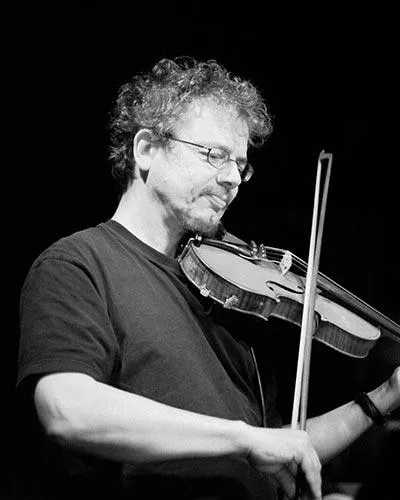
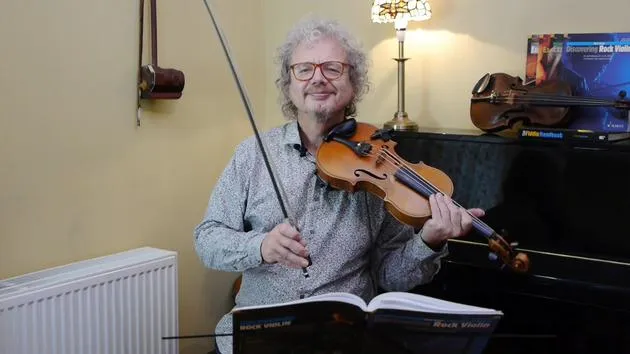
Chris HaighChris Haigh profiles French jazz-rock violinist Didier Lockwood, looking at trademark touches like his use of altered notes.
© 2011 Schott Music Ltd, London
What's in the course
18 lessons (1h 41m) · 1 free
Lesson transcript
Jazz Rock Lesson: Didier Lockwood
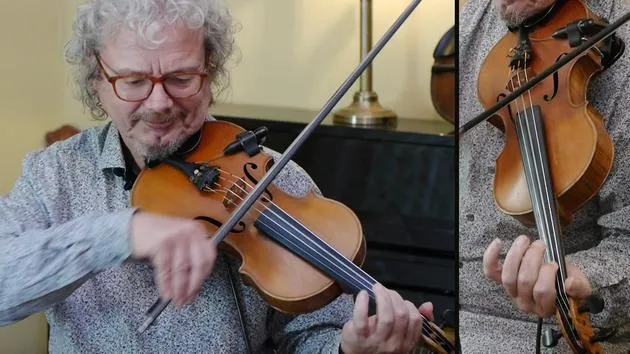
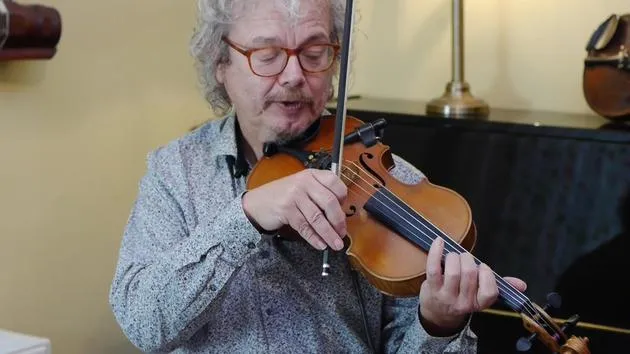
In this lesson, we're going to talk some more about jazz rock, and in particular, about a French fiddle player called Didier Lockwood.
Background
Didier was a musician who transitioned from electric guitar to the violin. This background provided him with a solid feel for rock music before he began playing the violin, giving him an advantage over Jean Leponti, though it's difficult to truly compare the two.
Distinctive Features of Didier Lockwood's Playing
Didier had several distinctive features in his playing, which I really enjoy:
Altered Notes
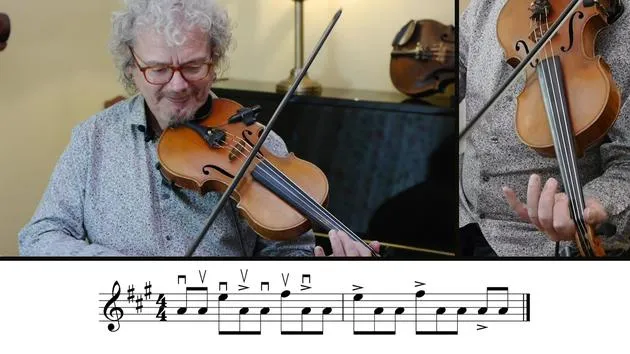
One of Didier's trademarks was his love for altered notes.
- Explanation: If you have a simple little scale over a D7, Didier would incorporate:
- Flat nines
- Sharp nines
- Flat fives
This little lick works in a much more interesting way than it might initially sound. It can be difficult to discern what's happening, but when you hear it in context, it sounds fantastic. We'll hear that particular lick at the end of this lesson.
Sliding Techniques
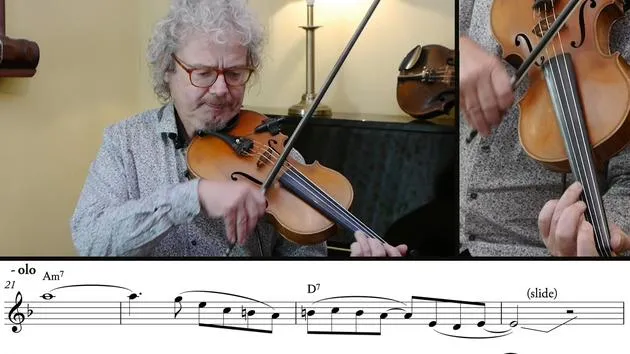
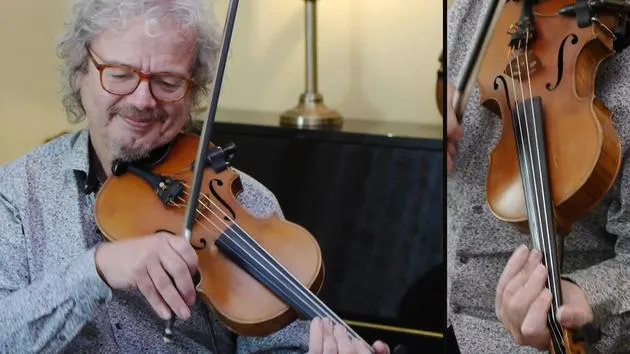
Didier made great use of sliding, which could be either upward or downward. Here's how they sound:
- Upward Slide: You play the note and slide up an indeterminate amount right at the end of the note.
- Downward Slide: This sounds a bit like this [demonstration].
When used in the right context, these slides sound exquisite.
Solo Albums and Nickname
In the 70s and early 80s, Didier released a string of solo albums characterized by a poppy and powerful feel. Because of his innovative style, he became known as the Jimi Hendrix of the violin. While many musicians have received this nickname, I believe Didier truly deserved it.
Harmonic Tricks
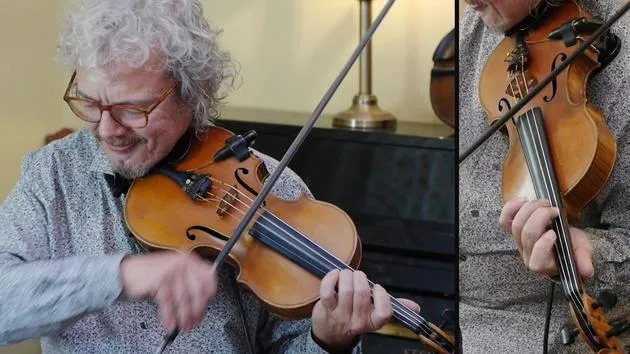
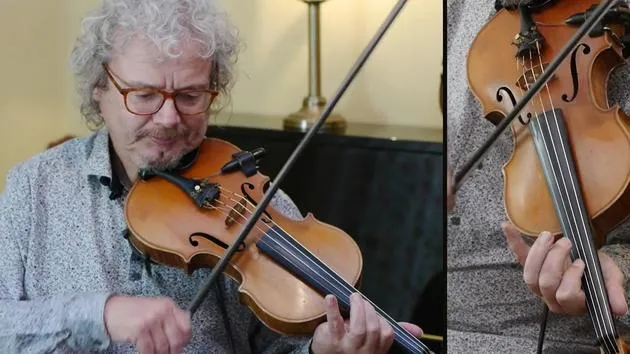
Another lick of Didier's that I particularly enjoy is a harmonic trick:
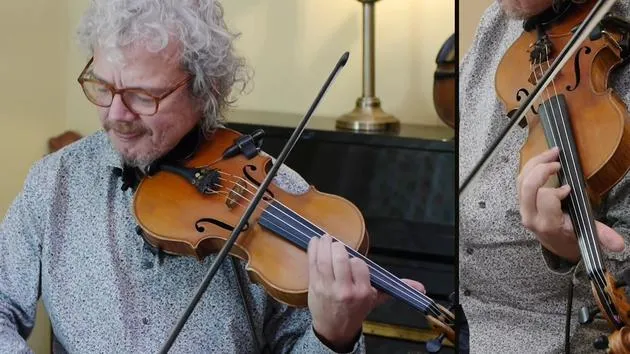
- Starting with your middle finger positioned high, you slide up and down to produce a swirl of harmonics.
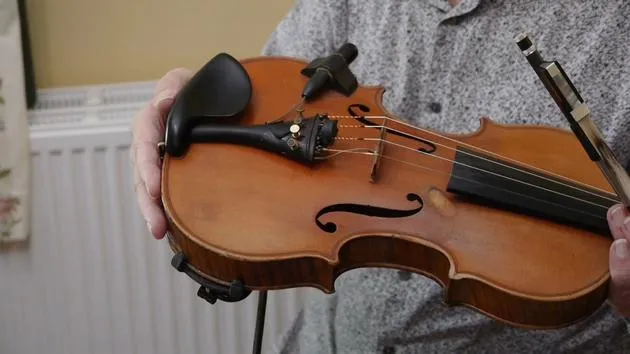
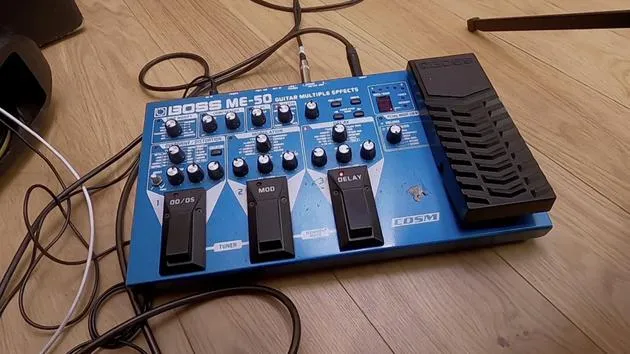
- Using various effects and echo creates a fantastic sound. You'll hear this technique in the little tune we're going to play.
Didier was a master of harmonics. In his proper jazz playing, especially in gypsy jazz, he utilized all kinds of harmonics with great effect. I strongly recommend you check him out.
Tune: Ionosphere
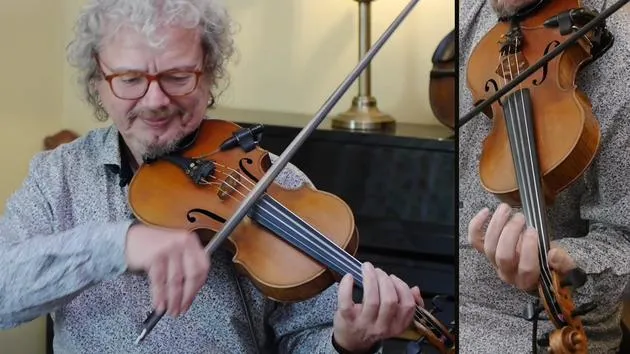
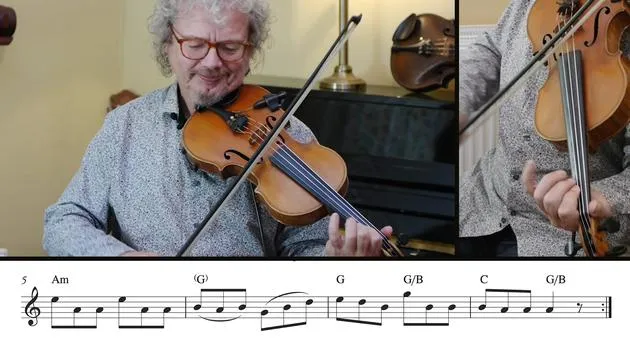
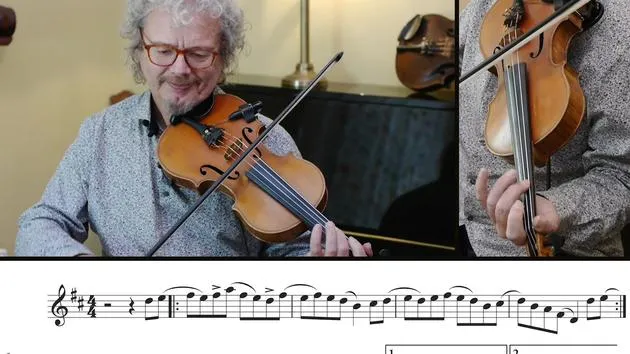
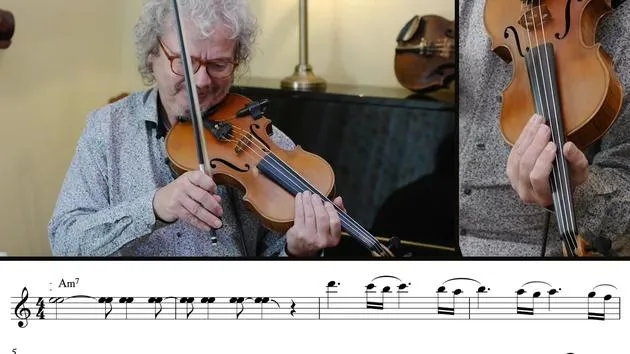
Now, let's dive into a tune titled Ionosphere. I will show you a few tricky bits:
Melody and Solo
- The melody is fairly straightforward.
- The solo includes:
- Slide: downward slide, that's one we keep returning to.
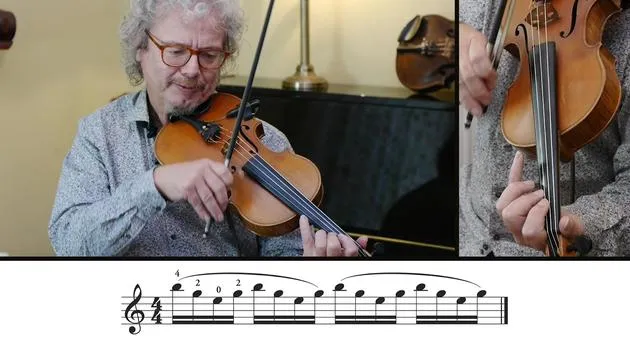
- Third finger: followed by the first finger open.
- Pentaonic lick: 1, 2, 1, this goes up a semitone.
- Incidentally, it's easy to get into a pentatonic lick, but it's much harder to exit neatly.
After that, we have:
- Double E followed by some octaves.
- Descending lick: one of his sharp nine-flat nine licks with slides.
- Harmonic swirl.
Conclusion
Putting all these elements together, here is what we end up with. Enjoy!
18 lessons
1h 41m of structured video lessons
Advanced video features
Slow down, loop a passage, follow along
Mobile, tablet & desktop
Practise wherever you are
100% satisfaction guarantee
30-day money-back guarantee
Meet your guru
Meet your guru
Chris Haigh has been a professional fiddle player for 25 years, with experience covering many different genres. He has played on over 75 albums, working with artists including Alison Moyet, Bob Geldof, All About Eve, Michael Ball, David Soul, Oumou Sangare, The Quireboys, Riverdance, Morcheeba, James Galway and Steps.
He has played swing jazz with The Kimbara Brothers, Diz Disley, Le Jazz, The Hot Club of London, and the Quecumbar Allstars, and leads a 7-piece Soviet swing band, The Kremlinaires.
Chris gives lessons and workshops on jazz violin technique and has taught jazz violin at Middlesex, Brunel and Newcastle universities and Truro College. His writing credits include nine fiddle books, among them The Fiddle Handbook.
He also runs Fiddling Around (fiddlingaround.co.uk), probably the most comprehensive and widely visited source of fiddle information on the web.







