



Explication et démonstration de l'exercice trois
Avec
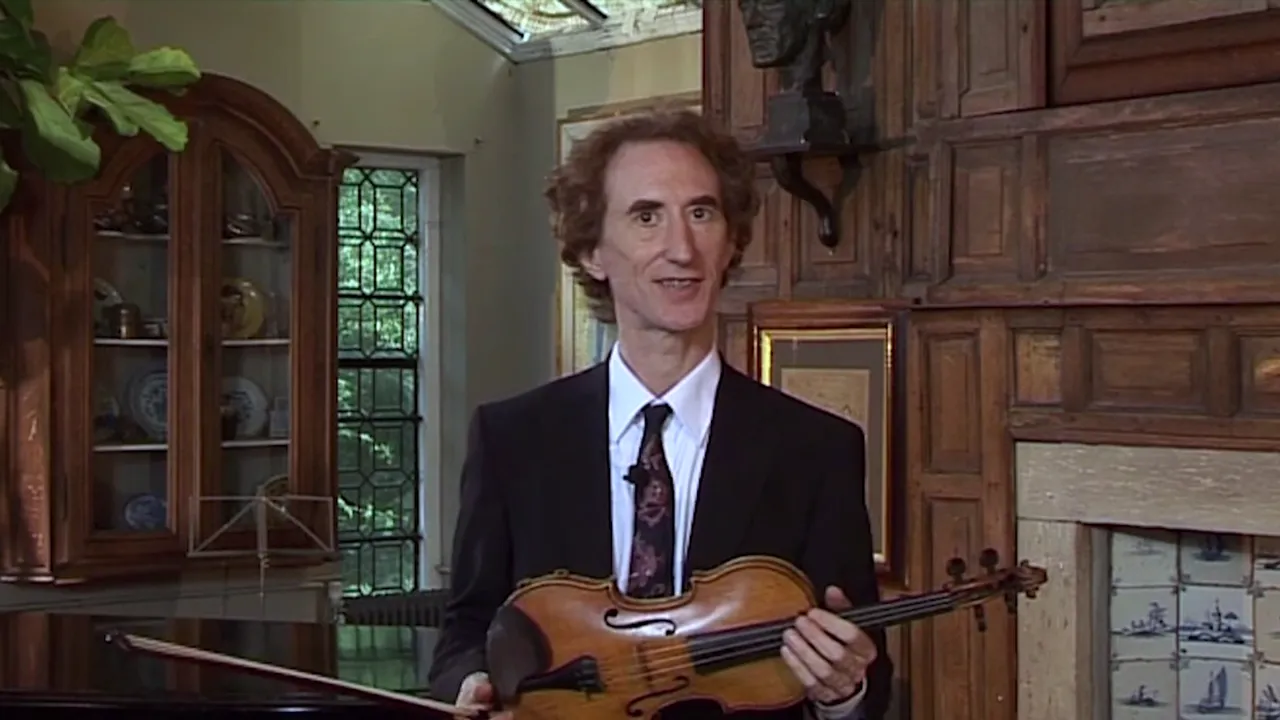
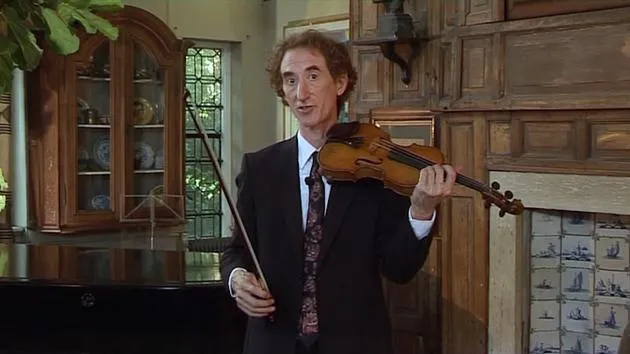
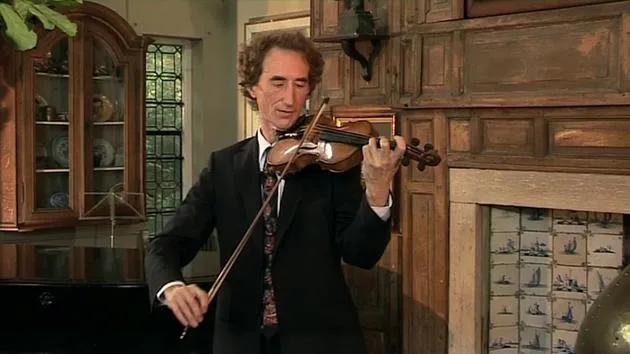
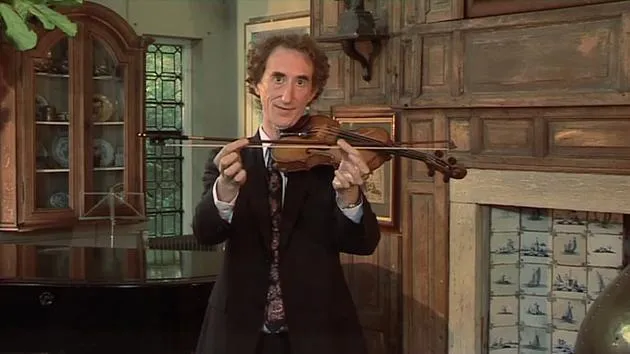
Simon FischerSimon Fischer explique l'exercice de pression : alterner une pression d'archet forte et légère au sein d'un même coup d'archet pour obtenir un son égal, pur et sans forcer.
Le contenu du cours
8 leçons (0h 59min) · 1 gratuites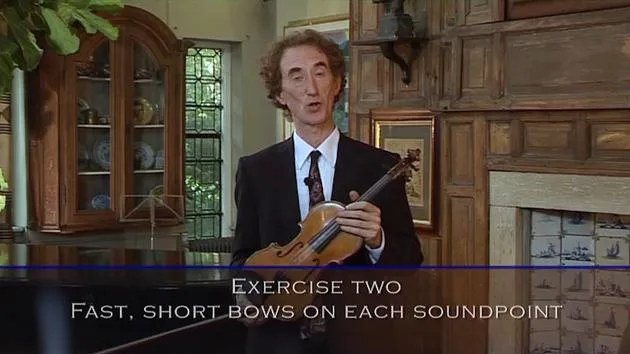
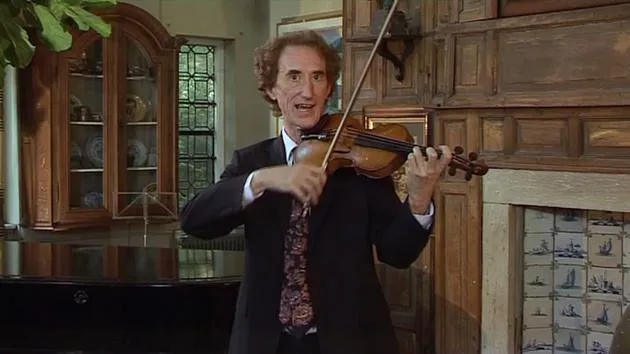
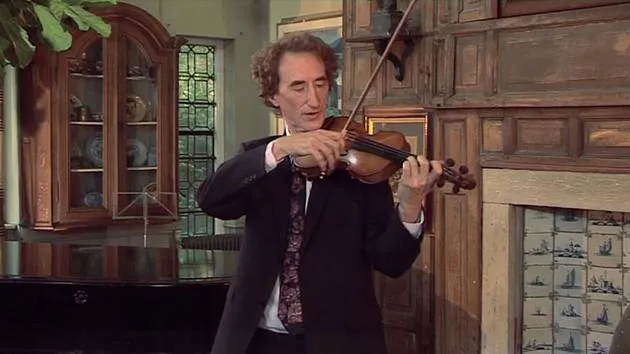
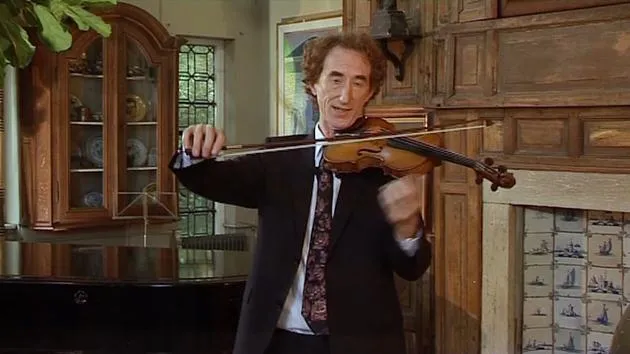
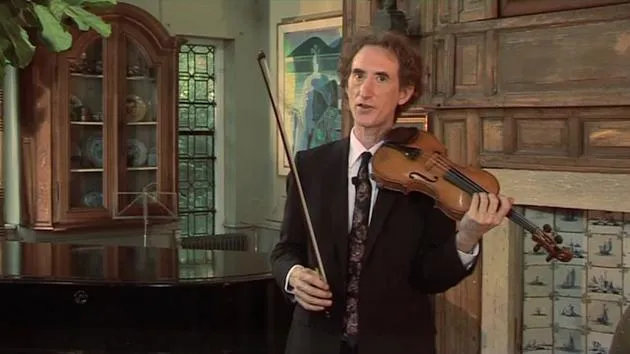
Transcription de la leçon
Pressure Exercise for Bow Control
The pressure exercise simply alternates heavy and light bow pressure within one long bow stroke. Here's how to approach it:
For Less Advanced Players:
- Focus on achieving 8 to 12 heavy-lights in one bow stroke.
For More Advanced Players:
- Challenge yourself with 28, 32, 36, or even 40 heavy-lights in a single bow stroke.
Objectives:
- Explore how deeply you can sink the bow into the string.
- Immediately transition to how lightly you can float the bow along the surface of the string.
- Aim for a tone that is absolutely pure, even, and unforced.
Tips:
- Strive for fantastic evenness in both forte and piano.
- To maximize the effects of the pressure exercise:
- Do as much as you can using only pressure or weight.
- Keep bow speed as unchanged as possible.
Caution:
- Avoid using too much extra speed to prevent scratching the tone.
- Use just a little extra speed to maintain purity.
Execution
- Forte, non diminuendo forte.
- Acknowledge the need for some extra bow speed without letting it become a speed exercise.
- Practice transitions:
- Subito piano.
- Forte, piano.
- Hold purity in tone.
Exercises:
-
Start with two in one bow:
Forte, piano. Forte, piano.
Address any issues related to pressure and tempo. -
Progress to three in one bow:
Focus on maintaining purity: Heavy, heavy. -
Try four in one bow:
Concentrate on equal thirds:
Heavy, heavy.
Increasing Complexity
- Work towards eight and then sixteen heavy-lights in a row, with careful attention to bow division:
- Go deep into the string and allow the bow to follow freely.
Volume Gradation:
- Execute shifts like pianoforte using localized actions:
- Stress the importance of separating actions so that each movement is intentional and precise.
Final Thoughts
- Maintain a steady hand while focusing on sound points.
- Keep the bow parallel to the bridge:
"If your bow wanders, your sound will too."
Key Reminders:
- Localized actions are crucial.
- For instance, when placing fingers on the string, do it without tensing the body.
Remember, every subtle adjustment in your technique can lead to improved tone and expression. Keep practicing and refining these motions to achieve greater control and sound quality.
8 leçons
0h 59m de leçons vidéo structurées
Fonctions vidéo avancées
Ralentissez, bouclez un passage, suivez la partition
Mobile, tablette et ordinateur
Pratiquez où vous voulez
Satisfaction garantie à 100 %
Garantie remboursement 30 jours
Rencontrez votre guru
Rencontrez votre guru
Simon Fischer mène une carrière remarquable et variée de concertiste, de pédagogue et d'artiste de studio.
Il s'est produit dans le monde entier en récital et a enregistré trois Sonates de Brahms, un enregistrement salué par la revue Gramophone.
Simon est reconnu comme l'un des professeurs d'élite au monde. Il est professeur à la Guildhall School of Music et a occupé des postes à la Yehudi Menuhin School, la Wells Cathedral School et la Purcell School, et a été pendant 15 ans professeur invité à la Royal Scottish Academy of Music. Après avoir étudié à Londres avec Yfrah Neaman et à New York avec Dorothy DeLay, l'approche de Fischer réunit les meilleurs éléments des traditions violonistiques française, russe et américaine.
Les publications de Fischer exercent une grande influence sur l'enseignement du violon. Rédacteur pour la revue The Strad depuis 1991, ses articles mensuels ont conquis un lectorat dans le monde entier. Publiés par Edition Peters, ses ouvrages techniques Basics and Practice (traduit en coréen, italien et allemand), Scales et The Violin Lesson, ainsi que le DVD The Secrets of Tone Production (désormais disponible en streaming via MusicGurus), sont devenus des références sur de nombreux continents. Son livre et DVD Warming Up a été décrit par la revue The Strad comme « 23 pages d'or technique à l'état pur ».
En 2014, Simon Fischer a reçu le prix de la European String Teachers Association « pour saluer une contribution à l'enseignement des cordes à l'échelle d'une vie ».
Dans son cours en quatre parties Secrets of Tone Production, Simon te guide pour apprendre à connaître ton instrument, puis pour travailler pas à pas ses exercices fondamentaux de sonorité, afin de produire un son plus riche, plus maîtrisé et plus beau au violon.







