



Quelques idées supplémentaires

Avec
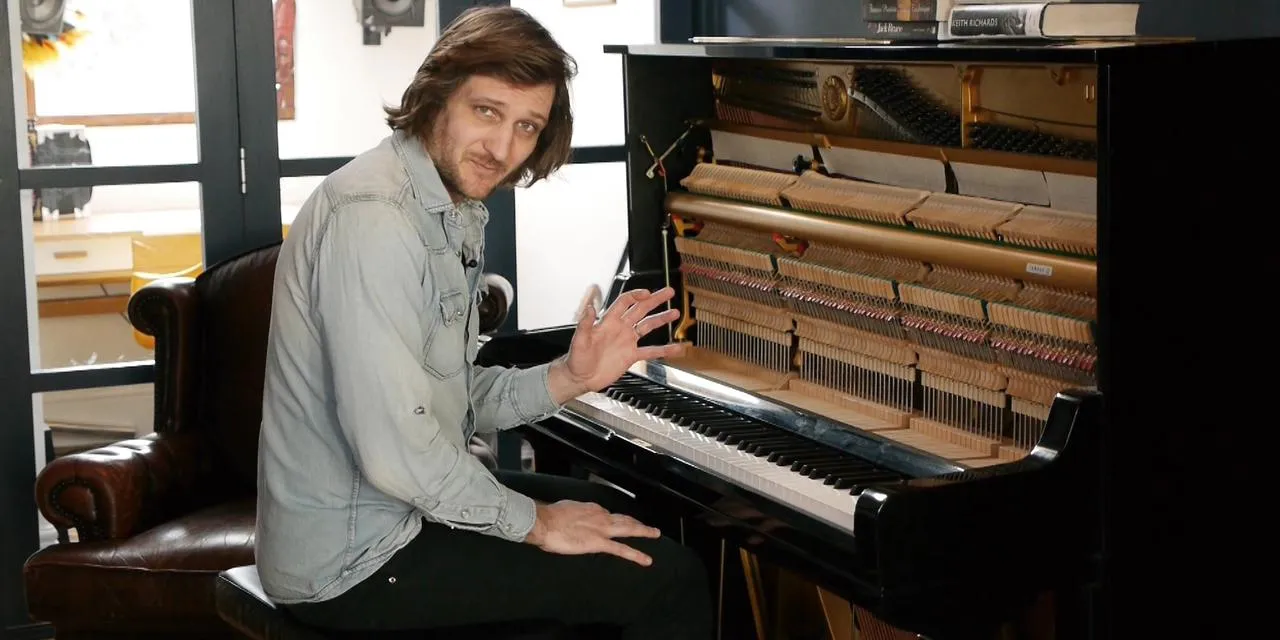
Paddy MilnerPaddy Milner partage quelques riffs de blues au piano supplémentaires du morceau - crush notes, variations en Si bémol et façons de les jouer autour d'un blues à 12 mesures.
Le contenu du cours
14 leçons (2h 17min) · 2 gratuites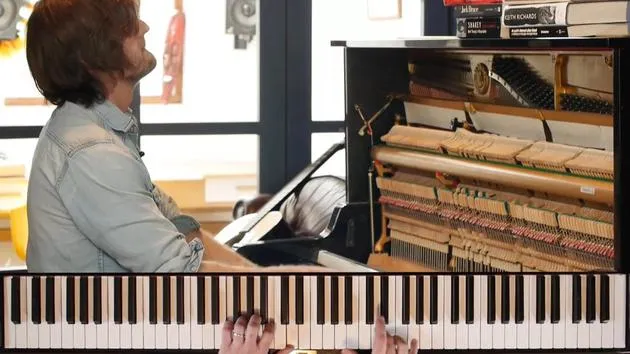
01. Démonstration : jouons un peu de blues
Leçon gratuite3:48
02. Explorer le riff de 'Pinetop Smith'
Leçon gratuite15:29
03. Mélanger les idées avec le riff de 'Pinetop Smith'
7:59
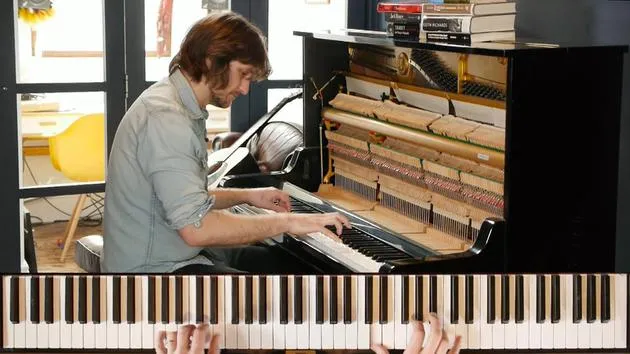
04. Riffs basés sur un accord de deuxième renversement
20:24
05. Explorer les tierces descendantes
15:28
06. Idées pour une introduction
9:34
07. La salle des machines : la basse à la main gauche
10:59
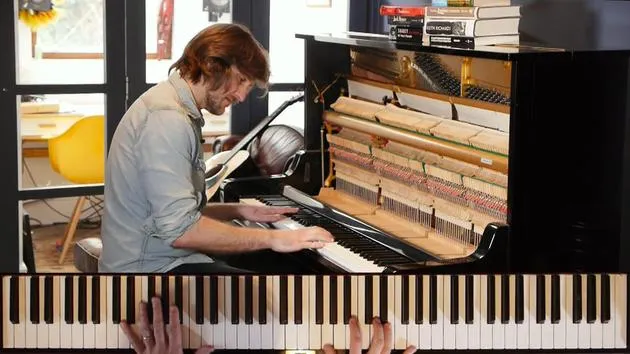
08. Idées pour les accords V-IV (mesures 9-10)
12:00
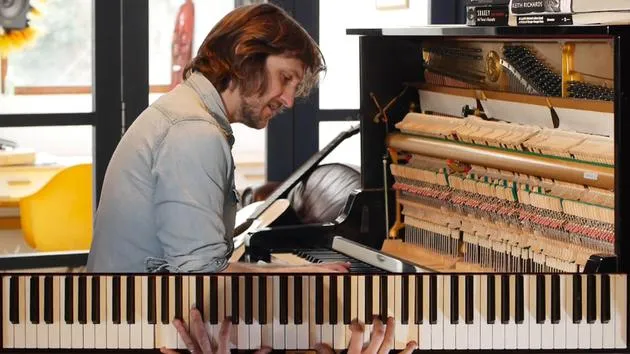
09. Explorer les accords « rolling »
7:24
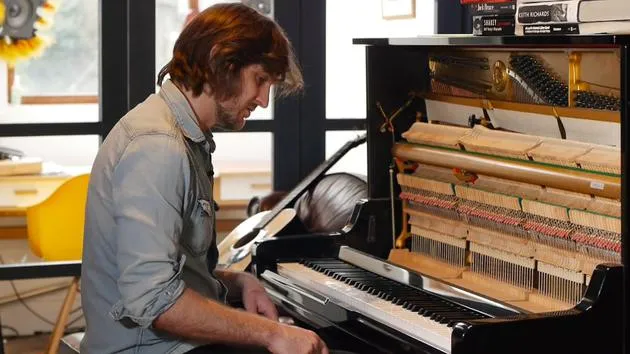
10. Break de piano n°1
8:58
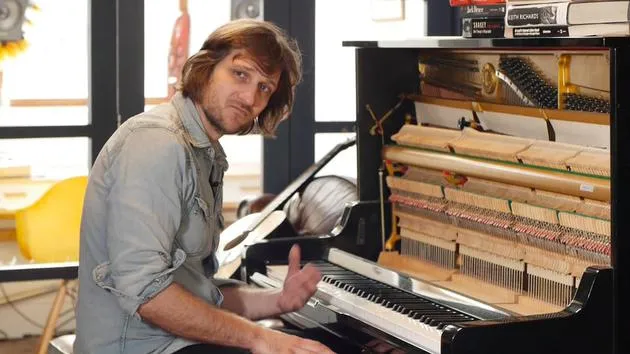
11. Break de piano nº 2
6:15
12. Explorer les fins
10:25
13. Quelques idées supplémentaires
Tu es ici6:53
14. Everyday I'm Shufflin' - Le défi du shuffle blues
1:35
Transcription de la leçon
Music Lesson
Introduction
Right. So in this lesson, I'm just going to throw a few ideas at you. There are a few little riffs that I used in the tune. Not going to go crazy, but here we go.
Riff Ideas
G and C Transition
Here's one. I'm basically going between a G and a C. I'll play it for you in context so you can kind of hear it.
Count in:
A, 1, 2, 3, 4.
That's what I'm doing. I'm playing, adding that sort of crush note, that B flat, little variation there.
When we go up to the four, we could change that B to a B flat. So you could do that when you go down to the five.
Speed Variations
So, yeah, there are different things you could do with this. You could kind of speed it up, rather than triplets, so you're playing it more like a 16th thing.
The tricky thing there is to try and keep that left hand shuffling away. I think that's a cool little lick.
12-Bar Examples
I tell you what, I'm going to play around a 12-bar, just using slightly different variations of that riff so you can hear the kind of thing I'm doing.
- Here, just doing a repeated note.
- You can try repeating different notes, add a little roll.
So, yeah, you can mess about with that to your heart's content.
Rolling Technique
There's another kind of rolling thing I was doing, which was just a totally repeated thing, sliding off that D flat with the G.
You could also do it with the B, which is quite effective if you're going from the G for four bars. When you go up to the C, trying to get that movement from the B to the B flat is kind of cool. This opens up all sorts of possibilities.
Demonstration
Let me just play you that over the start of the 12-bar.
Count in:
A, 1, 2, 3, 4.
So there, you can see I'm introducing the top note, changing a bit. You can start creating a few little melodies up there if you want as well.
There you go, back to the riff we just looked at previously.
Putting It Together
So let's put that together. You might want to include some other little things to outline the 12-bar. You can link it up with some other riffs.
Example:
So there you go. There's another couple of licks for you to check out.
Conclusion
I really hope you've enjoyed the course. Thank you so much for checking it out, and good luck with your playing! Remember to keep practicing, and hopefully, see you again on another course.
Take it easy!
14 leçons
2h 17m de leçons vidéo structurées
Fonctions vidéo avancées
Ralentissez, bouclez un passage, suivez la partition
Mobile, tablette et ordinateur
Pratiquez où vous voulez
Satisfaction garantie à 100 %
Garantie remboursement 30 jours
Rencontrez votre guru
Rencontrez votre guru
Paddy Milner est reconnu comme l'un des meilleurs pianistes de blues au monde : il est actuellement le claviériste attitré de Sir Tom Jones, après plusieurs années aux côtés du grand et regretté Jack Bruce, mais c'est aussi un superbe auteur-compositeur original et un chanteur au timbre singulier. Il suffit de lire les éloges de personnalités comme Dave Brubeck ci-dessous ! Son jeu figure sur la bande originale du film à succès 'Rocketman' (2019).
Il a remporté à deux reprises le prix du Meilleur claviériste aux British Blues Awards et occupe de longue date une résidence en tant que membre fondateur du Ronnie Scott's Blues Explosion au club mondialement réputé Ronnie Scott's.
Son groupe actuel LONDONOLA joue une musique britannique maison teintée d'une bonne dose d'esprit de La Nouvelle-Orléans, et son projet collectif JAWBONE va de succès en succès depuis la sortie de son premier album éponyme.
- « J'adore... voilà un gars qui sait vraiment jouer du piano » - Dave Brubeck
- « Je le recommande vivement. D'une certaine manière, tout se met à aller beaucoup mieux ! » - Jack Bruce
- « Le meilleur pianiste de blues d'Europe... » - Blues Access, USA
- « Impressionnant et original » - The Times
- « Éblouissant » - The Independent
Au fil de ses cours, Paddy décortique l'authentique shuffle de blues, le slow blues, le boogie-woogie, le rock 'n' roll et le piano de La Nouvelle-Orléans - jusqu'à trois grands classiques du boogie-woogie - pour que vous appreniez ces styles auprès de l'un des tout meilleurs du métier.







