



Idées pour les accords V-IV (mesures 9-10)

Avec
Paddy MilnerPaddy Milner partage des idées archétypales de piano blues pour les accords V et IV - les mesures 9 et 10 de la séquence de 12 mesures -, y compris des notes d'agrément et des doigtés glissés.
Le contenu du cours
14 leçons (2h 17min) · 2 gratuites
01. Démonstration : jouons un peu de blues
Leçon gratuite3:48
02. Explorer le riff de 'Pinetop Smith'
Leçon gratuite15:29
03. Mélanger les idées avec le riff de 'Pinetop Smith'
7:59

04. Riffs basés sur un accord de deuxième renversement
20:24
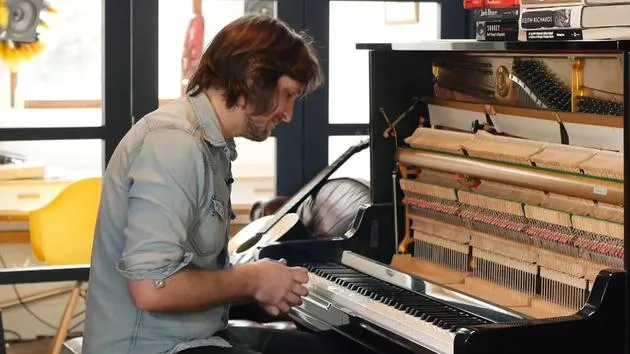
05. Explorer les tierces descendantes
15:28
06. Idées pour une introduction
9:34
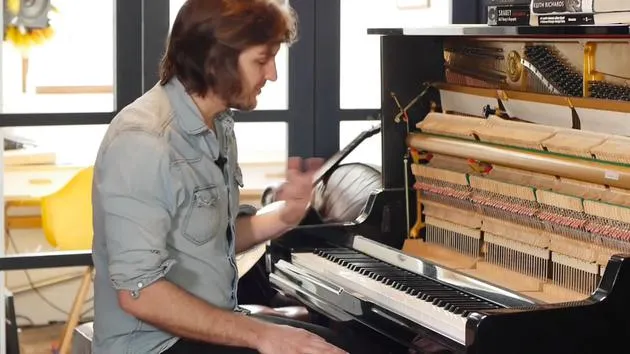
07. La salle des machines : la basse à la main gauche
10:59
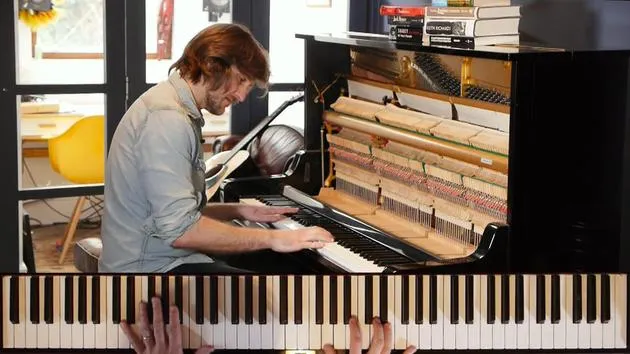
08. Idées pour les accords V-IV (mesures 9-10)
Tu es ici12:00
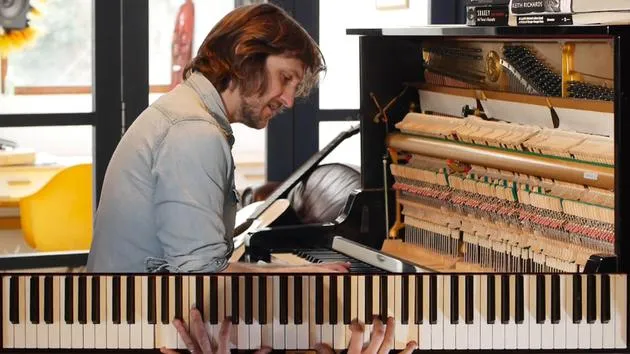
09. Explorer les accords « rolling »
7:24
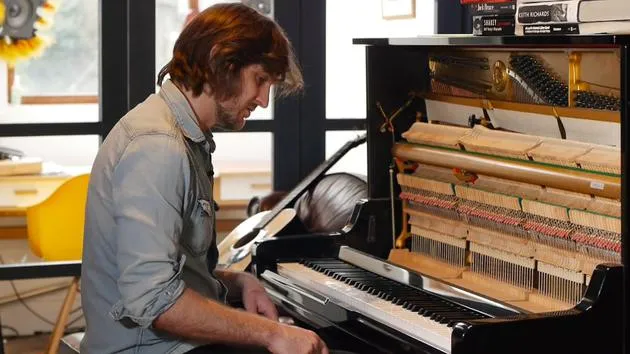
10. Break de piano n°1
8:58
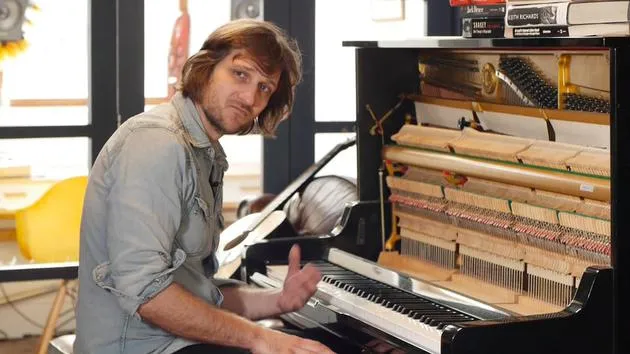
11. Break de piano nº 2
6:15
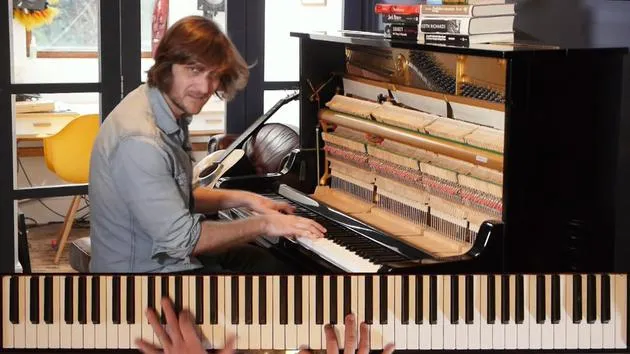
12. Explorer les fins
10:25
13. Quelques idées supplémentaires
6:53
14. Everyday I'm Shufflin' - Le défi du shuffle blues
1:35
Transcription de la leçon
Blues Piano Lesson: Playing Over the 5 and 4 Chord
Welcome back! In this video, we're going to look at the material I was playing over the 5 and the 4 chord in bars 9 to 10 of the 12-bar sequence. The goal is to get you playing some archetypal blues piano techniques.
Demonstration
I'll play around that a couple of times, refresh your memory, and then explain what I'm doing. So, coming up to bar nine... here we go!
Demonstrates the sound
I think that sounds pretty authentic!
The V Chord
On the V chord, you'll see me often outline the D to D7.
Notice I'm playing that E and adding a few grace notes. This outlines the D7 and includes some elements based on the blues scale at the end.
Example Technique:
- Sliding up from the thumb to the second finger and then to the third.
- You could also replicate that sliding motion.
Refreshing the Concept
Let's refresh that:
Plays again
Rolling down is like playing a D6 but with a 7.
Influence of Guitar
This style may originate from piano imitation of the guitar, definitely something you might hear Muddy Waters do. But it works great on the piano too!
The Turnaround
We're approaching the territory of the turnaround, which I'll cover in another video.
Key Patterns
Now, here's one thing you can play over the D to C and back to G, which sounds pretty cool:
- Muddy Waters Influence:
Another common move is outlining the D7...- Then play the C in octaves.
- This is a real signature move you'll hear Muddy Waters performing on the guitar, and we can adapt it for piano.
Adds a little ornament there.
You could also do this on the D, going up a C chord, it fits nicely under the fingers.
Creative Variations
Get that under your fingers! These are a couple of nice things you can play over the transition from the 5 to the 4 and then back to the 1.
Consider varying the riffs. You could play:
-
Example Riff 1:
Going back to the riff based on the 9th. -
Example Riff 2:
Or try something like this...
Rhythmic Play
You might also experiment with the feel and time. Instead of playing:
- A straight rhythm, try a shuffle-like groove.
*Demonstrates the context with bars *
Adds rhythmic interest.
Band Interaction
In a band setting, once you start playing that rhythm, one of the other instruments might nod to that idea and join you, which is always fun. After all, it's got to be great fun!
Practical Application
Putting that into context, I'll demonstrate a couple of bars leading up to it with a shuffle, then switch to a more straight groove in the right hand.
Plays demonstration
Additional Techniques
You can add the third, going from the major third to the minor third sounds pretty hip! Other ideas for the 5 to 4 transition could include:
- Example Move:
Playing descending thirds.
Listening and Learning
Remember to listen closely to what piano players are doing on classic records. Think about what the harmonica and guitars are doing too, and try to work out versions of those for the piano.
Final Thoughts
As always, let your creativity be your guide and come up with your own weird and wonderful ideas. Happy playing!
14 leçons
2h 17m de leçons vidéo structurées
Fonctions vidéo avancées
Ralentissez, bouclez un passage, suivez la partition
Mobile, tablette et ordinateur
Pratiquez où vous voulez
Satisfaction garantie à 100 %
Garantie remboursement 30 jours
Rencontrez votre guru
Rencontrez votre guru
Paddy Milner est reconnu comme l'un des meilleurs pianistes de blues au monde : il est actuellement le claviériste attitré de Sir Tom Jones, après plusieurs années aux côtés du grand et regretté Jack Bruce, mais c'est aussi un superbe auteur-compositeur original et un chanteur au timbre singulier. Il suffit de lire les éloges de personnalités comme Dave Brubeck ci-dessous ! Son jeu figure sur la bande originale du film à succès 'Rocketman' (2019).
Il a remporté à deux reprises le prix du Meilleur claviériste aux British Blues Awards et occupe de longue date une résidence en tant que membre fondateur du Ronnie Scott's Blues Explosion au club mondialement réputé Ronnie Scott's.
Son groupe actuel LONDONOLA joue une musique britannique maison teintée d'une bonne dose d'esprit de La Nouvelle-Orléans, et son projet collectif JAWBONE va de succès en succès depuis la sortie de son premier album éponyme.
- « J'adore... voilà un gars qui sait vraiment jouer du piano » - Dave Brubeck
- « Je le recommande vivement. D'une certaine manière, tout se met à aller beaucoup mieux ! » - Jack Bruce
- « Le meilleur pianiste de blues d'Europe... » - Blues Access, USA
- « Impressionnant et original » - The Times
- « Éblouissant » - The Independent
Au fil de ses cours, Paddy décortique l'authentique shuffle de blues, le slow blues, le boogie-woogie, le rock 'n' roll et le piano de La Nouvelle-Orléans - jusqu'à trois grands classiques du boogie-woogie - pour que vous appreniez ces styles auprès de l'un des tout meilleurs du métier.







