



Striped Shirt
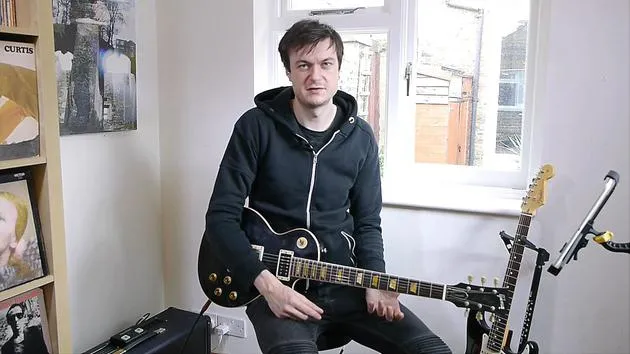
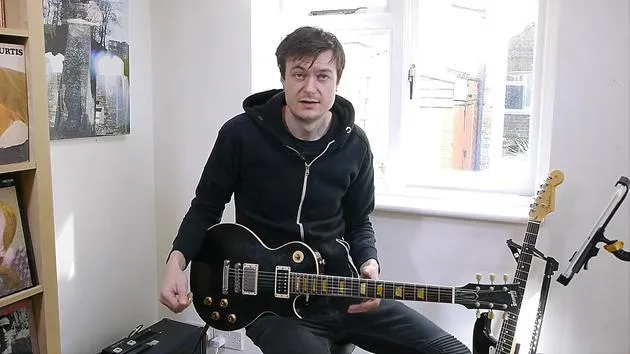
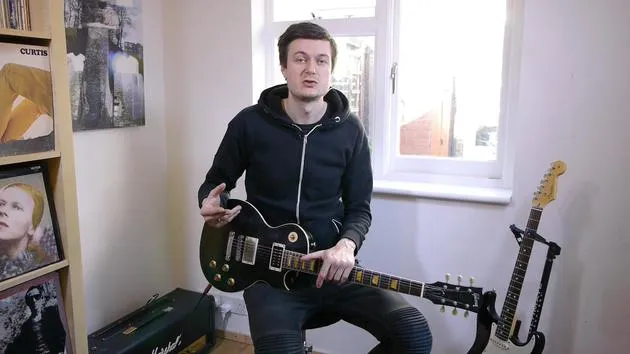
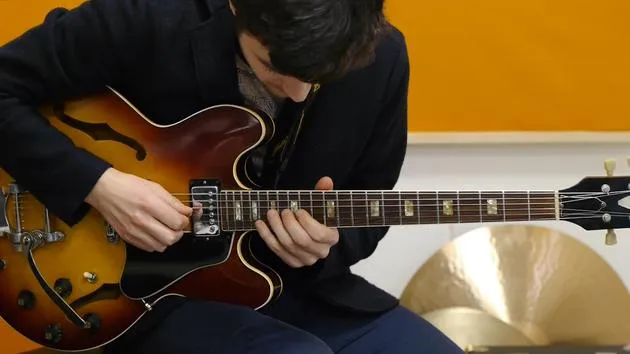
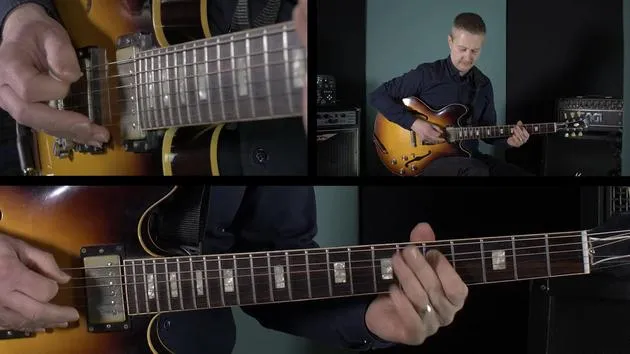
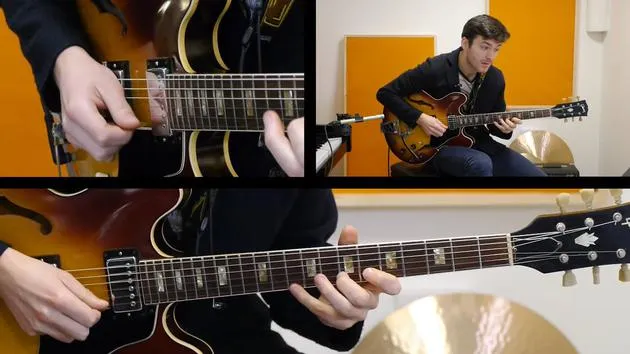
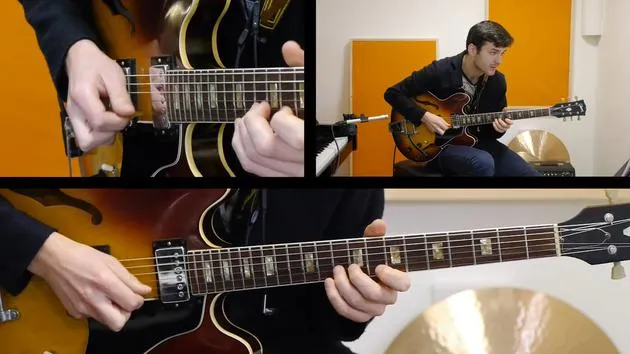
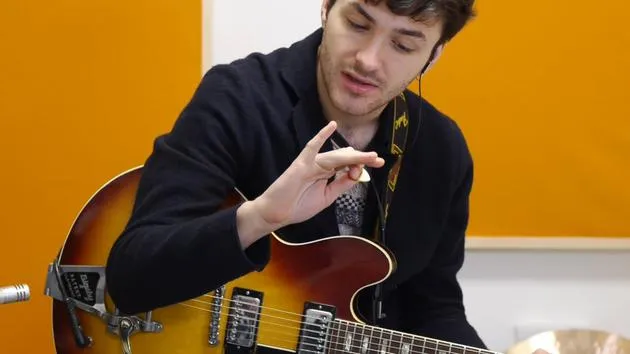
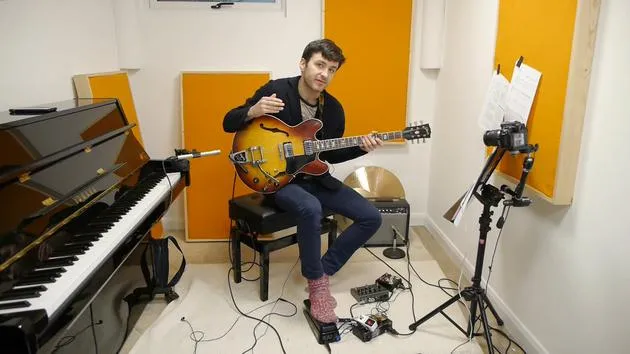
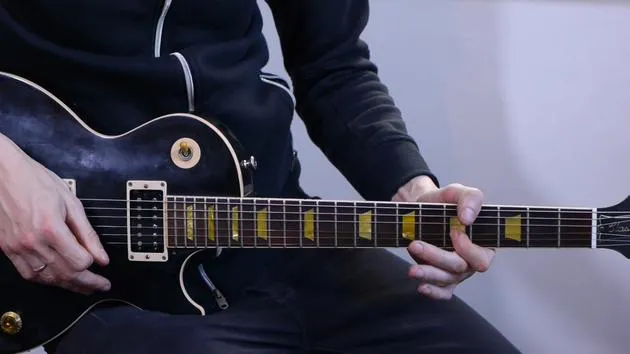
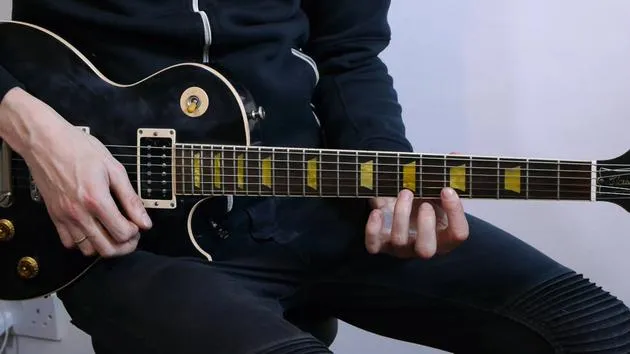
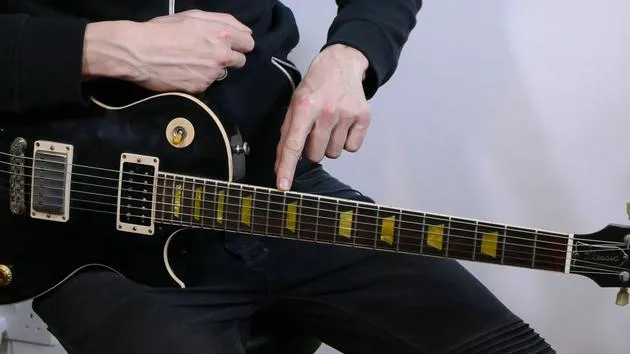
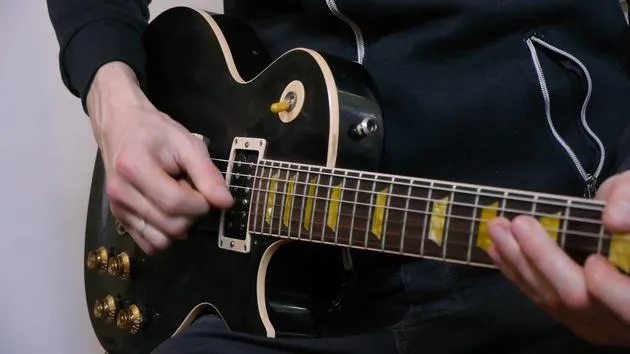
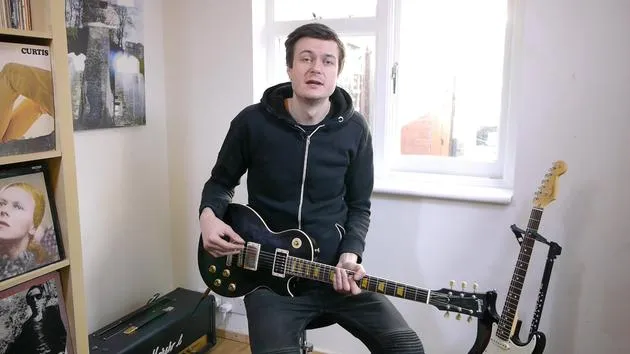
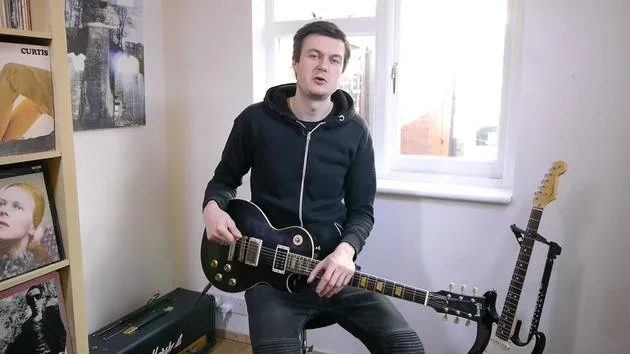
Rob Luft partage sa version de la pièce de grade 6 de Rockschool 'Striped Shirt', un morceau fusion en 6/8 inspiré de Pat Metheny, joué sur une Gibson 335 avec un slap-back delay.

Le contenu du cours
46 leçons (3h 57min) · 1 gratuites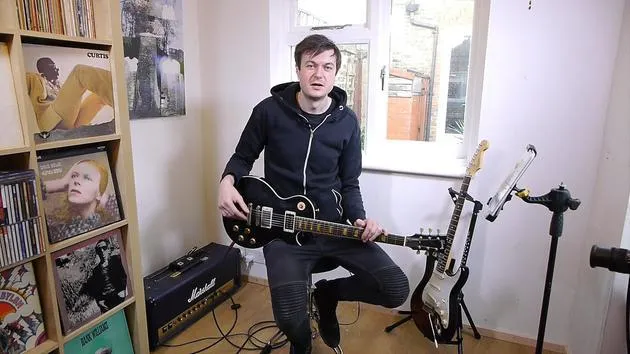
01. Introduction aux approches de l'improvisation
1:00
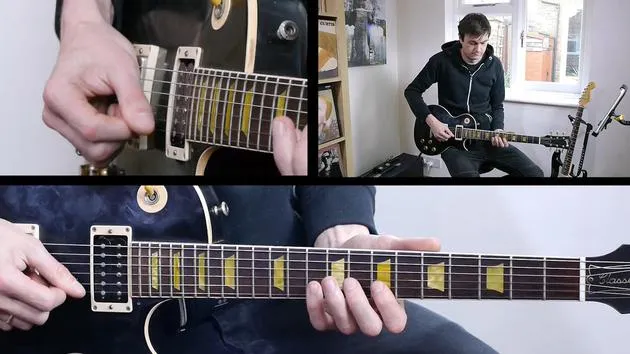
02. Embellir une mélodie
5:36
03. Défi : envoie ta mélodie
0:26
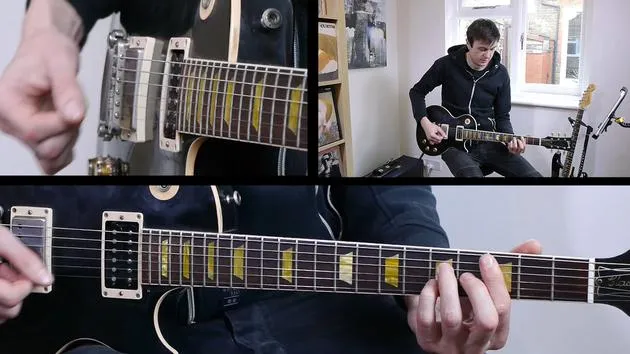
04. Accords de septième
6:38
05. Composer ton solo
8:53
06. Extensions supplémentaires et accords sus
4:19
07. Comping dans deux styles musicaux différents
8:36
08. Mélanger le comping rythmique et mélodique
4:24
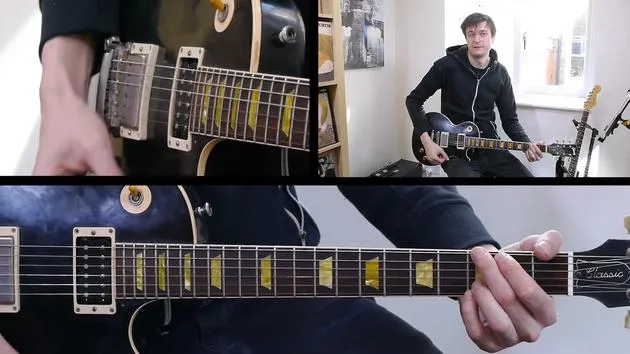
09. Impro rythmique et comping
9:55
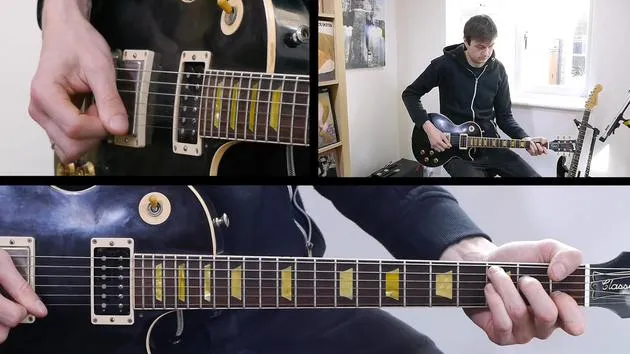
10. Grattage avancé et ornementations
5:40
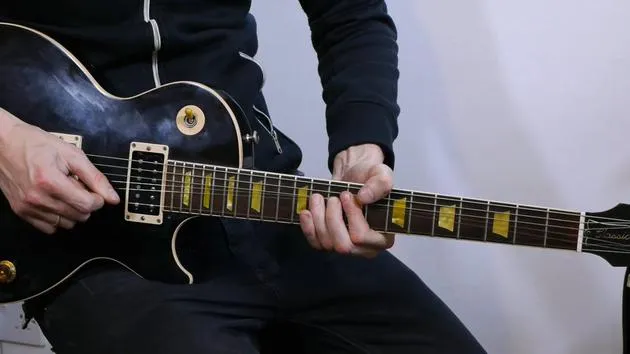
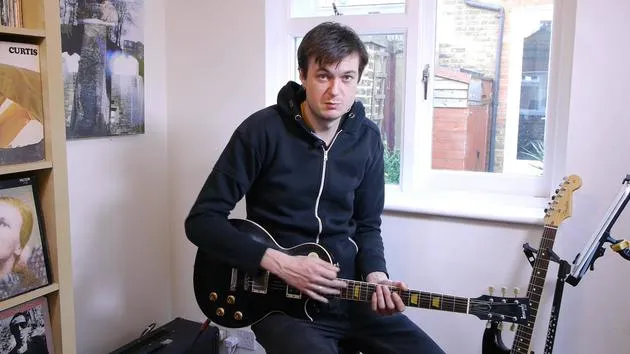
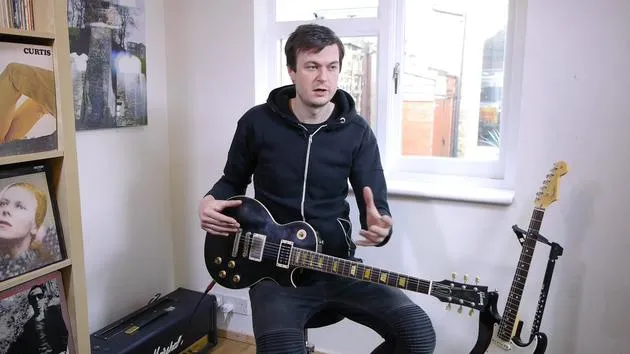
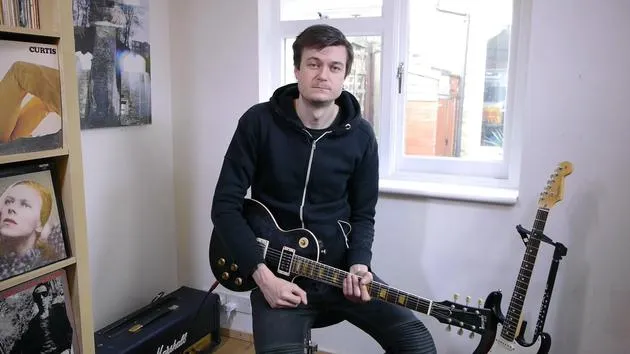
Transcription de la leçon
Striped Shirt Music Lesson
Introduction to Striped Shirt
- Featuring Larry Colton on guitar, known as one of the great fusion guitarists of the 20th century.
- Inspired by the legendary Pat Metheny, another landmark American jazz guitarist, particularly in the realm of jazz fusion from the late 1900s.
- The name "Striped Shirt" is a nod to Pat's signature striped T-shirt, which he still wears on stage.
Getting Into the Music
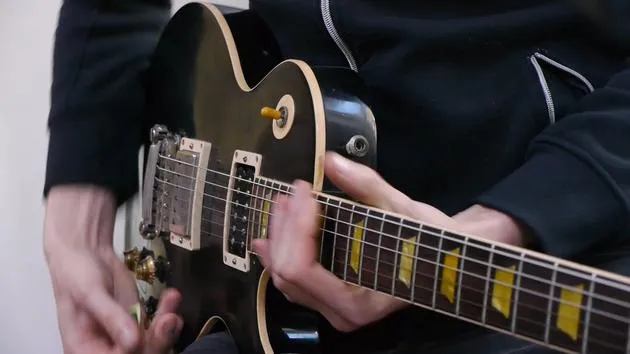
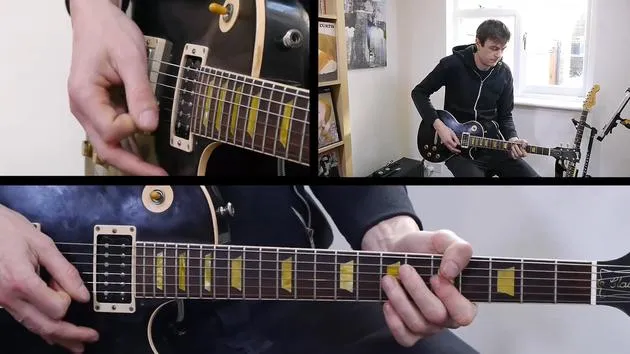
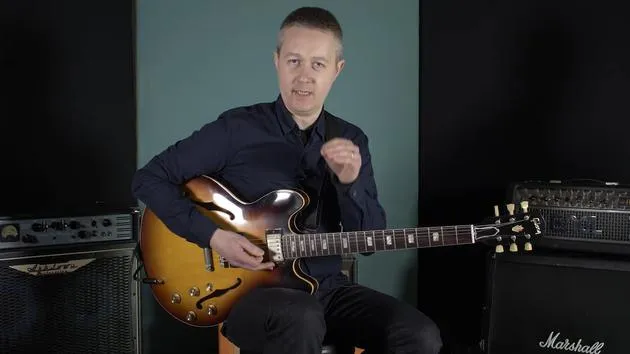
- Instrument: I'm using a Gibson 335 guitar, which offers a warm, dark sound for jazz.
- Delay Effect:
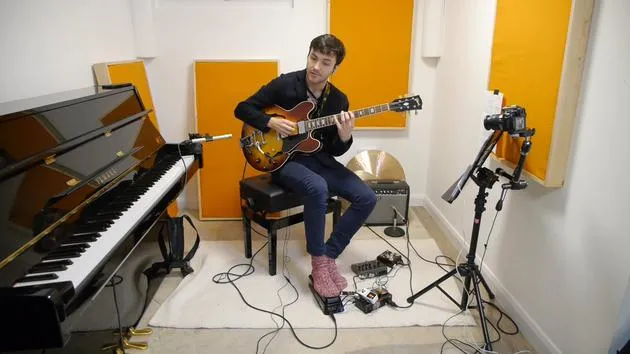
- Utilizes a delay pedal, providing a "slap back" effect.
- Every note played echoes, enhancing the depth of the guitar tone.
- Note: Many amplifiers lack this effect, so an external pedal may be necessary.
Time Feel
-
We are in 6/8 Time:
- This means there are 6 quavers (8th notes) per bar.
- The count feels like:
1, 2, 3, 4, 5, 6
instead of the typical1, 2, 3, 4.
-
Complex Structure:
- The piece employs a 4 over 6 feeling with dotted quavers and dotted 8th notes in bar 5.
- A suggested counting pattern:
1, 2, 3, 4, 5, 6
(Repeated for practice)
-
Polyrhythm:
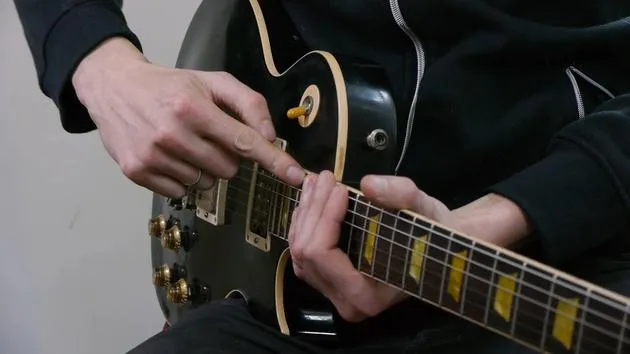
- The goal is to feel both three (with the right hand) and two (with the left hand) simultaneously.
Chords Overview
-
Bar 1: Features a slash chord, A major with a B in the bass.
-
Bar 2: Shifted up a fret to B flat over C.
-
The B flat triad is in its second inversion.
-
Explanation of Inversions:
- Root Position: Starting from the root note.
- First Inversion: Starting from the third.
- Second Inversion: Starting from the fifth.
-
-
C9SUS4 & B9SUS4:
- B flat over C creates a unique sound.
Challenging Sections
- Bar 28: A tricky line begins on the upbeat of Bar 27, leading into the solo section.
- Bar 29: Features a C minor nine pattern moving down a semitone to B minor 9.
- These small four-note patterns are common in Metheny or Larry Carlton's styles.
Improvisation Tips
-
Solo in Bar 32: Consider using the earlier phrase as inspiration.
-
Additional Scale Suggestions:
- Bluescale and Dorian Mode are present, particularly in bars 30 and 31.
-
Modes Explained:
- Dorian Mode: The second mode of A major, contains the B minor pentatonic scale.
- Aeolian Mode: Comes from D major and lacks the G sharp.
-
Improv Techniques:
- Explore breaking scales into thirds rather than relying solely on pentatonic or blues scales.
Recommended Resources
- Technical Exercises: Check out the exercises provided in this course for better understanding of modes.
- Influential Guitarists: Explore works from Frank Gambale, Larry Carlton, John McLaughlin, Al Di Meola, and flamenco guitarist Paco de Lucia.
Listening Suggestions
- Pat Metheny's "Bright Size Life" featuring Jacob Astorias and Bob Moses; released on ECM in the 1970s.
- Other Guitarists: Look into John Schofield and Bill Frisell for additional inspiration.
Conclusion
- Technical Challenge: Although this piece is complex, it provides deep insights into jazz styles, particularly influenced by Pat Metheny.
- Questions: Don't hesitate to reach out to your teacher for any clarifications. Enjoy your journey with this piece!
46 leçons
3h 57m de leçons vidéo structurées
Fonctions vidéo avancées
Ralentissez, bouclez un passage, suivez la partition
Mobile, tablette et ordinateur
Pratiquez où vous voulez
Satisfaction garantie à 100 %
Garantie remboursement 30 jours







