



Analyse de la Chaconne avec Rachel Podger
Avec
Rachel Podger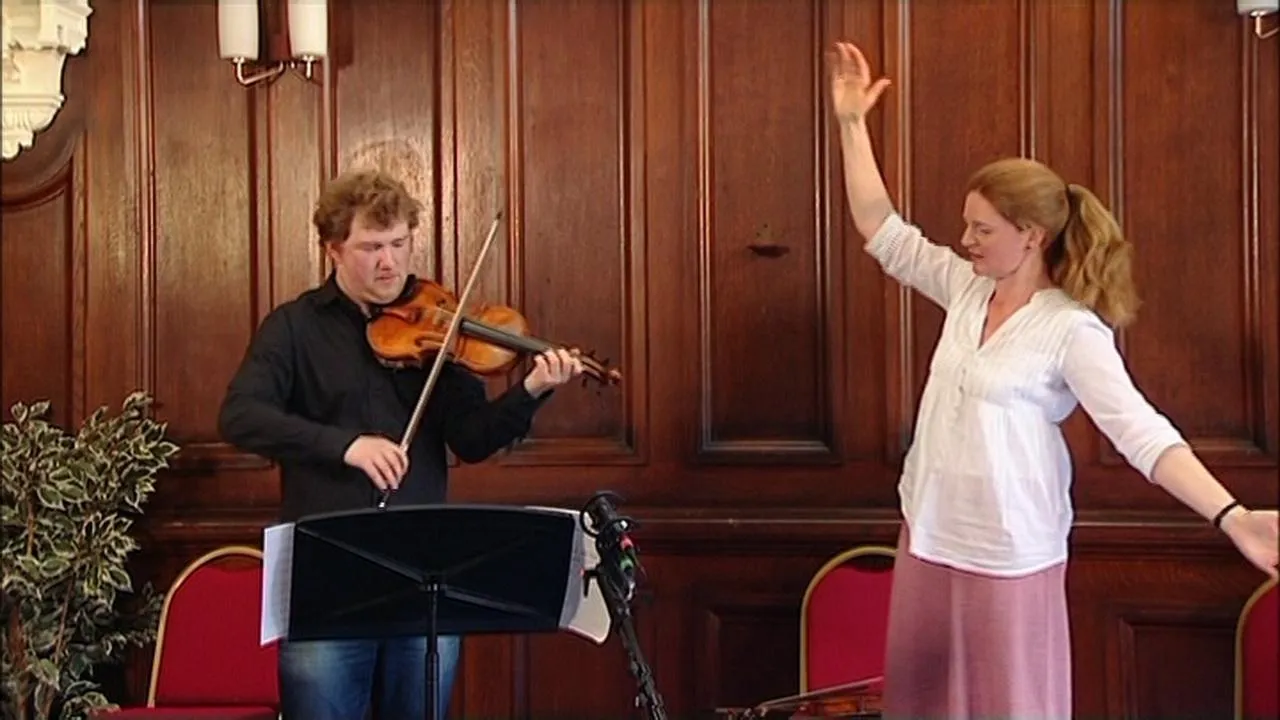
Le contenu du cours
11 leçons (2h 38min) · 1 gratuites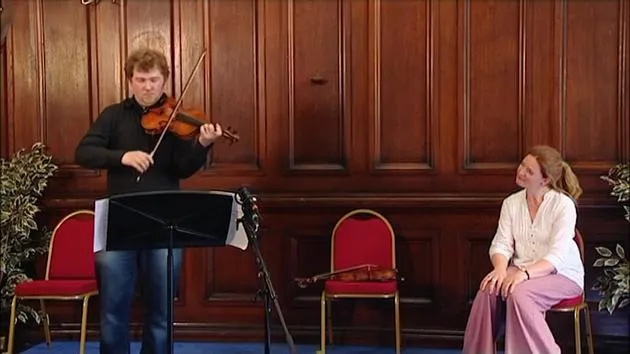
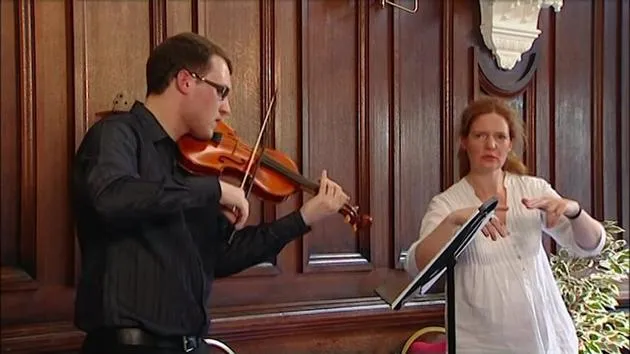
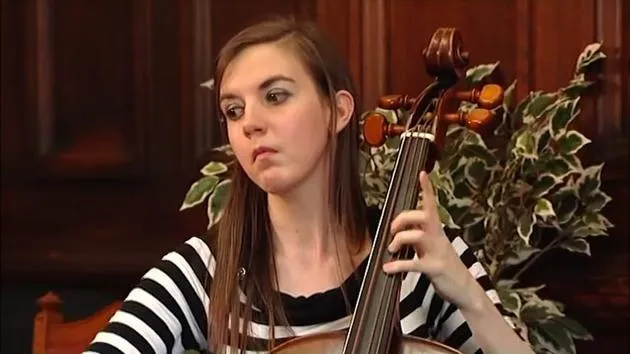
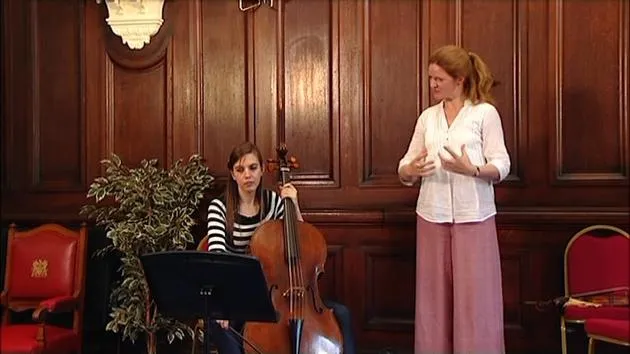
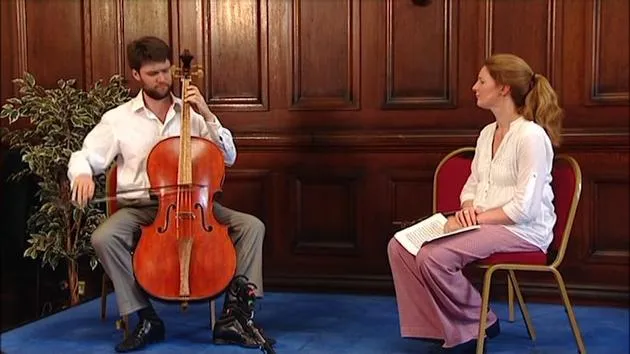
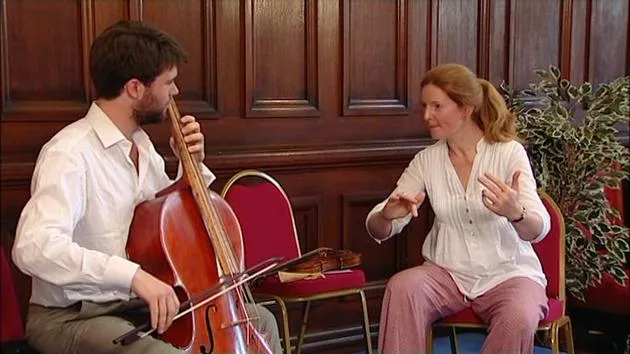
Transcription de la leçon
Music Lesson
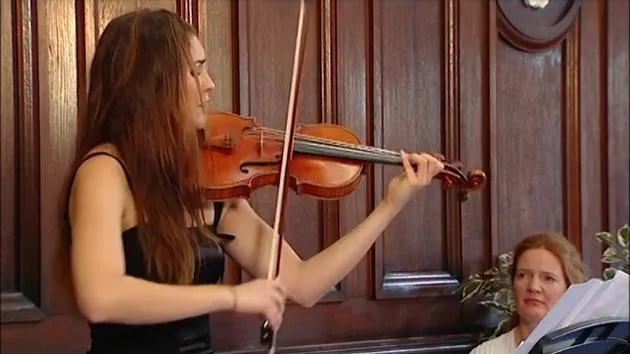
Introduction "So very cleverly, she's arranged the whole piece. Look, she's reduced it and she's arranged it so she can play it like that. Because actually, in the manuscript, it's five pages, isn't it? I think. And so in a modern edition, in facsimile edition, he fits in quite a lot more than when in the printed version. Have you ever played from that? It's wonderful to play from it, though, isn't it?"
Performance Feedback "Okay, well, I thought you played that very, very intensely. Beautifully as well. And it's quite... I think it's quite difficult to get the differences in character on a modern instrument, because the strings, of course, don't respond the same way. When you play these strings, gut strings, in different ways , as in getting into the string or playing further on the top of the string."
"Well, because you play baroque violin, don't you? Then you actually get a much stronger change of colour naturally, so you don't have to work it so hard."
"When you're playing the same repertoire on a modern instrument, you either decide, okay, I'm going to go along with that and just see what it'll do, or you need to exaggerate much, much more. I think it does help playing with a baroque bow, but maybe... I mean, I actually found when I was playing Monvalin, when I started playing baroque, I first started out with a baroque bow on the modern, which kind of helped a bit. But then afterwards, when I was playing much more baroque, it seemed such a compromise."
"And actually, I loved the sense of friction that you get with the baroque bow and the gut string, which of course you don't have with the round string. I then found it too confusing to mix. So maybe this is a... to have the baroque bow on this instrument is weird because it doesn't have the same grip on the string. Exactly."
"So it is actually more difficult to play on it with the bow on the modern than on the baroque. And so... Yes, stick to my... that's very acceptable. Very wise. Because I've played on the other one. I know exactly what you're talking about with the... getting into the string."
Technique and Expression "Absolutely. I was going to say what you could do is vary your bow speeds more. For instance, at the beginning of the slur, you could play slower and then speed up a little bit towards the end. That's how you get a difference in sound on these strings."
"Let's go from the beginning and what I'd like you to be maybe more aware of is the bass, the bass line. And let's try and always have the bass on the beat. Yeah, so we have..."
"So we have this kind of sense. Of course, we don't have a first beat; it starts on the second beat. So the first beat is somewhere in the ether, comes down to us, and then we go 2, 3, and 1, 2, 3, and 1, 2."
"And actually, the strong beat is the first beat. The second beat, of course, feels a little bit strong at the beginning, but then we have all those dissonances on the first beat. Lovely, thank you."
Application of Techniques "Could you just play us the bass of the theme? Yeah, that's it. So, Tum Tum, if you were a cellist playing along, you know, as a bass, a continuo, you'd probably do a retake, wouldn't you? Oh, actually, no, no, you don't need to because it's... Anyway, so T up, you'd lift T and then cadence jum bum away. Yes."
"So let's have an even stronger shape there with just the bass. Yes. So 1, 2, 3. 1, 2, 3, 1. And you'd also punctuate a little bit at the cadence, wouldn't you? Luckily, she tuned down to 415 pitch, so we don't have a funny kind of switch between 440 and 415, which is very thoughtful , that kind of feeling of..."
"So lots of first beat. My tom bomb, even though it's kind of on an up, it's kind of the wrong way around, actually, the way I did it."
"Let's play it together and let's start it on there and let's do that bow. Okay. Two, three, one, and one, and away."
Tempo and Dynamics "And then, of course, with all the top part, it kind of changes. So that's your kind of underlying pulse, isn't it? So slightly faster than you played it. So you don't need to play that speed right now. So maybe slow it down a little bit."
"But if you can have that sense of pulse, so you have quite a strong beat on the first as well as the second. Not just the second. Whenever there's a kind of dissonance on the second beat, it doesn't mean that the first beat needs to not exist."
"It's taken for granted that the first beat in a three bar is strong unless he overrules it in some kind of way."
Conclusion and Final Thoughts "Okay, let's try to tutti for you now in the other. Okay. Yes. Yeah, lovely. One other thing that this bow, as you know, does naturally is play up bows lighter, so you don't have to work so hard in lightening. We do a little bit even so."
"But I think you need to make it a little bit lighter. So we go. Yeah, so they're a little bit lighter. Do one more time, then we'll go on. Let me just tune to you."
"Yeah, okay. Can you make this fast, or is it just to me? Because I've been playing it slowly. I think that's actually a great speed because you get the lilt, of course, of the 1, 2, badam. So it's possible at all sorts of speeds."
"And it's also possible. It's the great thing about Bach, isn't it? It's possible in all sorts of instruments. I mean, if you heard this on a glockenspiel, it would still sound amazing. It's really marimba. They have it so beautiful. Have you heard it on marimba? Wow. There we are on marimba. That's actually beautiful."
"Actually, I did hear it once on saxophone. Was that beautiful? It was interesting. But you still had all the excitement of the chromaticism and the complexity, of course. And it still feels like a lifespan."
"I mean, this piece to me is like the... I don't know how you feel about it, but to me, it feels like a description of someone's life. Yeah. Especially with the major gentler part in the middle and big build up and then back to minor. There's kind of lots of different levels."
"So I think actually one thing I was going to talk about is having a very well-defined sense of the architectural shape of the whole piece. That doesn't mean that it always has to be the same way and that when you get to the end of the minor section, that you've got to be at a certain place. You might find that you get to a different place in the story."
"Yes. Slightly different emotions. But I also try to have a map of how I feel and it's more about... Absolutely, yes. It's really important to have the map because then, of course, they know where you're going as well. If you have a very clear map with directions and signposts, then it's very clear."
"Okay, so that was just a general thing. I think these could be a little bit more lifted, which again is a bit harder work with a modern bow. Let's just play that line. Well done. Yes. If you want to play it slow, it's really fine. I don't want to push you; I just don't know. I'm not sure myself."
"I'm not sure because this always feels a bit fast, but this feels right to the faster tempo. The rest of the Chaconne works with this being slightly faster, but I felt it a bit slower not to... because I'm afraid of rushing it and of it coming across a bit too... not calm enough."
"Yes. Okay. But there are lots of different characters out there, so there isn't just one. I mean, every variation has a different character. I mean, this one. What do you think? This one about the dotted... I saw it. It's like trying..."
"Well, depends. It is more... It's more of a dance than the first one. Yes. It's dancing on the theme that he's proposed. So it's more. It's a bit less serious than the beginning, which is a statement. Yes, it's elaborating the statement in a way."
Continuing the Lesson "Exactly. That's exactly what it's doing. Yes. And it does dance. So it's lovely to have the light chords. Maybe you're a little bit worried about making them sound, the chords, because I think it's actually okay to sometimes just brush chords, especially if they're light."
"And, of course, that's much easier to do with this one. Like a harpsichordist would do. Yeah. So you could experiment with that. Okay, let's do the next one. Yeah. The soprano variation with a chromatic alto part. Good."
"I like the melodic line that you find in that. That's great. When we get towards the cadence, could you punctuate a little bit more? Yes, so... and also, don't forget to bring out the... Yes. That chromatic line, which has this kind of pathetic nature to it. So it's in the best sense of the word."
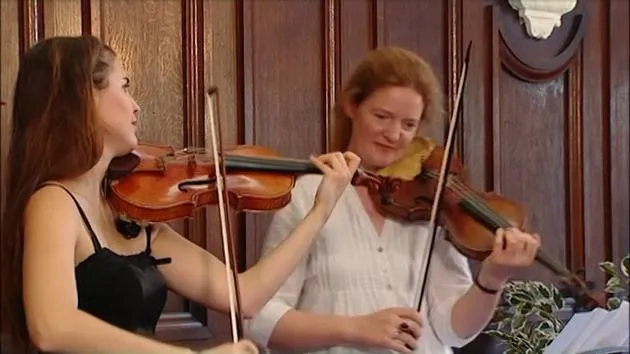
"Yes. So that we have more of a sense of punctuation at that. Do you want to do the second half? Yeah. Okay, good. Let's do a little duet. So you play the top and I'll play the bass. Okay. Okay, good."
Articulation and Characterization "Now, there's a kind of unwritten rule, actually. Tartini does mention it in his treatise, but it's a kind of articulation rule. Yes, tell me, tell me. No, no, no, no. Yes, tell me. Lifting. When there's such a big leap. Yes."
"When there are... Yeah. If the intervals are close by, then it's actually a very natural rule. It's more stepwise, so it's more legato. But if there are... the bigger the interval, the more air in between the notes. And it makes such sense if you apply that to all of this; the music just kind of comes off the page and it makes..."
"I've been playing too much with this modern folk. Naughty, naughty. So lift the up bows as well. And with that in mind, should we do the same kind of thing? Up. Good. Okay, good. Let's do it the other way around. So, and as... because you're going to be playing the bass, you need to kind of direct the top line."
Dynamic Control and Character Development "Okay. Okay, good. Yeah. So it was... We had a nice little kind of dynamic going on, didn't we? Could you get that? Even though you're playing both parts so dynamic within yourself. Yes. Yeah. Well done."
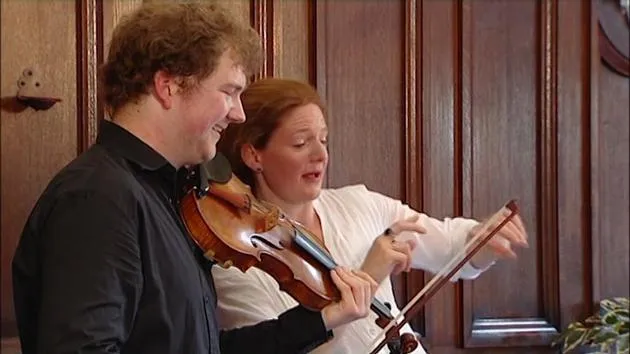
"Okay. Yes. This is actually a very good variation to practice this, isn't it? Yes. You can articulate; you can punctuate that a bit more. Or just articulate is actually the word. Maybe. Now if with a baroque bow, what you tend to do is kind of dip into the string with a bow."
"Yeah. So you go into the string and out. Maybe you can try and imitate that. Yeah, nice. Lovely. Yeah, let's go on. Yes. Gesture. Uh huh. Okay. Slur is very much an expression, of course, and it's strong at the beginning, as Krantz tells us, and weaker at the end."
"So tat. Good. Yes. And how about coming away to the resolution? Yeah."
"So it actually means that the first beat of the next variation is weak. Exactly. And if you apply this articulation rule really, really strongly, very strictly, you'd get a lot of character. Yes. You might end up not doing all of that. Of course, you can then choose which ones fit your interpretation as well."
"But I think that's the place to start with those articulations. Should you carry on a bit? Ey. Space. Okay, good. Now we can see here very clearly because it's actually a very simple variation. Yes."
Final Thoughts "That he does the same kind of thing three times, doesn't he? Which he often does because he loves number three being the Trinity as well. So most of that love for number three comes from religious background. And also."
"Actually, I'm getting carried away now, but you know the rhythm that he uses so much like da da dum. Like Brandenburg 3. 1, 2, 3. 1, 2, 3. 1, 2, 3. 1st, 2, 3. 1, 2, 3. So lots of threes in that piece. You can detect threes all over. It's quite a good hobby."
"So here we have. That was 1, 2, 3. Now what tends to happen also with the register here? It's coming down, isn't it? So number three is mostly less unless it's a rising sequence. Okay. And that's how you get your structure."
"So try to never, ever say the same thing twice. Okay. Expression wise. And what is... So the bass goes less. Rather more. I felt it was going more. It's upbeat character, isn't it? And then the fourth bar is the cadence, so then that just follows."
"That's not as important as the information from before. So these... So you think that the bass is basically not. It's not going more and more. It's going less. I think it's not attached. It's a separate voice."
"Separate voice, yes. And that this is going less and then this is going more. Is that or staying the same or just characterizing the bass? Because, of course, you've got lots of dissonances on each beat, actually, on each bar."
"I think it's very liberating to feel the separation between the voices. It's incredibly liberating. Especially in fugues. In Bach fugues."
"Yeah. And what I used to do... It's a bit of an admission, especially on camera, is with the fugues; I used to color in the different voices with different colors so that then I could read it and say, oh, okay, we got green going on there. Ah, yeah. It's appearing there again. Oh, yeah. Carrying on there. Okay."
"And red is, at the moment, is connected to red at the bottom, you know, and so it gives you the actual outline of all thematic material. And it's really fun to do as well."
"Okay. We could spend about three hours on this piece. I'm sorry; we've only scratched the surface, really. Sorry. It's such a big piece and... Thank you very much. Thank you very much."
11 leçons
2h 38m de leçons vidéo structurées
Fonctions vidéo avancées
Ralentissez, bouclez un passage, suivez la partition
Mobile, tablette et ordinateur
Pratiquez où vous voulez
Satisfaction garantie à 100 %
Garantie remboursement 30 jours
Rencontrez votre guru
Rencontrez votre guru
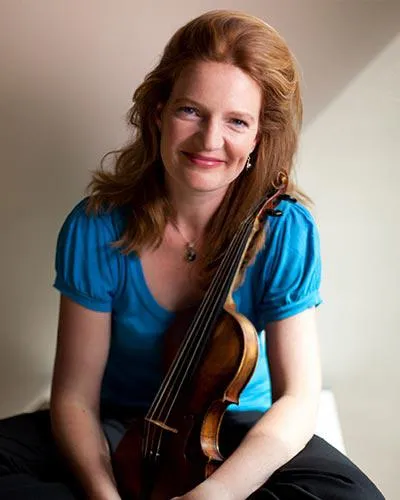
Rachel Podger est l'un des talents les plus créatifs à avoir émergé dans le domaine de l'interprétation sur instruments d'époque. Au cours des deux dernières décennies, elle s'est imposée comme une interprète de référence de la musique des périodes baroque et classique, avec de nombreux enregistrements à son actif allant de la musique du début du XVIIe siècle à Mozart. Elle a été formée en Allemagne et en Angleterre, à la Guildhall School of Music and Drama, où elle a étudié auprès de David Takeno et Micaela Comberti.
Après des débuts avec The Palladian Ensemble et Florilegium, elle a été premier violon de The English Concert de 1997 à 2002. En 2004, Rachel a entamé une direction invitée avec l'Orchestra of the Age of Enlightenment, en tournée en Europe et aux États-Unis. Un point culminant de cette collaboration a été un concert télévisé aux BBC Proms en 2007. 2009 a vu un enregistrement de la Sinfonia Concertante de Mozart avec l'altiste Pavlo Beznosiuk, ainsi que deux concertos pour violon de Haydn.
Au fil des ans, Rachel a mené de nombreuses collaborations avec des orchestres du monde entier ; parmi les projets qui lui sont chers figurent ceux menés avec Arte dei Suonatori (Pologne), Musica Angelica et Santa Fe Pro Musica (États-Unis), l'Academy of Ancient Music, l'European Union Baroque Orchestra et la Holland Baroque Society.
Dans son cours MusicGurus sur les œuvres de Bach pour violon et violoncelle seuls, Rachel ouvre ce répertoire fondamental et partage la manière dont elle l'aborde, t'aidant à apporter à ton propre jeu de Bach compréhension stylistique, phrasé et sensibilité baroque.
Crédit photo : Jonas Sacks







