



Entretien avec Rachel Podger
Avec
Rachel Podger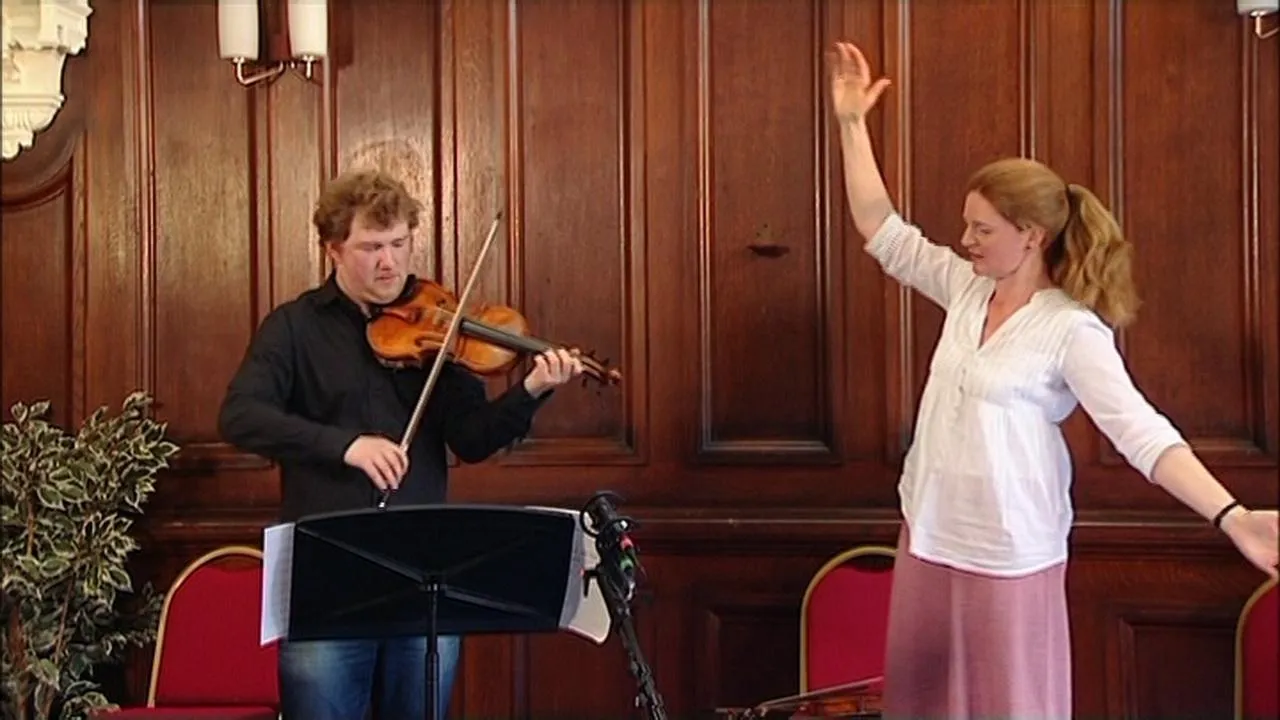
Le contenu du cours
11 leçons (2h 38min) · 1 gratuites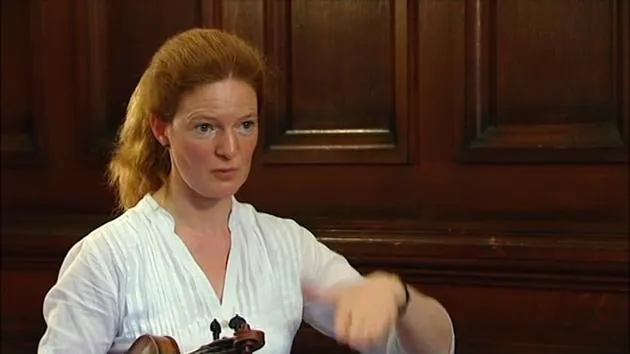
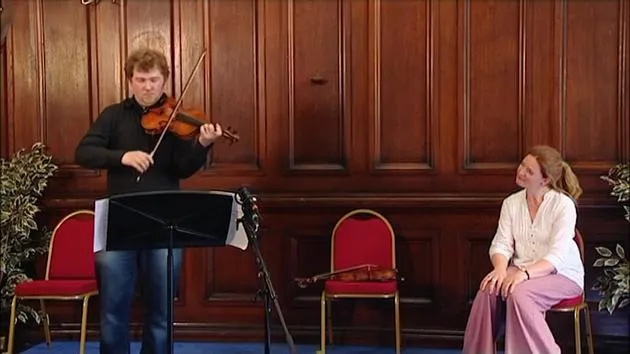
01. Entretien avec Rachel Podger
Tu es ici8:53
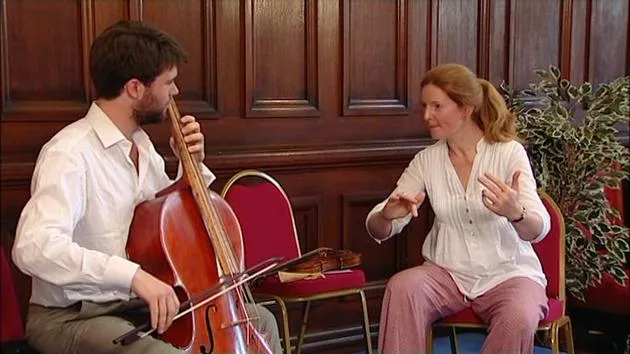
Transcription de la leçon
Differences Between Period and Baroque String Instruments
When we talk about period or Baroque string instruments, what's the difference?
Overview of Differences
There are lots of differences, of course:
- Structural differences
- Musical differences in interpretation
- Historical performance practice
These elements need to be assimilated and understood in order to perform the music in a historically knowledgeable way.
Structural Differences
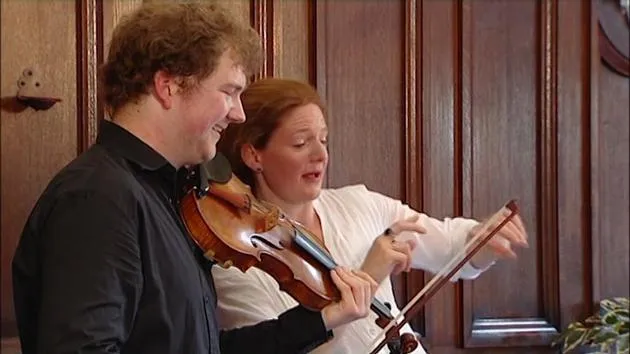
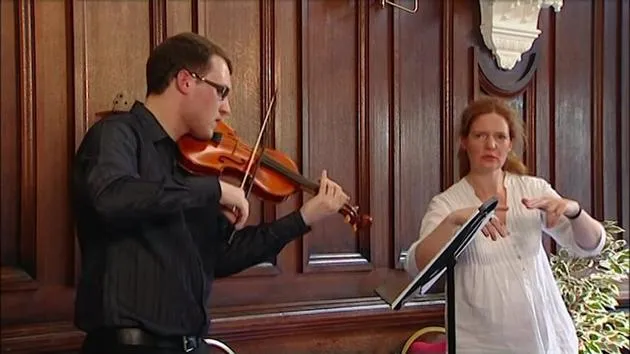
I happen to have a Brock violin here. The most obvious difference is that:
- Gut Strings: They are purely gut and not wound at all. The G string, on a modern violin, is a wound string. Some players do play with pure gut, but it can be quite difficult to make a good sound on the G string. However, this is personal taste.
Importance of Gut Strings
- Gut D String: It's a very thick string and makes the most wonderful, gutsy sound.
- Sound Ideal: The sound ideal is very different from a modern instrument. It's more mellow because the string is porous, as there's no covering of aluminum.
You can delve into the string with the bow, which is one of the main differences between playing with modern strings versus gut strings. This is something you learn quickly; to make a good sound, you need to get into the string.
Baroque Bow
The Baroque bow has a different shape:
- Shorter and light at the tip, which enables you to get into the string effectively at the beginning of the stroke on a down bow.
- The bow tapers naturally, impacting articulation.
Technical Considerations
Some technical aspects that differ from modern playing include:
- A slightly lower elbow position
- Flexibility in the fingers to achieve nuance in articulation
Articulation is crucial for phrasing in Baroque music; there's a lot of emphasis on different types of articulation.
Extemporizing and Ornamentation
Another important aspect is extemporizing and ornamentation. Personally, this excited me most when I started playing music from the 17th and 18th centuries. Once you know the language of the time, you can interpret the music with a sense of freedom, as long as you follow the harmonic and grammatical structure.
Transitioning from Modern to Baroque Instruments
As a student who can play the modern violin quite well, if you take up a Baroque violin, what problems might you face?
Challenges in Adaptation
- Sound Production: It's quite difficult to produce the expected sound when first using a bow of this shape, primarily due to the nature of the strings.
- Bow Technique: The bow may lift off at the end because it's quite light, and you might go beyond the bow's length since it's shorter.
- Relaxation: Any tension in your upper arm, right arm, or hand will show immediately. Playing these strings is akin to being naked; you must be relaxed and understand how to manipulate them effectively.
Adjusting Posture
-
The neck on a Baroque instrument is thinner, and its angle to the body is different, causing it to emerge straight from the instrument. In contrast, modern instruments have an angled neck.
-
This affects how you hold the instrument; the posture is more integrated with your body, rather than extended outward.
Baroque Cello Considerations
Does the same apply to the Baroque cello?
Similarities and Differences
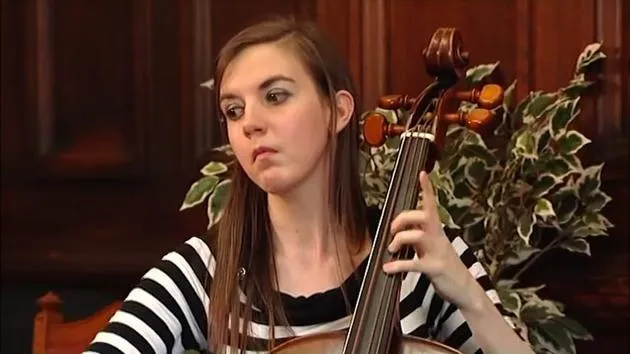
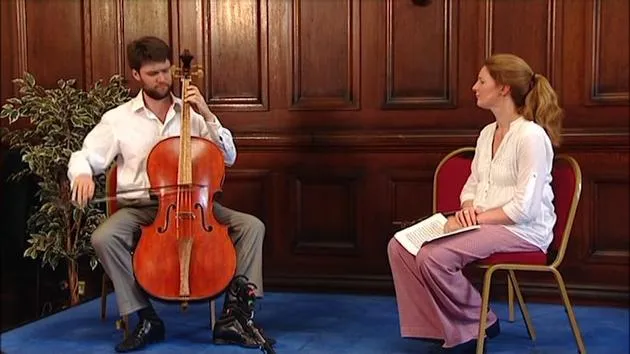
- The neck of the Baroque cello is also thicker with a different angle.
- The biggest difference is that there is no spike, the posture of the instrument is more upright. With a modern cello, the instrument leans more due to the spike being used for stability.
Bowing Techniques and Sound Release
When it comes to technique:
-
The Baroque cello bow is heavier and larger. The emphasis on getting into the string is very important, as well as the front of the note.
-
Sound Release: This goes along with the musical shape. For example, when you have a strong emphasis on a dissonance, you should release it on the consonant chord. The bow can emphasize this, allowing you to highlight different strong points in a phrase.
Playing Modern Instruments in Baroque Style
For those wanting to play in the right style but on a modern instrument, where should they start?
Recommendations
- Try a Baroque Bow: It's a good idea to try a Baroque bow even if you're not playing with gut strings. It significantly changes how you approach phrases.
Observations to Note
-
You'll notice that the bow won't sustain as much unless pressed hard, but if you go with the flow and get into the string, it will come away naturally.
-
Shortened Notes: Shortened and lifted notes become much easier with this kind of bow.
Additional Considerations
-
The Baroque bridge, which has a flatter shape, makes executing chords and arpeggiation easier.
-
Articulation: Understanding articulation is key, recognize the hierarchy of the phrase and the hierarchy of units.
-
For instance, in a 4/4 bar, you would typically have:
- A strong beat on 1
- Less on 2, a little more on 3, and less on 4.
By following these rules, everything makes much more sense.
11 leçons
2h 38m de leçons vidéo structurées
Fonctions vidéo avancées
Ralentissez, bouclez un passage, suivez la partition
Mobile, tablette et ordinateur
Pratiquez où vous voulez
Satisfaction garantie à 100 %
Garantie remboursement 30 jours
Rencontrez votre guru
Rencontrez votre guru
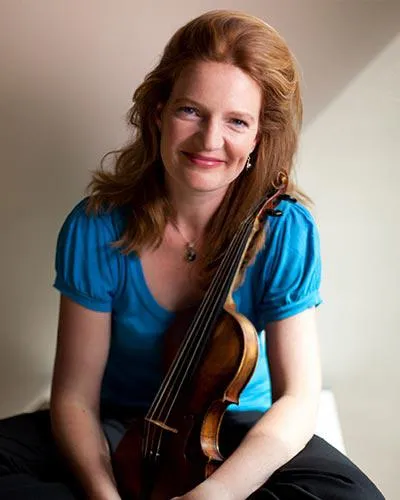
Rachel Podger est l'un des talents les plus créatifs à avoir émergé dans le domaine de l'interprétation sur instruments d'époque. Au cours des deux dernières décennies, elle s'est imposée comme une interprète de référence de la musique des périodes baroque et classique, avec de nombreux enregistrements à son actif allant de la musique du début du XVIIe siècle à Mozart. Elle a été formée en Allemagne et en Angleterre, à la Guildhall School of Music and Drama, où elle a étudié auprès de David Takeno et Micaela Comberti.
Après des débuts avec The Palladian Ensemble et Florilegium, elle a été premier violon de The English Concert de 1997 à 2002. En 2004, Rachel a entamé une direction invitée avec l'Orchestra of the Age of Enlightenment, en tournée en Europe et aux États-Unis. Un point culminant de cette collaboration a été un concert télévisé aux BBC Proms en 2007. 2009 a vu un enregistrement de la Sinfonia Concertante de Mozart avec l'altiste Pavlo Beznosiuk, ainsi que deux concertos pour violon de Haydn.
Au fil des ans, Rachel a mené de nombreuses collaborations avec des orchestres du monde entier ; parmi les projets qui lui sont chers figurent ceux menés avec Arte dei Suonatori (Pologne), Musica Angelica et Santa Fe Pro Musica (États-Unis), l'Academy of Ancient Music, l'European Union Baroque Orchestra et la Holland Baroque Society.
Dans son cours MusicGurus sur les œuvres de Bach pour violon et violoncelle seuls, Rachel ouvre ce répertoire fondamental et partage la manière dont elle l'aborde, t'aidant à apporter à ton propre jeu de Bach compréhension stylistique, phrasé et sensibilité baroque.
Crédit photo : Jonas Sacks







