



Plugins de pitch
Avec
Aamir Yaqub
Le contenu du cours
16 leçons (1h 33min) · 1 gratuites
01. Bienvenue dans les effets audio
Leçon gratuite0:46
02. Effets audio
3:00
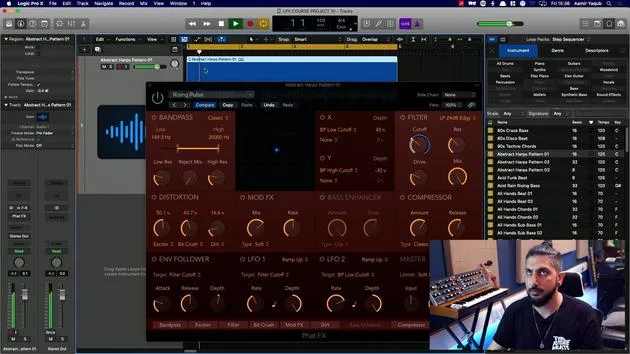
03. Utilisation des Multi Effects - Phat FX et Step FX
5:11
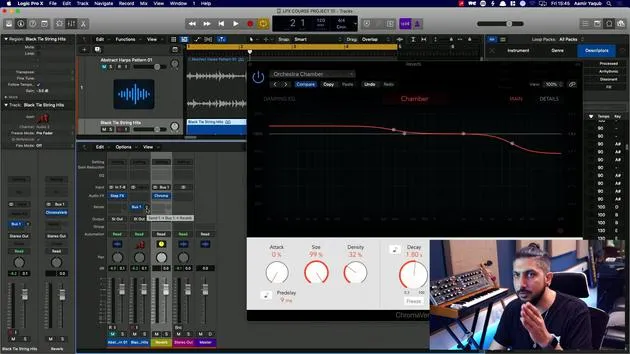
04. Configurer un bus de reverb avec un send
3:58
05. Utiliser les reverbs dans Logic Pro
3:27
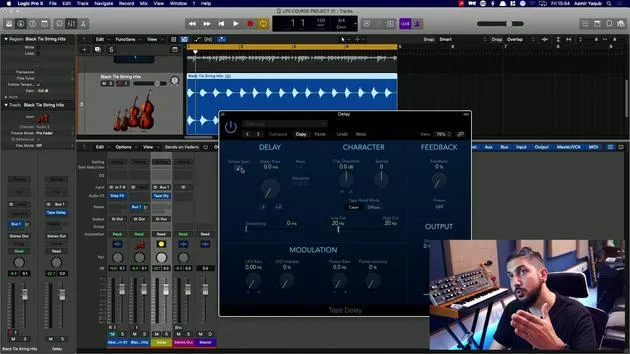
06. Utiliser les delays dans Logic Pro
8:02
07. Plugins de distorsion
6:35
08. Plugins de filtre
5:35
09. Conclusion sur la distorsion et les filtres
0:30
10. Plugins de modulation
12:54
11. Plugins de pitch
Tu es ici6:50
12. Conclusion sur la modulation et le pitch
1:03
13. Amplis et effets de pédale
10:38
14. Effets spécialisés
5:49
15. EQ (égaliseurs)
7:18
16. Dynamique et compression
11:43
Transcription de la leçon
Vocal Sound and Pitch Modulation Lesson
I'm going to load up a vocal sound here because we're going to look at some pitch modulation stuff. I'm just going to go for something fairly simple.
Loading the Vocal
Come on, come on.
I need something.
Come on, come on.
Wow.
Come on.
Come.
Wow.
They have got the craziest stuff on here. Where's that person I always use?
Hey, yeah, yeah. Okay, yeah. Oh, yeah, yeah, yeah. Hey, yeah.
So I'm going to bring in this vocal here. Because these pitch plugins that we're going to look at tend to work best on vocals.
Vocal Transformer
The first one that we're going to look at is Vocal Transformer.
- Allows you to take a sound and make it sound like it's being sung in a different pitch, but it's not a very natural thing; it's a very unnatural effect.
- You can do some very simple things, like:
- Change the pitch overall.
- Change just the formant.
- If you remember when we talked about formant earlier, this would mean that the pitch remains the same, but it sounds like it's coming from a different place in the voice.
Let's go chipmunk mode. Hold on one second.
We also have the ability to turn this voice into a robot. If you click on "robotize", this will make this sound a little bit more like a robot. You can change the note that the person is on just by adjusting that there.
This is a wonderfully creative tool. There's a lot of stuff like this that happens in modern production, using vocals, chopping them up, and using things like the vocal transformer to make them sound uniquely creative. It's a really fun plugin to play around with!
Pitch Shifter
Next up in the pitch section, we have the Pitch Shifter.
- This is supposed to do a much more natural job of shifting any pitched instruments.
- The first thing I would do is probably just change the mix to 100%.
- This is going to transpose that vocal.
You can change the timing algorithm to be vocals, speech, or drums:
- Manual
- Pitch tracking
I'm going to leave it on vocals for now and turn on latency compensation. This compensates for latency, so you don't hear the delay that it takes for this plugin to process. Otherwise, it would shift your vocals out of time, which would obviously be annoying.
So, we have the vocal here:
- If I was to just take this and drop it by a few semitones:
Hey, yeah, yeah, yeah ho.
I can hear what it sounds like in a different key. Essentially, I'm changing the keys of the vocal. This will help me to get closer to that final production if I have a vocal or any other pitched instrument that I want to bring into a production I'm already working on and it's not in the same key.
Pitch Correction Plugin
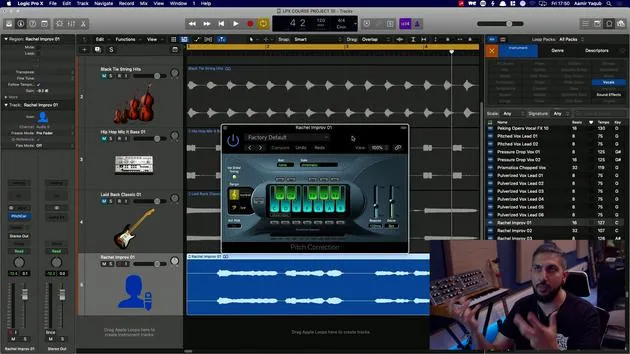
The last one we're going to look at in the pitch category is the Pitch Correction Plugin.
This is a sound that you are probably quite familiar with because this is the sound of Auto Tune. Essentially, Auto Tune is an automatic tuner.
- What we did with Flex Pitch was essentially manually going in and changing things.
- With Pitch Correction, it automatically tunes your pitched instrument (in this case, a vocal) in a more computerized way.
It's not really meant to sound natural. It can sound more natural, but it's not necessarily meant to. If you want it to really hard shift your notes onto the keys of the scale, you would go for a super fast response, like a few milliseconds.
You have to set the key that you're working in. For example, we might be working in C minor pentatonic.
This will aggressively move the vocal to the notes, and you'll see where it's moving it to and the amount of correction happening. If you want that to sound a bit more natural, just open up that response time a bit, let's go to about there.
That's much more acceptable! All of this will differ based on your tastes and your style, but this is essentially something which will automatically track and tune your vocals.
16 leçons
1h 33m de leçons vidéo structurées
Fonctions vidéo avancées
Ralentissez, bouclez un passage, suivez la partition
Mobile, tablette et ordinateur
Pratiquez où vous voulez
Satisfaction garantie à 100 %
Garantie remboursement 30 jours
Rencontrez votre guru
Rencontrez votre guru
Aamir Yaqub est un producteur et ingénieur du son basé à Londres. Il a travaillé avec certains des plus grands noms de la musique, dont Alicia Keys, David Guetta, Rihanna, Sia et will.i.am, tout en développant des artistes indépendants.
Au fil de ses cours, il enseigne l'intégralité de son flux de travail sur Logic Pro : de l'interface et de l'enregistrement à la création de beats, la synthèse et les effets MIDI, jusqu'au mixage et à la finalisation d'un morceau.







