



Legato
Le contenu du cours
10 leçons (2h 21min) · 1 gratuites
01. Breathing, part 1
Leçon gratuite6:59
02. Rossini, William Tell and The Thievish Magpie
14:54
03. High Range Building
8:50
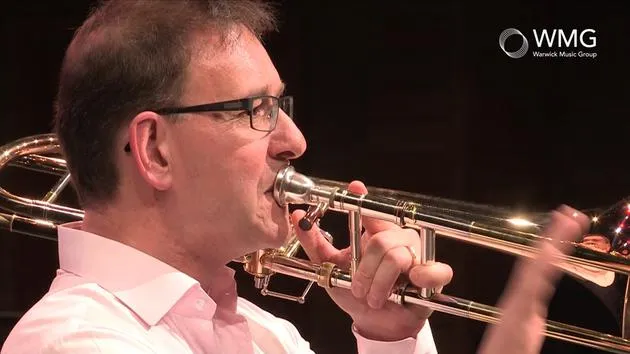
04. Detached Articulation
18:50
05. Mahler's Third Symphony
22:21
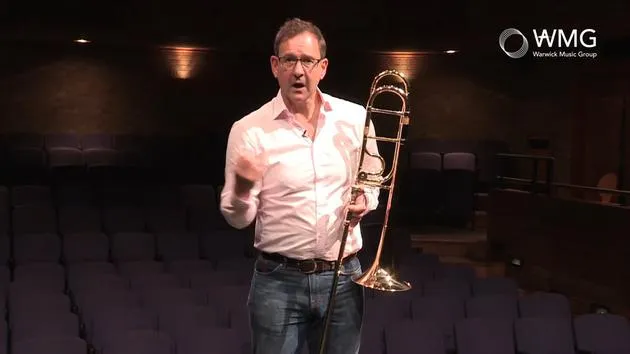
06. Mozart Requiem
13:41
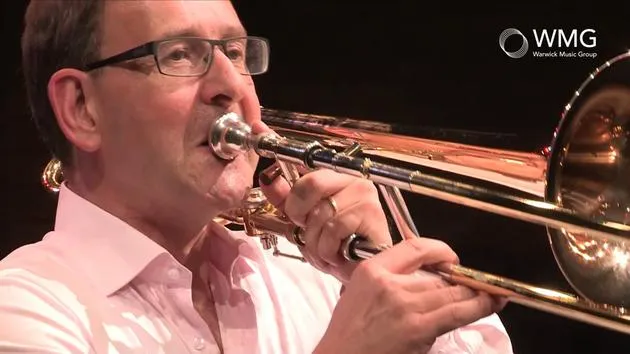
07. Ravel's Bolero
11:35
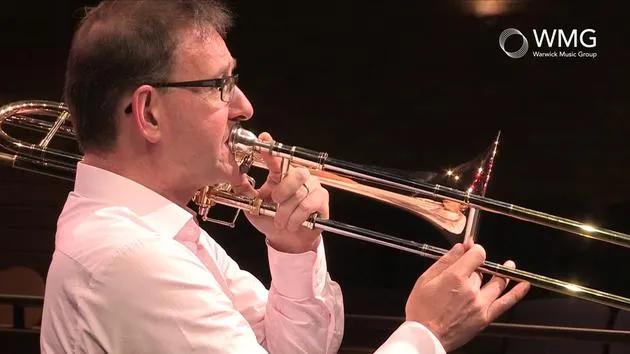
08. Legato
Tu es ici17:55
09. The Philosophy of Warm Up
14:04
10. Wagner, Ride of the Valkyries and Prelude to Act 3 of Lohengrin
12:20
Transcription de la leçon
Four Interrelated Topics in Trombone Playing
Welcome! Today, we're going to discuss four closely related subjects in trombone playing that we couldn't divide into individual portions:
- Natural Legato
- Flexibility
- Slide Technique
- Legato on the Slide
Natural Legato
First of all, let's talk about what we call natural legato. This is the most beautiful legato we have. We don't need to do anything other than simply:
- Let the air flow through the instrument smoothly.
- Make minute adjustments with the jaw to adjust the lower lip position, moving across the harmonic.
Many people use a legato tongue technique on this. The reasoning for employing legato tongue across all types of legato is that it achieves two things:
- It evens out all legatos so they all sound the same.
- It makes it more secure.
However, my problem with that argument is that while it makes them sound uniform, it compromises the quality of legato.
The target, for me, is to make all legatos sound like the smooth, gentle exhalation of air that I aspire to achieve.
As you can already hear, I'm doing some techniques called flexibilities where we move around the range. We start with very basic ones and can increase the range up to two or more octaves.
Understanding Harmonics and Notching
The trombone is built on a series of layers known as harmonics, and in our minds, we cross over into the next harmonic, almost like crossing a bridge.
This defines a jump or change, leading us to what I call notching. This is when we "click down" across the harmonics, but this is counterproductive to increasing our range and improving our flexibility.
We need to convince our bodies that we are playing glissandos and that there are no notches, every note should seamlessly connect.
Embouchure and Air Flow Adjustments
Some teaching methods suggest that there should be absolutely no movement of the embouchure when playing. While I partially agree, I find it difficult to maneuver the trombone without making some movements.
- When going lower, my jaw moves forward and down.
- When going higher, it moves back.
It's crucial to avoid closing the lip aperture as we adjust.
Practicing Flexibility
When practicing flexibilities, I recommend starting in the middle register to find a hinge point. This approach feels more natural and allows you to practice effectively.
- As we go low, the chin moves forward and down.
- As we go high, the chin slightly moves back, with airflow adjusted accordingly.
We change the airflow based on the range we are playing, ensuring fluid transitions.
Turning Flexibilities Upside Down
An important practice is to turn your flexibilities upside down. While we all can go up and down, it's also essential to practice coming back down and integrating high, middle, and low registers together.
Slide Technique
Before diving into legato on the slide, it's essential to address slide technique. Many teaching methods claim that breathing is the most crucial aspect of brass playing. However, I believe that the slide technique holds the most significance.
If the slide technique is incorrect, the timing of the tongue and air won't align. Therefore, the first thing I correct with any student, and in my own practice, is the slide technique.
Importance of Slide Positioning
Many players spend:
- 25% of the note moving to it,
- 50% on the note,
- 25% moving to the next note.
This means we only spend half of our time in the position for each note.
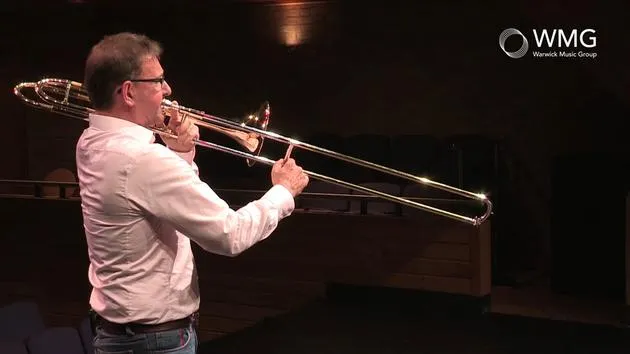
Practice Suggestion: Look at your slide when playing a familiar piece of music. Many students struggle with speed because their slide technique is uncoordinated.
Timing Over Speed
Slide technique is ultimately a question of timing, not speed. To practice:
- Move the slide as you articulate the note so that you're there on time.
- Maintain the slide position for the longest possible time, even with staccato notes.
Legato on the Slide
When doing legato on the slide, avoid a separate air attack every time the slide moves.
Practicing Continuous Airflow
To practice this, work on a constant stream of air without interruption:
- When performing legato on the slide, the air should move continuously, reflecting the glissando technique.
Correct slide technique will help achieve the desired legato sound.
Light Legato Tonguing
Next, we integrate legato tongue. With legato tonguing:
- Lightly lick the back of the teeth.
- Avoid interrupting airflow; this is a common mistake!
A delicate legato tongue ensures a fluid airstream.
Putting It All Together
Now, let's combine these concepts in practice. Remember, even classical trombonists should return to playing ballads to enhance their vocal quality and beauty.
Final Thoughts
In conclusion, this segment covers the interconnected aspects of:
- Natural Legato
- Flexibility
- Slide Technique
- Legato on the Slide
This video encapsulates vital information that could significantly impact your playing.
As we continue this series of videos, you'll find orchestral repertoire alongside technical guidance. If you're facing technical challenges with orchestral excerpts or solo pieces, work on those issues in isolation.
Important!
Don't overwhelm yourself with difficulties in a challenging piece. Fix the technical aspects first, then return to enjoy playing with confidence!
10 leçons
2h 21m de leçons vidéo structurées
Fonctions vidéo avancées
Ralentissez, bouclez un passage, suivez la partition
Mobile, tablette et ordinateur
Pratiquez où vous voulez
Satisfaction garantie à 100 %
Garantie remboursement 30 jours
Rencontrez votre guru
Rencontrez votre guru
Ian Bousfield est au sommet de la profession depuis plus d'un quart de siècle, excellant peut-être dans davantage de facettes du métier de la musique que tout autre tromboniste à ce jour. Sa carrière l'a amené à jouer dans deux des orchestres reconnus parmi les quatre meilleurs au monde, dont l'un est considéré comme peut-être le plus grand orchestre d'opéra, à se produire en soliste au plus haut niveau avec des orchestres, des brass bands et sur instruments d'époque, à enregistrer en soliste chez les plus grands labels, à jouer les thèmes de superproductions hollywoodiennes et à enseigner à la Royal Academy de Londres.
En tant que soliste, Ian s'est produit, entre autres, avec la Vienna Philharmonic, le London Symphony, le London Philharmonic, le BBC Philharmonic, le Halle Orchestra, le Sapporo Symphony et l'Austin Symphony. Il a travaillé avec les chefs suivants : Riccardo Muti, Michael Tilson Thomas, Sir Neville Marriner, Kent Nagano, Ion Marin et Matthias Bamert, et EMI, Camerata, Chandos et Doyen comptent parmi les labels pour lesquels Ian a réalisé plusieurs enregistrements en solo au fil des ans. Les deux temps forts de la carrière solo d'Ian à ce jour sont probablement l'interprétation du Concerto de Nino Rota avec la Vienna Philharmonic et Riccardo Muti (2008) à trois reprises à Vienne, ainsi qu'au Lucerne Festival et à Tokyo, et la création mondiale de Stargazer de Jonathan Dove, écrite pour lui et qui lui est dédiée, avec le London Symphony Orchestra dirigé par Michael Tilson Thomas (2007). Il s'est produit avec tous les grands brass bands du monde, enregistrant avec bon nombre d'entre eux. Il s'est produit en soliste à peu près partout dans le monde et, en tant que clinicien, il est sans doute plus simple de mentionner les conservatoires et festivals où il ne s'est pas produit !







