



Detached Articulation
Le contenu du cours
10 leçons (2h 21min) · 1 gratuites
01. Breathing, part 1
Leçon gratuite6:59
02. Rossini, William Tell and The Thievish Magpie
14:54
03. High Range Building
8:50
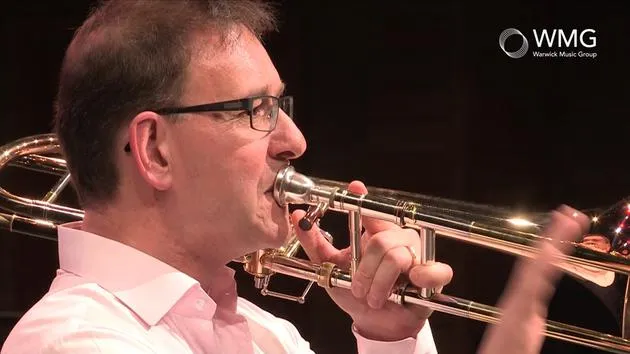
04. Detached Articulation
Tu es ici18:50
05. Mahler's Third Symphony
22:21
06. Mozart Requiem
13:41
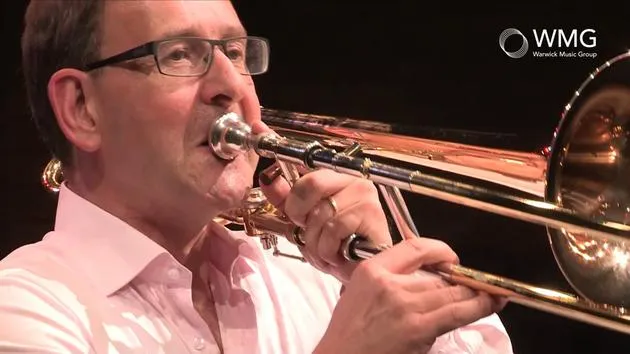
07. Ravel's Bolero
11:35
08. Legato
17:55
09. The Philosophy of Warm Up
14:04
10. Wagner, Ride of the Valkyries and Prelude to Act 3 of Lohengrin
12:20
Transcription de la leçon
: The tongue can effectively strike your tooth, but it must remain relaxed. If I'm honest, about two-thirds of my tooth is covered by my tongue when I play, but I'm not pushing.
Myth 2: Saying "Ta" for Articulation
- We're often taught to say "ta, ta, ta" or "da, da, ta". However, this causes the jaw to move.
- If we try to say "ta" without moving our chin, it doesn't work.
- Move away from vowel sounds and focus on relaxed contact. The sound should be a blend of P, N, D, and ta.
Importance of the End of the Note
- The clarity of the beginning of the next note depends on the embouchure's position at the end of the previous note.
- Often, the embouchure is affected by airflow , it can push the lips open when played, causing a lack of clarity.
- Critical Point: The aperture (the hole) must be maintained. If the embouchure tries to revert to its position as we articulate, we lose clarity.
Practicing Articulation Without the Trombone
- The combination of tongue and air can be practiced without the trombone:
- Think of blowing out a birthday candle , the goal is to get the air out effectively.
- Isolate the use of air and tongue in practice to enhance articulation without relying solely on the instrument.
Preparation is Key
- The clarity of articulation depends on ensuring the air is flowing correctly to create the note.
- Always have the embouchure fixed in position before playing. Speaking through the embouchure can help achieve ultimate clarity, ensuring the aperture is open and ready.
Summary of Articulation System
- The embouchure must be:
- Open and fixed at the beginning, middle, and end of the note.
- The tongue:
- Touches wherever needed, remains relaxed, and should not use the tip.
- Focus on direction of airflow when using the tongue.
Practical Exercise: Fast Articulation
When I joined the London Symphony Orchestra at 23, my biggest weakness was fast articulation. I spent several months working on this, starting with a series of exercises.
- Tip:
- Begin by ensuring the embouchure is fixed while developing your articulation system.
- Try the exercise for triple tonguing found in traditional etude books.
- Understand that clarity and legato can be challenging; playing with clarity and length is harder but essential.
The Slow Exercise
- Use a metronome to practice:
- Ensure the clarity of sound comes from consistent airflow through the instrument.
- The key to this practice is keeping the tongue relaxed.
Mastering Speed
- To achieve speed in articulation:
- Focus on the clarity at the beginning of the note while maintaining relaxed articulation.
- The airflow must be steady.
- As your skills progress, push through the discomfort , that's where growth happens.
Final Thoughts
In conclusion, the basics of detached articulation include:
- The embouchure must remain in position.
- The aperture must be set and stable.
- The tongue touches lightly and relaxed, without using the tip.
By mastering these elements, you will enhance your playing and develop clear, articulate sound on your instrument. Happy practicing!
10 leçons
2h 21m de leçons vidéo structurées
Fonctions vidéo avancées
Ralentissez, bouclez un passage, suivez la partition
Mobile, tablette et ordinateur
Pratiquez où vous voulez
Satisfaction garantie à 100 %
Garantie remboursement 30 jours
Rencontrez votre guru
Rencontrez votre guru
Ian Bousfield est au sommet de la profession depuis plus d'un quart de siècle, excellant peut-être dans davantage de facettes du métier de la musique que tout autre tromboniste à ce jour. Sa carrière l'a amené à jouer dans deux des orchestres reconnus parmi les quatre meilleurs au monde, dont l'un est considéré comme peut-être le plus grand orchestre d'opéra, à se produire en soliste au plus haut niveau avec des orchestres, des brass bands et sur instruments d'époque, à enregistrer en soliste chez les plus grands labels, à jouer les thèmes de superproductions hollywoodiennes et à enseigner à la Royal Academy de Londres.
En tant que soliste, Ian s'est produit, entre autres, avec la Vienna Philharmonic, le London Symphony, le London Philharmonic, le BBC Philharmonic, le Halle Orchestra, le Sapporo Symphony et l'Austin Symphony. Il a travaillé avec les chefs suivants : Riccardo Muti, Michael Tilson Thomas, Sir Neville Marriner, Kent Nagano, Ion Marin et Matthias Bamert, et EMI, Camerata, Chandos et Doyen comptent parmi les labels pour lesquels Ian a réalisé plusieurs enregistrements en solo au fil des ans. Les deux temps forts de la carrière solo d'Ian à ce jour sont probablement l'interprétation du Concerto de Nino Rota avec la Vienna Philharmonic et Riccardo Muti (2008) à trois reprises à Vienne, ainsi qu'au Lucerne Festival et à Tokyo, et la création mondiale de Stargazer de Jonathan Dove, écrite pour lui et qui lui est dédiée, avec le London Symphony Orchestra dirigé par Michael Tilson Thomas (2007). Il s'est produit avec tous les grands brass bands du monde, enregistrant avec bon nombre d'entre eux. Il s'est produit en soliste à peu près partout dans le monde et, en tant que clinicien, il est sans doute plus simple de mentionner les conservatoires et festivals où il ne s'est pas produit !







