



Rosalie (leçon)
Avec
Mike DowlingDans cette leçon, Mike Dowling t'apprend à jouer le morceau Rosalie à la guitare acoustique.
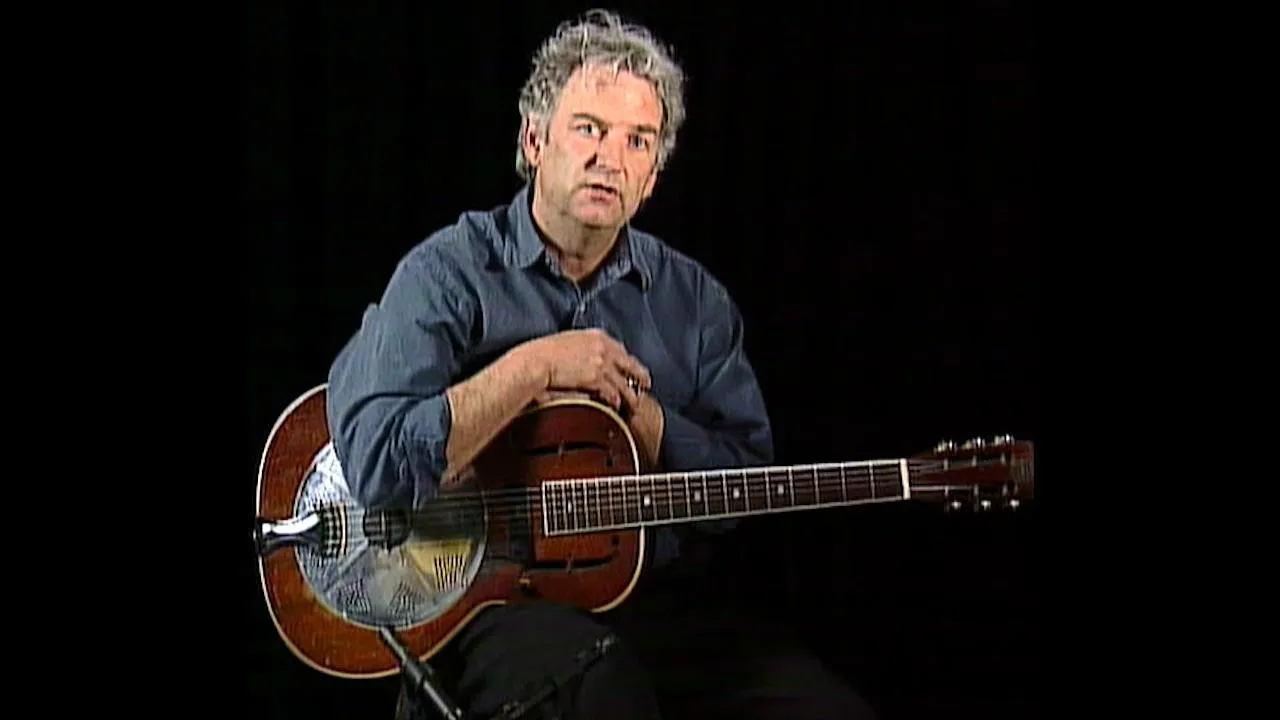
Le contenu du cours
14 leçons (1h 30min) · 1 gratuites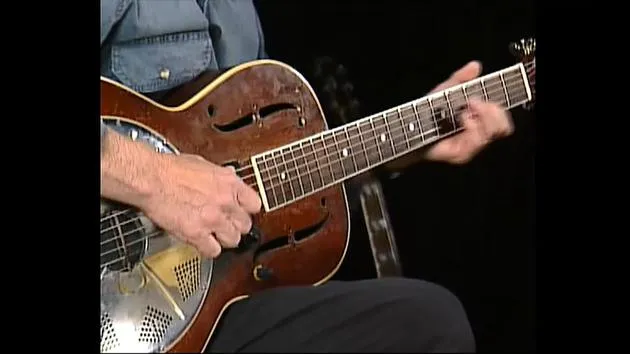
01. Rosalie (interprétation)
Leçon gratuite4:58
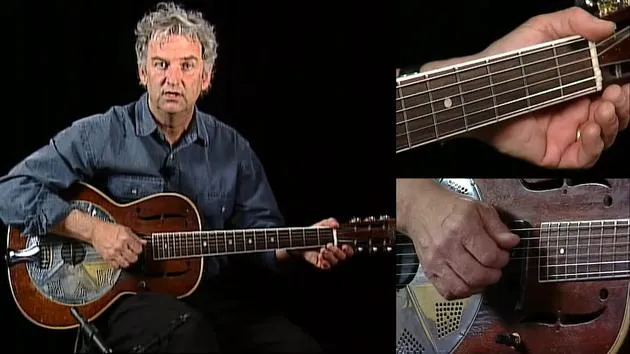
02. Rosalie (leçon)
Tu es ici8:59
03. Nit Pickin' (interprétation)
3:22
04. Nit Pickin' (leçon)
11:02
05. Minor Thing (interprétation)
4:21
06. Minor Thing (leçon)
10:48
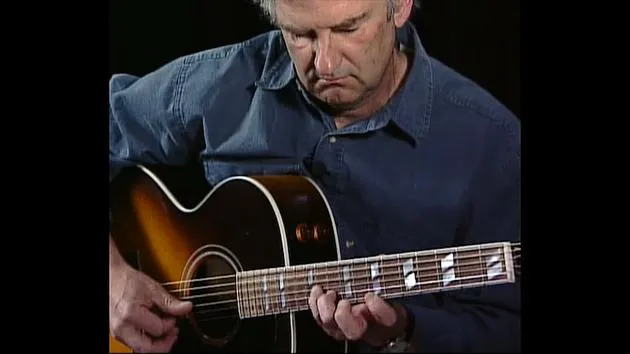
07. Johnson City Rag (interprétation)
3:33
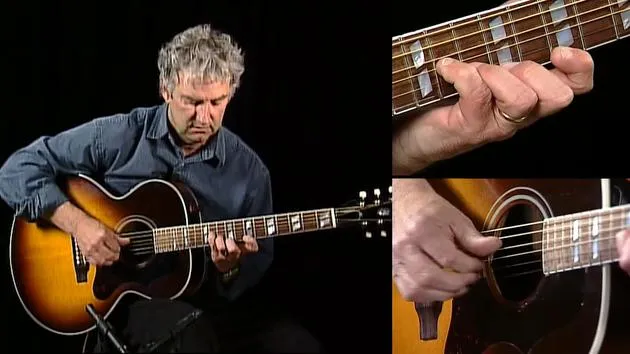
08. Johnson City Rag (cours)
9:39
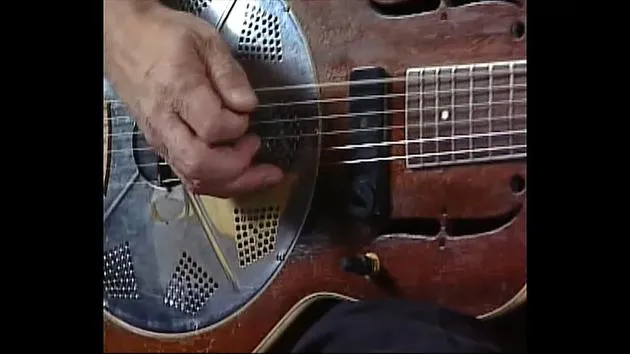
09. Fishin' In The Wind (interprétation)
2:35
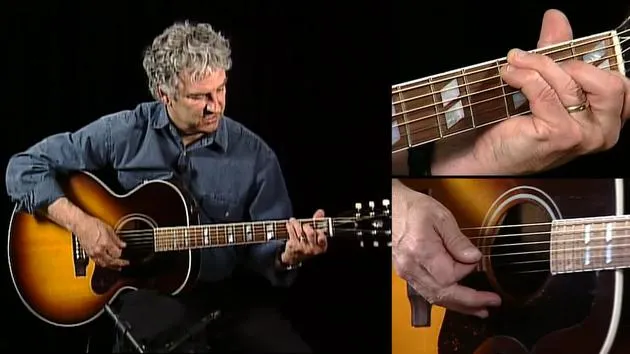
10. Fishin' In The Wind (leçon)
10:15
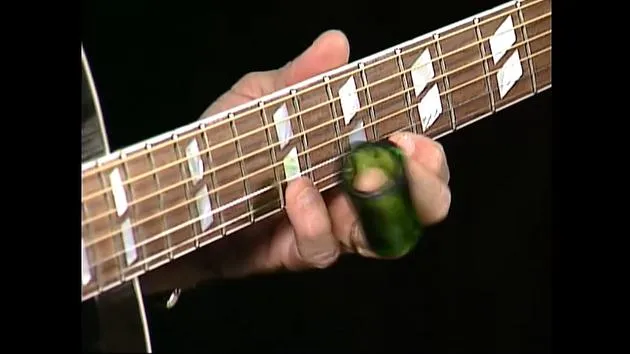
11. Bottleneck March (performance)
3:00
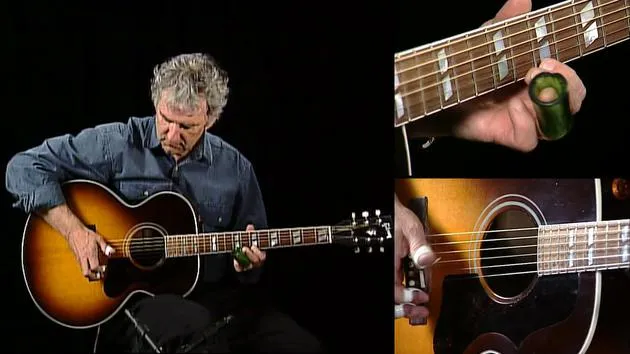
12. Bottleneck March (leçon)
10:31
13. BONUS : Bottom Lands (interprétation)
3:44
14. BONUS : String Crazy (interprétation)
3:34
Transcription de la leçon
Music Lesson: Exploring "Rosalie"
Alright, let's take a look at "Rosalie."
This tune goes back the furthest of all the tunes I play. It's a 19th-century piece, known for its pretty melody, written by George Root. I've always liked this melody, and I wanted to rearrange it to make it more accessible and interesting to play beyond what's found in the printed folio.
G Tuning and Basic Melody
So, I put this tune in G tuning. Here's the basic melody.
I wrote an interlude for it, which also serves as the introduction you'll hear me play. I played it so slowly that I felt the tune needed some musical life support to keep it going and provide the listener with a sense of the beat.
Strumming Technique
I came up with a strum pattern that sounds like this:
- Playing with my bare fingers.
- Striking the strings with my thumb.
- Picking up with my fingers.
- Brushing back down for the backbeat and lifting up again.
This creates a four-part strum pattern.
Let me play the intro, and we'll dive into the main passages of the tune.
Breaking Down the Tune
I think the best way to approach this is to break down the main passages so you can understand them better. I aim to provide insights that you may not get from simply watching or from the printed page.
Starting the Main Theme
We start with:
- A C minor 6th chord
- Followed by A D
And we kick off the main theme of the tune there. You'll hear this in the accompanying performance.
Strum this using a pattern that I have. I often play a little slap as a backbeat between the notes and phrases. But sometimes, I may need to brush down with that backbeat to highlight a melody note.
Note: You're likely to encounter various techniques in this tune. If I want to exaggerate the backbeat, I might get my hand over the end of the fingerboard and, as I brush down, slap with my palm for a more percussive effect. It's okay if it doesn't stay steady throughout; sometimes, just implying that backbeat is enough for the listener to follow along.
Playing the Melody
- My basic groove in playing the main theme involves:
- Playing the melody on the top string.
- Using a harmony a sixth below.
- This creates the distinctive "yodel" sound.
If I were to outline the scale a little, it would sound like this. We have lovely notes below that will ring sympathetically with it.
Transitioning to the C Chord
When you play the C chord that's coming up:
- Play it as part of a bar to ensure you hit the bass notes right away.
Here's what I'm talking about...
As soon as I get that note, it's part of my bar, and I can catch up with the lower notes. That's a little D7SUS chord, which resolves to D7.
My backbeat functions as a bridge between the melody notes. You can hear the note moving on the inside of the D string, while you may catch my foot tapping in some of the performance pieces, though I'll try to keep that quiet.
Applying the Technique
Whether you use the techniques I'm showing you for "Rosalie" or elsewhere, I'd be flattered if you learn a couple of these tunes. This method also creates a nice blues groove.
Continuing with the Tune
Now moving further in the tune:
- D back to G.
I'm just playing a D chord high up, fretting my tones, and diminishing that triad. You might hear something buzzing in my guitar, but that's alright; everything rings nicely.
If you make your standard tuning a minor chord and move it up a couple of frets and back down, you'll have what I'm using to end those long phrases.
Playing the Bridge
When I play the bridge, the second part of this tune:
- I'm kind of heavy on the vibrato, accentuating the open ringing quality of the notes.
Tip: Before you start playing in open tuning, particularly on a National Guitar, check your intonation in higher positions. I often replay a passage I'll encounter later to ensure I'm familiar with how it should sound.
Conclusion of the Lesson
The main theme in this tune repeats a couple of times, and I've outlined the bridge for you. There shouldn't be anything too problematic here. The notes are not hard, and you'll know where to go using the tab.
Just aim for a relaxed but crisp backbeat, and I think you'll have good luck with this tune.
So, let's leave "Rosalie" right there and move on to the next tune.
14 leçons
1h 30m de leçons vidéo structurées
Fonctions vidéo avancées
Ralentissez, bouclez un passage, suivez la partition
Mobile, tablette et ordinateur
Pratiquez où vous voulez
Satisfaction garantie à 100 %
Garantie remboursement 30 jours
Rencontrez votre guru
Rencontrez votre guru
Lorsque le grand Vassar Clements, aujourd'hui disparu, a entendu Mike Dowling jouer de la guitare en 1975, il a fait la chose la plus sensée. Il l'a engagé. Mike était le guitariste du premier groupe de tournée de Vassar et on peut l'entendre sur son “Nashville Jam”, nommé aux Grammy. Clements le décrivait simplement comme “l'un des meilleurs guitaristes qui soient, où que ce soit”. Ce sentiment est partagé par un chœur toujours plus nombreux de critiques musicaux, d'élèves guitaristes et d'amateurs de musique acoustique du monde entier.
Mike puise en profondeur dans le riche bagage de la guitare des racines américaines, avec une prédilection pour le style Piedmont mélodique de maîtres du blues acoustique comme Mississippi John Hurt et le grand slidiste Tampa Red. Mais on ne peut pas cataloguer Mike comme un bluesman, ni même comme un fingerstylist. Il est bien trop polyvalent pour cela. Du blues au bottleneck au jazz d'autrefois et bien d'autres choses entre les deux, la musicalité, la profondeur et la maîtrise de l'instrument de Mike se transposent avec aisance aussi bien sur les guitares à table plate que sur les archtops et les résonateurs.
Interprète, compositeur, professeur, musicien de studio, inventeur : tout ce que fait le guitariste Mike Dowling reflète son amour et sa maîtrise de l'instrument qui est au centre de sa vie depuis plus de quarante ans.
Dans ses cours, Mike ouvre pour toi le sac à malices de l'uptown blues : un fingerpicking Piedmont détendu, une basse régulière au pouce alterné, des traits en notes simples pleins de swing et les figures de slide et de bottleneck qui donnent son âme à la guitare des racines américaines - le tout enseigné avec le même feeling qu'il insuffle à chaque note.
“Un excellent instrumentiste à l'aise dans une large palette de styles musicaux. Il insuffle du feeling à chaque mot et à chaque note.”
--Hit List, Acoustic Guitar
“Dowling est un guitariste fluide et précis, et son chant éraillé possède un côté espiègle et bondissant très attachant.”
--Dirty Linen







