



Nit Pickin' (leçon)
Avec
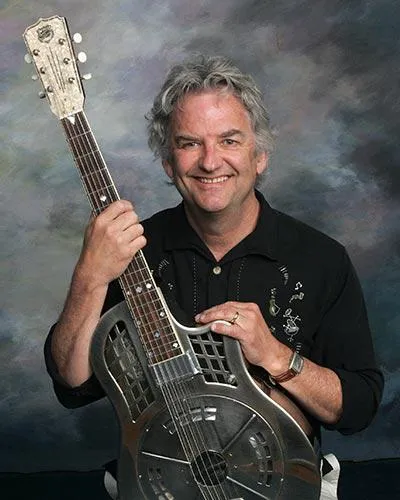
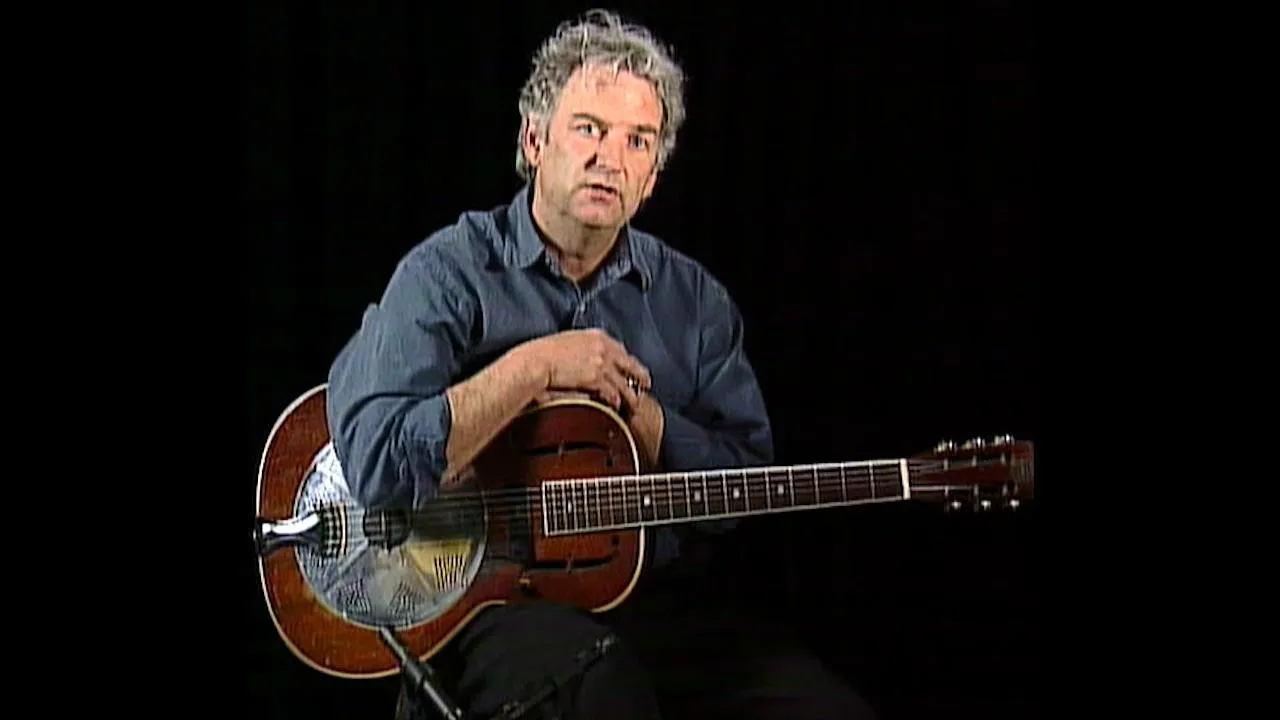
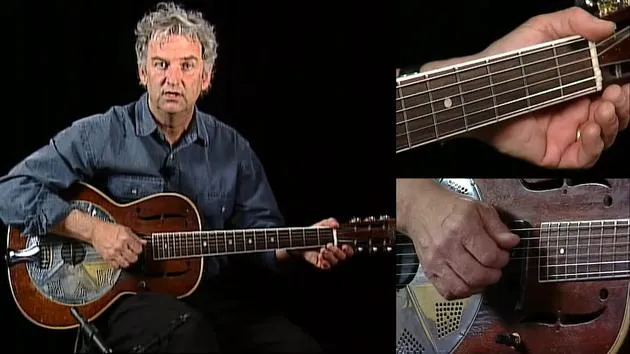
Mike DowlingMike Dowling enseigne son morceau de fingerpicking 'Nit Pickin'' à la guitare acoustique, en travaillant le roll de pouce alterné et sa syncope délicate de trois contre deux.
Le contenu du cours
14 leçons (1h 30min) · 1 gratuites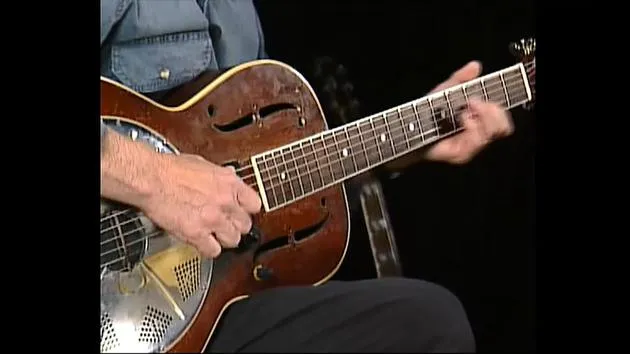
01. Rosalie (interprétation)
Leçon gratuite4:58
02. Rosalie (leçon)
8:59
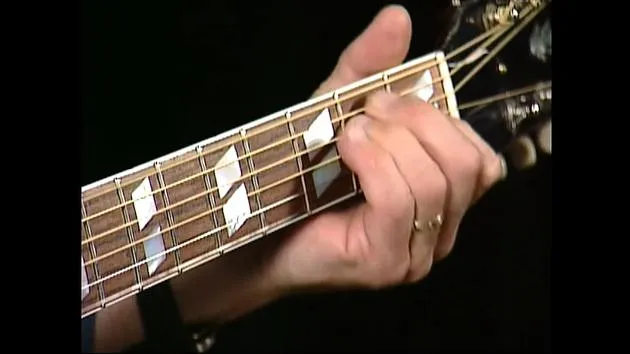
03. Nit Pickin' (interprétation)
3:22
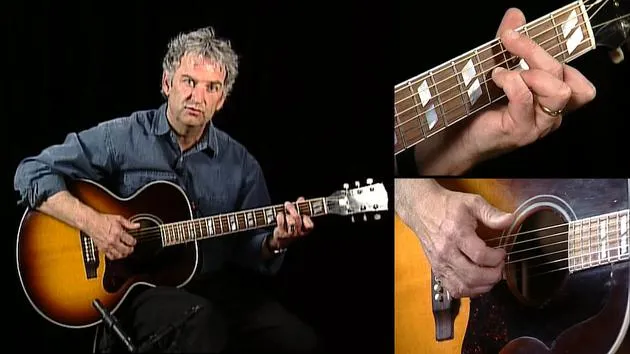
04. Nit Pickin' (leçon)
Tu es ici11:02
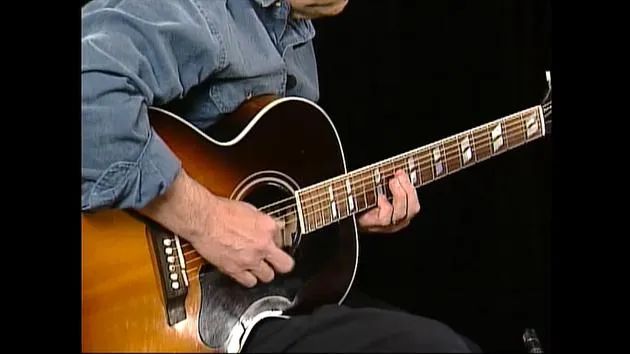
05. Minor Thing (interprétation)
4:21
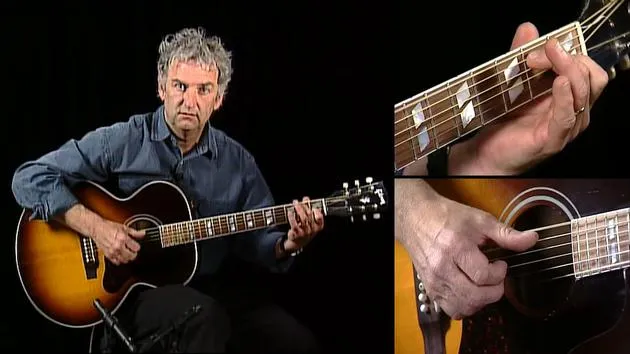
06. Minor Thing (leçon)
10:48
07. Johnson City Rag (interprétation)
3:33
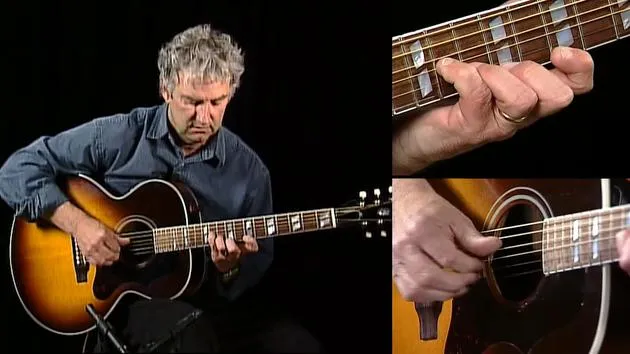
08. Johnson City Rag (cours)
9:39
09. Fishin' In The Wind (interprétation)
2:35
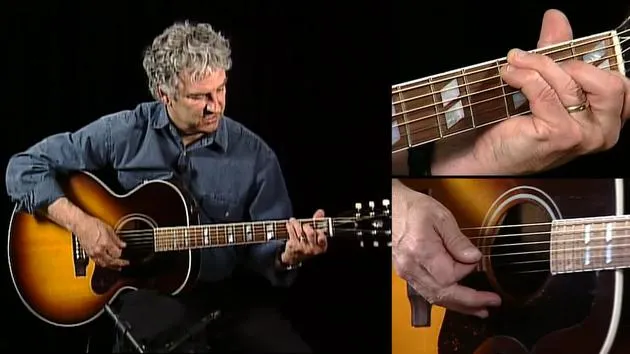
10. Fishin' In The Wind (leçon)
10:15
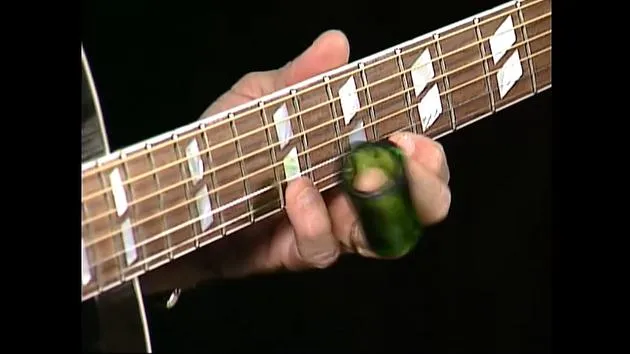
11. Bottleneck March (performance)
3:00
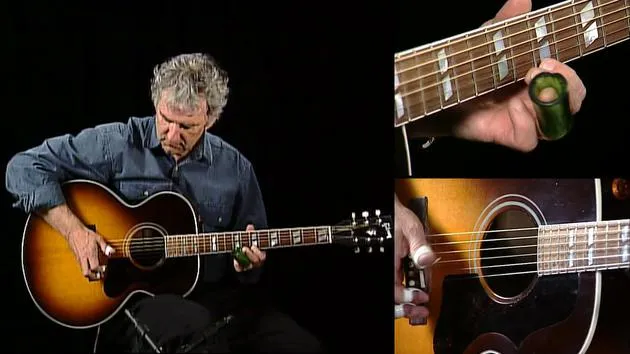
12. Bottleneck March (leçon)
10:31
13. BONUS : Bottom Lands (interprétation)
3:44
14. BONUS : String Crazy (interprétation)
3:34
Transcription de la leçon
Music Lesson: Tune Nitpicking Overview
Alright, now we're going to take a look at my tune "Nitpicking." To get a handle on this rhythm, there's a finger-picking technique that's critical. It's easy to relate to if you think of the tune in "In the Mood."
E Chord Practice
- Play an E chord: Just play a forward roll with your fingers.
- Right-Hand Focus: You can use your angle button to access my right or left hand as we get further along here.
Right-Hand Riff
Here's my riff:
-
Eighth notes:
- 1 and 2 and 3 and 4
- 1 and 2 and 3 and 4
-
With an alternating thumb.
Next, I've got quarter notes against that:
- "I remember learning this tune, this syncopation, almost sitting in my room, pulling my hair out trying to get this down."
- While these are eighth notes, they're grouped in threes. Some call this a three against two syncopation, but it's really eighth notes against quarter notes.
Chord Variation
Now, let's take a look at "Nitpicking."
- I'm going to ask you to give these chords some big names, though it's not critical.
- I'm playing a G major 7 form; we can just call it an altered G.
Rhythm Cadence
With my right hand and the chord:
- It looks like this.
- Then I lift up my first finger, you can see it happening while I'm going.
Chord Changes
- IV Chord: I alter this chord for my C9 altered chord.
- Return to G: Then come back to G.
- Next Chord: Move to an E7 chord.
- Previewing Play: I come up here and will play the whole passage shortly.
Structure Recap
So here it goes from the top:
- Pattern: C9 back to G.
- You can break out of that pattern if you want; it won't harm anything.
Full Playing Context
Let me play it in context without interruption:
- Back to G, and E goes to A7.
- Just a bar chord, A9, and make it minor, same motif.
- C altered back to G major like before.
- Move to my A bar.
Key Modulation
Finishing up here on the second part in the key of C:
- G7 augmented.
- Now we've modulated to the key of C, moving out of the pattern we had before, into regular pattern picking to get the melody notes.
Palm Muting Technique
You can hear me muting with my palm down here:
- "I feel I'm really pushing it. If I don't have a thumb pick and I'm playing with my bare thumb, I'm muting it."
Playing Without Finger Picks
You might wonder, "Why don't you just use finger picks?"
- If I've got this three-finger pattern, I'm not adept at playing with a finger pick on my ring finger.
- I sometimes play this tune with my bare fingers and just a thumb pick if I want to get more definition.
Be aware: Playing with bare fingers can prevent low-end notes from getting washed out or too muffled.
Bridge Progression
Back to the Bridge
Let me go back to the bridge of this tune:
- Chords: C, E minor 7, a sixth.
- Setting up the last part of the tune.
- Back to our refrain: C.
Chords Recap:
- Just implying a C chord.
- Minor sixth, A7, D7, and to G.
Special Chord Mention
There's one chord I wanted to bring to your attention:
- Seven flat five.
- It gives me an E flat and rings against an open high E.
I appreciate finger picking tunes that create a bell-like quality with discordant notes ringing against one another.
- Positioning: I can stay in fourth position and make it a minor seven flat five as the passage continues.
Second Part of the Tune
Single Note Passages
Let's go to the second part of this tune where I'm playing some single note passages.
- The second part of the tune goes like this, and I'll get there in a minute.
Syncopation Practice
Here's my syncopation:
- "Hear that?" It's the same as the opening syncopation but I'm using it on an A 9th chord, A minor 7.
Turnaround Chords:
- Then I get into this.
- Tap your foot and use your thumb and the finger on the "ands" to stay on track rhythmically.
Technique Reference
The late great Oscar Alimon was superb at this technique:
- "It almost sounded like plectrum playing, but he was playing with picks."
Balance Suggestion
The key is achieving an even balance to those notes because sometimes the thumb has more weight and tends to overpower the finger notes.
Final Tips
For single line passages:
- Practice playing on one string.
- "See what I'm doing?" Thumb, finger, thumb, finger, thumb, finger.
If you're tapping the foot on quarter notes:
- Use the thumb on the downbeat, and as a general rule, use your finger on the "ands" or the offbeat.
Ending Passage
For the last passage in that tune:
-
If you take a D chord and move it over to the next set of strings, then up one more fret and just pluck those notes, it looks like a D chord.
-
This creates a great all-purpose turnaround with three voices moving down.
Conclusion
To capture the ending of this tune, we can put it up an octave and use harmonics at the 12th fret to take us out.
I hope that what we've talked about will get you started playing this tune, especially the critical syncopation. I encourage you to expand on it and use it in your own way as well.
Alright, let's go to the next tune!
14 leçons
1h 30m de leçons vidéo structurées
Fonctions vidéo avancées
Ralentissez, bouclez un passage, suivez la partition
Mobile, tablette et ordinateur
Pratiquez où vous voulez
Satisfaction garantie à 100 %
Garantie remboursement 30 jours
Rencontrez votre guru
Rencontrez votre guru
Lorsque le grand Vassar Clements, aujourd'hui disparu, a entendu Mike Dowling jouer de la guitare en 1975, il a fait la chose la plus sensée. Il l'a engagé. Mike était le guitariste du premier groupe de tournée de Vassar et on peut l'entendre sur son “Nashville Jam”, nommé aux Grammy. Clements le décrivait simplement comme “l'un des meilleurs guitaristes qui soient, où que ce soit”. Ce sentiment est partagé par un chœur toujours plus nombreux de critiques musicaux, d'élèves guitaristes et d'amateurs de musique acoustique du monde entier.
Mike puise en profondeur dans le riche bagage de la guitare des racines américaines, avec une prédilection pour le style Piedmont mélodique de maîtres du blues acoustique comme Mississippi John Hurt et le grand slidiste Tampa Red. Mais on ne peut pas cataloguer Mike comme un bluesman, ni même comme un fingerstylist. Il est bien trop polyvalent pour cela. Du blues au bottleneck au jazz d'autrefois et bien d'autres choses entre les deux, la musicalité, la profondeur et la maîtrise de l'instrument de Mike se transposent avec aisance aussi bien sur les guitares à table plate que sur les archtops et les résonateurs.
Interprète, compositeur, professeur, musicien de studio, inventeur : tout ce que fait le guitariste Mike Dowling reflète son amour et sa maîtrise de l'instrument qui est au centre de sa vie depuis plus de quarante ans.
Dans ses cours, Mike ouvre pour toi le sac à malices de l'uptown blues : un fingerpicking Piedmont détendu, une basse régulière au pouce alterné, des traits en notes simples pleins de swing et les figures de slide et de bottleneck qui donnent son âme à la guitare des racines américaines - le tout enseigné avec le même feeling qu'il insuffle à chaque note.
“Un excellent instrumentiste à l'aise dans une large palette de styles musicaux. Il insuffle du feeling à chaque mot et à chaque note.”
--Hit List, Acoustic Guitar
“Dowling est un guitariste fluide et précis, et son chant éraillé possède un côté espiègle et bondissant très attachant.”
--Dirty Linen







