



Comment faire un power chord

Lesson time: (2min 21sec)
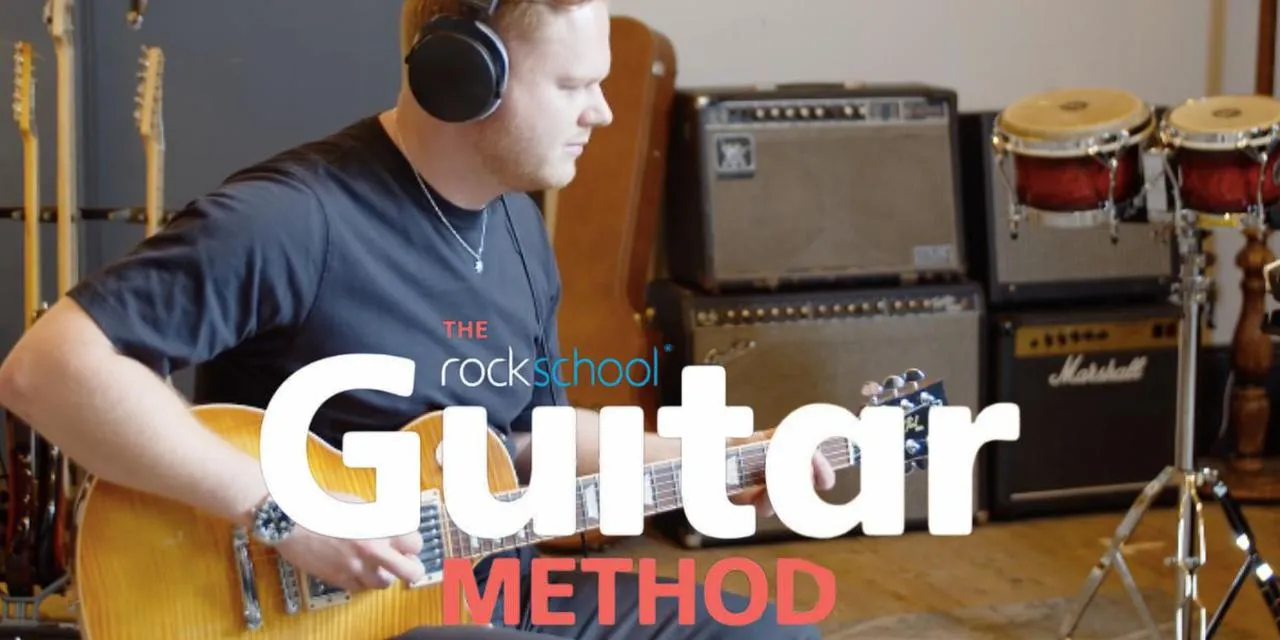
Tommy Webb montre comment construire des power chords à deux notes, A5 et E5, et comment gratter les cordes proprement pour que la puissance vienne de la distorsion de l'ampli.
Course preview
This lesson is part of the course Méthode de Guitare : Country & Metal
Watch a preview of the full course below.
Lesson transcript:
So as I mentioned previously, a chord is two or more notes played at the same time. And these power chords we're looking at in this course are two note power chords. We have an A5 here, it's called. What that means is the note is A. That's our root note, the lowest note in the chord. And the five is telling us it's a power chord. So a five, a power chord. To play this, we've got the open A string and the second note on the D string, which we said earlier was an E. So we're playing A and E together. This is where we're going to use our pick again. The style is quite aggressive and harsh, but we want to be brushing the strings. All the aggression and power is going to come from the amp. So we're just brushing the strings and unplugged. You should be able to hear just how hard I'm hitting my strings really soft. But as soon as I add the distortion, I've not changed any attack in my hand. You can hear all the powers coming from the amp. So what we're going to do, play the open A string and the second fret on the D string at the same time. You want to get used to brushing just these two. With our pick and our strumming pattern, people tend to think we're going all the way down. But I find it easier to do small kind of circle motions this way. You're hitting the strings you want and getting out the way before you hit the next string underneath. So what I mean by that is if I go straight down, you can hear I'm hitting the G and the B string. Whereas with this, most of circle motion, I'm only hitting the A string and the D string, the ones I want for this chord. So in this example one, we're going to play the open A string as a half note, the second fret on the D string as a half note. Then we're going to try and play the two together as a whole note. So for four beats. And you can hear when they come together, it gives you that classic rocky sound that we're so used to hearing. So much more thicker and powerful than just single notes. So a really key skill for metal, rock and lots of other styles of music. Let's give this example a go.
About the instructor
Tommy Webb est un guitariste basé à Londres, titulaire d'une licence avec mention (BA Hons) en guitare de l'Academy of Contemporary Music de Guildford, où il a étudié auprès de Sandy Beales (One Direction, Wheatus) et Nicolas Meier (Jeff Beck). Son propre jeu circule librement entre rock, pop, indie, hip-hop, country et metal - précisément le terrain que couvrent ses méthodes de guitare. Tommy a travaillé avec un large éventail d'artistes et de groupes à travers le pays, dont Jarki Monno et Indira May, partageant scènes et sessions avec les guitaristes Paul Murray (Jess Glynne, Zak Abel) et Adam Chetwood (Paolo Nutini, Mark Ronson), ainsi que les batteurs Alex Woodward (Black Honey), Luke Robinson et “Bambi Music” (N-Dubz, Lethal Bizzle, Wretch 32, Tinie Tempah). Sur scène, il s'est produit au Jazz Cafe en première partie de la chanteuse soul Jocelyn Brown, ainsi que dans des salles et festivals comme Ronnie Scott's, Troy Bar, The Watford Colosseum, Camden Assembly, Kensington Roof Gardens, Notting Hill Arts Club, Meraki Festival et Sundown Festival. Sur disque et à la radio, Tommy a enregistré des sessions live pour BBC Three Counties Introducing, Vibe FM et Pulse 88, avec des morceaux diffusés sur BBC Radio 1 et Radio 2. Il a enregistré dans des studios comme South Lanes Brighton, Hempstead Road et Titan Studios, auprès de producteurs tels que Steph Carter (Gallows, Lyoness) et TMS / Froe Barnes (Lewis Capaldi, Dua Lipa). Dans ses méthodes de guitare, Tommy vous transmet tout ce savoir-faire de musicien en activité - en enseignant les techniques, les sonorités et le feeling qui se cachent derrière des styles bien réels, du rock et de la pop à l'indie, au hip-hop, au country et au metal - pour que vous puissiez jouer la musique que vous aimez vraiment. read more