



Improviser en utilisant la fondamentale des accords de la progression de blues

Lesson time: (5min 57sec)
Course preview
This lesson is part of the course Gagner en fluidité à l'harmonica blues
Watch a preview of the full course below.
Lesson transcript:
Constructing a Solo on the Diatonic Harmonica
Hello, my name is Matt. In this lesson, we're going to be looking at constructing a solo on the diatonic harmonica using the root notes of the chords that the accompaniment is playing.
Overview
- Instruments: Guitars, bass, piano, etc.
- Chords Involved: Only three chords
- Root Notes on Harmonica:
- 2 draw: G (most common)
- 4 blow: C
- 4 draw: D
The 12 Bar Blues
For the first four bars of a simple 12-bar blues, we have:
- Bars 1-4: G (2 draw)
- Bars 5-6: C (4 blow)
- Bars 7-8: G (2 draw)
- Bar 9: D (4 draw)
- Bar 10: C (4 blow)
- Bars 11-12: G (2 draw)
If you just play the root notes, it can be extremely dull. However, you can start to embroider it, adding one or two extra notes to add character.
Adding Additional Notes
- If you play just the root notes, it's pretty dull.
- By incorporating adjacent notes (notes next door), you can create something more interesting.
Remember, it's all based around the root notes of the chords.
The Importance of Listening
- It's not strictly necessary to count; the more you listen to 12-bar blues, the more you'll anticipate chord changes.
- Most blues follows the 12-bar pattern. Keep listening to what other harmonica players are doing.
By doing this, you'll develop a better understanding of when to change and how to make your playing sound more interesting.
Practical Application
Now, let's put this into practice!
- I will go back to the pub and drag the band out again.
- We'll play two 12-bar progressions, and I will construct two solos based on the root notes of the chords, keeping it straightforward.
After a count of four...
1, 2, 3, 4!
Adding Bends
As you learn to make successful bends on the harmonica, you can add these to your playing as well. Bends provide more options and directions to explore, allowing you to create interesting riffs.
Examples of bends included with root notes:
- 2 draw
- 4 blow
- 4 draw
Once you master those note bends, you can incorporate them into any other formula used to construct a solo.
For instance, in the previous lesson using the blues scale, you can add bends to enhance its lyrical quality.
Final Thoughts
Bends can be difficult, but they are worth persevering with as they open up many more possibilities in your playing. Happy practicing!
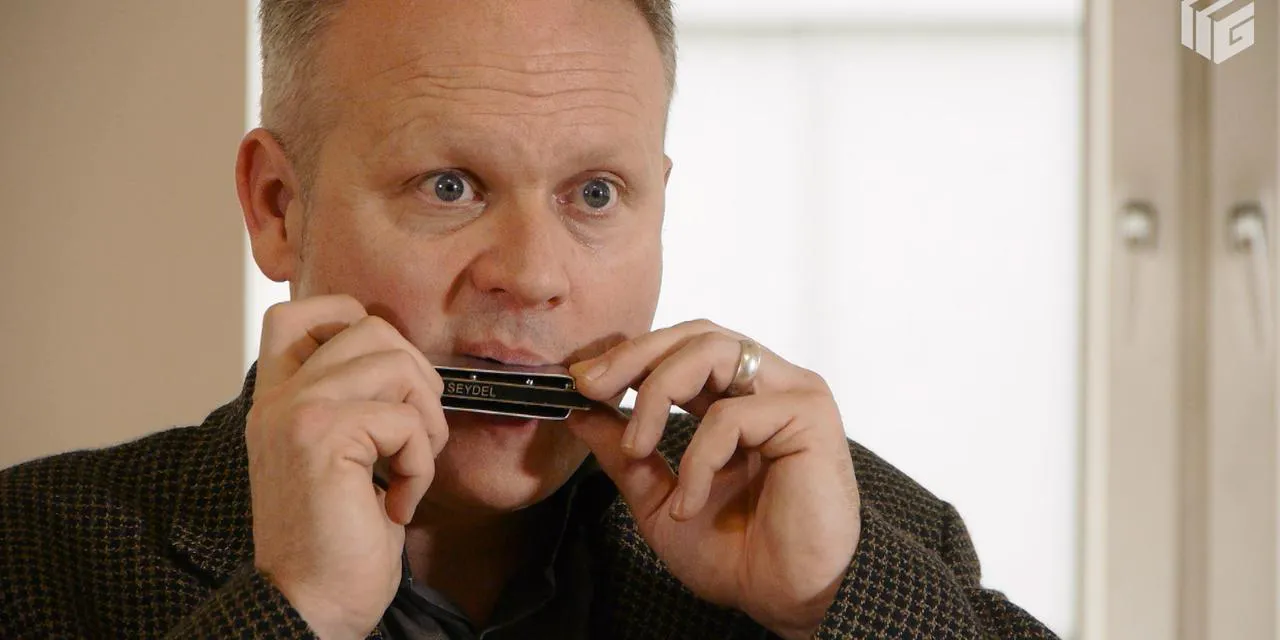
About the instructor
Mat Walklate est un harmoniciste et professeur installé à Manchester qui évolue dans le blues et le folk, et qui joue aussi de la flûte, du whistle et de l'uilleann pipe et chante. Il a remporté le British Blues Harmonica Championship en 1992 et le All-Britain Fleadh Cheoil à l'harmonica en 1993, et il est artiste endossé par Seydel.Au cours d'une carrière de trente ans, il a tourné en Europe avec des groupes tels que The Moochers et le groupe de musique irlandaise The House Devils, a enregistré et mixé quelque quatorze albums entre 2001 et 2021 — parmi lesquels Sea of Blues et Traditional Harmonica — et se produit désormais en duo avec le chanteur-guitariste Alex Haynes et aux côtés du spécialiste du blues Dr Tom Attah. Il enseigne l'harmonica au Leeds Conservatoire et en privé.Sur MusicGurus, ses cours te mènent de tes premières notes sur un harmonica en Do — embouchure, position cross-harp, bendings et ta première improvisation — jusqu'à un jeu de blues fluide, avec vibrato, positions alternatives et le phrasé qui fait chanter un solo. read more