



Développer des solos plus intéressants
Lesson time: (7min 43sec)
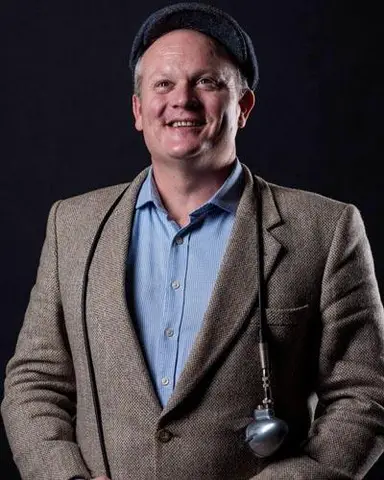
Mat Walklate montre comment donner à un solo de blues du dramatisme et un arc narratif, en construisant un riff répété vers un apogée enflammé.
Course preview
This lesson is part of the course Gagner en fluidité à l'harmonica blues
Watch a preview of the full course below.
Lesson transcript:
Developing Interesting Solos: A Lesson with Matt
Hello, I'm Matt, and this lesson is hopefully going to help you:
- Develop interesting solos
- Add some drama to your solos
- Give your solos a narrative arc
Riff Repetition
So, what can we do? One effective approach to constructing a solo that adds a bit of spice and drama is to find a little riff and repeat it.
- Sometimes, you can repeat it to the point where people think you're going to overdo it.
- Then, transition into a big fiery note; this can create a strong apex for your solo.
Most good riffs involve draw notes and possibly bends as well. For instance, you might start fairly simply, something like this, and then begin to develop a riff. It's not the only way to create a solo, but it does work.
Structuring Your Solos
You're not going to use this method for every solo, hopefully, as you want to experiment with different approaches. However, this is one rewarding method of playing.
Often, the apex of the solo comes around bar number nine, where you have the big lift. Not always, but it's one way of doing things.
Exploring Different Riffs
- There are lots of different riffs out there.
- You can be as simple or as busy as you like.
Consider starting from the bottom of the harmonic scale. This could be tricky in a jam situation, but if you know how many solos you're expected to play, you can structure them based on that length of time:
- If you're playing only one 12-bar solo, then you'll want to showcase as much as possible.
- If you're getting two or three, think about structuring your solos to avoid using all your best stuff in the first 12 bars.
This can involve keeping some ideas in reserve if you have multiple solos in a row.
Playing Through the Turnaround
If you're playing two 12-bar solos (or maybe three), you can:
- Stop and start the next solo, or
- Play through the turnaround, which can be quite effective.
As I said, there's not just one approach to constructing a solo; there are many, and you can adjust based on your preferences.
The Importance of Simplicity
Being fast and busy doesn't necessarily make a solo better. You can say a lot with very few notes. Things like tone and vibrato can help to enhance your sound significantly.
Many blues harp solos from the 40s, 50s, and 60s often didn't stray above hole number four. They managed to create diverse-sounding solos using just those four holes.
Quick Demonstration
As a quick demonstration, I'll illustrate what you can do with the first four holes. Let me think...
And that's just two possibilities out of thousands of permutations you can create using those holes!
Exercise Recommendation
To practice after this lesson, you might consider restricting yourself to the first four holes on your harmonica. You could even physically tape over holes five through ten! Try to create something using just:
- 1, 2, 3, 4 draw notes
- Blow notes: 3 blow (same as 2 draw) and 4 blow for variety
- Be cautious with 1 blow (don't linger) and stay away from 2 blow, as it's the weakest of the bunch.
With bends in 1, 2, 3, and 4 draw, you have quite a few notes to work with. By limiting yourself to these four holes, you may discover new ideas and sounds that emerge from this exercise.
Happy playing!
About the instructor
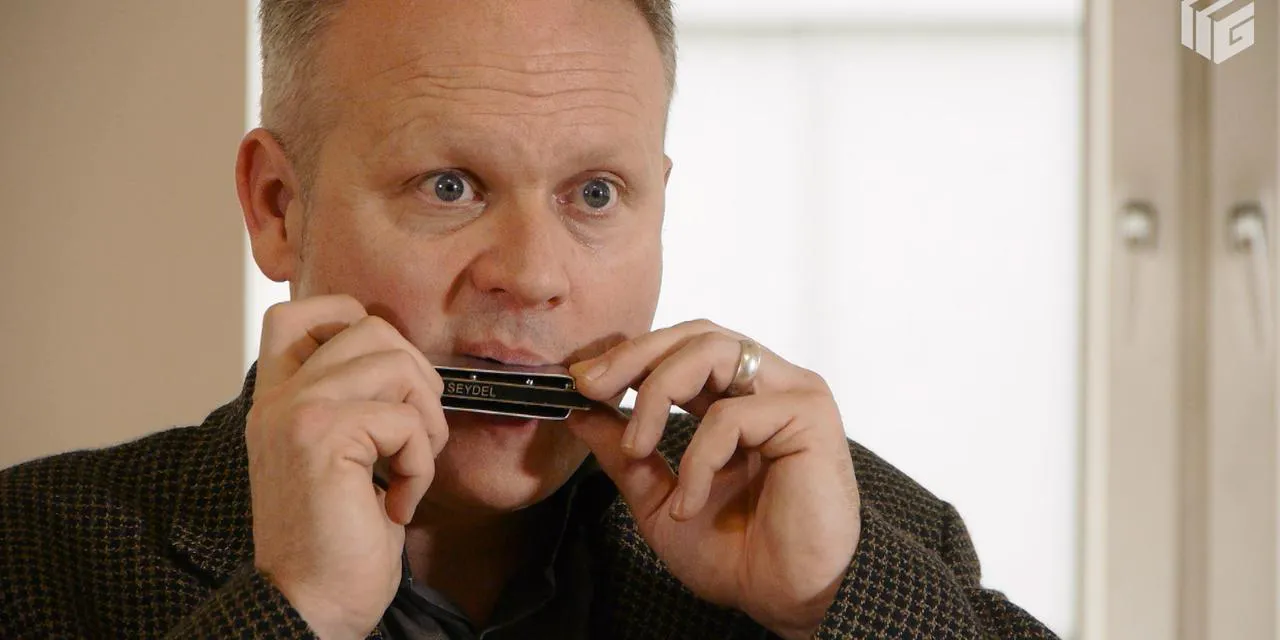
Mat Walklate est un harmoniciste et professeur installé à Manchester qui évolue dans le blues et le folk, et qui joue aussi de la flûte, du whistle et de l'uilleann pipe et chante. Il a remporté le British Blues Harmonica Championship en 1992 et le All-Britain Fleadh Cheoil à l'harmonica en 1993, et il est artiste endossé par Seydel.Au cours d'une carrière de trente ans, il a tourné en Europe avec des groupes tels que The Moochers et le groupe de musique irlandaise The House Devils, a enregistré et mixé quelque quatorze albums entre 2001 et 2021 — parmi lesquels Sea of Blues et Traditional Harmonica — et se produit désormais en duo avec le chanteur-guitariste Alex Haynes et aux côtés du spécialiste du blues Dr Tom Attah. Il enseigne l'harmonica au Leeds Conservatoire et en privé.Sur MusicGurus, ses cours te mènent de tes premières notes sur un harmonica en Do — embouchure, position cross-harp, bendings et ta première improvisation — jusqu'à un jeu de blues fluide, avec vibrato, positions alternatives et le phrasé qui fait chanter un solo. read more