



Mettre du rythme dans le blues

Avec
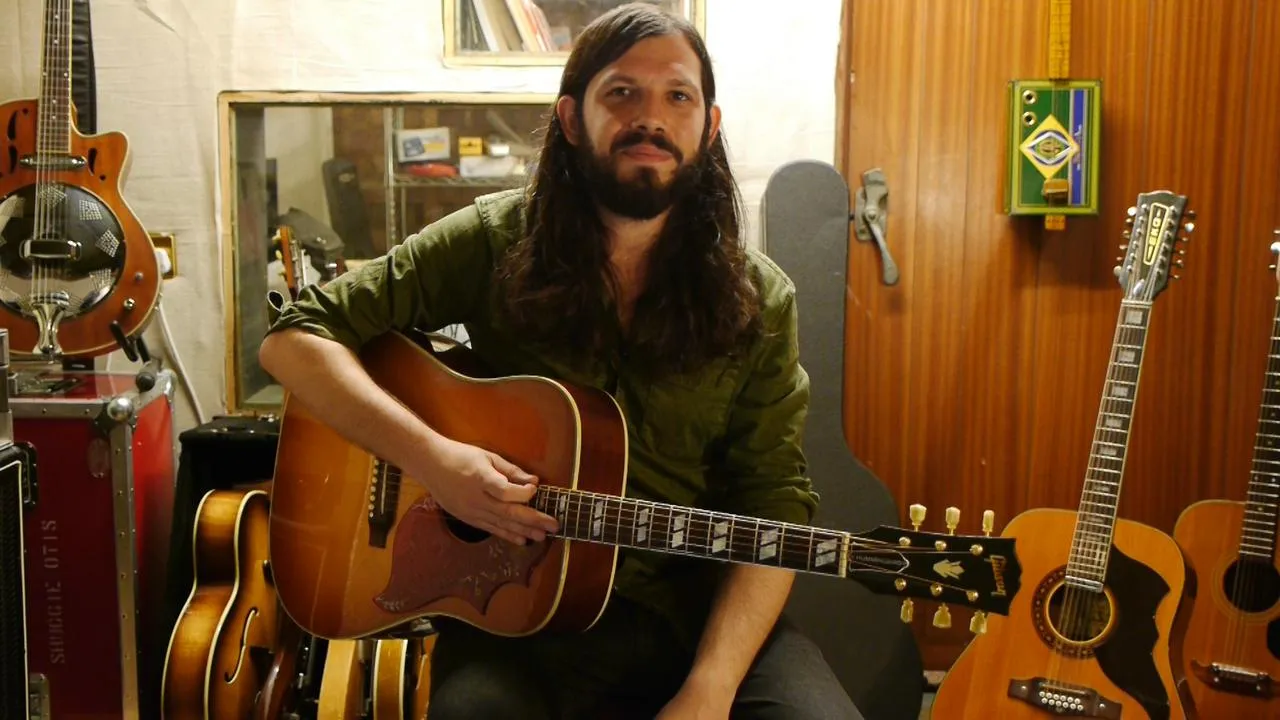
Marcus BonfantiMarcus Bonfanti te montre comment le rythme donne de la couleur à ton jeu de blues, avec la technique de la main droite et le mute des deux mains pour des grooves plus serrés.
Le contenu du cours
9 leçons (1h 45min) · 1 gratuites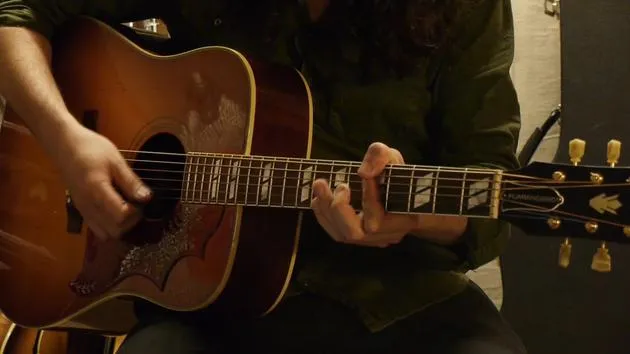
01. Comment embellir ton blues de 12 mesures
10:42
02. Explorer le blues et le turnaround
16:12
03. Mettre du rythme dans le blues
Tu es ici15:28

04. L'utilisation de la ligne de basse dans le blues
12:54
05. Introduction au solo de blues - Partie 1
11:09
06. Introduction au solo de blues, Partie 2
11:59
07. Hybrid picking
Leçon gratuite13:16

08. Interprétation de Mississippi John Hurt - Sliding Delta (arrangement de Marcus)
2:04
09. Commencer à trouver ta voix
11:31
Transcription de la leçon
Putting Some Rhythm in the Blues
Hi, it's Marcus Bonfanti here again. Thanks for checking out this lesson. This is called Putting Some Rhythm in the Blues.
Focus on Rhythm
Today, we are going to concentrate more on rhythm. The last two lessons discussed the chordal makeup of the blues, which is very important. You've got to know the template for what you're playing. However, I believe rhythm is one of the most essential elements of this music, and indeed, all music. Rhythm is what makes people want to get up and dance or feel a tune.
We're going to stay in the key of A and explore different rhythms that can enhance your blues playing.
Shuffle Rhythm
We'll center on a shuffle rhythm. You've probably heard this rhythm in many blues tunes. There are different varieties, such as:
- Texas Shuffle
- Chicago Shuffle
- Ordinary Shuffle
Let's look at this particular way of playing the shuffle. If you've been playing the blues for a little while or have had an introduction to it, you'll recognize this sound and technique.
Standard Riff
This is a standard riff that transfers to the four chord. Now, that was just one little pass, showcasing different variations you can create with that riff.
Importance of Rhythm
The rhythm is crucial; it drives the song. A good tip is to play it nice and slow so you can hear the gaps within your playing. Listen closely, there are minute gaps in between that really define the rhythm.
Many people, once they have a technique, tend to play as fast as possible. However, I don't think that's a good idea. A guitar teacher once told me, "If you can play it slow, you can play it fast." I didn't understand this until I practiced slowly. When I tried to speed it up, it became much easier.
Playing too fast often leads to skimming over key technical elements. If I ever needed to play the song slower and groovier, it didn't sound right because I hadn't mastered the basic techniques needed for slower rhythms.
Variations in Shuffle in A
Let's run through the variations in this shuffle in A:
- Standard Variation
- Third Variation
Just as we talked about in the first lesson, we'll focus on the minor third to major third shift. Instead of playing it with chords, I'm demonstrating it down an octave as a leading bass line.
Right Hand Technique
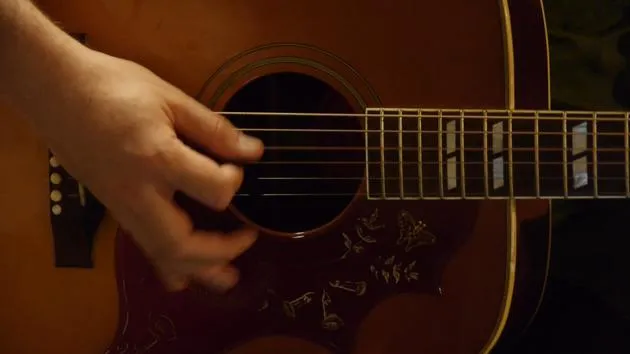
Pay attention to the right-hand technique. The muting is essential, accomplished by both hands. At a basic level, my hand is resting on the strings, allowing me to use the palm to dampen notes that should not resonate.
- Palm Muting: This technique cuts resonance similar to a dampener pedal on a piano.
My plectrum plays the A and D strings for that solid rock sound. Then I move up to the D and G strings, then down to the bottom two strings and back up.
The fingers of my right hand may look inactive at the moment; they are just resting there for now. In future lessons, I'll cover hybrid picking, which involves using these three fingers to play notes.
Third Variation Example
Now let's skip over the second variation and go directly to the third. You must be mindful of which notes need to be heard since you're playing two notes simultaneously.
For the first half of the riff, you should emphasize the lower string, and for the second half, focus on the higher string.
- Riff Example:
- First half: Emphasize the fifth string.
- Second half: Emphasize the B string (fourth string).
Left Hand Technique
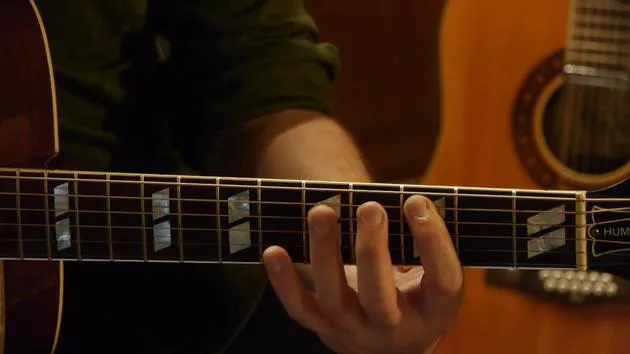
Next, let's concentrate on left-hand technique. All muting cannot be achieved with the right hand alone. The left fingers are pressed when needed to provide extra rhythm and assist with muting.
Now, I will demonstrate a few different variations, which will become more complex as we proceed. We will explore several interesting movements that will seamlessly connect with the next lesson, which will be about baseline movement. But for now, I don't want to overwhelm you.
Expanding the Riff
I'll show you variations that expand the riff from two strings to incorporate the whole chord. By using my A chord as a sort of bar, everything I play around it will sound like an A.
- A Chord Variation: This version of A frees up your fingers to create rhythmic elements.
The right-hand technique remains unchanged; the only difference is I'm introducing variation notes that sound good within the context of A.
Final Thoughts and Practice
I encourage you to take these concepts and experiment. Here's a little shuffle to encapsulate putting some rhythm in the blues using different variations.
- Practice Tips: Try it yourself and see how you get on!
If you have questions or want to learn more about anything discussed here, feel free to get in touch with me on the website. I would be happy to help you!
9 leçons
1h 45m de leçons vidéo structurées
Fonctions vidéo avancées
Ralentissez, bouclez un passage, suivez la partition
Mobile, tablette et ordinateur
Pratiquez où vous voulez
Satisfaction garantie à 100 %
Garantie remboursement 30 jours
Rencontrez votre guru
Rencontrez votre guru
Marcus Bonfanti a travaillé avec Ten Years After, Ginger Baker, Van Morrison, Ronnie Wood, David Gilmour et Nick Mason de Pink Floyd, Phil Manzanera de Roxy Music, Shuggie Otis et PP Arnold. Musicien professionnel depuis plus de quinze ans, il a parcouru le monde en tournée et enregistré dans de nombreux genres, mais le blues est là où bat son cœur et ce qu'il fait de mieux. Il a sorti trois albums solo -tous cités parmi les albums de l'année du magazine Classic Rock- et a tourné avec Robert Cray, Chuck Berry, John Fogerty et Beth Hart, se produisant dans des festivals comme le SXSW et le Legendary Rhythm & Blues Cruise. Rien de tout cela ne serait arrivé sans avoir passé les heures nécessaires à apprendre le métier - et c'est précisément à cela que servent ses cours. Que tu veuilles faire carrière dans la musique ou que tu adores simplement le blues et veuilles mieux le jouer, Marcus est là pour t'aider.







