



Qu'est-ce qui fait un bon organiste Hammond ?
Lesson time: (1min 58sec)
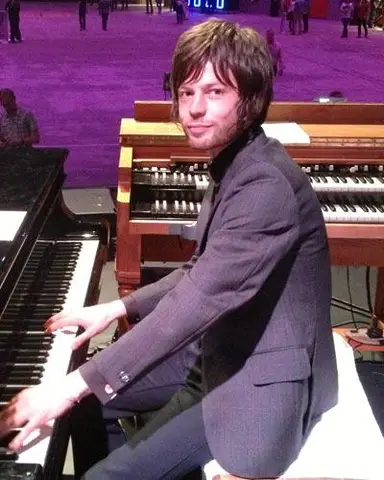
Joe Glossop explique qu'un bon jeu de Hammond commence par comprendre en quoi le rôle de l'orgue diffère de celui du piano ou des claviers, plutôt que de recréer ce que tu sais déjà.
Course preview
This lesson is part of the course Le langage authentique du Hammond pour le rock et le R&B
Watch a preview of the full course below.
Lesson transcript:
Understanding the Hammond Organ
I think what makes a good Hammond player is a fundamental understanding of the difference between keyboard instruments and a Hammond organ.
The Unique Role of a Hammond Player
It's the approach that differs your role in any outfit or context. Your contributions are quite different.
- Chorus vs. Pad:
- You can't lift a chorus with a pad on a piano.
- You just can't add the same things.
You've got to take on a different role and understand that role, rather than trying to recreate what you might already know on a piano or a keyboard.
A Fundamental Understanding
I believe it's that fundamental understanding that is essential.
- Not everyone should learn to play the Hammond organ.
- People who truly love it should pursue it.
- Hopefully, they'll gain the tools to really understand the instrument.
This understanding allows players to get the best out of the Hammond and utilize all the amazing sounds it can produce. I think people sometimes don't make the most of it when they lack this fundamental understanding.
The Inspiration Behind My Selections
All the tunes I've chosen, I selected because I love them. I have probably loved them for a long time.
- Inspiration:
- They are fundamental things that made me want to play.
- They continue to motivate me to play full-time.
This music is very much from the late 50s to the early 70s. The Hammond, really, can be traced back to Jimmy Smith, who is the obvious figure that popularized it in jazz before rock existed in the mid-50s.
Other influential artists include Bill Doggett and others before him.
The Evolution of Music
To summarize, I believe this music very much represents the style from the mid to late 50s until the early 70s. After that, synthesizers took over, and the Hammond organ gradually fell out of popularity.
About the instructor
Joe Glossop est un claviériste de Sheffield qui s'est fait un nom à l'orgue Hammond. Il occupe actuellement le poste d'organiste dans le groupe de tournée de Tom Jones, et a joué avec Van Morrison et James Hunter, ainsi qu'au piano et au Rhodes. Ses cours permettent de tirer le véritable son Hammond de n'importe quel clavier : le réglage des drawbars, le Leslie, la basse walking à la main gauche, et le vocabulaire d'accompagnement et de solo des traditions de l'orgue soul-jazz, blues et rock, de Jimmy Smith à Booker T. read more