Allman Brothers - Whipping Post (analyse)

Avec
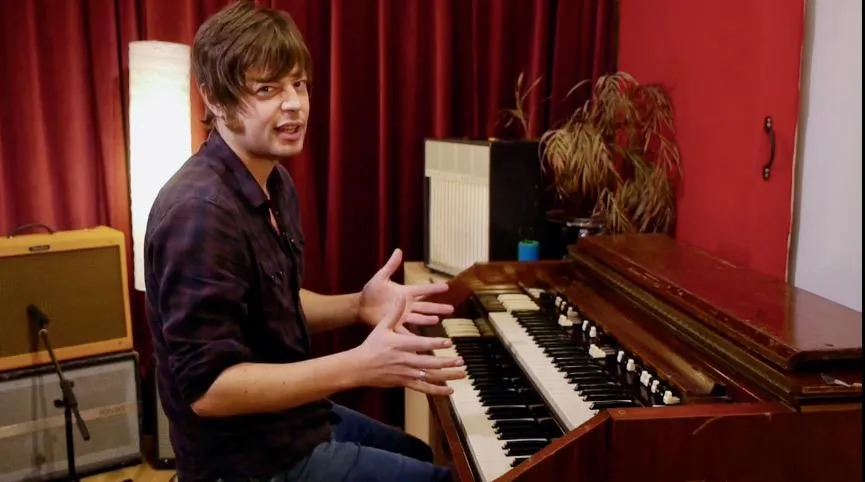
Joe GlossopJoe Glossop décortique le jeu de Hammond de Greg Allman sur Whipping Post des Allman Brothers : les réglages de tirettes harmoniques et les voicings d'accords derrière ce son épais des couplets.
Le contenu du cours
21 leçons (1h 25min) · 1 gratuites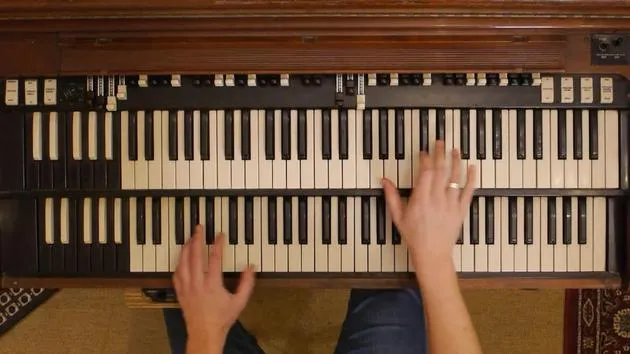
01. The Small Faces - Tin Soldier (interprétation)
1:16
02. The Small Faces - Tin Soldier (analyse)
7:03
03. Deep Purple (John Lord) - Smoke On The Water (interprétation)
1:02
04. Deep Purple (John Lord) - Smoke On The Water (analyse)
8:38
05. Allman Brothers - Whipping Post (interprétation)
1:23
06. Allman Brothers - Whipping Post (analyse)
Tu es ici8:39


Transcription de la leçon
Ullman Brothers Music Lesson
Introduction
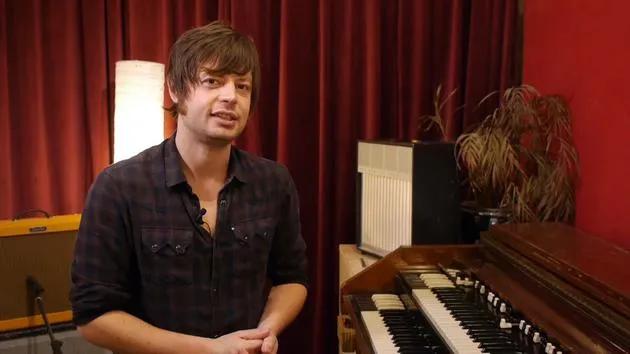
Okay, so let's have a look at a little bit of Ullman Brothers. Greg Ullman was the Hammond player in that band. Really fantastic band from Georgia, formed in the late 60s. I'm sure you've all heard of them.
Key Tracks
Their first album had a couple of great tracks on it. Dreams was the other one I was thinking of, so check that out.
Featured Song: "Whipping Post"
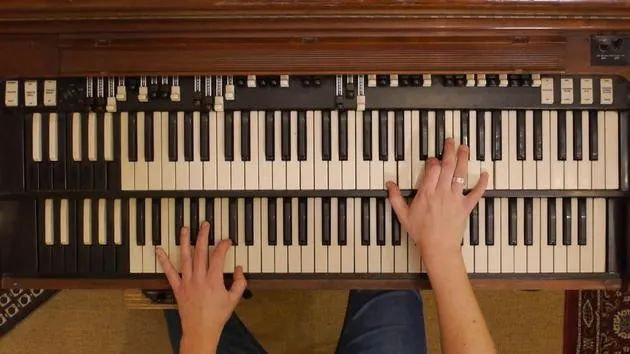
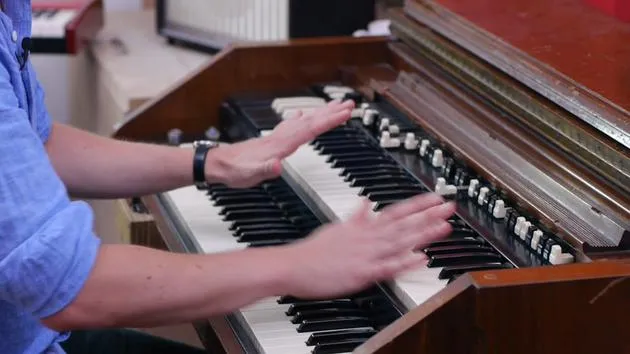
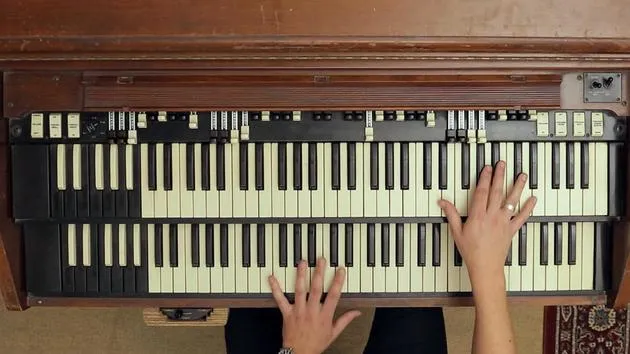
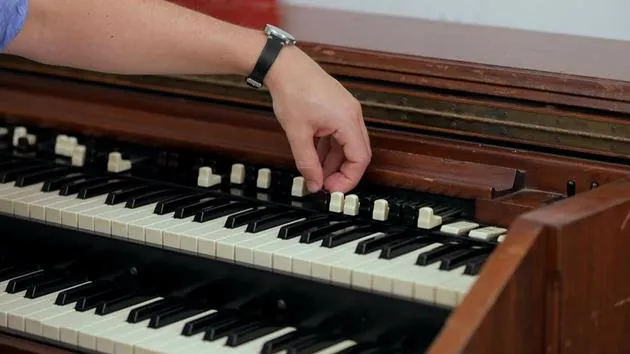
This one's called Whipping Post. It features fantastic use of the instrument. Greg Ullman liked to use a lot of the percussion and harmonics. In this, on the main bulk of chords, he employs these features effectively.
- Main Verse Sound:
- Nice bulky tone with this set of drawbars.
Chords for the Verse
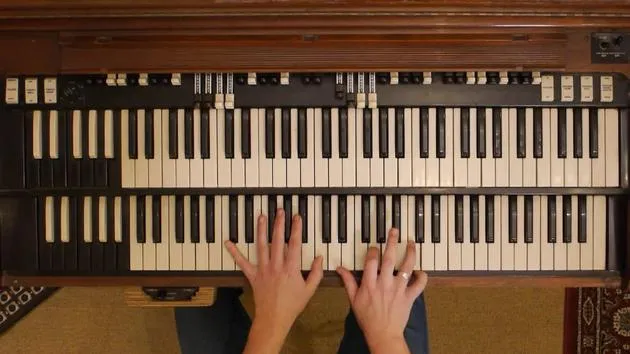
So, we're going to start there. These are the main set of chords:
- A Major
- B Minor 7
- A Minor 7 (first inversion)
Playing Technique
What you'll notice is that if you take your hand off completely, the way the organ works with the percussion feature will produce a harmonic again. If you keep one finger on, you won't get it until you release it again.
- Example:
- Hold a note: no harmonic.
- Take your hand off: you get it every time.
This is just one little feature or approach when you're playing block chords like that.
- Question for Consideration:
- Do you want the percussion or not between chords?
- If you want to vary it, you might want to hold a note on so you don't have it every time.
Greg uses that technique very well.
Chords for the Chorus
For the chorus, I'll just quickly show you the chords:
- Switching to a more gospel kind of tone:
- D7
- E7
Note: I've phrased that quite broadly. You can even add a left hand in there.
Time Signatures
Now, let's put this in context:
- Intro: 11/8 (which is quite unusual)
- Vocals: Switches to 12/8 (a lot more regular)
This band had a quite advanced musical style, with a really great rhythm section. They referenced things that most rock bands wouldn't have done at that time.
Verse to Chorus Progression
Let's look at the verse and how that progresses into the chorus and the changes in sound between the two.
- Bass Line:
- We can put a basic bass line in.
Up to the break, there's a little guitar part that comes in, which is the main bulk of the chorus until we go back into 11/8.
Switching Sounds
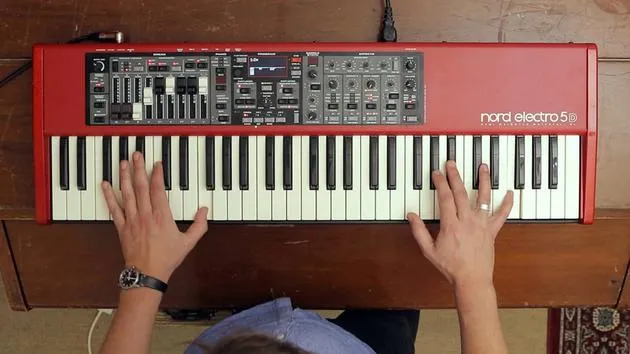
All that is required is changing from this preset to the B flat and switching from slow to fast on the Leslie.
- Note:
- If you're putting in a bass line and playing on your own, you'll need to jump up, switch those settings, and drop the bass.
Main Chorus Chords
So, we land on the D chords with the two seven chords, and then we hit the main chorus with:
- Chords:
- A, D, and C.
You can phrase them however you like; it's quite a full-on, in-your-face chorus.
Guitar Riff & Timing
Next, we have this guitar riff that leads you into a break section. When we come back in 11/8, you'll be following the guitar line.
After the break, you come in with a really cool line.
Contextualizing the Sound
To put this in context, I'm using this bass sound again, classic sort of 16 and 8 with a bit of the five and a third, maybe up to three or four just to give it a bit of mid.
Then, you're back to the verse.
Summary of Key Parts
To sum up those parts:
- Features:
- Percussion set, first four drawbars (with a bit of bass taken out around number four, about halfway).
- Fuller sound for the chorus (D7 and E7).
Over here, I've got the C3 Broto on the top manual, but not on the bottom for the bass. Most of it is on slow Leslie, except for the chorus, which I switch.
Final Notes
For the guitar line: you're just holding the A and walking down 7, 6, 5, 4 underneath the A, and then following the chords up.
You really do have to listen to the record to get the perspective on that and how it sits in.
Listen, check out the record. Check out the whole record; it's a very good album.
21 leçons
1h 25m de leçons vidéo structurées
Fonctions vidéo avancées
Ralentissez, bouclez un passage, suivez la partition
Mobile, tablette et ordinateur
Pratiquez où vous voulez
Satisfaction garantie à 100 %
Garantie remboursement 30 jours
Rencontrez votre guru
Rencontrez votre guru
Joe Glossop est un claviériste de Sheffield qui s'est fait un nom à l'orgue Hammond. Il occupe actuellement le poste d'organiste dans le groupe de tournée de Tom Jones, et a joué avec Van Morrison et James Hunter, ainsi qu'au piano et au Rhodes. Ses cours permettent de tirer le véritable son Hammond de n'importe quel clavier : le réglage des drawbars, le Leslie, la basse walking à la main gauche, et le vocabulaire d'accompagnement et de solo des traditions de l'orgue soul-jazz, blues et rock, de Jimmy Smith à Booker T.