



Analyse par András Schiff du No. 4 Moderato
Lesson time: (18min 2sec)
Course preview
This lesson is part of the course Schubert - Moments Musicaux nos 1, 3 et 4
Watch a preview of the full course below.
Lesson transcript:
Music Lesson
Introduction
And the next one, please. It's the same movement, but it's a different expression. This is not cozy; this is very tragic.
Expression and Emotion
- Please, you played it also because if you think of Bach, you know. But it's something else.
- This is mysterious. It shouldn't be so clear because you have harmonies.
- When you play it like this, you hear the "La Cremosa" of Mozart's Requiem.
Playing Techniques
- Again, the Neapolitan sixth. Please, it's too many fingers.
- Play me a choral.
- Yeah, very good.
- Now play it as it's written.
Replaying the Piece
- Okay, now I play again.
- The left hand again: this is too staccato; make this one a little longer.
- Very much better.
Character of the Piece
Now, just think of it:
- The tone fall, the character of the piece, and what we had.
- The first one, you see sunlight, sunshine. This is very dark, not just because it's in minor.
- And then it gets desperate. This is the most tragic piece of the Moma Musical.
Tempo and Rhythm
Okay, let's go from when this was jumping.
- Do more of that duck till "yum yum" phrase.
- Tempo, tempo, tempo. Very strict, but I would not slow down because you spoiled the surprise.
- Yum pom pimp. Again, the silence. Silence is the most beautiful thing in music.
Establishing a Rhythm
- But why a new tempo? I think the same tempo.
- Now get this: the movement of the trio section, the middle part, has a little accent on the syncopation.
- It's misleading because the listener hears: 1, 2, 3, 4; 1, 2, 3, 4; 1.
- But Schubert says 1, 2, 3 for 1, 2, 3; for 1, 4.
- We must establish this rhythmic pattern. After we can talk about details.
Playing Details
- A little more accent on the syncope: 1, 2, 3, 4; 1, 2, 3, four; 1, 2, 3, four.
- Okay, and now play legato.
Imagining the Scene
What's legato?
- Now try to think that the C sharp minor section is less Schoenam?llerin and more winterize.
- We are out in the cold, but we would like to be in a warm room.
Transition in Playing
- And this is the warm room.
- In your dream, you sit too long on the middle note. That's very good.
- There is a little bump that I don't need, you know, because it has to have a wonderful lilt swing.
Left Hand Technique
This is also your left hand is too heavy there. Be careful.
- So long. Too long.
Continuing with the Piece
Let's go on now. Very good.
- Now this is a question mark and answer.
- Don't do that; it's not a clever finger.
- Can you reach that? Yes, of course. Very good.
Theme of Wandering
It's one of those songs of wandering, you know.
- He's an unhappy wanderer.
- After coming back from the warm room, which was only in his dream, we are back on the road in ice.
- Sing. No, silence. This is so poetic.
Concluding Thoughts
And again, he thinks of the warmth, but only for two bars. Then it's interrupted, and then there is this epilogue.
- But there is no hope.
Play this again.
- But yes, it's beautiful.
- This is again: you have such a drama, so much happening in so little time.
- You have to put all the emotions and all the feelings within that time frame.
But it was very good.
Thank You
Now, thank you very much.
About the instructor
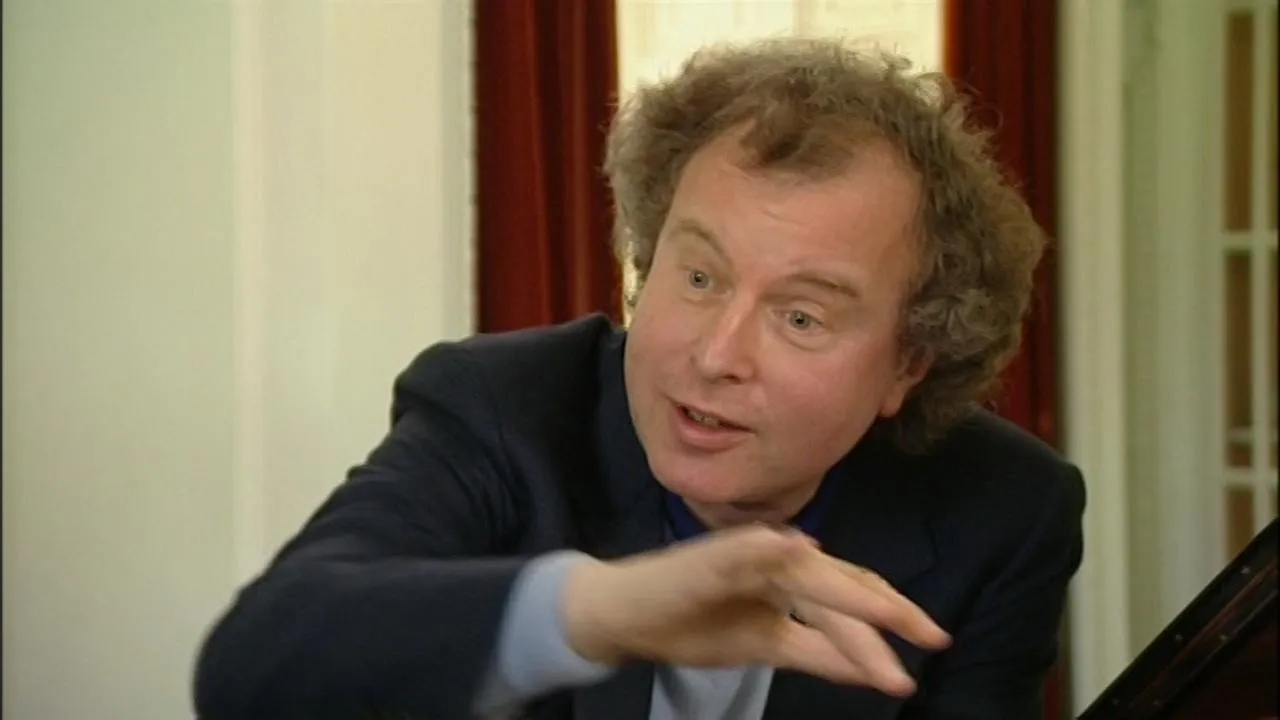
András Schiff est l'un des membres les plus éminents d'une génération de pianistes hongrois nés dans les années qui ont suivi la Seconde Guerre mondiale, aux côtés d'artistes tels que Zoltán Kocsis, Dezso Ránki et Jenő Jandó. De ce groupe remarquable, Schiff est celui qui a acquis la plus grande réputation internationale, non seulement en raison de sa décision de mener sa carrière hors de Hongrie, mais aussi grâce à son sens du toucher finement nuancé et à une mémoire impressionnante qui lui permet de présenter, en concert et sur disque, de larges pans de l'œuvre d'un compositeur. Schiff est né à Budapest le 21 décembre 1953 et a étudié avec le compositeur hongrois Pal Kadosa et Ferenc Rados (qui ont également enseigné à Kocsis et Ránki), ainsi qu'avec le claveciniste anglais George Malcolm. Il fait ses débuts à Budapest à l'âge de 19 ans, suivis d'apparitions en concert dans toute l'Europe et aux États-Unis. Sa réputation s'est accrue avec des prestations primées au concours de Moscou en 1974 et au Leeds Festival en 1975. András Schiff travaille avec la plupart des grands orchestres et chefs internationaux, mais il dirige lui-même la plupart de ses interprétations des concertos pour piano de Bach, Beethoven et Mozart. En 1999, il a créé son propre orchestre de chambre, la Cappella Andrea Barca, avec lequel il travaille chaque année comme chef et soliste, tout comme avec la Philharmonia Orchestra et le Chamber Orchestra of Europe. Le style de Schiff, où un toucher d'une sensibilité peu commune s'allie à une attention à la clarté contrapuntique, a fait de lui l'un des plus grands interprètes de Bach de notre époque. Il a enregistré l'intégrale de la musique pour clavier de Bach, ainsi que l'intégrale des sonates et des fragments de sonate de Franz Schubert, dont la musique pour clavier introspective convient bien au tempérament de Schiff. Il a achevé un cycle des sonates de Beethoven chez ECM en 2009, et il a reçu en 2011 le Prix Schumann de la ville de Zwickau pour son interprétation et sa promotion de la musique de Schumann. En 2001, Schiff a entrepris de revisiter et de réenregistrer les œuvres de Bach. Outre les œuvres romantiques d'Europe centrale attendues, la musique de Béla Bartók et de Leos Janácek occupe une place de choix dans le répertoire de Schiff. Dans ses cours MusicGurus sur les Moments Musicaux nos 1, 3 et 4 de Schubert, la Partita no 2 de Bach et les dernières sonates pour piano de Beethoven, Schiff te fait entrer dans cet univers interprétatif — en partageant sa façon de penser la conduite des voix, le toucher, la clarté contrapuntique et la structure, pour que tu puisses apporter une réelle profondeur et une véritable compréhension à ces œuvres au clavier. read more