



Explicación y demostración del ejercicio cuatro
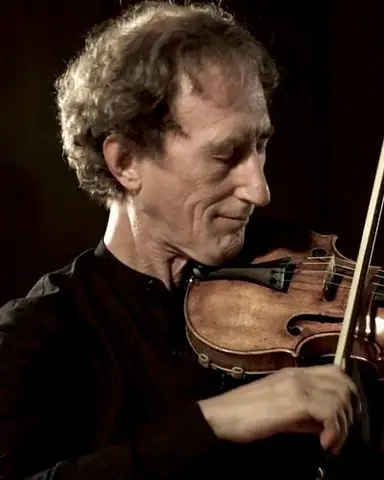
Lesson time: (18min 48sec)
Course preview
This lesson is part of the course The Secrets of Tone Production, Parte 4: ejercicios fundamentales finales de sonido
Watch a preview of the full course below.
Lesson transcript:
Speed Exercise in Bowing Techniques
The speed exercise uses exactly the same divisions as the pressure exercise. But here, the bow moves fast or slow, instead of heavy or light. As you can hear, there's quite a difference. Let's look at it in detail.
Key Techniques
-
Fast Part of the Stroke:
- Use more bow and very slightly more pressure.
-
Slow Part of the Stroke:
- Use less bow and less pressure.
Tip: Keep the speed and pressure exercises as different from each other as possible. Use as little extra pressure as you can during the fast part of the stroke. Just enough to maintain good contact with the string. Float the bow along the string horizontally rather than digging in vertically.
Practice Suggestions
Let's try it again. Just a little more weight you need, don't you?
Rhythm Exercise
- Feel the rhythm, Oliver:
- It goes fast, slow, fast, slow:
- Fast, Slow
- Fast, Slow
- It goes fast, slow, fast, slow:
That's very good.
Two in One Bow
- Do two in one elbow:
- Fast, Slow
- Fast, Slow
- Fast, Slow
Just a little heavier at the point. It's like a whipping motion.
Instructions:
- You do that just at the moment when you're going: fast, slow.
- But remember, it's the opposite of what you want.
Transition Practice
- Coming back, now do three on the next down bow:
- Fast, Fast
- Dum, bum, bum, bum, bum, bum, bum, bum, bum, bum.
That's good. Now do four.
Caution:
- Be careful when you change bow at the heel. There's a kerfuffle there.
- Fast, Slow, Fast, Slow, Fast, Slow.
Well done!
Speed Patterns
- Next set:
- Fast, Slow, Fast, Slow.
- Coming up is six at:
- Bum, bum, bum, bum.
Count:
- One, two... The feeling should be one of a long string, not a long string this way.
That's better.
Bow Division
- Say "bow" this time.
- Yes, but this seems too much like the pressure exercise to me.
Technique Reminder:
- Just go along, along, along.
- Start on the string, or from the air? You know, you're doing this.
Focus on Execution
Look at this: just that, and then go 4, 5.
- Here's the middle:
- You want 1, 2, 3, 4, 4, 5, 6.
That's it! Fast, Fast, Fast.
Increasing Difficulty
- Now do 8:
- 1, dum, bum, bum, bum, bum, bum, bum.
- Yeah, go along, along, along, along, not down in, down in, down in.
Note:
- Don't do it with your head either. That's better. Just the bow.
Instrument Practice
Can I borrow your instrument? What you want to do is get it ringing.
- Listen to this:
- Play little near the bridge.
Now, for fast, slow, fast, slow:
- Little near the bridge, Olivia.
Reminder:
- Don't nod while playing. Keep the violin still.
Chamber Music Tip
If you want to bring somebody in while playing chamber music, watch the scroll.
- Technique:
- Line it up with an object in front of you and try to keep it in exactly the same place.
Practice:
- Fast, slow, fast, slow, fast, slow.
Down Bow Considerations
-
At the beginning of the down bow, your speed pattern should be fast, slow, right from the beginning.
-
There's still a moment on the down bow at the point. So:
- Fast, slow, slow to the end.
Now slow. That's great!
Advanced Techniques
I'll show you something else here:
- If you go fast, slow, stop. Do it like that.
Goal:
- We want total purity; don't let it sound like "bong."
Joining Techniques
- Now join it together.
- You must stop the bow before you go the other way.
Final Note:
- Ensure you're not going slow, fast, slow on the down bow.
Bow Control and Purity
- Keep practicing to ensure a pure sound from the first note to the last.
- Fast, slow, fast, slow, and be careful with your positioning near the bridge.
Summary of Key Points
- It's essential to differentiate fast from slow.
- Use all the bow:
- "You pay for all the hair; you may as well use it all."
Make sure to play under your hand and play right to the point.
Final Practice Exercise:
- Feel the pulse. It's fast, slow, and fast, slow.
Let's do it one more time, and I'll subdivide it for you:
- Bom, bom, bom, ...
Exactly, Olivia! Can you make more difference between the fast and the slow?
Thank you!
- Remember to play as close to the bridge as possible; keep the bow parallel.
That's it! Good progress.
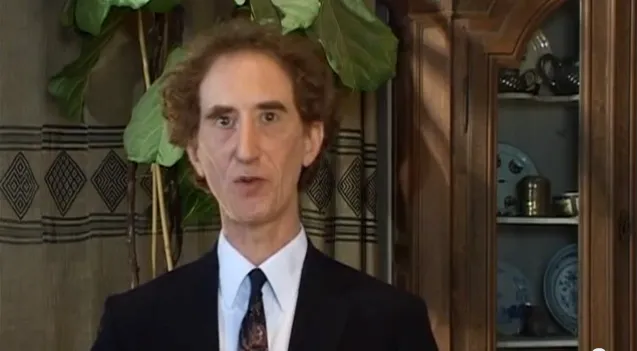
About the instructor
Simon Fischer disfruta de una distinguida y polifacética carrera como intérprete, pedagogo y artista de grabación. Ha actuado por todo el mundo como recitalista y ha grabado tres Sonatas de Brahms, una grabación que recibió grandes elogios en la revista Gramophone. Simon está reconocido como uno de los profesores de élite del mundo. Es profesor en la Guildhall School of Music y ha ocupado cargos en la Yehudi Menuhin School, la Wells Cathedral School y la Purcell School, y durante 15 años fue profesor visitante en la Royal Scottish Academy of Music. Tras estudiar en Londres con Yfrah Neaman y en Nueva York con Dorothy DeLay, el enfoque de Fischer une los mejores elementos de las tradiciones violinísticas francesa, rusa y estadounidense. La obra publicada de Fischer ejerce una gran influencia en la enseñanza del violín. Autor de artículos para la revista The Strad desde 1991, sus columnas mensuales han atraído seguidores en todo el mundo. Publicados por Edition Peters, sus libros de técnica Basics and Practice (traducido al coreano, italiano y alemán), Scales y The Violin Lesson, así como el DVD The Secrets of Tone Production (ahora disponible en streaming a través de MusicGurus), se han convertido en referencias en muchos continentes. Su libro y DVD Warming Up fue descrito por la revista The Strad como "23 páginas de oro técnico puro". En 2014, Simon Fischer recibió el premio de la European String Teachers Association "en reconocimiento a toda una vida de contribución a la enseñanza de instrumentos de cuerda". En su curso de cuatro partes Secrets of Tone Production, Simon te guía para que conozcas tu instrumento y luego trabajes sus ejercicios fundamentales de sonido paso a paso, de modo que puedas producir un sonido más rico, más controlado y más hermoso con el violín. read more