



Cuidado en el cambio de arco
Qué incluye el curso
8 lecciones (0h 59m) · 1 gratis
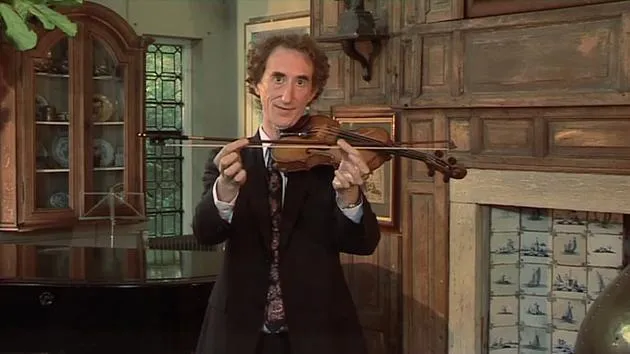
Transcripción de la lección
Music Lesson
Bow Technique
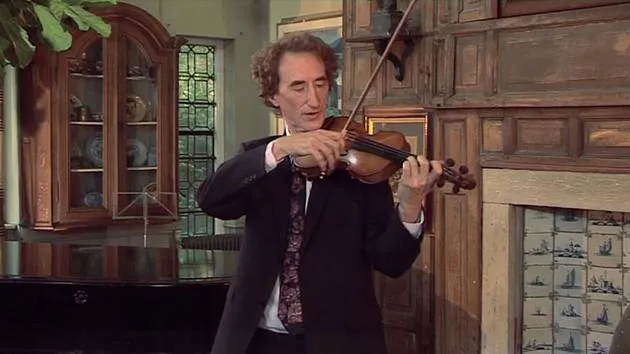
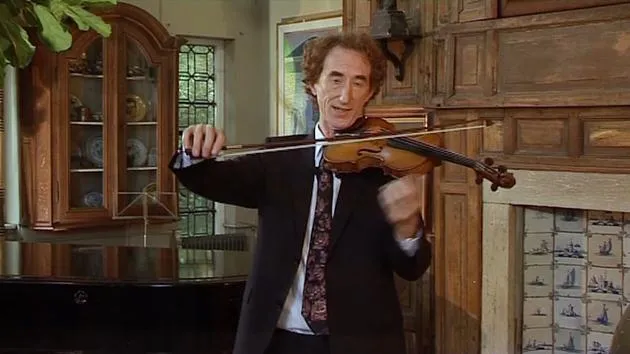
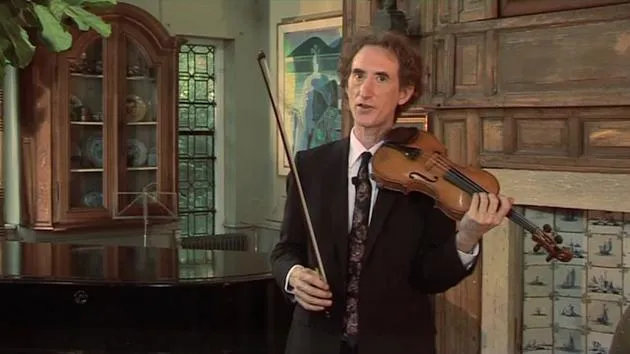
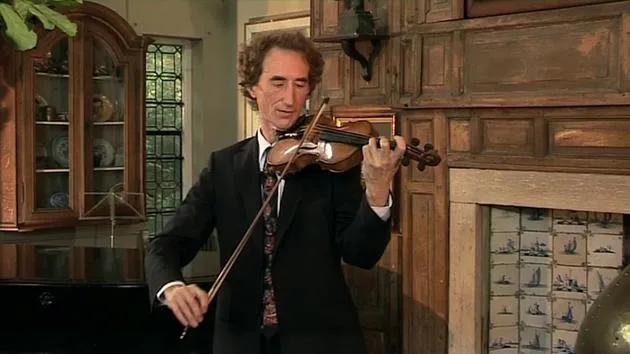
The last part of the bow, before you change from up to down or down to up, is the place where you have to be extra careful. The danger is that you play forte again just before the change of bow, at the heel or at the point.
Remember:
- The last pattern in the bow then becomes heavy, light, heavy instead of heavy, light, which is what you want.
Practice Focus
Is this a good thing to practice?
Is this?
That was good.
Yes. Can you focus on non diminuendo?
- So it goes forte, piano.
- That's it.
- Forte, piano.
Awareness of Dynamics
What you need to be aware of is playing:
- Forte, piano.
- Forte, forte, piano, piano.
Right. Now then, what we need to achieve is a totally pure sound at the beginning of the bow. For instance, this one coming up here.
- That's it. That's it. Yes.
The thing is, if you think about it, if the bow doesn't move, however hard you press, you will not make a single sound. The only sound that can come is when the bow is moving.
Bow Movement and Sound
So when you're beginning with the heel, you're moving the bow too slowly and too heavily, and you get the...
There, now, there.
Now, can you do the same thing in forte?
Because we want to go:
- Forte, piano.
- Forte, piano.
- Forte, piano.
Now here, be careful. Well done.
Thumb Position
I do think you should bend your thumb in:
- Forte, piano.
- Forte, piano.
Still more subito. That's it. Now do the same on the up bow. No, on the up bow, you...
Diminuendo.
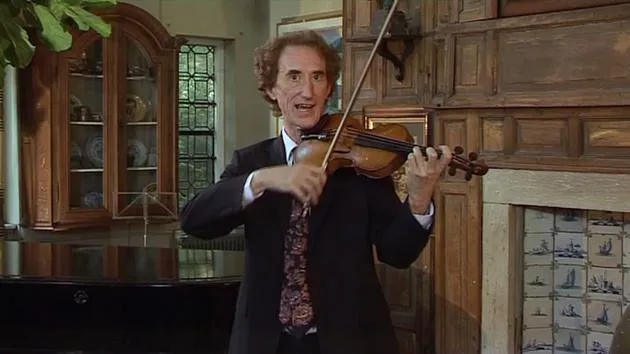
And again, you can see these things visually. You can see the wood is down like that. It gradually comes up on the up bow, whereas on the down bow, it springs up.
- Forte, piano.
- Now here, careful there.
That's what you need to do:
- Piano.
- That's it.
- Forte, piano.
- Bravo.
- Piano. Bravo.
- That's good.
Key Points to Remember
The place to be careful is the end of the up bow before going to the down. You don't want to suddenly go heavier or faster.
Well done. Now release.
- Careful, careful.
- And forte, piano.
- Release.
Yeah. You know, Oliver, you don't want to go too fast because there is the speed exercise, which is different from the pressure exercise.
So remember:
- You don't want to just go like that.
- You want to go heavy and then light.
Practicing Changes
Good. Now do two in one bow.
You see? You see just there, the change?
Can you just practice once?
- Light, heavy.
- Light, heavy.
Just right at the heel.
Right here?
Yeah, that's it.
Try it here.
- Light, heavy.
Can you get that at the heel? Get it as good at the heel as you did it at the point?
Yeah. Okay.
Continuity in Sound
Then forte, piano. Keep it carefully there.
- Forte, piano.
- Careful here.
- Forte, forte, piano, forte.
That's it. Now do two in one bow.
Stay a little nearer the bridge.
Turn around this way.
- That's good.
- Forte, piano.
- Forte, piano.
- Forte, piano.
Advanced Practice
Now three:
- Do come back to the heel because you're not using all your bow. Yes.
- Forte, piano.
- Forte, piano.
- Forte, piano.
- Forte, piano.
That's it. Try four, four.
- And keep it continuous.
- Heavy, heavy.
Do come right to the heel next time.
- Heavy, light head.
- Now 6:
- 1, 2, 3, 4, 5, 6.
- Keep a continuous sound.
That's it. Very good. Now coming up is 8.
- So you go 1, 2.
- Keep it continuous.
- That's it. Go right down there.
-
- 1, 2.
Now do 9:
- 1, 2, 3.
That's the way.
Do 12:
- 1, 2.
Okay. - 1, 2, 3.
- 1, 2, 4.
Threes are 12.
- So 1, 2, 3.
- Three foes is 12 even. Aha.
Rhythmic Consistency
Don't give a big accent on each of the four.
- Group of four.
Look at this. Listen to this. - You hear the groups, but make it even.
Yes.
You don't want to do things like 1, 2, 3. Just even here.
- Just seamless.
- Do 16. Do four fours.
So one.
- Yeah, do start right here.
- One.
- 1, 2, 3, 4.
Heavy.
- Let's go heavier, Oliver.
- 2, 3, 4.
- Yes.
Final Exercises
Can you do five?
- 1, 2, 3, 4, 5.
- Happy.
- Heavy.
Each one:
- You want to hear each one against this background.
That's it.
4, 5:
- 1, 2, 3, 4, 5.
Well done.
Okay, well done.
8 lecciones
0h 59m de lecciones en vídeo estructuradas
Funciones de vídeo avanzadas
Ralentiza, repite un pasaje, sigue la partitura
Móvil, tablet y ordenador
Practica donde quieras
Garantía de satisfacción 100%
30 días de garantía de devolución
Conoce a tu gurú
Conoce a tu gurú
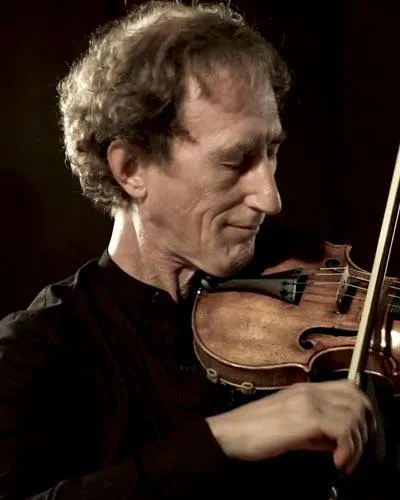
Simon Fischer disfruta de una distinguida y polifacética carrera como intérprete, pedagogo y artista de grabación.
Ha actuado por todo el mundo como recitalista y ha grabado tres Sonatas de Brahms, una grabación que recibió grandes elogios en la revista Gramophone.
Simon está reconocido como uno de los profesores de élite del mundo. Es profesor en la Guildhall School of Music y ha ocupado cargos en la Yehudi Menuhin School, la Wells Cathedral School y la Purcell School, y durante 15 años fue profesor visitante en la Royal Scottish Academy of Music. Tras estudiar en Londres con Yfrah Neaman y en Nueva York con Dorothy DeLay, el enfoque de Fischer une los mejores elementos de las tradiciones violinísticas francesa, rusa y estadounidense.
La obra publicada de Fischer ejerce una gran influencia en la enseñanza del violín. Autor de artículos para la revista The Strad desde 1991, sus columnas mensuales han atraído seguidores en todo el mundo. Publicados por Edition Peters, sus libros de técnica Basics and Practice (traducido al coreano, italiano y alemán), Scales y The Violin Lesson, así como el DVD The Secrets of Tone Production (ahora disponible en streaming a través de MusicGurus), se han convertido en referencias en muchos continentes. Su libro y DVD Warming Up fue descrito por la revista The Strad como "23 páginas de oro técnico puro".
En 2014, Simon Fischer recibió el premio de la European String Teachers Association "en reconocimiento a toda una vida de contribución a la enseñanza de instrumentos de cuerda".
En su curso de cuatro partes Secrets of Tone Production, Simon te guía para que conozcas tu instrumento y luego trabajes sus ejercicios fundamentales de sonido paso a paso, de modo que puedas producir un sonido más rico, más controlado y más hermoso con el violín.







