



Sentir el impulso del arco
Qué incluye el curso
11 lecciones (1h 7m) · 1 gratis
01. Calienta para el ejercicio uno con un sencillo ejercicio de arcada recta
Lección gratis1:53
02. Explicación y demostración del ejercicio uno
27:16
03. El primer ejercicio con más detalle
12:03
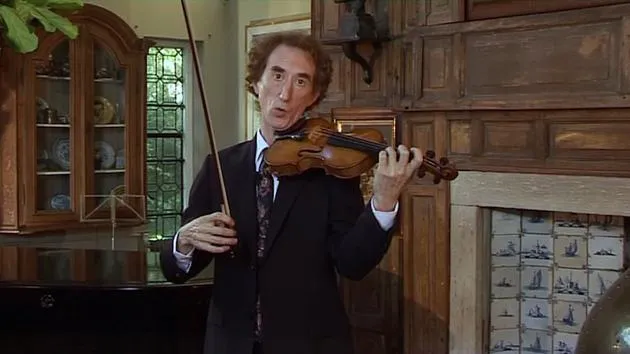
04. Aislar los elementos
3:16
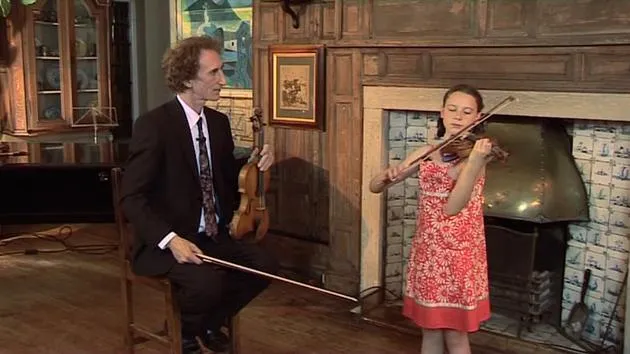
05. Tocar con musicalidad
4:41
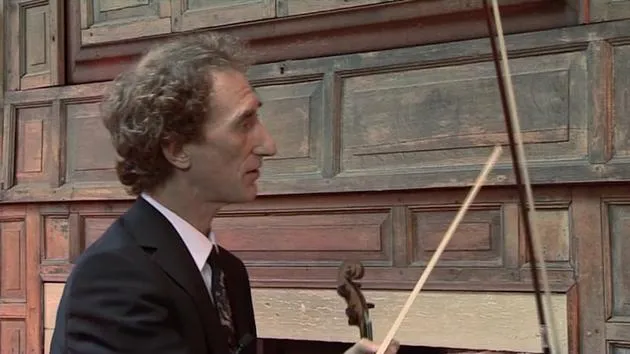
06. Cómo hacer el cambio de arco perfecto
7:03
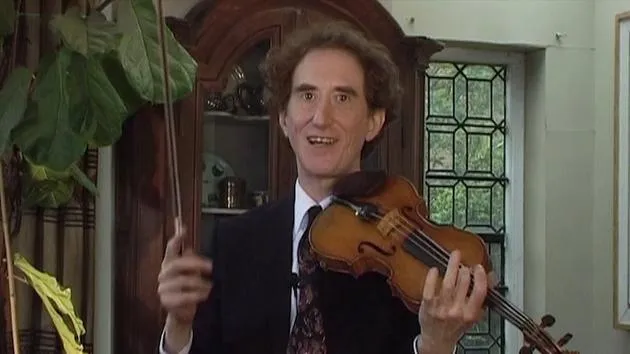
07. No existe un cambio de arco inaudible
1:22
08. Sentir el impulso del arco
Estás aquí3:18
09. Añadir los dedos de la mano izquierda
1:15
10. Aplicar la práctica del punto de contacto a los pasajes
2:53
11. Sonar tan bien como el mejor intérprete del mundo, ahora mismo
2:08
Transcripción de la lección
Understanding Bow Technique
Evenness of Speed, Pressure, and Sound
Although evenness of speed, pressure, and sound point is something that most players need to work on, it isn't so difficult to find. Here's something that really helps:
The Arm vs. The Bow
-
Does the arm lead the bow, or does the bow lead the arm?
Most people answer that the arm leads the bow. After all, the bow can't move itself. Yet, when there's a feeling of the hand going along with the bow and a sense of allowing the bow to travel with its own momentum, many strokes work much better.
-
The Bow's Power:
The bow really does seem to have its own power to move. Look at the difference:
- If you hold the bow and try to move it evenly, you get one result.
- If instead you go with the bow, if you follow the bow, you get a different result altogether.
Embracing Momentum
Imagine that the feeling of momentum in the bow is real, like the natural bounce when the bow plays spiccato. The bow knows how to bounce out of the string and does so with a feeling of natural momentum.
- Find the Same Feeling:
- Try to discover this same feeling in your strokes along the string.
- Imagine that if you were to take your hand away, the bow would simply keep going on its own in the same direction and at the same speed.
This brings a wonderful ease and smoothness into every bow stroke. This is one of the things that makes a significant difference in achieving silky smoothness and evenness of the bow.
Following vs. Guiding
The sense of the hand following the bow is an entirely different feeling from that of holding the bow and trying to guide it by pushing and pulling it yourself.
-
Question Time:
"Yes. Yes, Tim. The question is: does the arm lead the bow, or does the bow lead the arm? And what do you think?"
"Yeah, so because the bow can't play itself. Yes. But you can have a feeling that it does play itself because there's such a thing as momentum. And you can go with the bow. You can follow the bow."
Practical Exercise
Watch this, Tim:
- If I hold the bow and try and do it all myself, look at this.
- But if I follow the bow and let it go with its own momentum, then it's like this: I go with the bow.
Key Takeaway:
Don't hold the bow and then do things with it. The bow knows how to play. Go with it and see what happens.
- Conclusion: "Oh, lovely! And deep in the string. Deeper, even. And feel the low. Oh wow. Bravo. Bravo!"
11 lecciones
1h 7m de lecciones en vídeo estructuradas
Funciones de vídeo avanzadas
Ralentiza, repite un pasaje, sigue la partitura
Móvil, tablet y ordenador
Practica donde quieras
Garantía de satisfacción 100%
30 días de garantía de devolución
Conoce a tu gurú
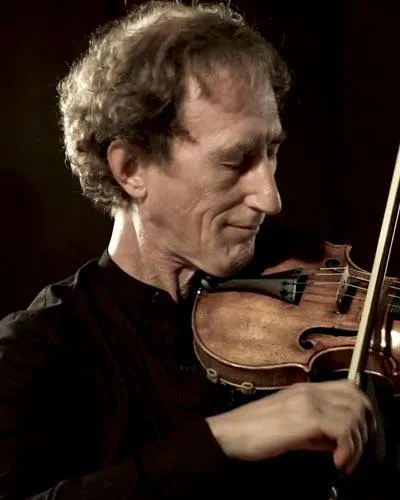
Conoce a tu gurú
Simon Fischer disfruta de una distinguida y polifacética carrera como intérprete, pedagogo y artista de grabación.
Ha actuado por todo el mundo como recitalista y ha grabado tres Sonatas de Brahms, una grabación que recibió grandes elogios en la revista Gramophone.
Simon está reconocido como uno de los profesores de élite del mundo. Es profesor en la Guildhall School of Music y ha ocupado cargos en la Yehudi Menuhin School, la Wells Cathedral School y la Purcell School, y durante 15 años fue profesor visitante en la Royal Scottish Academy of Music. Tras estudiar en Londres con Yfrah Neaman y en Nueva York con Dorothy DeLay, el enfoque de Fischer une los mejores elementos de las tradiciones violinísticas francesa, rusa y estadounidense.
La obra publicada de Fischer ejerce una gran influencia en la enseñanza del violín. Autor de artículos para la revista The Strad desde 1991, sus columnas mensuales han atraído seguidores en todo el mundo. Publicados por Edition Peters, sus libros de técnica Basics and Practice (traducido al coreano, italiano y alemán), Scales y The Violin Lesson, así como el DVD The Secrets of Tone Production (ahora disponible en streaming a través de MusicGurus), se han convertido en referencias en muchos continentes. Su libro y DVD Warming Up fue descrito por la revista The Strad como "23 páginas de oro técnico puro".
En 2014, Simon Fischer recibió el premio de la European String Teachers Association "en reconocimiento a toda una vida de contribución a la enseñanza de instrumentos de cuerda".
En su curso de cuatro partes Secrets of Tone Production, Simon te guía para que conozcas tu instrumento y luego trabajes sus ejercicios fundamentales de sonido paso a paso, de modo que puedas producir un sonido más rico, más controlado y más hermoso con el violín.







