



Explicación y demostración del ejercicio uno
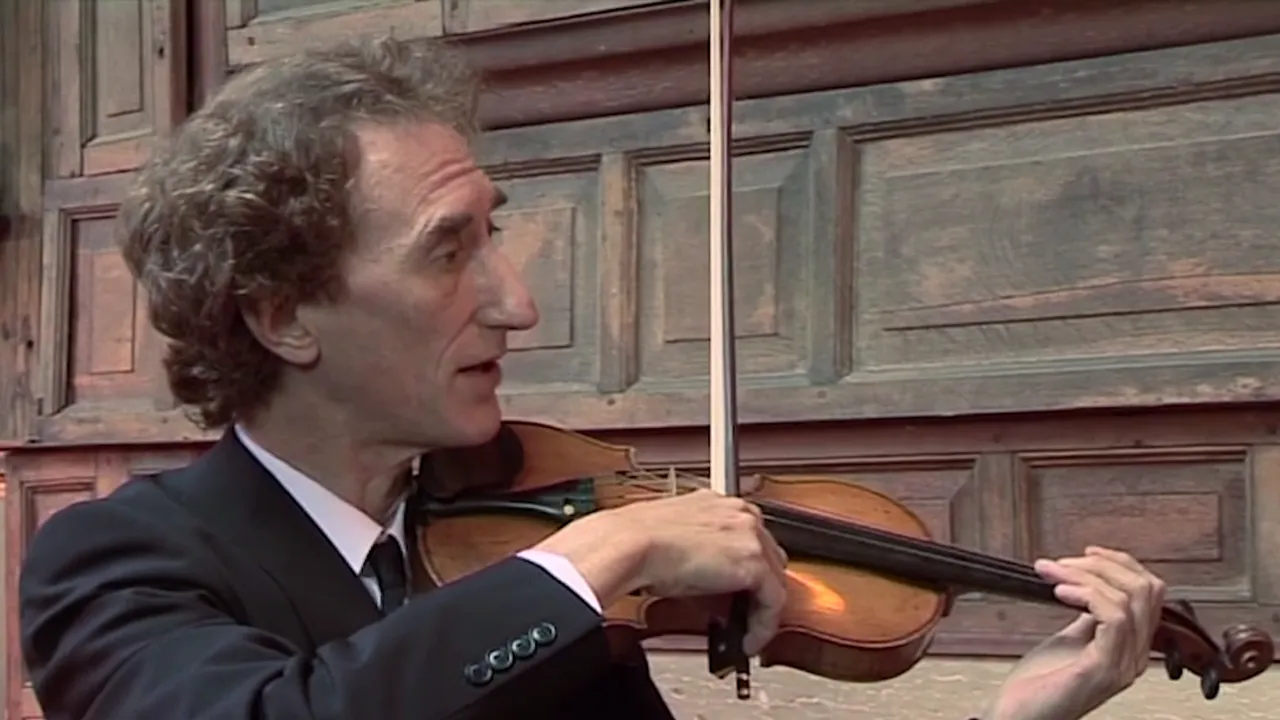
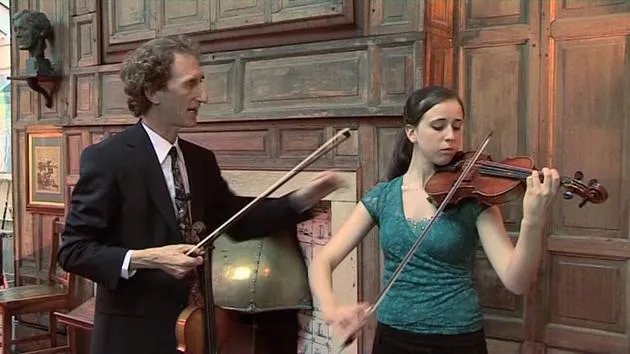
Simon Fischer demuestra el primer ejercicio de sonido fundamental: trazar arcadas completas y uniformes manteniendo constantes la velocidad, la presión y el punto de contacto para lograr un sonido de cuerda puro.
Qué incluye el curso
11 lecciones (1h 7m) · 1 gratis
01. Calienta para el ejercicio uno con un sencillo ejercicio de arcada recta
Lección gratis1:53
02. Explicación y demostración del ejercicio uno
Estás aquí27:16
03. El primer ejercicio con más detalle
12:03
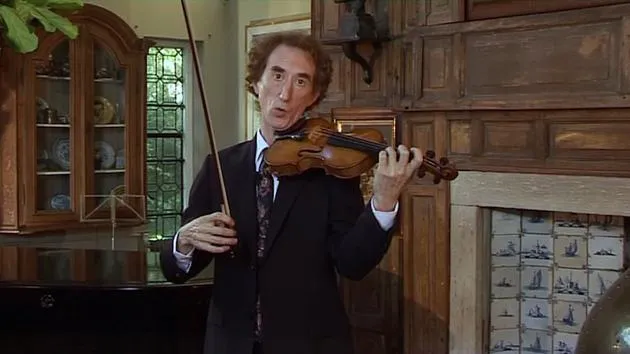
04. Aislar los elementos
3:16
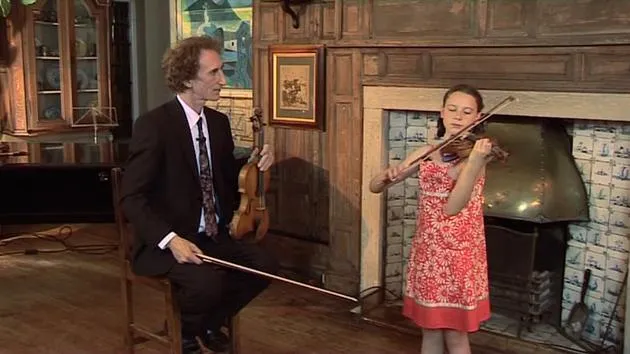
05. Tocar con musicalidad
4:41
06. Cómo hacer el cambio de arco perfecto
7:03
07. No existe un cambio de arco inaudible
1:22
08. Sentir el impulso del arco
3:18
09. Añadir los dedos de la mano izquierda
1:15
10. Aplicar la práctica del punto de contacto a los pasajes
2:53
11. Sonar tan bien como el mejor intérprete del mundo, ahora mismo
2:08
Transcripción de la lección
Music Lesson: Bowing Technique
This exercise is the starting point for all work on sound and all work on the bow in general.
Key Factors
Each of the three factors, speed, pressure, and sound point, must remain completely constant and even.
The Exercise
- Objective: Draw whole bows up bow and down bow continuously, focusing on one sound point at a time.
- Adjust: Speed and pressure until the string vibrates at its widest and freest.
The aim is simply to:
- Learn the feel of the string at each distance from the bridge.
- Find the tones, achieving the perfect balance of speed, pressure, and sound point for a totally pure sound.
Important Notes:
- The string should vibrate freely.
- The instrument resonates as if the bow and string work together in perfect contact at each sound point.
Step-by-Step Process
- Begin without vibrato.
- Experiment with speed and pressure until you're sure the string is vibrating widely.
- Add vibrato once you're confident with the above adjustments.
Focus on Evenness
- The more even it is, the more under control it is.
- To create an even tone, the factors must be consistent:
- Speed: Must be even
- Pressure: Must be even
- Sound Point: Stay on one sound point.
Visualize:
- Imagine a needle on a dial in a recording studio, flickering up and down as the volume increases and decreases with changes in speed and pressure.
- Aim to keep everything so even that the needle stays absolutely steady.
Listening and Adjustments
-
Tuning: If the D is just a fraction out of tune with the open string, you will hear a hard edge on the sound.
- Listen to this hard edge:
- "Listen to the timbre. That's much better."
- Listen to this hard edge:
-
Control: Maintain your bow angle to avoid extraneous noises and keep sound constant:
- The speed of the bow mustn't change.
- The pressure mustn't change.
- The sound point mustn't change.
Moving Through Sound Points
-
Sound Point 5:
- Faster, slightly flatter.
- Lighter, stay on sound point five.
- "Vibrate, brother."
-
Sound Point 4:
- Without vibrato.
- Lighter and faster.
- "Isn't it interesting? You make it lighter, but it doesn't get quieter. It gets more radiant."
-
Sound Point 3:
- Stay on one sound point.
- Watch the width of the string vibration.
- Slowly drop pitch slightly while maintaining control.
-
Exploration:
- Explore sound limits.
- Increase resonance and vibration.
Conclusion of the Exercise
- Divide the playing area into five sound points.
- Sound Point 5: Near the fingerboard.
- Sound Point 1: Near the bridge.
- Sound Point 3: In the middle.
Final Notes:
- Ensure you make continuous sounds, especially at the heel.
- Focus on not stopping prematurely during bow strokes.
- Stay aware of your instrument's angle and adjust your posture to maintain optimal bowing technique.
Encouragement:
- "See how wide you can get it. See how much sound you can get radiating out with all this resonance and vibration."
Continue to practice these principles, and remember the connection between speed, pressure, and sound points for an even and vibrant sound!
11 lecciones
1h 7m de lecciones en vídeo estructuradas
Funciones de vídeo avanzadas
Ralentiza, repite un pasaje, sigue la partitura
Móvil, tablet y ordenador
Practica donde quieras
Garantía de satisfacción 100%
30 días de garantía de devolución
Conoce a tu gurú
Conoce a tu gurú
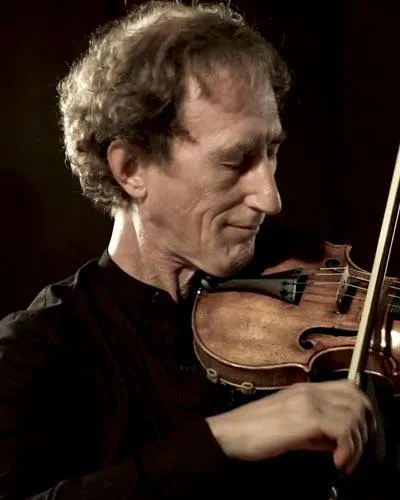
Simon Fischer disfruta de una distinguida y polifacética carrera como intérprete, pedagogo y artista de grabación.
Ha actuado por todo el mundo como recitalista y ha grabado tres Sonatas de Brahms, una grabación que recibió grandes elogios en la revista Gramophone.
Simon está reconocido como uno de los profesores de élite del mundo. Es profesor en la Guildhall School of Music y ha ocupado cargos en la Yehudi Menuhin School, la Wells Cathedral School y la Purcell School, y durante 15 años fue profesor visitante en la Royal Scottish Academy of Music. Tras estudiar en Londres con Yfrah Neaman y en Nueva York con Dorothy DeLay, el enfoque de Fischer une los mejores elementos de las tradiciones violinísticas francesa, rusa y estadounidense.
La obra publicada de Fischer ejerce una gran influencia en la enseñanza del violín. Autor de artículos para la revista The Strad desde 1991, sus columnas mensuales han atraído seguidores en todo el mundo. Publicados por Edition Peters, sus libros de técnica Basics and Practice (traducido al coreano, italiano y alemán), Scales y The Violin Lesson, así como el DVD The Secrets of Tone Production (ahora disponible en streaming a través de MusicGurus), se han convertido en referencias en muchos continentes. Su libro y DVD Warming Up fue descrito por la revista The Strad como "23 páginas de oro técnico puro".
En 2014, Simon Fischer recibió el premio de la European String Teachers Association "en reconocimiento a toda una vida de contribución a la enseñanza de instrumentos de cuerda".
En su curso de cuatro partes Secrets of Tone Production, Simon te guía para que conozcas tu instrumento y luego trabajes sus ejercicios fundamentales de sonido paso a paso, de modo que puedas producir un sonido más rico, más controlado y más hermoso con el violín.







